"Strongest Body" QKing Robotics Strengthens Its "Brain" to Move from Competence to Capability
 05/08 2026
 454
454
Author | Murong Li
Intelligent driving: Another core talent shifts to embodied AI.
Dr. Liyun Li, former Vice President of XPeng Motors and head of autonomous driving, has officially joined QKing Robotics as CTO.
On the surface, this move signifies QKing Robotics addressing its "shortcomings" by strengthening the robot's "brain" capabilities.
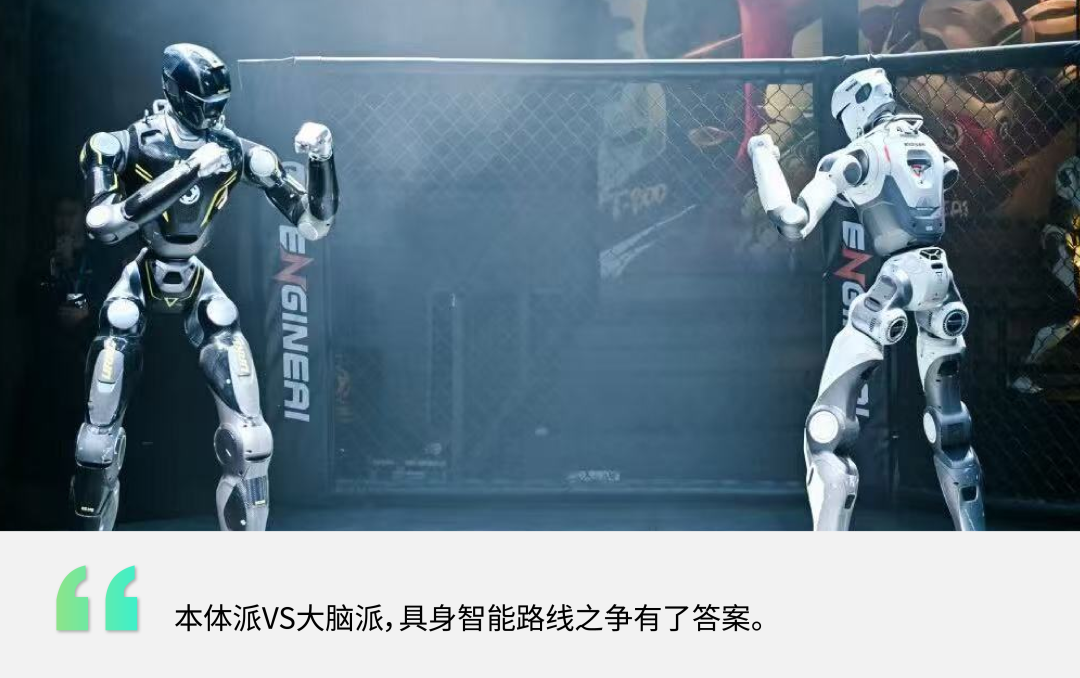
Looking deeper, the entry of this seasoned intelligent driving veteran into a body-focused company to develop the brain sends a clear signal: the debate between the "brain-first" and "body-first" approaches in embodied AI has found an answer.
Single-point breakthroughs can no longer support large-scale deployment. In the future, full-stack integration may be the only endgame for general-purpose robots.

Body-First vs. Brain-First: Who Will Be the Ultimate Winner?
The complexity of embodied AI far exceeds that of most technology industries.
It is not a single technical issue but a coupling of multi-layered systems, including mechanical structures, control systems, perception algorithms, and data loops.
This has determined that, in the early stages of the industry, few companies possess full-stack capabilities simultaneously, leading to a natural divergence in paths.
One group of companies chooses to start with the "body," i.e., the body-first approach, represented by Unitree Technology, QKing Robotics, and Agility Robotics. Their core belief is that without a stable, durable, and controllable robot body, intelligent systems cannot be deployed. They focus on developing hardware technologies such as robot bodies, motion control algorithms, and joint motors.
Unitree boasts over 90% self-developed core components and motion control algorithms, establishing inherent advantages in motion control and cost control. After its appearance on the Spring Festival Gala, there was a surge in demand that temporarily outstripped supply.
QKing Robotics, equipped with its self-developed harmonic force-controlled joint modules and reinforcement learning algorithms, achieved the world's first natural gait walking with its SE01, breaking through traditional robot gait limitations. With continuous advancements in its technologies, QKing can perform front flips and efficient, stable sprints, earning it the title of the "strongest body."
Another group of companies chooses to start with "intelligence," i.e., the brain-first approach, represented by Autovariable Robotics, Physical Intelligence, and Qianxun Intelligence. This camp focuses on deep cultivation of AI models and algorithms, with the core logic of creating a general-purpose large model suitable for robots.
Autovariable's WALL-A embodied large model innovatively deeply integrates the VLA architecture with world models, significantly enhancing zero-shot generalization capabilities in unstructured environments.
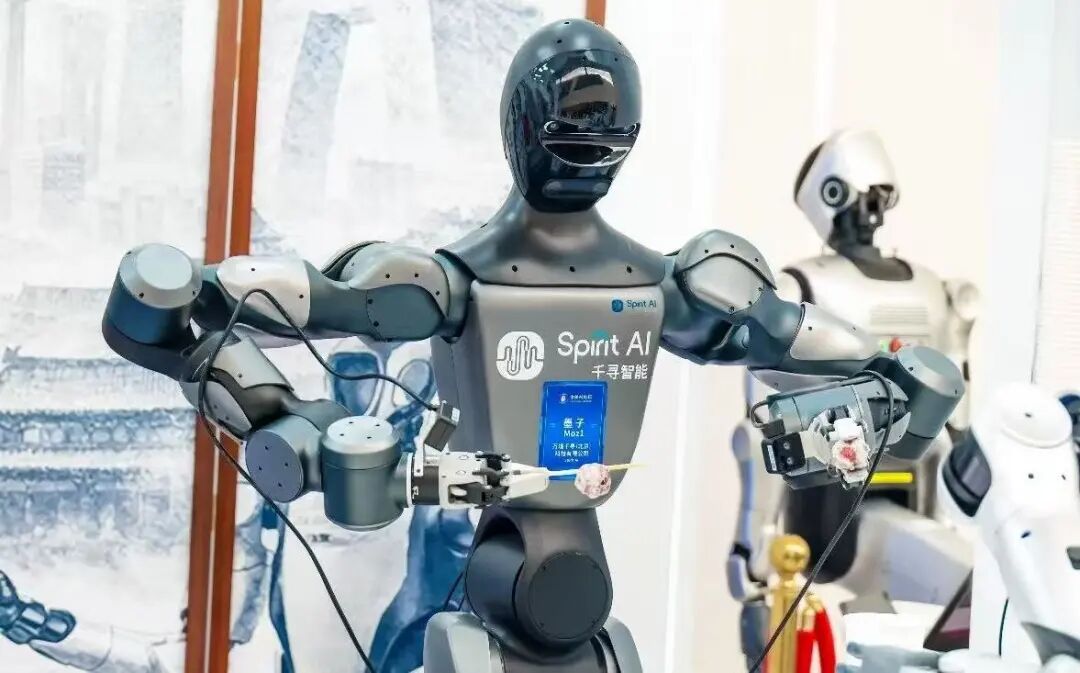
Qianxun Intelligence's self-developed Spirit v1.5 embodied large model became the first embodied model in China to surpass the international benchmark Pi0.5. It can perform a series of complex operations such as wiping, opening and closing hinges, and handling flexible objects without additional training.
Both paths have yielded phase achievement (phased results), but the problems are equally apparent.
For the body-first camp, while robots can currently run and jump, they remain in a state of "strong limbs, simple mind." Once they enter complex task scenarios, deficiencies in perception and decision-making capabilities quickly become apparent.
Not long ago, at a robot marathon, the Glorious Robot won the championship in less than seven months from project inception to competition entry, defeating highly anticipated robots like those from Unitree.
This also indicates that with the maturity of the supply chain, the advantages established by pure hardware companies may quickly be replaced.
For the brain-first camp, the upper limit of model capabilities is still constrained by the physical carrier. While they perform impressively in simulated environments, they often suffer from issues like slow response and structural errors when deployed on real robots.
Jiyang Gao, founder of Xinghaitu, once bluntly stated:
"Currently, the linkage between the whole machine and intelligence is a crucial issue. While production processes can ensure a certain level of consistency, subtle differences still exist between each robot. After incorporating the base model, these subtle differences are amplified."
Another obvious problem with this path is that without their own hardware, data loops cannot be established, and model iteration will naturally encounter issues. To achieve true intelligence, robots must "personally" perceive, act, make mistakes, and correct them to truly understand the world.
In short, the body and the brain are not substitutes for each other but are like the relationship between a foundation and a roof. Without the former, the latter cannot be built; without the latter, the former can only remain a rough structure.

From the "Strongest Body" to "Software-Hardware Integration"
What QKing Robotics has done in the past few years is essentially one thing: pushing the "body" to its limits.
In terms of key technical paths, QKing Robotics has formed a relatively complete body capability system. Its self-developed planetary and harmonic joint hybrid control scheme enables high-precision, high-load motion performance. Patents cover core areas such as joint design and motion control, gradually building its own technological barriers.
QKing Robotics' hardware capabilities have been validated across multiple models:
The PM01 completed the world's first humanoid robot front flip stunt, achieving in-place front flips and efficient, stable sprints with its full-stack self-developed joint technology. Its hardware performance and bionic algorithms lead the industry. The full-size humanoid robot T800, with high explosive power and safety, demonstrates strong environmental adaptability in high-dynamic scenarios such as wrestling and has entered mass production.
QKing Robotics' robots can already be seen on the streets and in shops in Shenzhen, indicating that QKing Robotics has strong body engineering and scalability capabilities.
Earlier this year, QKing Robotics reached a cooperation agreement with Fengwu Technology, clearly proposing the path of "body as the foundation + brain empowerment."
QKing Robotics has begun to fill in the "brain" piece of the puzzle, and Liyun Li's joining precisely fills this critical gap.
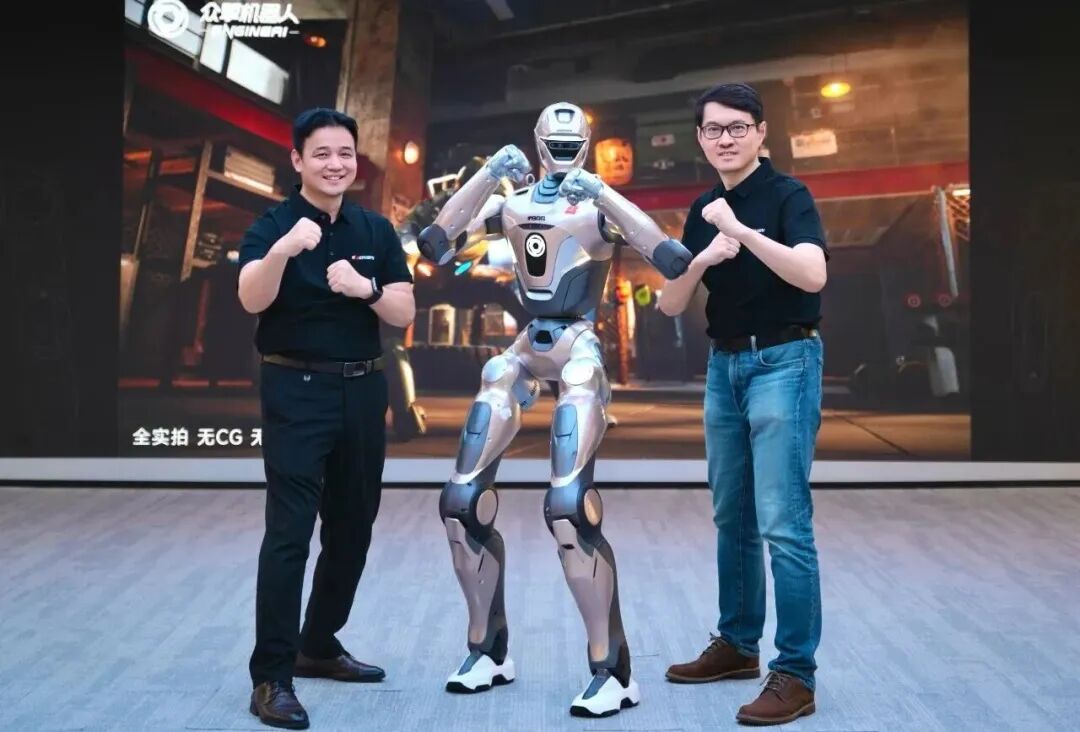
Judging from his resume, Liyun Li spans multiple areas such as algorithms, systems, and products. With a background in electronic engineering from Tsinghua University and computer science from New York University, he possesses a solid technical foundation.
After graduation, he worked at LinkedIn's U.S. headquarters, Baidu Apollo, and JD.com's JDX Smart Logistics Lab, covering multiple fields such as recommendation systems, autonomous driving, and intelligent logistics.
During his tenure at XPeng, he deeply participated in the complete process of XNGP from research and development to mass production, led the AI transformation and upgrade of the autonomous driving team's products and technologies, and expanded the team from less than 100 to 1,000 people. He not only has advanced technical experience but also rich management experience.
In the words of Tongyang Zhao, founder and CEO of QKing Robotics:
"He understands cutting-edge technologies like VLA and world models and possesses strong capabilities in industrial-scale mass production and deployment. This is precisely the key to rapidly solving the large-scale deployment of robots, something that purely academic factions cannot achieve."
Liyun Li's joining has also introduced a methodology for building full-stack AI from scratch to QKing Robotics, including how to construct models, collect and train data, and drive technological engineering and productization.
It is evident that QKing Robotics is shifting from "only making bodies" to a collaborative development stage of "body + cerebellum + embodied brain."
While QKing Robotics' past advantage lay in "performing difficult movements," the next challenge is to "complete complex tasks."

Converging Paths: Full-Stack Integration as the Endgame
This year, embodied AI has reached a critical juncture in moving from the laboratory to real-world scenarios, where single-point capabilities are no longer sufficient to support competition.
Whether viewed from talent flow or product evolution paths, a clearer trend is emerging: the competition in embodied AI is shifting from "single-point breakthroughs" to "systemic capabilities."
Besides QKing Robotics, more and more "body-first" companies are significantly increasing their investment in "brains."
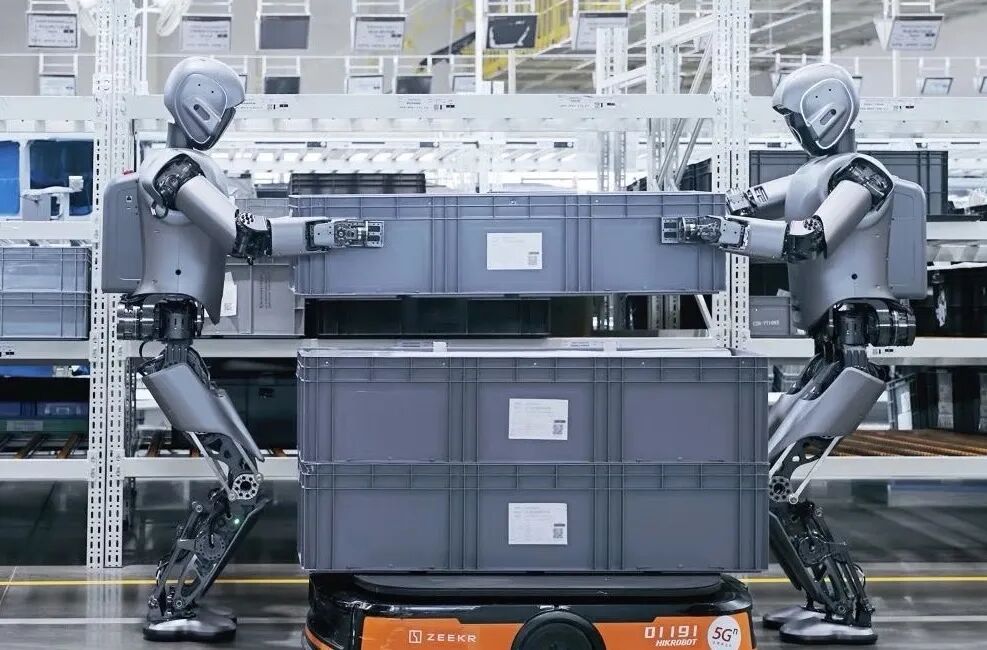
Over the past decade, Unitree Technology has devoted nearly all its energy to making robots run faster and jump higher, with minimal investment in robot brain development.
This year, to keep up with changes, Unitree plans to invest over 2 billion yuan in intelligent robot model research and development.
Xingxing Wang publicly emphasized the importance of the "brain," stating, "Whoever can develop a large model for robots will be the world's most powerful AI and robot company."
Similarly, in December last year, Songyan Power and HuiChen Co., Ltd. reached a strategic cooperation agreement. The two sides will deeply collaborate on robot brain research and development and scenario-based intelligent applications, with the consumer-grade humanoid robot "Xiaobumi (Bumi)" as the core.
On the other hand, the brain-first camp is also addressing its own shortcomings.
Companies that previously focused on models are accelerating their expansion into hardware to solve issues related to data acquisition and real-world deployment.
For example, while introducing the WALL-A large model, Autovariable Robotics fully self-developed the wheeled dual-arm humanoid robot "Quantum 2," which has 20 degrees of freedom in a single hand and can perceive subtle changes.
Qianxun Intelligence, while releasing the Spirit V1 VLA model, introduced the full-force-controlled humanoid robot Moz1, constructing a dual-wheel drive of "model + body."
The underlying logic is not complicated:
Model iteration relies on real-world data;
Acquiring real-world data relies on robots entering scenarios;
And for robots to operate stably, they rely on reliable hardware systems.
Therefore, the past divergence in paths between "body-first" and "brain-first" is gradually finding an answer.
More and more companies are moving towards integration. For example, ZhiYuan Robotics adopts a full-stack self-research route, not only having a product matrix of three major families—Yuanzheng, Jingling, and Lingxi—covering various forms such as full-size, half-size, wheeled, and quadrupedal robots but also focusing on software-level breakthroughs. It has successively launched three embodied large models: Genie Operator-1 (GO-1), WholeBodyVLA, and GenieReasoner, constructing a complete large model system.
Zhihui Peng, co-founder of ZhiYuan Robotics, pointed out:
"Without intelligence deeply coupled with the body, a robot is just a tool, not true embodied AI."
There is also ZhiJian Power, which insists on full-stack self-research in both software and hardware, constructing a technological system centered around the "Four Os" (One Model, On Device, One Body, One Hour) to achieve model-defined bodies and software-defined hardware. Founded less than six months ago, it has completed five rounds of financing totaling 2 billion yuan, becoming the youngest unicorn in embodied AI.
As embodied AI faces more requirements to enter real-world scenarios, in the long run, it must be vertically integrated—developing both models and hardware.
As Liyun Li stated:
"To enable robots to truly create value, we must adhere to 'Body for AI, AI for Body'—joint design and co-evolution of the body and AI." Future competition will not lie in the leadership of single-point capabilities but in the ability to possess continuously evolving systemic capabilities.
The "body-first" and "brain-first" approaches, two seemingly opposite paths, will ultimately "converge."
-
![]()
Tesla Restructures Its Balance Sheet
-
![]()
Accelerating the High-Speed Interconnection Upgrade of AI Computing Clusters! JONHON Releases ELSFP External Light Source Optical Connectors
-
![]()
Breaking the overseas blockade of volumetric holographic materials, this optical enterprise secures nearly 100 million yuan in financing!
-
![]()
Why Does Jensen Huang So Openly Praise China’s AI?
-
![]()
"Wudang" Unveiled: Arm China's Next-Gen AI VPU Redefines Video Encoding
-
![]()
From Energy Conservation and Carbon Reduction to AI Decision-Making: GECON East Intelligence and Chery Group Explore a New Green and Smart Paradigm for Automobile Manufacturing
-
![]()
WAIC 2026 Observation | AI Accelerates Towards the Core of Industries, Industrial AI Enters a Critical Phase
-
![]()
Volkswagen China Fires the First Shot in Foreign-Funded 'White Box Delivery'!