Leapmotor Achieves Record Sales but Faces Challenge of Shedding 'Budget-Friendly' Image | Auto Circle
 05/08 2026
 440
440
As new energy, autonomous driving, artificial intelligence, and chip technology rapidly advance, the automotive industry is undergoing an unprecedented transformation. To stay abreast of the latest developments and market trends, LingTai LT has launched the 'Auto Circle' column. From a professional perspective, this column covers the latest global automotive news, major automakers' new product launches, technological innovations, and market performance. Through in-depth analysis, it uncovers the underlying business logic and market patterns, exploring how these factors are reshaping the automotive landscape and influencing human mobility. This is the 29th article in the series, focusing on Leapmotor.
Author: Zhang Qian
Editor: Hu Zhanjia
Operations: Chen Jiahui
Produced by: LingTai LT (ID: LingTai_LT)
Header Image: Publicly available online
Automakers' April sales figures have been released in succession.
Most brands experienced growth, but Leapmotor stood out with a staggering 71,387 units sold, marking a 42.69% month-on-month increase—the highest growth rate among the 10 brands surveyed. This marks the 13th time in the past 14 months that Leapmotor has topped the new energy vehicle startup rankings. However, on the same day, a live broadcast mishap occurred.
During the broadcast, the navigation interface on the vehicle's central control screen suddenly crashed: lane markings disappeared, surrounding vehicles were no longer displayed, and only a lone car model remained on the screen. The host struggled to maintain composure while Leapmotor's Senior Vice President, Cao Li, sat nearby, frequently glancing at the screen with an uneasy expression.
The comment section quickly filled with messages, prompting the live stream to disable comments entirely.

High Sales Volume, But What About Profitability?
Let's examine the overall landscape in April.
BYD maintained its lead with 321,123 units sold, marking a nearly 7% month-on-month increase. Geely followed with 235,164 units, roughly flat compared to the previous month. These traditional automotive giants remain unchallenged in scale, but their growth has slowed—a natural consequence of reaching such a large base. They now act more as market 'stabilizers' than 'accelerators.'
The real excitement lies among the new energy vehicle startups.
Leapmotor's 71,387 units, up 42.69% month-on-month, not only led in growth rate but was also the only brand among those surveyed with a month-on-month increase exceeding 40%. Hongmeng Intelligent Driving sold 32,759 units, up 23.24%; XPENG sold 31,011 units, up 13.12%. These brands are not just growing—they're growing sustainably. Leapmotor and Hongmeng Intelligent Driving both saw year-on-year increases exceeding 70%, indicating genuine market expansion rather than seasonal rebounds. Seres sold 33,187 units, up 4.55% month-on-month, showing relatively conservative growth. Zeekr sold 31,787 units, up 8.42%, performing steadily. Both brands face similar issues: standout products but a lack of concentrated market presence, resulting in insufficient consumer differentiation.
On the other hand, some brands experienced declines. Li Auto sold 34,085 units, down 16.97% month-on-month; NIO sold 29,356 units, down 17.27%. The reasons for the decline differ: Li Auto's L9 is due for a replacement, with consumers holding off purchases in anticipation of the new model; NIO is in a product transition phase, having just launched the new ES6/EC6 in early April, with the LeDao L80 and ES9 set to arrive in May, leading to a temporary dip in deliveries.
Regardless, double-digit month-on-month declines are not a good sign in today's competitive market.
More notably, all three of NIO's internal brands saw declines in April compared to March, indicating a broader issue beyond single-product performance. Xiaomi, still not disclosing exact figures, reported 'over 30,000 units' sold. Industry estimates suggest a month-on-month growth rate of around 50%, a new annual high.
With approximately 80,000 units delivered in Q1 and 109,000 units from January to April, this 'latecomer' is rapidly ramping up production, now on par with leading new energy vehicle startups.
However, Leapmotor, despite its impressive sales figures, tells a different story in its financial reports. In 2024, Leapmotor reported revenue of 64.73 billion yuan and net profit of 540 million yuan. Alongside Li Auto, it is one of only two new energy vehicle companies to achieve full-year profitability.
Its 2026 targets have been set: 1 million units sold and 5 billion yuan in net profit.

Leapmotor Must Shed Its 'Budget-Friendly' Label
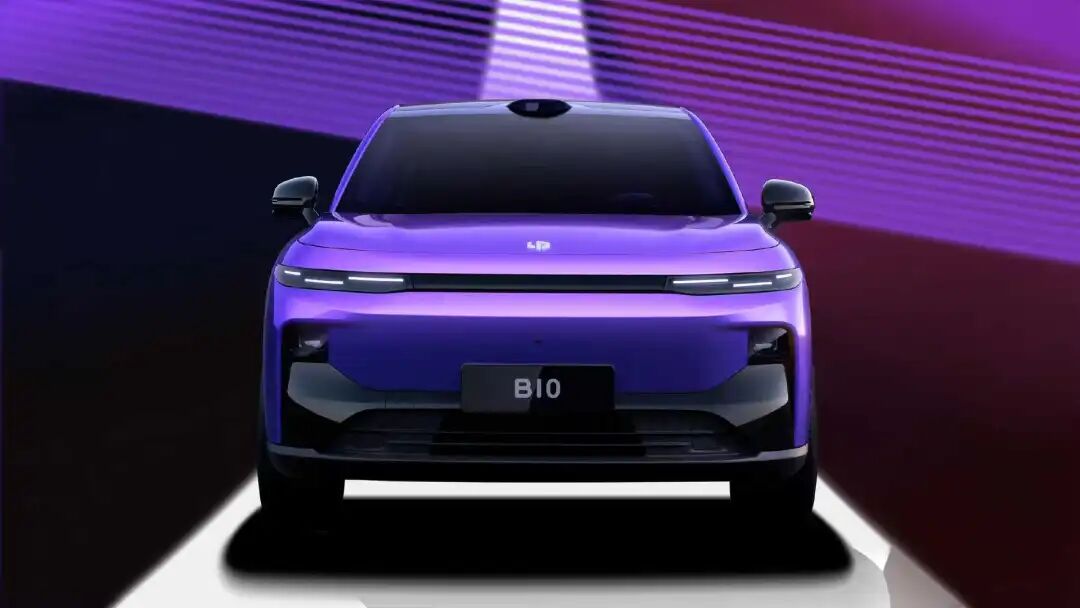
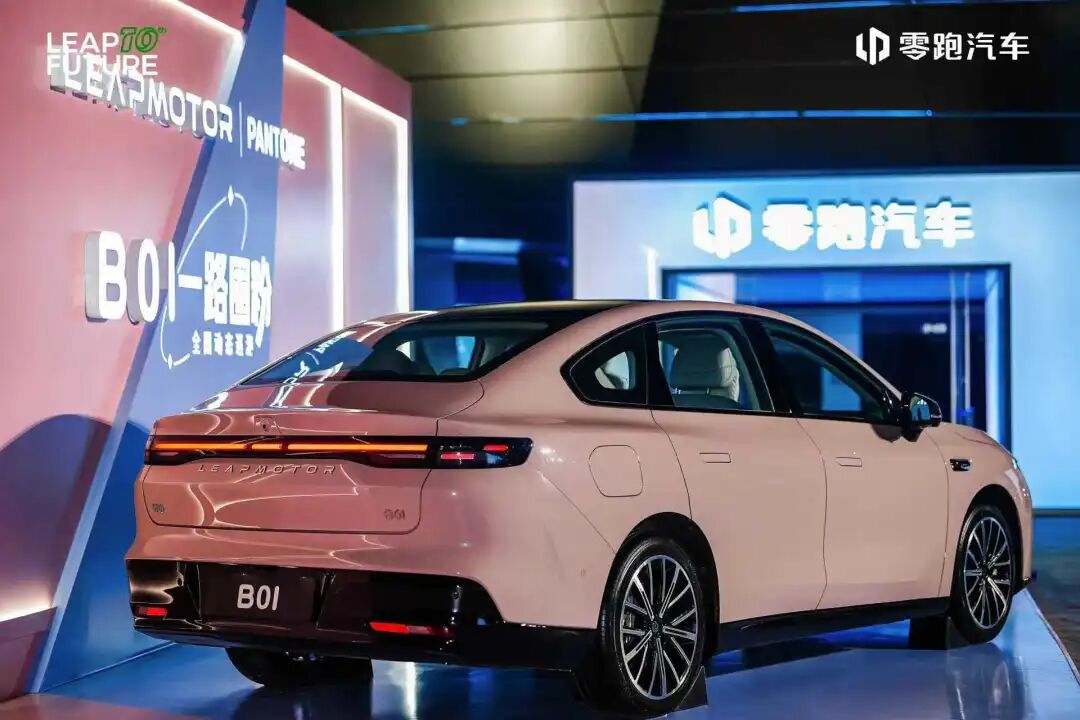
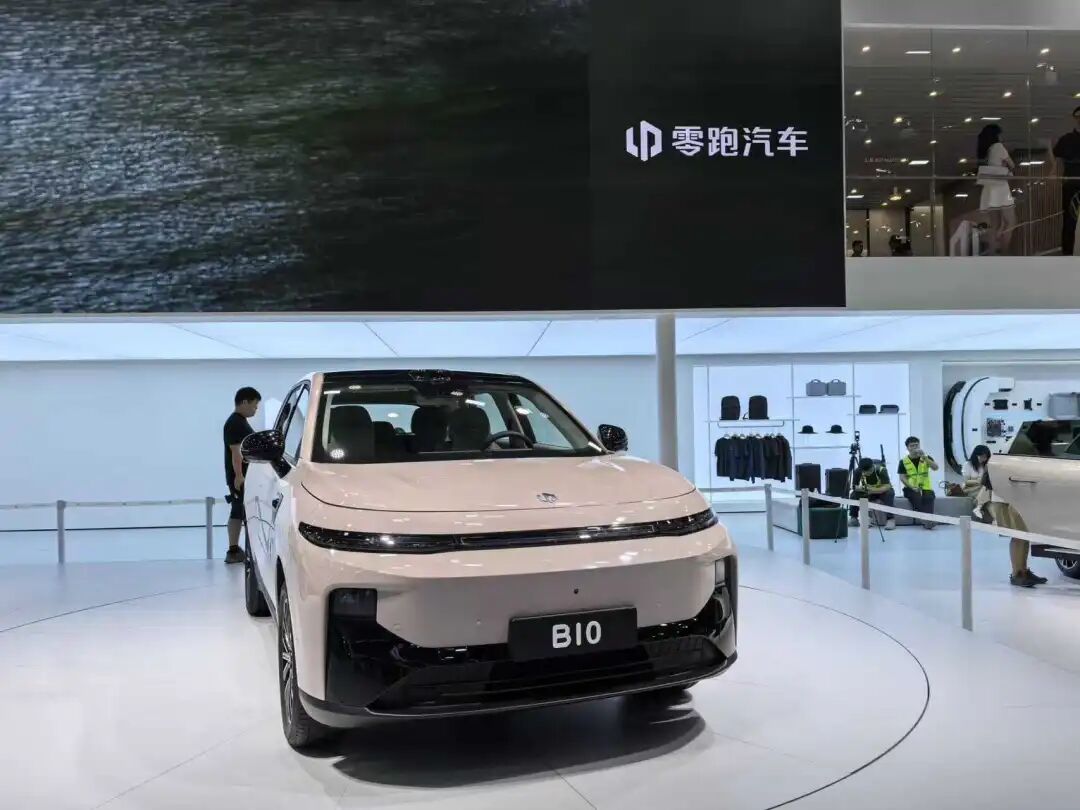
Leapmotor's price range spans from 65,800 to 269,800 yuan, covering four series (A, B, C, D) plus the Lafa 5, with a full lineup of sedans, SUVs, MPVs, and both battery electric (BEV) and extended-range electric vehicles (EREV).
Senior Vice President Xu Jun summarizes this strategy as 'using the A series to penetrate the entry-level market, the D series to reach the premium segment, and the B and C series to strengthen the mid-range.' This comprehensive layout reflects Leapmotor's core approach: 'leveraging in-house R&D to reduce costs and bring premium features like LiDAR and high-level intelligent driving to budget-friendly price points.'
The A10 introduced LiDAR and 'park-to-park' navigation assistance for under 100,000 yuan; the D19, priced between 170,000 and 210,000 yuan, directly competes with Li Auto's L series at a significantly lower price. In 2025, amid intensifying price wars, this strategy has proven effective—cost-effectiveness remains the strongest driver in this market. However, once a brand is tied to 'cost-effectiveness,' upgrading becomes difficult.
Leapmotor founder Zhu Jiangming explains this logic bluntly: 'Using a B2B approach for B2C—if your product is the same as others but 20 yuan cheaper, people will buy yours.' This mindset helped Leapmotor quickly gain traction, rising from second- and third-tier startups to the top. But if prices rise, customers will simply switch to competitors. This isn't a loyalty issue—it's a brand positioning problem. When a brand positions itself as 'budget-friendly,' the market responds with, 'If you're not cheap, I won't buy.'
Data from Tianyancha and JL&F Consulting shows that Leapmotor's average selling price (ASP) across all models in 2025 was 125,000 yuan, on par with Haval (127,000 yuan) and Mazda (127,000 yuan). Consumers in this price range are highly price-sensitive and have little tolerance for brand premiums. For Leapmotor to jump to the 300,000-yuan-plus market, it requires more than just a price hike—it demands a complete reimagining of consumer perception.
In 2026, Leapmotor plans to elevate its brand with two new models: the D19 and D99. Xu Jun states that the D series has a 'critical mission'—to boost sales while enhancing the overall service experience. However, Zhu Jiangming admits that Leapmotor's greatest success lies in ensuring customers 'don't feel like they've overpaid or regret their purchase.'
The challenge is that consumers in the 300,000-yuan-plus market demand 'beyond expectations.' In 2025, 833,000 NEVs priced between 300,000 and 400,000 yuan were sold, up 17.2% year-on-year. But the competitive landscape here differs vastly from the 120,000-yuan segment. The Audi A6L sold around 163,000 units, the AITO M8 about 150,000 units, while the Mercedes-Benz E-Class, Audi Q5L, BMW 5 Series, and Lexus ES dominate not just with features but with brand trust, social status, and long-term ownership experience.
Entering this segment requires NEVs to layer on intelligence, cabin experience, and service systems. Leapmotor's strength in 'cost-based pricing and universal high-end features' only addresses part of the equation. While it can undercut competitors on price, buyers in the 300,000-yuan-plus range are far less sensitive to cost than those in the 120,000-yuan segment.
They care more about: How does this car reflect on me? Is the brand trustworthy? Will support be available if issues arise? Launching a second brand is one option for Leapmotor. Toyota has Lexus, BYD has Tengshi and Yangwang—creating a premium sub-brand is industry standard. However, market perceptions of Leapmotor's premium ambitions are mixed. As one automotive market researcher put it, 'Building a premium brand is incredibly challenging. Toyota invested heavily in Lexus, taking 17 years to surpass Mercedes-Benz as the top-selling luxury brand in the U.S. Hyundai's Genesis, founded in 2015, only approached break-even by 2024. BYD and Daimler's joint venture, Tengshi, struggled for 12 years before turning a profit.'
Moreover, product logic in the 300,000-yuan-plus market differs. Over the past two years, most growth in this segment has come from extended-range and plug-in hybrid vehicles—models like the Li Auto L9, AITO M9, and Tank 700 exemplify the 'large vehicle + hybrid + family-oriented' formula. Meanwhile, pure electric vehicles (BEVs) priced above 300,000 yuan have struggled across all brands.
If Leapmotor's second brand goes all-electric, it faces the toughest market segment. If it opts for extended-range or plug-in hybrids, it must differentiate from its main D series to avoid pricing constraints imposed by shared platforms, powertrains, and battery supply chains.
Zhu Jiangming acknowledges that Leapmotor 'can't keep selling cars like stainless steel.'

Back to the Live Broadcast Incident
The navigation interface crashed—lane markings vanished, surrounding vehicles disappeared, leaving only a solitary car model on the screen.
With executives seated nearby, the live stream disabled comments, as if ignoring the problem would make it disappear. Customer service later advised, 'If lane markings suddenly stop displaying, visit a dealership for inspection.' It wasn't a catastrophic failure, but the timing was awkward.
On the same day, Leapmotor had just announced its record April sales of 71,387 units, dominating automotive media headlines. Then, a live broadcast mishap exposed stability issues with its intelligent driving system. The celebration was short-lived.
The embarrassment lies in Leapmotor's branding as a champion of 'affordable high-level intelligent driving.' Features like LiDAR, navigation assistance, and 'park-to-park' capabilities—once exclusive to 300,000-yuan-plus models—are now available under 100,000 yuan. This strategy won over many users but also placed immense pressure on Leapmotor's systems: a larger user base, diverse driving scenarios, and higher stability demands.
For a brand promoting 'technology for all,' a system failure during high-speed driving—juxtaposed with 71,387 units sold—feels ironic. Technically, the navigation crash might just be a software bug fixable via OTA updates. But the deeper issue is concerning: Are there blind spots in Leapmotor's in-house R&D quality control and testing coverage?
The live broadcast failure suggests this bug was either missed during internal testing or deemed non-critical. Either scenario points to a larger problem: In the rush for rapid functional iteration, stability verification may have been neglected.
More troubling was the decision to disable live comments. When technical issues arise during a corporate broadcast, the standard response is to explain, apologize, and outline solutions. Leapmotor chose the simplest approach—silencing users. If this becomes habitual, the brand damage could outweigh any software glitch.
Users may not see comments during the broadcast, but they'll discuss it on Weibo, Xiaohongshu, and car enthusiast forums—you can't suppress that.
Customer service's suggestion to 'visit a dealership for inspection' is equally perplexing. If intelligent driving systems promise 'hands-free driving,' why ask users to drive to a store when issues arise? This logic undermines the 'intelligence' claim. If remote diagnostics and quick fixes aren't possible, the technology's credibility suffers.
As the user base grows from 100,000 to 500,000 to 1 million, even rare bugs will escalate into widespread reputation crises.
Speed Isn't the Answer—Profitability Is
April's sales figures send a clear industry signal: NEV penetration has surpassed 60%, and the market has shifted from 'policy-driven' to 'product- and brand-driven.'
To survive, brands must do more than just sell vehicles—they must profit. Leapmotor's performance epitomizes this trend.
Data from Tianyancha and financial reports indicate Leapmotor's 2026 targets: 1 million units sold and 5 billion yuan in net profit. Achieving this requires either a significant increase in average selling price (ASPs)—necessitating a successful brand upgrade—or a drastic reduction in unit costs through economies of scale. Neither path is easy.
For brand upgrading, Leapmotor's 'budget-friendly' image is deeply entrenched. Customers buy Leapmotor because 'it's cheaper for the same features,' not because 'it
Sales figures are a testament to Leapmotor's prowess in product definition. The company recognizes that the majority of Chinese consumers are not seeking the priciest or most technologically advanced offerings; instead, they prefer "adequate configurations at the most competitive price." This strategic positioning has propelled Leapmotor from the second and third tiers of the market to the forefront. Yet, reaching the pinnacle also entails greater scrutiny.
As BYD begins to make significant inroads into the mid-to-high-end market segment, Li Auto's intelligent driving technology matures further, and Xiaomi ramps up its production capabilities—will the customers Leapmotor has attracted with its "affordability" strategy simply switch allegiance because "others offer even lower prices"? This query demands more profound contemplation from Leapmotor's management team than merely focusing on April's sales data.
-
![]()
Total Investment Hits Nearly 3.28 Billion! Goertek Launches Mass Production of 12-Inch Transparent Substrate Wafer for AR Glasses’ Micro-Nano Optical Components
-
![]()
Why Is This Precision Optical Film Leader Worth Reevaluating with a Tens of Millions Procurement?
-
![]()
AI Costs Plummet by 90% Over Nine Years: Key Insights from Davos You Shouldn’t Miss
-
Doubao, Your Late-Night AI Companion, Now Eyes Profitability
-
![]()
SRC Empowers SEER Intelligence to Reach a Market Cap of Tens of Billions, Yet Fails to Sustain Profitability
-
![]()
China’s Embodied AI Industry Faces Fierce Domestic Competition, Making Overseas Expansion Essential for Survival
-
![]()
32.8 Billion Yuan Investment! Goertek’s 12-Inch AR Glasses Optical Wafer Base in Lingang Begins Operations
-
![]()
How Far is the All-New Li Auto L8 from Being the Best Five-Seat SUV with In-House Full-Stack Development?