ByteDance Applies the 'Brakes' to Doubao's Free Model: How Much Time Do AI Companies Still Burning Cash Have Left?
 05/09 2026
 443
443
Doubao Ushers in the End of Free AI in China: The Brutal Ledger of Large Model Players and the 2026 AI Company Shakeout Guide
Soon, AI tools on your phone will start charging fees.
We once took for granted the instant gratification and free offerings of the internet: free cloud storage, daily food delivery subsidies, and near-free ride-hailing. Then, the subsidies stopped, membership fees rose, and we had to start budgeting carefully.
Over the past two years, domestic AI large models have inherited the free attribute of the mobile internet. Whether for research, report writing, or generating stunning images, major companies have freely provided top-tier computing power at our fingertips, like benefactors handing out money.
But that delicate veil has finally been torn apart by Doubao.
I
A Paid Pop-Up Window Reveals the AI Industry's 'Survival Crisis'
Upon opening the Doubao app, many professional users accustomed to getting things for free discovered a new paid notice in the familiar interface. To better serve professional users, Doubao has introduced a paid version with more value-added services on top of its free tier.
The price tags are clear and unforgiving: Standard version at 68 RMB per month (688 RMB per year), Pro version at 200 RMB per month (2,048 RMB per year), and Professional version at 500 RMB per month (5,088 RMB per year).
To put it bluntly, even the wealthy are hesitant to give away free flour anymore because electricity and computing costs have skyrocketed.
Countless users' first reaction was, 'Is ByteDance running short on cash?' But industry insiders felt a chill down their spines. If even a cash-rich giant like ByteDance can't sustain the 'free-burning-money' model, how long can the rest of us hold on?
This is not a simple commercial trial but a life-and-death pivot for the entire AI industry, shifting from 'burning cash for valuation' to 'making money to survive.' When ByteDance starts scrutinizing 'computing cost accounting,' those large model companies without backing, cash flow, or a clear path to commercialization have already been written into the industry's 'ledger of life and death.'
Doubao's paid model is the AI large model industry's 'coming-of-age ceremony,' marking its complete departure from 'wild growth.' It's a brutal trailer (forewarning), tearing off the fig leaf of 'AI profitability challenges' and foreshadowing a massive industry shakeout in 2026.
II
ByteDance's 'Calculated Move': Not Short on Cash, but Afraid of Being Dragged Down by the 'Computing Black Hole'
Assuming ByteDance is short on cash is a misunderstanding of its profitability.
The hard data on the table is clear enough: ByteDance's annual revenue and net profit generate cash flow sufficient to overshadow most traditional industry giants.
They're not short on cash. But another set of figures is far more glaring: Capital expenditures in AI are an unrelenting black hole. Chip procurement, server cluster construction, and the relentless training of models with hundreds of billions of parameters burn real money every second.
Interestingly, Volcano Engine officially disclosed a figure: As of March this year, the average daily Token usage of Doubao's large model had surpassed 120 trillion. This figure doubled in the past three months and skyrocketed 1,000 times compared to its launch in May 2024.
What does 120 trillion Tokens mean? If we think of it as a factory assembly line, it means machines operating nonstop at overcapacity. For users, generating a complex PPT, processing massive data, or creating a cinematic-quality video takes just a finger swipe.
But for the backend, such tasks consume an enormous amount of computing power and inference time.
ByteDance's anxiety is a strategic defense.
If it continues to rely on revenue from other core businesses to 'subsidize' Doubao's free operations, once user growth peaks, AI will transform from a cutting-edge technological advantage into a heavy burden dragging down the company's profitability. Tan Dai, head of Volcano Engine, cut to the heart of the business logic: 'The price difference of Tokens essentially reflects their differing capabilities.' Next-generation models will be more powerful, with higher per-Token costs but also increased value creation.
What I value more is the strategic pivot behind this. Doubao's paid services aren't about squeezing small change from ordinary users but meeting the demands of complex, high-value tasks.
Daily Q&A remains free, but productivity scenarios with high computing demands must enter a closed loop of 'investment-monetization-reinvestment.'
This is ByteDance's 'coming-of-age ceremony' in transitioning from a 'traffic giant' to a 'technology giant'—only by achieving commercialization and transforming AI from a pure cost center into a self-sustaining profit center can it avoid the fate of companies that dazzle with technology but lack a clear path to profitability.

III
The Industry's 'Ledger of Life and Death': Three Types of Players, Two Possible Outcomes
The law of gravity in business always applies. When the tide recedes, vague notions of 'technology + vision' can no longer sway investors. Instead, two hard metrics—'how long cash flow can sustain' and 'whether positive cash generation is achievable'—will determine the fate of all large model companies.
Who will survive beyond 2026, and who will face rapid liquidation, is clearly written in the ledger.
Type 1: Cash-Rich Giants (Tencent, Alibaba, ByteDance, Baidu)—The Dealers at the Table
Their core advantage isn't technological superiority by leaps and bounds but 'mature businesses that provide financial support.' For them, AI is an ecosystem amplifier, not a financial drain.
Take Tencent, which quietly embeds AI into its vast advertising and gaming businesses. AI-driven precision targeting significantly boosts ad click-through rates, while AIGC tools multiply the efficiency of short video material production, cutting costs in half. This monetization is subtle but profitable.
Alibaba tightly binds large models with Alibaba Cloud and e-commerce scenarios, monetizing AI through cloud service subscriptions and merchant tools. Baidu leverages search, a natural text-interaction scenario, to embed ERNIE's capabilities across its product lineup, forming a closed loop of 'search + AI.'
The logic is simple: Giants aren't short on cash or application scenarios. They don't even need AI to be independently profitable in the short term—just using AI to solidify their existing business moats ensures survival in the knockout stage.
Type 2: Unicorns Teetering on the 'Cliff' (Zhipu AI, MiniMax, etc.)—Tightrope Walkers Facing Uncertain Fates
This is the most dangerous and anxious group currently. They boast cutting-edge technology and star-studded teams but lagging commercialization keeps their funding chains perpetually tense.
Data is the coldest lie detector. Take Zhipu AI: In 2025, its MaaS API platform achieved 1.7 billion RMB in ARR (Annual Recurring Revenue). Not bad at first glance—but at what cost? That same year, Zhipu's adjusted net loss hit 3.182 billion RMB.
Now look at MiniMax: In 2025, it generated $79.04 million in revenue (approximately 543 million RMB), with over 70% from international markets. But the flip side was a staggering $1.872 billion in losses, with adjusted net losses reaching $251 million.
These unicorns are trapped in a vicious cycle: To capture market share and developers, they must slash API prices. For example, DeepSeek recently announced steep price cuts, reducing DeepSeek-V4-Flash's per-million-token input cache hit price to 0.02 RMB and DeepSeek-V4-Pro to 0.025 RMB.
Zhipu, another domestic large model, raised API prices three times in 2026 to meet strong demand. But in an industry where discounts of 90% or even free Token giveaways are common, pricing power is extremely fragile.
No matter how strong the technology, if revenue can never fill the computing cost hole, they won't survive the capital winter.
Type 3: The 'Doomed' Laggards (Follower Startups and Marginal Models)—Time Is Running Out
If unicorns are walking a tightrope, many startups have already fallen off.
Let's examine real industry cases. Over the past two years, numerous traditional A-share marketing firms and casual game companies announced their own 'general-purpose industry large models' to jump on the bandwagon. Most lacked foundational technical barriers, simply wrapping overseas or domestic giants' APIs in a UI and spinning stories.
But illusions must shatter. When giants slash Token prices to pennies or even fractions of a penny, these wrapper companies' profit margins vanish instantly. They lack the giants' ability to cross-subsidize with other businesses or the unicorns' access to large financing rounds.
Take a listed marketing firm that launched an AI copywriting system, attempting to charge hefty subscription fees monthly. Within six months, users realized free general-purpose models delivered better results. The company didn't earn money; instead, its main business profits were dragged down by upfront server and R&D costs.
They tried to seize market share with 'cheap services' but found that higher scale meant higher upstream API costs, trapping them in a classic death spiral. Ultimately, they became the first casualties of the industry shakeout.

IV
The Future Gamble: General-Purpose Models 'Fall Out of Favor,' Vertical Scenarios Become the 'Lifeline'
The competitive landscape has fundamentally changed. Previously, the race was about parameter counts and benchmark scores; now, investors only care about one thing: quantifiable ROI (Return on Investment).
The future AI battleground isn't about who's smartest but who's most profitable.
Path 1: The 'Twilight' of General-Purpose Models—From 'Hot Commodities' to 'Utilities'
The myth of general-purpose models is fading. With the rise of open-source ecosystems, technical gaps in common knowledge Q&A, simple poetry, and painting between models are narrowing to mere 'time differences' of a few months.
Homogenized competition inevitably sparks price wars. When DeepSeek drives Token prices to pennies, the 'sell Tokens' business model reaches its limit.
In the future, general-purpose models will become as 'infrastructural' as today's utilities—embedded into various hardware and software as foundational tech components or used by cloud providers as 'loss leaders' to attract customers, rather than standalone profit centers.
For pure model companies without ecosystem support, this path will only narrow.
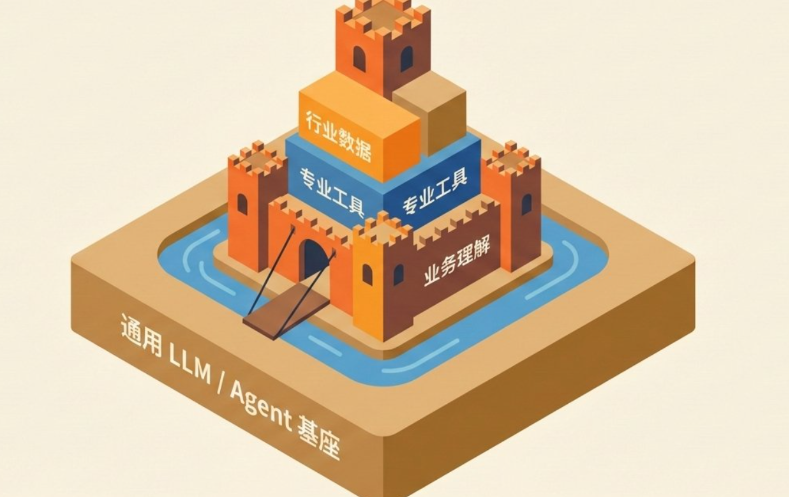
Path 2: The 'Dawn' of Vertical Scenarios—Where the Real Money Lies
The real gold is buried in messy vertical industries. Here, AI doesn't talk about changing the world—just about saving employers a few headcounts or boosting conversion rates by a few points.
Finance, healthcare, industrial manufacturing—these fields resist easy penetration by general-purpose models and demand deep industry know-how.
Take Volcano Engine's Seedance 2.0 video generation model, which demonstrated terrifying efficiency in the vertical 'comic drama' production scene.
Traditionally, producing a high-quality comic drama required dozens of artists and editors. After integrating Seedance 2.0, participating production companies reduced per-minute costs to 4,000–5,000 RMB, with manpower dropping from 20 person-days to just 3, cutting total costs nearly tenfold.
That's the ultimate ROI.
In healthcare, hospitals don't need AI to write novels. But if AI can slash manual screening costs for oncology clinical trials or generate medical records accurately in real-time during outpatient visits, dramatically reducing doctors' paperwork, hospitals will gladly pay hefty subscription fees.
Deep diving into vertical scenarios, standardizing AI capabilities, and embedding them into existing enterprise workflows—this is the lifeline for AI companies to survive today.
V
Conclusion: In AI's Second Half, Survival Matters More Than 'Winning'
The paid test option on Doubao's App Store page is like a starting gun. It declares the end of the AI industry's era of 'wild growth and burning cash for the future' and marks the beginning of the second half, where 'accounting for every penny and making money to survive' takes center stage.
The finish line of this race isn't a nebulous 'technological singularity' but a cold, hard 'commercial singularity.'
In AI's second half, the competition isn't about the size of computing clusters or the outrageousness of model parameters—it's about raw business acumen.
Who can first close the loop of 'technology-product-commerce,' who can make customers willingly open their wallets, and who can achieve positive cash flow will truly cross the 2026 threshold.
Those who only know how to flaunt parameters at product launches but can't deliver cash flow in earnings season will be mercilessly written into the industry's thick 'ledger of life and death' and fade into obscurity.
ByteDance has slammed on the strategic brakes. Giants are methodically harvesting scenarios. Unicorns are struggling to stay above the profitability line. Edge followers are collapsing en masse. This knockout stage has entered its cruelest phase.
The uncertain future looms. Do you believe AI unicorns still mired in losses can survive long enough to achieve full profitability?
With general-purpose models engaging in a 'price war to the death,' which vertical fields will become the new 'blue oceans' where AI can actually make money? Share your predictions in the comments, and let's witness this industry shakeout together.
-
![]()
Tesla Restructures Its Balance Sheet
-
![]()
Accelerating the High-Speed Interconnection Upgrade of AI Computing Clusters! JONHON Releases ELSFP External Light Source Optical Connectors
-
![]()
Breaking the overseas blockade of volumetric holographic materials, this optical enterprise secures nearly 100 million yuan in financing!
-
![]()
Why Does Jensen Huang So Openly Praise China’s AI?
-
![]()
"Wudang" Unveiled: Arm China's Next-Gen AI VPU Redefines Video Encoding
-
![]()
From Energy Conservation and Carbon Reduction to AI Decision-Making: GECON East Intelligence and Chery Group Explore a New Green and Smart Paradigm for Automobile Manufacturing
-
![]()
WAIC 2026 Observation | AI Accelerates Towards the Core of Industries, Industrial AI Enters a Critical Phase
-
![]()
Volkswagen China Fires the First Shot in Foreign-Funded 'White Box Delivery'!