Yuanbao Is 'Leaking,' Tencent Secures Just a 'Standing Ticket' in the AI Race
 05/18 2026
 498
498

Author | Lucky
As AI sparks a new wave of technological revolution, has Tencent secured its next 'ticket' to the future?
At the 2026 Annual General Meeting, Pony Ma, Chairman and CEO of Tencent, remarked, "A year ago, we thought we had boarded the ship, only to find it was leaking. We quickly switched to another vessel, and now we feel like we're standing on it, but we still can't sit comfortably. We hope the ship can speed up."
Clearly, in Ma's view, after a year of arduous exploration, Tencent has embarked on the journey toward the next era. Financial data supports this perspective, as AI has indeed become a significant driver of Tencent's performance growth. In the first quarter of 2026, aided by AI, Tencent's marketing services and enterprise services revenue both increased by 20% year-over-year, far surpassing the overall revenue growth rate of 9%.
However, it's important to note that Tencent is no ordinary internet company. Its business moat is primarily built on the relationship chains accumulated through social products like WeChat and QQ, as well as the resulting network effects.
During the PC era, relying on QQ, Tencent easily expanded into gaming, entertainment, portals, and other businesses. When smartphones emerged, WeChat promptly inherited QQ's social relationship chains, helping Tencent secure its 'ticket' to the mobile internet era. Today, WeChat has yet to undergo a true AI-driven transformation, indicating that Tencent still faces significant uncertainty in the AI era.
01
Two Attempts, Same 'Script' for Yuanbao
As we all know, AI became the focal point of the tech industry in late 2022 with the advent of ChatGPT. However, due to its greater emphasis on AI application deployment and the immaturity of model capabilities, Tencent did not aggressively pursue consumer-facing AI applications like ByteDance and Baidu did at the time.
It wasn't until early 2025, when DeepSeek open-sourced DeepSeek-R1, providing a mature foundational model for latecomers, that Tencent began to fully invest in the consumer AI assistant product, Yuanbao.
In mid-February 2025, Tencent Yuanbao integrated the full-featured version of DeepSeek-R1, supporting internet search and consolidating information sources from Tencent's ecosystem, including WeChat Official Accounts and Video Channels. Meanwhile, Tencent also began actively acquiring computing power, with capital expenditures reaching RMB 19.1 billion in the second quarter of 2025, a 119% year-over-year increase.
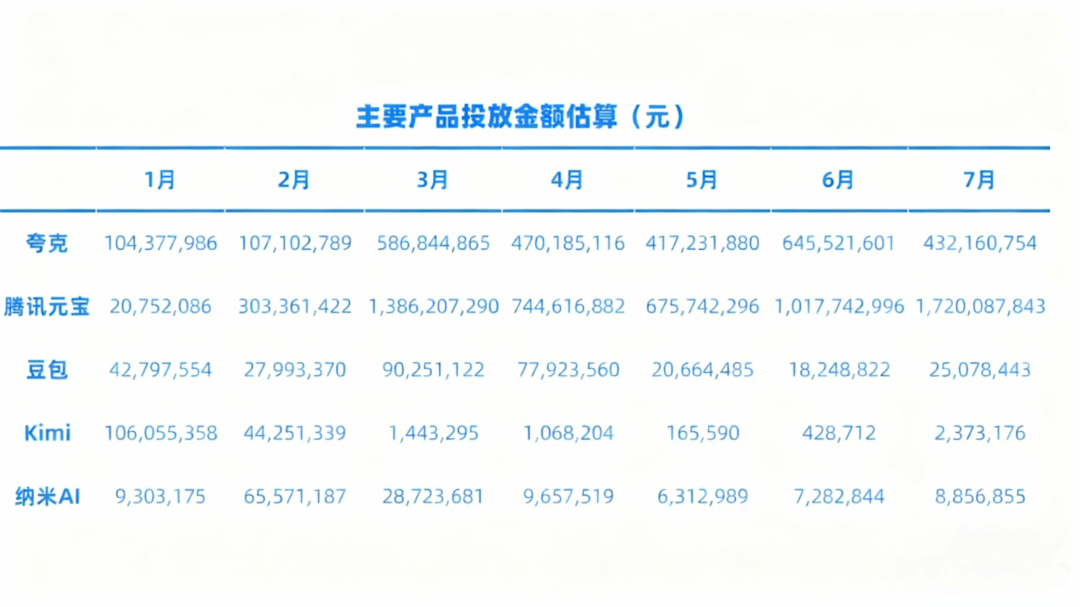
Source: AppGrowing
To promote Yuanbao's market penetration, Tencent invested heavily in marketing. According to AppGrowing data, Yuanbao's cumulative advertising spend reached approximately RMB 6 billion in the first half of 2025. As a result, Yuanbao once topped the free App Store chart in China.
Unfortunately, due to its positioning as merely a chatbot and lacking sufficient differentiation, Yuanbao inevitably experienced user attrition in the second half of 2025 as Tencent's marketing efforts waned.
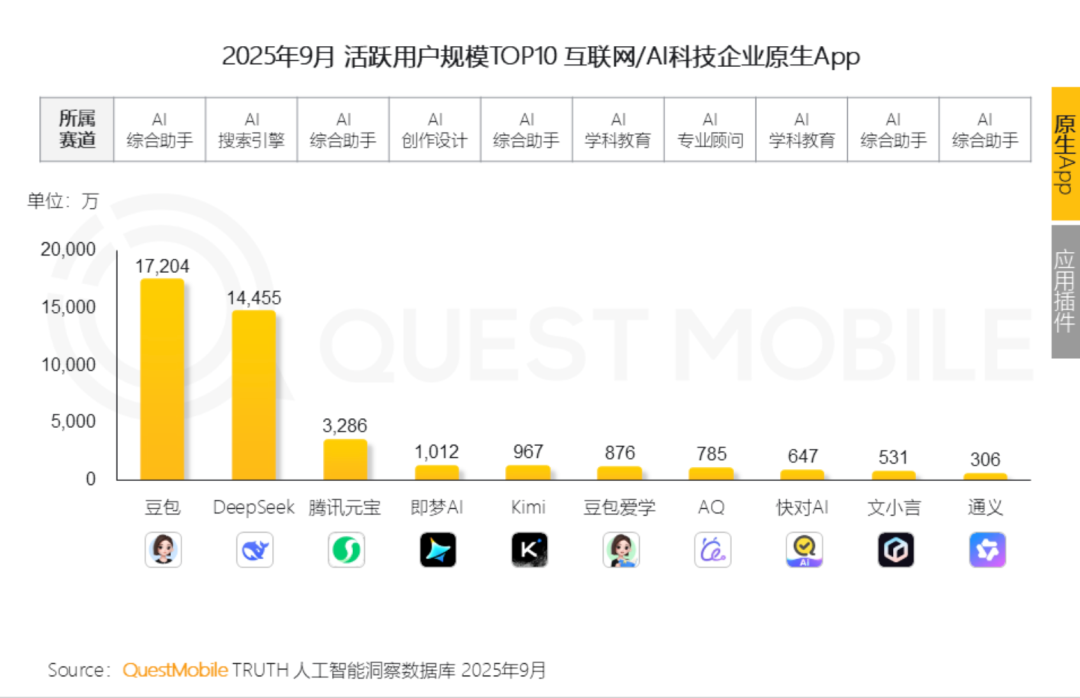
Source: QuestMobile
Data disclosed by QuestMobile shows that Yuanbao's monthly active users (MAU) stood at 42 million in March 2025 but dropped to 32.86 million by September, a decline of 21.76%. This is why Ma described Yuanbao a year ago as 'leaking.'
However, Tencent did not abandon Yuanbao. During the 2026 Spring Festival, it launched another 'marketing war' with a 'RMB 1 billion cash red packet' campaign. Ma commented, "Instead of spending heavily on TV advertising like our competitors, we're converting those funds into red packets, hoping to recreate the moment when WeChat red packets went viral during the Spring Festival Gala 11 years ago."

Source: Tencent
To enhance user engagement, Yuanbao leveraged Tencent's social strengths by introducing the AI social feature 'Yuanbao Pai.' Users can create or join 'Pai' group chats within Yuanbao, where the embedded Yuanbao AI interacts with users based on chat content.
Indeed, the Spring Festival red packet campaign injected massive traffic into the internet product. On February 18, 2026, Tencent revealed that following the conclusion of the RMB 1 billion campaign, Yuanbao's daily active users (DAU) exceeded 50 million, with MAU reaching 114 million.
However, Yuanbao did not become an 'evergreen' product like WeChat red packets. After the Spring Festival traffic peak, its user base plummeted again. During the fourth quarter of 2025 and full-year earnings call on March 18, 2026, Tencent President Martin Lau disclosed that Yuanbao's DAU stood at 18 million, a 64% drop from the Spring Festival period.
In summary, despite differing feature focuses and marketing strategies in early 2025 and early 2026, Yuanbao followed the same 'leaking' trajectory.
The root cause is that while heavy marketing raised Yuanbao's profile, its lack of a robust self-developed foundational model prevented it from cultivating differentiated competitiveness.
According to LatePost, due to the inability to train DeepSeek exclusively and the relatively weaker capabilities of Tencent's Hunyuan model, "the Yuanbao team couldn't validate some product ideas, and many desired features couldn't be implemented." To this day, Yuanbao's core functionality remains natural language conversation, lacking unique capabilities that distinguish it from competitors like Doubao, DeepSeek, and Kimi.
In contrast, Doubao does not rely on heavy marketing like Yuanbao but focuses on product innovation, continuously introducing new features based on user needs.
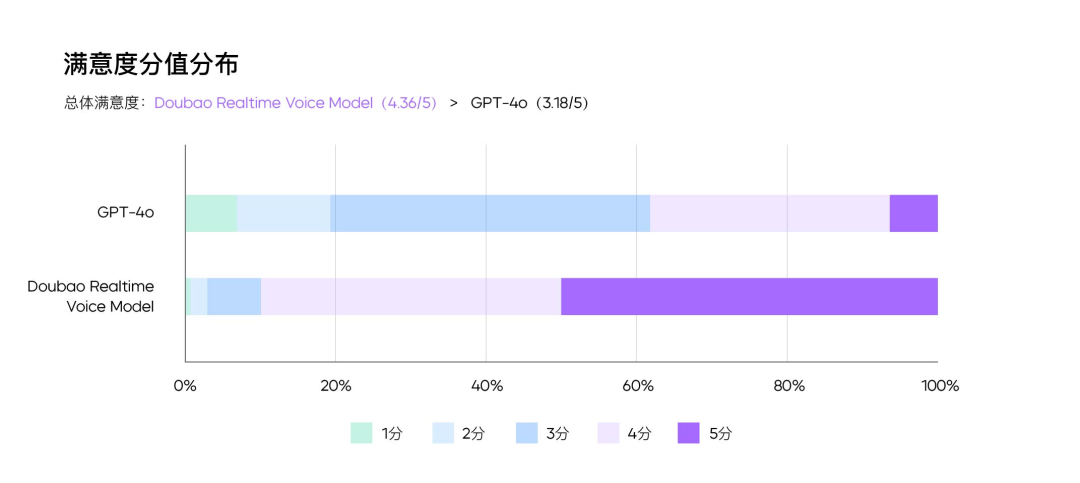
Source: Doubao
For example, as early as 2023, Doubao launched real-time voice calling, offering emotional companionship by collecting dialects and refining accent granularity. In 2024, with the maturation of multimodal technology, Doubao promptly integrated the Seedream 2.0 model to enhance its text-to-image capabilities.
Doubao's product strategy resembles that of Douyin, both adhering to the 'first principles' approach—optimizing features based on new technologies' characteristics and users' fundamental needs. This not only significantly improves user experience but also achieves a 'snowball effect' through low-cost viral spread. By the end of 2025, 36Kr reported that Doubao's DAU exceeded 100 million, making it ByteDance's least promoted product to reach this milestone.
02
With Ample Resources, Tencent Remains Calm
Although Yuanbao has yet to establish itself in the AI industry, Tencent has not panicked into pursuing entirely new AI ventures. Ma stated, "We can't just jump into others' territories because they're doing something. We've tried that before and mostly failed."
In contrast, during the early mobile internet era, Tencent exhibited strong crisis awareness, venturing into sectors like microblogging, mobile IM, and mobile operating systems. At the 2013 WE Conference, Ma declared, "In the mobile internet era, every entrepreneur should adopt a 'zero-based' mindset."
Facing the revolutionary wave of AI, Tencent has remained relatively calm. On one hand, AI technology is still in its exploratory phase and has not yet reached a critical 'tipping point.' On the other hand, Tencent's core business remains highly stable.
As the mobile internet flourished, smartphones gradually replaced PCs as the primary computing platform. Social products better suited to mobile connectivity, such as microblogging and mobile IM, rose to prominence, continuously eroding QQ's influence and threatening Tencent's social relationship chains.
While AI technology holds vast potential, it has not yet spawned entirely new social products. Consequently, Tencent's social relationship chains remain robust, and its commercial ecosystem—built around social media and extending into advertising, gaming, and payments—retains strong competitiveness.
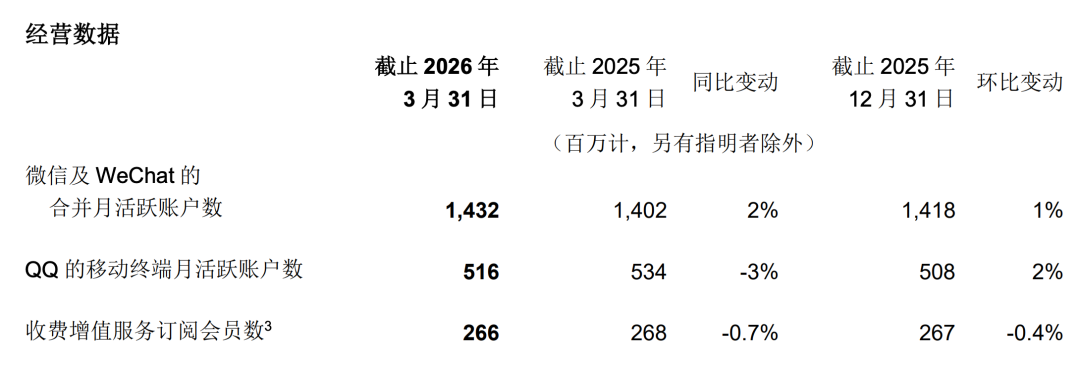
Source: Tencent's Q1 2026 Earnings Report
Financial data shows that as of the end of March 2026, the combined MAU of WeChat and WeChat Work reached 1.432 billion, up 2% year-over-year, nearly equivalent to the entire Chinese-speaking mobile internet population.
In the first quarter of 2026, Tencent's revenue from value-added services, marketing services, fintech and enterprise services, and other businesses reached RMB 96.11 billion, RMB 38.171 billion, RMB 59.885 billion, and RMB 2.292 billion, respectively, up 4%, 20%, 9%, and 103% year-over-year.
Overall, Tencent's revenue in the first quarter of 2026 reached RMB 196.458 billion, up 9% year-over-year; Non-IFRS net profit attributable to shareholders was RMB 67.905 billion, up 11% year-over-year; and gross margin stood at 57%, up 1 percentage point year-over-year.
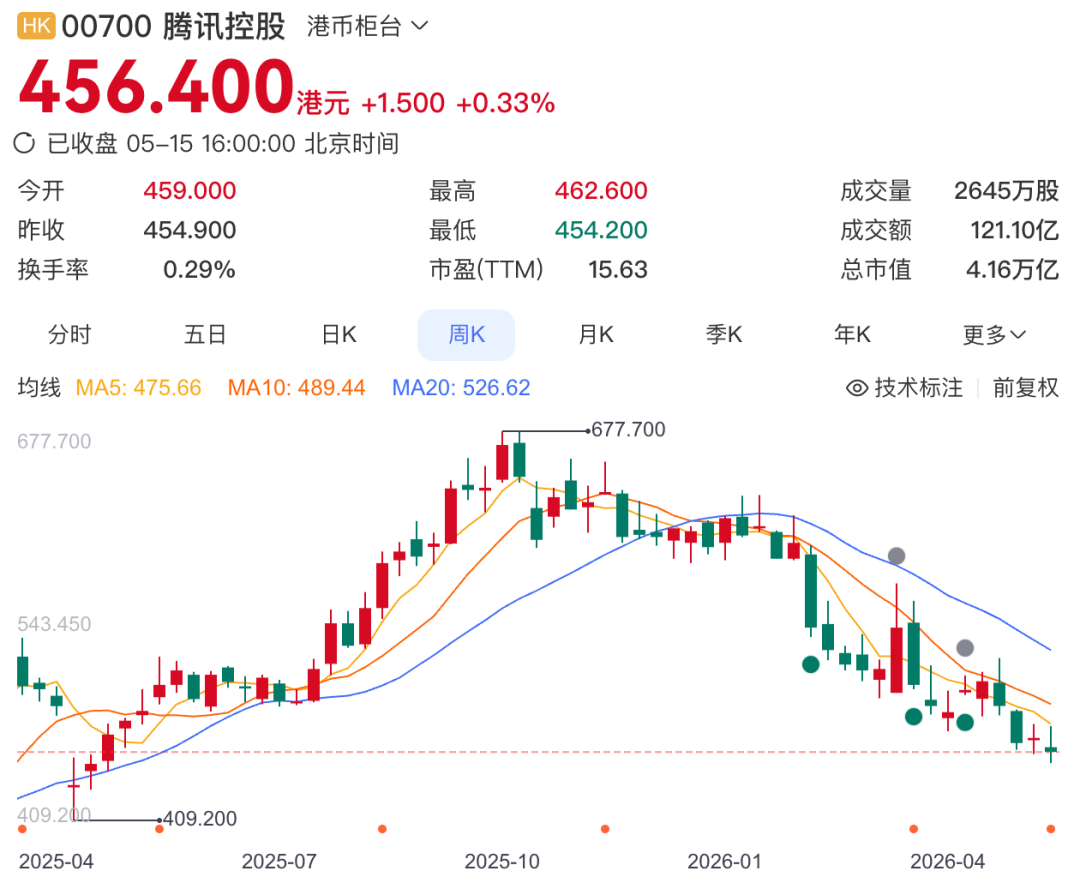
Source: Baidu
Curiously, despite steady performance growth, Tencent's stock price has been declining. As of May 15, Tencent's share price closed at HKD 456.4, down 32.65% from its peak of HKD 677.7 in late October 2025.
The reason is that capital markets focus not only on short-term performance but also on long-term growth potential. While Tencent's existing mature business lines deliver impressive results, its failure to outline a compelling growth trajectory in the AI era introduces significant uncertainty.
03
AI Monetization: Doubao Goes Left, Tencent Goes Right
Since 2026, with the maturation of AI agents, AI applications have entered deeper waters, prompting many tech companies to explore commercialization.
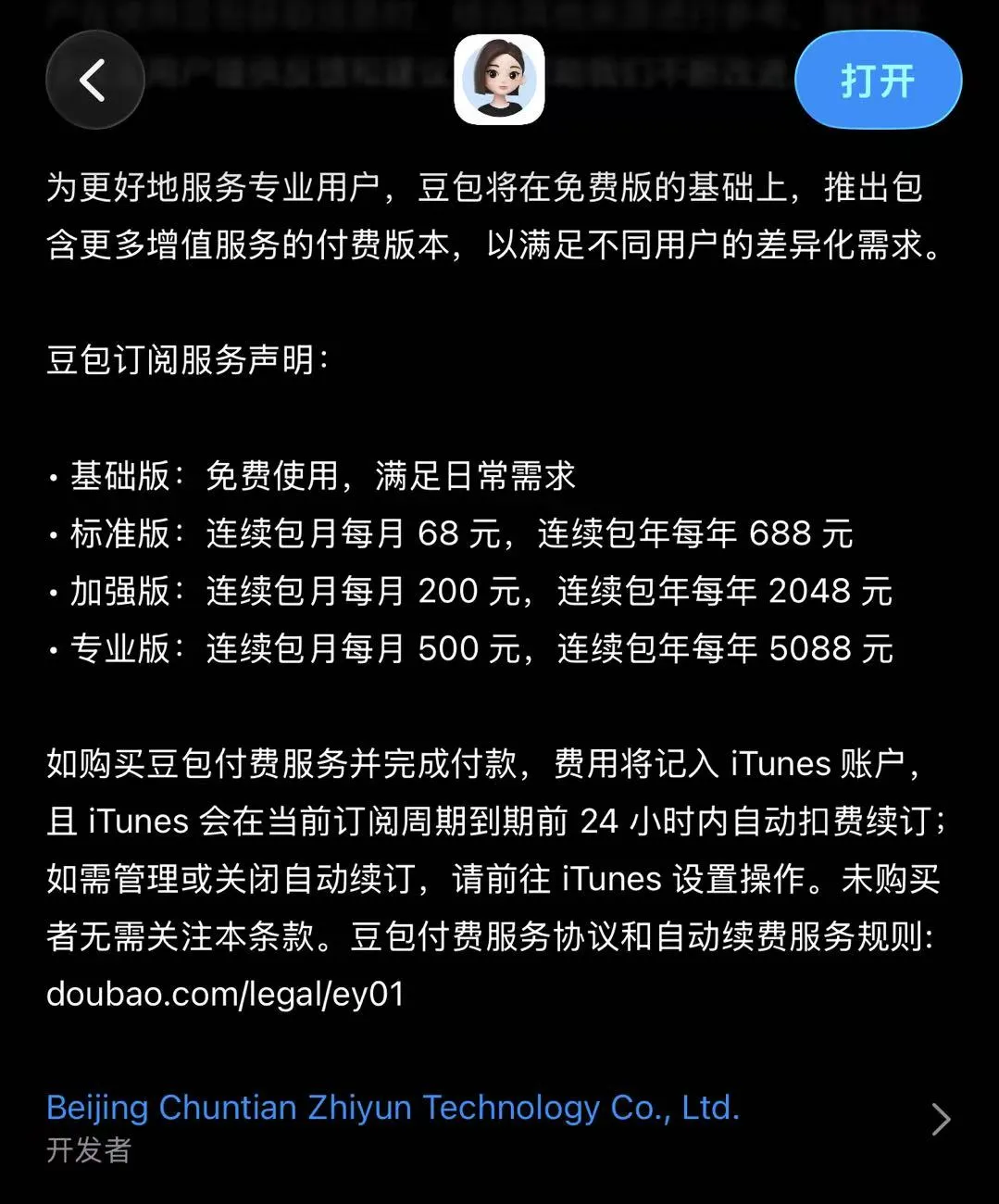
Source: Doubao
For instance, in early May, Doubao announced three 'subscription plans' on the App Store: Standard at RMB 68/month, Enhanced at RMB 200/month, and Professional at RMB 500/month (with continuous monthly billing). These plans focus on complex tasks and productivity scenarios, including PPT generation, data analysis, and video production.
Doubao's approach is not unique. Leading AI products like ChatGPT, Claude, and Gemini have also introduced multi-tier subscription models for consumer users. After subscribing, users can unlock advanced reasoning models, in-depth research, code generation, data analysis, and other productivity-enhancing features.
However, Tencent does not endorse this monetization path. During the first quarter of 2026 earnings call, Lau stated, "In the domestic market, the subscription-based model for AI products targeting consumer users faces significant challenges. The penetration rate of paying users remains in the single digits, making it difficult to replicate the large-scale subscription model seen overseas."
Indeed, even OpenAI struggles to achieve profitability through subscriptions. Official data shows that as of February 2026, ChatGPT had over 50 million individual subscribers and over 9 million paying enterprises.
Yet, despite its massive paying user base, ChatGPT remains mired in losses. OpenAI's internal financial projections indicate an expected loss of USD 14 billion in 2026, with cumulative losses from 2023 to 2028 reaching USD 44 billion. Profitability is not expected until 2029 at the earliest.
Given the difficulties of directly charging users, Tencent has chosen a different path—leveraging WeChat to aggressively develop agents.
Source: The Information
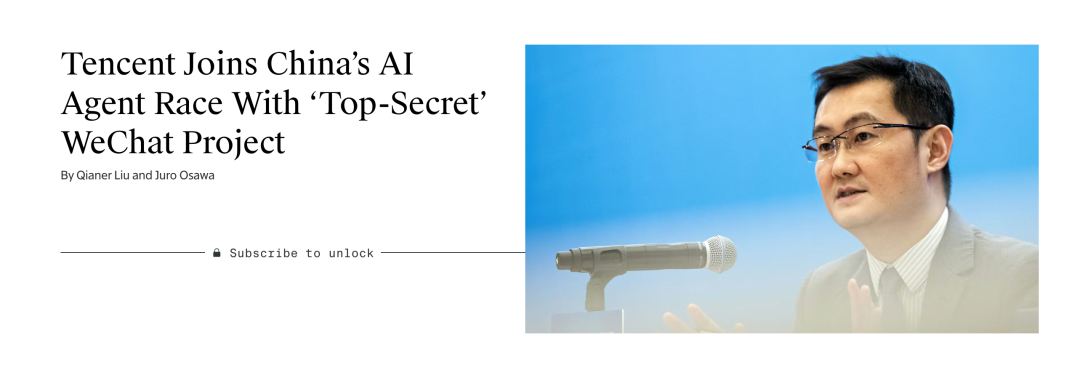
According to The Information, the WeChat agent is slated to launch in the third quarter of 2026, connecting millions of mini-programs within the WeChat ecosystem to comprehensively serve billions of WeChat users' needs, such as hailing rides, ordering food delivery, and online shopping.
Ma commented, "WeChat mini-programs have long adhered to a decentralized approach, with tens of thousands of service providers relying on their own channels for promotion rather than centralized platform traffic. The future WeChat agent will continue this philosophy, balancing centralized capabilities with decentralized distribution to prevent service providers from being reduced to mere channels."
Clearly, the WeChat agent will carry on Tencent's core strategy from the mobile internet era: it will not directly charge users but instead prioritize building an open ecosystem platform. By attracting users and developers with free agent capabilities, it aims to monetize through service commissions, fees, and ad distribution once the ecosystem matures.
While WeChat boasts a vast mini-program ecosystem with numerous developers and merchants providing services—giving it a natural advantage in agents—it's important to note that agents differ from traditional internet businesses. Rapid user growth does not reduce marginal costs but instead drives them skyrocketing due to surging demand.
Typical examples include Manus, with a single-task operational cost of approximately $2. As user numbers rapidly expand, both computing power and operational expenses rise simultaneously, making it difficult to achieve a commercial closed loop. Ultimately, it had to choose to be acquired by Meta.
Currently, to provide strong support for the large-scale deployment of WeChat Agent, Tencent is actively acquiring computing power. In the first quarter of 2026, Tencent invested 22.542 billion yuan in R&D, a year-on
When investments in AI-related new businesses are excluded from the equation, Tencent's Non-IFRS operating profit growth rate for the first quarter of 2026 would experience a notable increase, shifting from 9% to 17%. In essence, the investments in AI have absorbed nearly half of Tencent's profit growth momentum. With the deployment of WeChat Agent and the consequent surge in demand for computing power, Tencent's profit margins are likely to face further compression.
The true challenge confronting Tencent may not revolve around the successful deployment of WeChat Agent. Rather, it lies in how to construct a sustainable business model in the face of a vast user base and escalating computing costs.
Should cash flow fail to turn positive, even if WeChat Agent evolves into a second "Mini Program" phenomenon, Tencent will find it arduous to secure a prominent position in the AI era.
Interactive Topic
Which platform do you think holds more promise: Yuanbao or Doubao? And what are your thoughts on the potential of WeChat Agent?
This article represents original content from Shijiao Farsight. Any unauthorized reproduction is strictly prohibited.
-
![]()
Ford and Geely Forge New Joint Venture in Spain, Sidestepping Changan and JMC
-
![]()
199 RMB! Godox's First Camera Review: Subpar Photography, Transparent Viewfinder Frame is the Highlight
-
![]()
AI Smartphones: A Modern-Day 'Emperor's New Clothes'?
-
![]()
Yonyou Network: A Company Selling 'Transformation' but Struggling in Its Own Transition
-
![]()
Focus | CCCC’s Takeover of Greentown Comes to Fruition: Why Did the 11-Year ‘Control Without Authority’ Era End?
-
![]()
Final Verdict: The 2026 China Auto Forum Shines with Unique Characteristics at a Pivotal Moment
-
![]()
Tencent Maintains Matrix Approach, Alibaba Merges Entry Points: Tech Titans Initiate AI Agent Consolidation
-
![]()
Geely Secures Portion of Ford’s Spanish Production Capacity