No More Wu Zhao: DingTalk Enters the 'Chen Yusen Era'
 06/11 2026
 459
459
By Duole
On June 11, Alibaba announced a management adjustment at DingTalk, with Chen Hang stepping down as CEO and Chen Yusen, born in 1992, taking over.
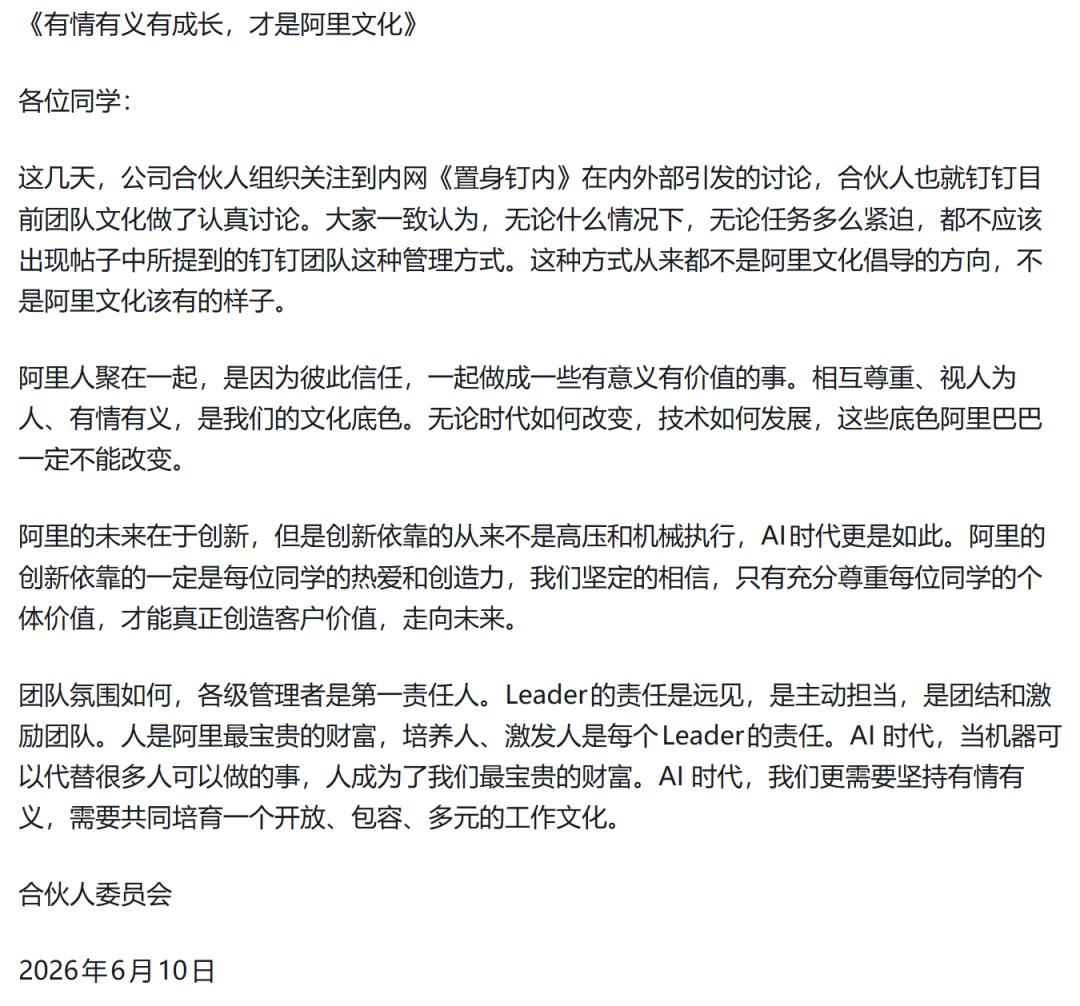
A day earlier, Alibaba's Partnership Committee had just released a statement on the company's internal network, clearly addressing controversies surrounding DingTalk's recent management style. The two events, occurring in quick succession, were naturally interpreted by outsiders as a form of organizational accountability.
However, focusing solely on this layer would underestimate the significance of this leadership change.
DingTalk is no longer the enterprise communication tool that emerged from the ruins of Laiwang a decade ago. It carries too many of Alibaba's expectations and too much historical baggage. It is both a collaboration platform used by over ten million enterprise organizations and Alibaba's closest entry point to real-world work scenarios in enterprise-level AI applications. The problem is that enterprise software in the AI era can no longer just digitize processes, approvals, and organizational relationships. It must answer a more difficult question: When models can understand tasks, invoke tools, and execute automatically, what kind of software do enterprises still need?
This is where Chen Yusen's appointment truly becomes interesting.
He is not a traditional Alibaba veteran, nor is he a manager who rose through the ranks in sales, operations, or group functions. His background resembles that of a tech entrepreneur: rising to fame at a young age, starting out in cybersecurity competitions, founding Changting Technology at 22, and having the company acquired by Alibaba Cloud a few years later. Later, he worked on MuleRun within Alibaba Cloud, betting on the creation, distribution, and trading of AI Agents.
In other words, Alibaba is not just handing DingTalk over to a young CEO this time, but to someone who believes that software forms will be redefined by Agents.
01 Growth Narrative Clashes with Cultural Backlash
Before this personnel adjustment, DingTalk experienced a rare public controversy.
A lengthy post by a former DingTalk employee sparked internal and external discussions, pointing to issues with internal management styles, work pace, and team culture. Subsequently, Alibaba's Partnership Committee issued a statement on the internal network, emphasizing that mutual respect, treating people as people, and loyalty are the cultural foundations of Alibaba. They also clearly stated that innovation cannot rely on high pressure and mechanical execution, especially in the AI era.
The importance of this statement lies in bringing to the surface a long-standing contradiction within tech companies: In the previous generation of internet growth logic, high intensity, strong execution, and ambitious goals were seen as part of an organization's fighting strength. For a product to go from 0 to 1, to break through, to seize a window of opportunity, it often relied on founder-like obsession and charging ahead. DingTalk grew up in this state in its early years.
Chen Hang, also known as Wu Zhao, is the creator of DingTalk. He embodies the typical early Alibaba product manager temperament (temperament): unyielding, results-oriented, willing to start over, and possessing an almost instinctive obsession with the product.
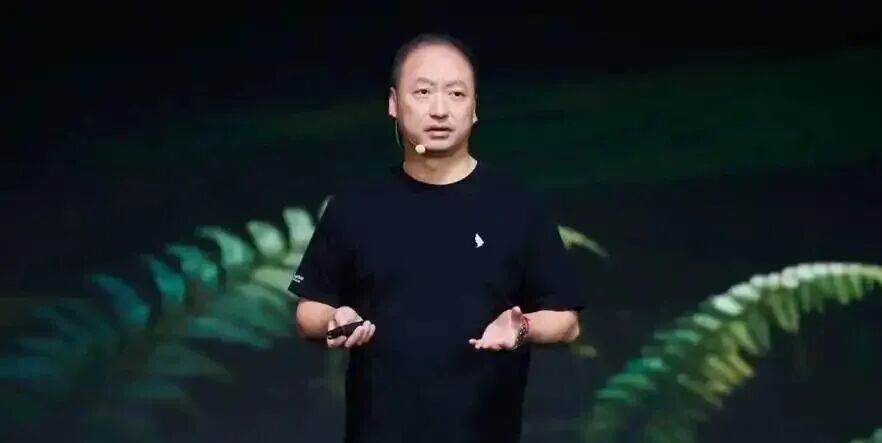
Publicly available information shows that he worked his way from Taobao Search, Etao, and Laiwang to DingTalk. After Laiwang failed, the team shifted to enterprise social networking and eventually created DingTalk. This story is a classic in China's internet narrative: losing in the C-end battle, going to the B-end to fight anew; difficult internal innovation in large companies, using small teams, strong will, and strong execution to force out a new product.
In its early years, DingTalk indeed won with this approach.
It used a free strategy to penetrate small and medium-sized enterprises, capturing managerial needs with features like clock-in, message reachability, approvals, and contact lists. Later, it became an important entry point for remote work and online collaboration during the pandemic. It was not the most gentle office software, but it was rigid enough, sink ( sink - penetrated deeply enough), and understood the management realities of Chinese enterprises well enough. For many small and medium-sized enterprises, DingTalk was not just a collaboration tool but the first stop for digital management.
But the problem is that just because a model can bring a product to the mountainside doesn't mean it can take it over the next mountain.
Over the past few years, DingTalk has experienced several strategic shifts. First, it moved from enterprise communication to collaborative office and low-code, then to cloud-DingTalk integration, then to independent commercialization, and finally to AI transformation. Behind each shift was the same anxiety: DingTalk had a massive user base but always needed to prove that it was not just a free tool or an office entry point but a platform capable of generating sustained commercial and strategic value.

Wu Zhao's return in 2025 was essentially Alibaba's attempt to use the founder's product energy to pull DingTalk back into the AI battlefield. At that time, Alibaba was making AI one of its most important strategic directions, with Kuake on the C-end and needing a truly process-oriented product on the B-end. DingTalk was naturally the most suitable candidate.
Thus, DingTalk began rapidly launching AI products, from AI spreadsheets and AI assistants to the later Wukong Agent platform. In public reports, DingTalk described itself as the work style of the AI era, attempting to make AI not just about writing meeting minutes or polishing documents but about entering enterprises' real workflows, connecting accounts, permissions, data, and application systems to ultimately complete tasks.
This path was correct, but the approach was flawed.
AI-ifying enterprise software is different from creating a mobile office tool a decade ago. A decade ago, enterprises had not yet completed digitization, and simply moving people, messages, approvals, and attendance online was already a huge step forward. Today's challenge has changed: Enterprises already have systems, data, processes, and many employees are overwhelmed by various collaboration tools. To unleash productivity, AI doesn't need to invent more work entry points but to reduce unnecessary ones and lower the degree to which people are dominated by systems.
If past management tools were about breaking down human behavior into fine-grained actions, recording, quantifying, and tracking them, then good products in the AI era should free people from repetitive labor. A team that loudly proclaims its goal of having machines do work for humans but still relies primarily on human overwork to drive innovation internally creates a certain paradox.
Perhaps this is where the external controversies over DingTalk truly stung Alibaba.
02 The Geek Succession: Why Is He Stepping into the Spotlight?
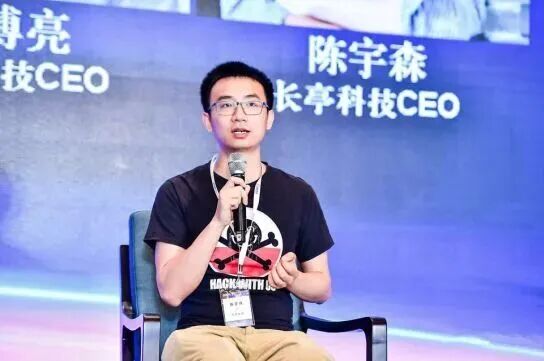
After Chen Yusen's appointment, the easiest labels for outsiders to grasp are his birth year of 1992, Alibaba's youngest business unit CEO, tech geek, and serial entrepreneur.
Chen Yusen's first significant professional experience was with Changting Technology. Publicly available information shows that he founded the cybersecurity company Changting Technology after graduating from Zhejiang University at 22. The founding team had a strong background in CTF and white-hat hacking, later growing into a representative new force in China's cybersecurity field. In 2019, Alibaba Cloud proposed to fully acquire Changting Technology, with the brand and team maintaining independent operations after the acquisition.
The skills honed through a security startup are different from those of an ordinary internet product manager.
C-end AI products can initially pursue impressiveness, allowing for do-overs, joking about hallucinations, and gradual rollouts of experiences. But enterprise-level AI is different. It deals with customer data, approval permissions, financial processes, sales leads, contract documents, and organizational knowledge. Once AI moves from answering questions to executing tasks, security, permissions, auditing, and stability are no longer ancillary functions but the product itself.
This is the first layer of fit in Chen Yusen's background: He knows that enterprise clients won't pay for a chatty toy; what they truly need is a system capable of stably completing tasks in a controlled environment.
The second layer of fit is his experience in ToB commercialization.
Changting Technology was not just a technical project. Publicly available information shows that the company went through the complete process of financing, productization, sales system construction, and acquisition by a cloud vendor. Cybersecurity is a typical ToB industry, with slow customer decision-making, long delivery chains, and product value often verified through real attacks, defenses, and long-term service. A young founder's ability to take this company to acquisition by Alibaba Cloud indicates that he has at least experienced the transition from technical advantage to commercial closed loop .
This is precisely what DingTalk needs most now.
In the past, DingTalk had user scale, entry points, and organizational relationship chains, but its commercial value always required repeated proof. The biggest problem with enterprise collaboration products is that users open them daily but aren't necessarily willing to pay for every feature. The more it resembles infrastructure, the more it is taken for granted; the more it enters enterprises through management needs, the more it is labeled as tool-like and monitoring by employees. AI provides DingTalk with new monetization possibilities, but only if it can truly help enterprises complete tasks that previously required humans.
The third layer of fit comes from MuleRun.
Before taking over DingTalk, Chen Yusen worked on the AI Agent product MuleRun within Alibaba Cloud. According to public interviews, MuleRun's core belief is that as large models' programming capabilities enhance and Vibe Coding lowers development barriers, more non-technical personnel can encapsulate their work knowledge and processes into Agents.
Chen Yusen values not creating another chatbot but combining personal experience, offline knowledge, SOPs, and model capabilities to make Agents a new type of productivity unit that can be created, distributed, and used.
Chen Yusen repeatedly emphasizes lowering barriers at MuleRun. He believes that low-code is still too difficult for the average person and that the truly natural way is to describe needs and work processes in natural language.
He also proposes that future trading markets may not be shelf-like but could be triggered in conversations. Users would no longer browse app stores for tools but state the problems they need to solve, with the system matching appropriate Agents, skills, and processes underneath.
This is especially crucial for DingTalk.
DingTalk has accumulated a vast number of features over the past decade, but feature bloat itself can become a burden. A common dilemma for enterprise software is that the more it tries to satisfy customers, the more complex the interface becomes; the more it tries to carry processes, the more bloated the entry points become; the more it tries to be a platform, the more lost users feel about where to start. Simply adding an AI button to all these features doesn't change the essence. The real change is when users no longer need to understand the software's structure but when the software understands the user's tasks.
This is why Chen Yusen is more suitable for this position than many traditional managers.
The biggest difference from the Wu Zhao era is that Chen Hang built DingTalk into a digital tool for enterprise managers, while Chen Yusen faces the question of whether he can turn DingTalk into an intelligent execution system within enterprises.
03 DingTalk at a Crossroads
Today, DingTalk, now in Chen Yusen's hands, stands at a delicate crossroads.
It still holds a massive user base and deep penetration in enterprise services but faces challenges in commercialization, product bloat, and sustained pressure from competitors like Feishu. More fundamentally, if it remains just a collaborative office software, DingTalk's ceiling is already clearly visible.
Chen Yusen's takeover signals that DingTalk will undergo a thorough 'AI-native' restructuring. The future DingTalk is likely to transform from a hub of traffic into an incubation and trading ground for Agents. Business experts who normally approve, report, and hold meetings on DingTalk will be armed with low-barrier development tools to become creators of AI mules.
This resembles a reshaping of organizational relationships. Alibaba's recent forays into novel small-team organizations like Token Hub and Token Foundry already hint at this trend.

Chen Yusen's MuleRun is itself a product of this organizational dividend. These small-scale, high-density talent, fully committed new Entrepreneurial Unit (startup units) are blooming throughout Alibaba. DingTalk's leadership change means Alibaba is extending this soil of 'loyalty, growth, and individual creativity' from internal experimental fields to DingTalk's vast commercial ecosystem.
Chen Yusen's mission will not just be about refining the product. He needs to quickly heal old wounds, smooth over the cultural rifts torn open by the 'Inside DingTalk' article, and use his geek purity to counteract the pragmatic internal competition that once prevailed at DingTalk.
He must also prove that his theories about Agent trading platforms can achieve product-market fit in reality. On this path, he faces not just external competition but also his own transformation in identity.
Alibaba has given him trust but also a battlefield that will offer little time to catch his breath.
The DingTalk of the Chen Yusen era needs to blaze a new trail in uncharted territory.
-
![]()
Honda CEO Faces Vote of No Confidence Due to Alleged Neglect of China Market
-
![]()
The Flip Side of 618: New Arrivals Steal the Spotlight as Major Sales Event Hits Midpoint
-
![]()
Wang Chuanfu's Goal of Becoming the World's No.1 Relies on a 'Production Schedule'
-
![]()
Jensen Huang: The Embodiment of a Bull Market
-
![]()
Joint Interview with Five Major E-commerce Platforms: Ending Involution for a Healthier 618 Shopping Environment
-
![]()
Does It Become More User-Friendly Over Time? The Rising Product Prowess of Hunyuan Hy3 and Tencent Yuanbao's Quiet Resurgence
-
![]()
Gross Profit Margin, Supplier Payments, and Dividends Undergo 'Abrupt Shifts': Indicators of Tianbo Intelligence's IPO Performance Manipulation", "Tianbo Intelligence, gross profit margin, financial i
-
Top Ten in May Sales Rankings Feature No Fuel Vehicles: Has China’s Auto Market Undergone a Complete Transformation?