Jensen Huang: The Embodiment of a Bull Market
 06/11 2026
 547
547
Author | Wuta
Editor | Li Xiaotian
"NVIDIA wouldn't be where it is today without PC gaming, eSports internet cafes, and the electronic sports industry,"
Huang remarked during his visit to South Korea at the end of October last year.
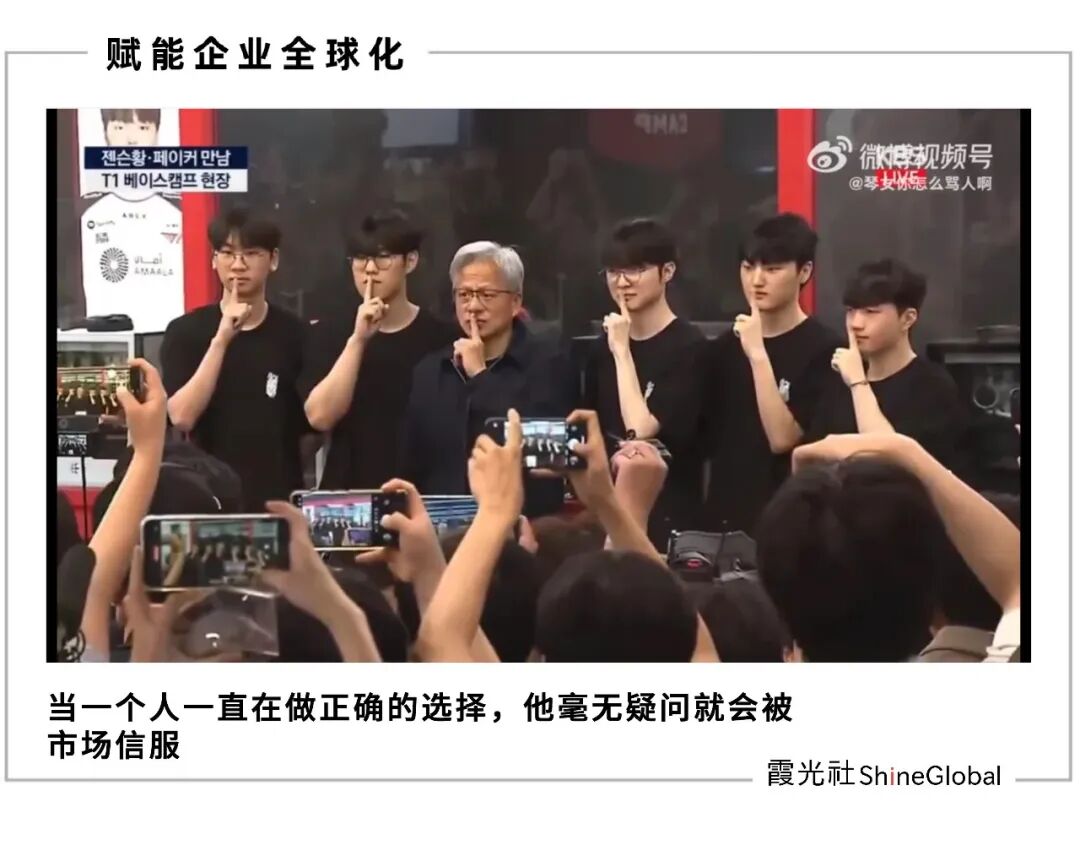
Now, over half a year later, he has embarked on another visit to South Korea, with his first stop being the T1 Base Camp internet cafe in Hongdae.
T1, the team that has clinched three consecutive championships in the League of Legends World Championship (also known as the S-Series), along with its star player Faker, undoubtedly symbolizes South Korean eSports.
South Korea's reputation as an "eSports powerhouse" has long been firmly established in the public's mind.
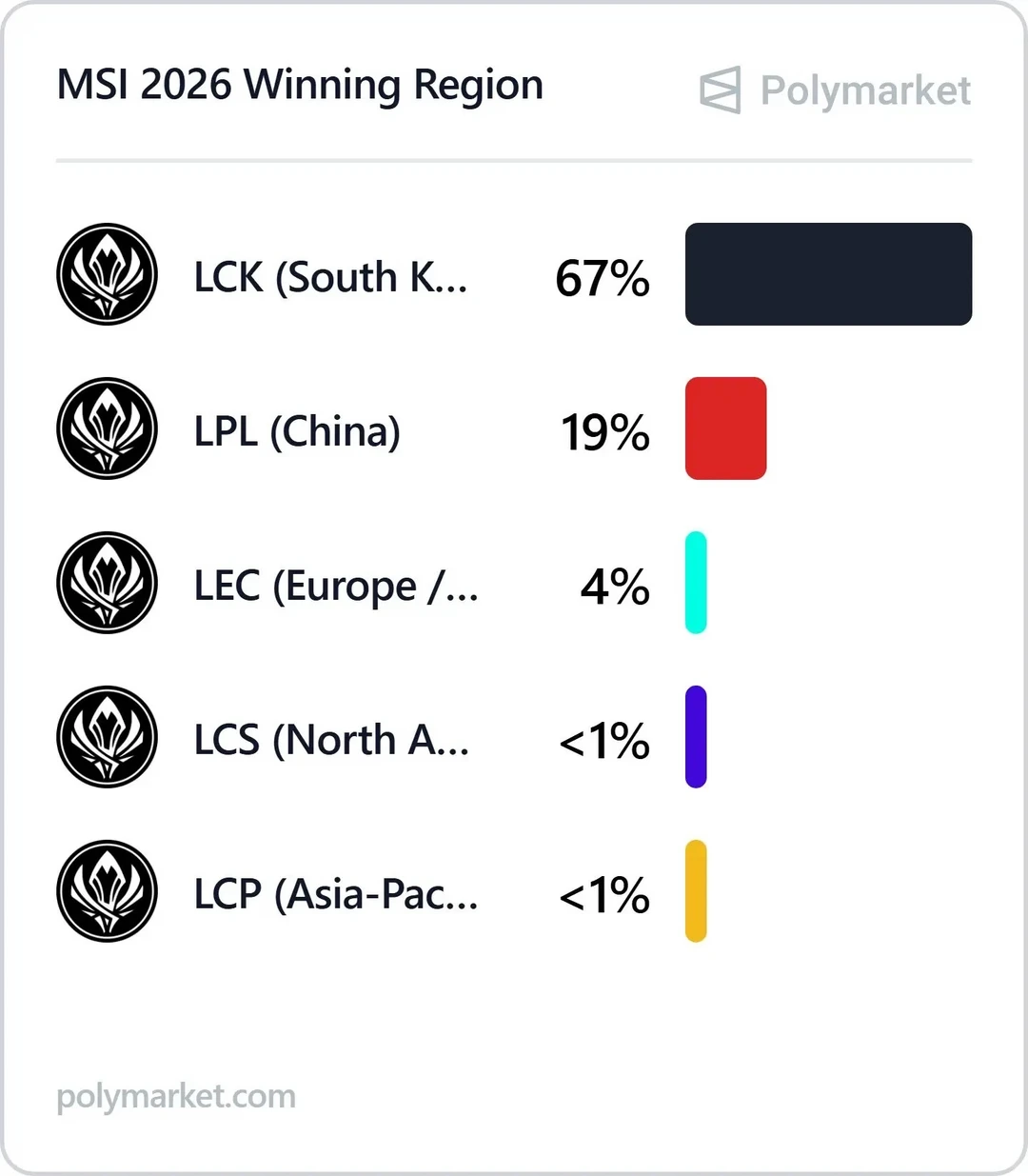
The prediction market platform Polymarket has shared a forecast regarding the region of the League of Legends Mid-Season Invitational (MSI) champion. As of now, 69% of viewers believe that a team from the South Korean region (LCK) will emerge victorious in the MSI championship.
Although some joked that "Faker seems a bit out of place among a group of business tycoons," a closer examination of Huang's itinerary in South Korea and even over the past three months reveals a rather "down-to-earth" approach.
In Seoul, after meeting Faker, Huang visited a barbecue restaurant just 400 meters away from the T1 Base Camp. Not content with just grilled pork belly and soju, the group then moved on to a BBQ outlet for some fried chicken and draft beer.
The following day, Huang and Yoo Jae-suk recorded an episode of tvN's variety talk show, "You Quiz on the Block."
On the third day, he threw the first pitch at Jamsil Baseball Stadium for the Doosan Bears, dined with SK Group executives at Kkanbu Fried Chicken, and distributed fried chicken and HBM Chips honey banana-flavored potato chips (a snack collaboration between SK Hynix and 7-Eleven) to onlookers.
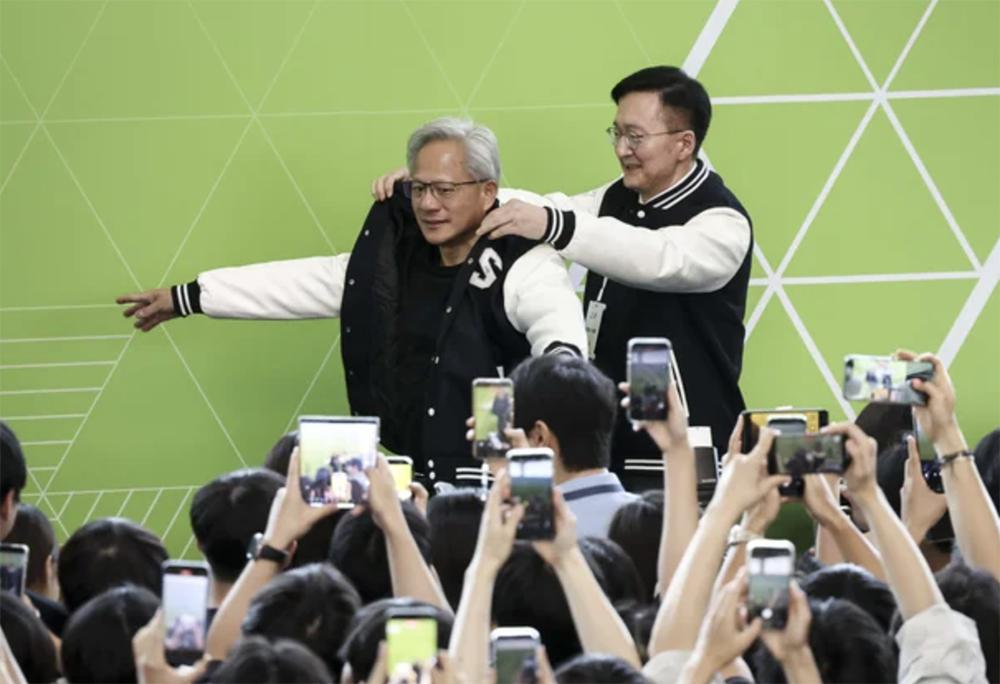
Image Source: EToday
What about his activities before this trip?
After the Shenzhen annual meeting, he visited Bahuari Beef Hot Pot, savored fried sauce noodles and douzhi (a fermented bean drink) in Nanluoguxiang, enjoyed pepper buns and grilled corn at Raohe Night Market in Taipei, and even left his mark by signing "Jensen was here" in a restroom.
While countless people aspire to emulate Jensen Huang's style, this billionaire, with a net worth of $185 billion, is sealing billion-dollar deals while enjoying life, setting a trend that Asians simply cannot overlook.

The Magic of Jensen Huang
"If you have lunch with Bill, chances are you'll be eating hamburgers. Someone always goes to McDonald's to buy him one," Joe Cerrell, managing director of the Gates Foundation, once revealed in an interview with The Telegraph.
In today's society, distance doesn't necessarily breed beauty, but it certainly sparks curiosity.
What do the wealthiest business tycoons like to eat?
This seemingly trivial question often conceals the public's voyeuristic tendencies, curiosity, admiration for the powerful, compensation for feelings of inferiority, social comparison, and even a desire to imitate. It has become a way for the public to explore the lesser-known aspects of the world's top billionaires.
Jensen Huang, on the other hand, openly displays his "backstage" behavior on the "front stage." His pursuit of local cuisine and culture exudes a sense of closeness to the people, which can be seen as a genuine emotional connection. And this emotional connection is the best lubricant for NVIDIA's global business operations.
During an event at Seoul National University, Huang once remarked, "Nowadays, anything with a 'K,' like K-Pop and Korean dramas, is incredibly popular."
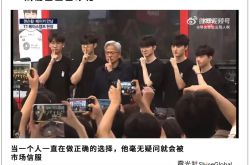
Whether sincere or not, this recognition of K-culture persisted throughout his visit to South Korea: he imitated Faker's poses for photos, praised fried chicken, and complimented the girl group BLACKPINK and their song "Golden."
Even in a conversation with Seoul National University students, he said, "When I left home this morning, I was still Jensen. Now I'm K-Jensen. Next time you see me, make sure to call me K-Jensen."
Such emotional and cultural interactions between billionaires and the public seem rare in the past. When mentioning Jack Ma, one might recall his "shocking" statement to Sa Beining, "I don't like money," and Sa Beining's uncontrollable facial expressions at the time.
But now, Huang is enriching the "narrative of the rich" with a sense of "down-to-earthness."
He can be an uncle enjoying noodles by the street or a business tycoon whose words carry immense weight.
Beyond the 60 New Taiwan dollar pepper buns, there was his declaration at Computex in Taipei, "the next trillion-dollar company, ladies and gentlemen," which was followed by a surge in the stock prices of the optical communication chain industry. Among them, Marvell's stock price soared by 32.52% at the opening, with its market value skyrocketing from $192 billion to $254 billion.
Beyond eSports, fried chicken, and beer, there were intensive meetings with entrepreneurs such as Choi Tae-won, chairman of SK Hynix, South Korea's memory chip giant; Koo Kwang-mo, chairman of LG Group; Lee Hae-jin, chairman of search platform Naver; Chang Byung-gyu, chairman of game company KRAFTON (Pubg Corporation); and Kim Taek-jin, CEO of NCSOFT (abbreviated as NC). After Huang's statement, "We are just getting started. The shortage of computing power and advanced packaging will last for years," the KOSPI index narrowed its losses by nearly 4% in a stock market tug-of-war.
More importantly, there is the realization of authenticity. After the Hongdae barbecue dinner, when asked by the media, Choi Tae-won replied that they didn't discuss business but merely chatted about how "pork belly is delicious."
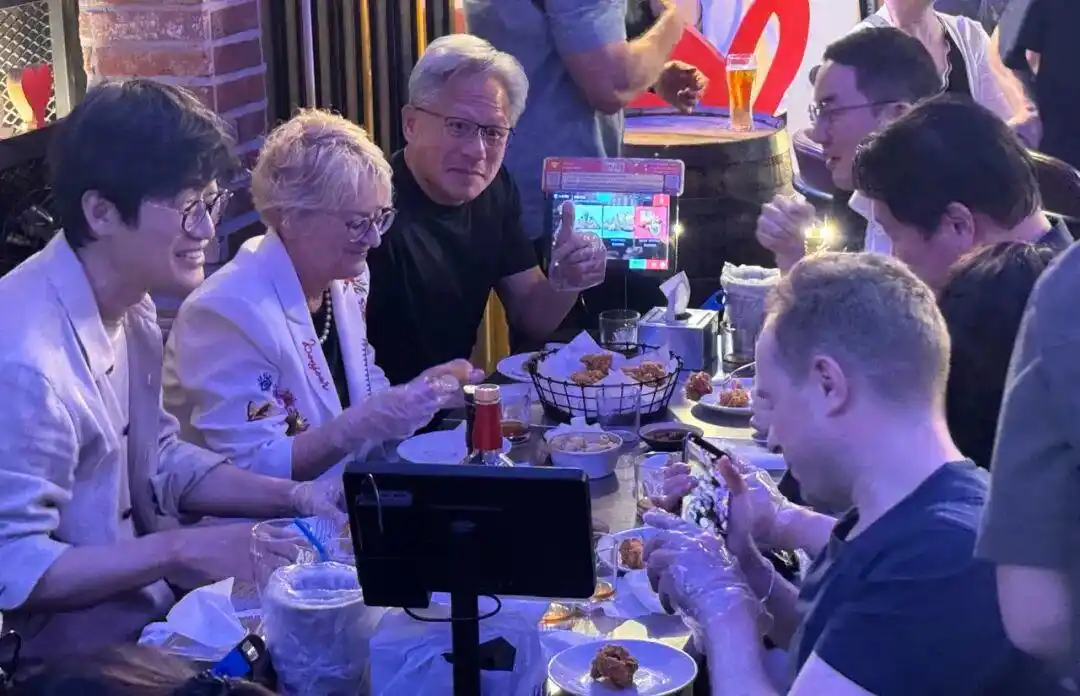
Jensen Huang's style has become a popular check-in spot.
A grounded personality allows Jensen Huang's sense of authenticity to transcend stereotypical frameworks, leading to his judgments and evaluations receiving unexpected recognition from the public and the market.
People love stories, and the market is willing to believe in myths.

Why Do People Trust Jensen Huang So Much?
When discussing NVIDIA's turning point, most people would likely point to 2006.
That year, AMD acquired ATI for a staggering $5.4 billion. However, due to the need to integrate the product lines and future visions of the two companies, which required significant human and material resources, AMD's market share in graphics cards continued to decline, with the gap between AMD and NVIDIA widening from 50-50 to 80-20. NVIDIA quickly responded to Microsoft's move to introduce a unified rendering architecture by launching the G80 series GeForce 8800 GTX graphics card and the parallel computing platform CUDA (Compute Unified Device Architecture).
The number "80-20" often represents an unstoppable unilateral trend.
From 2007 to 2014, these seven years marked NVIDIA's most rapid "ascension period." Through continuous technological innovation, product iteration, and graphics card architecture upgrades, NVIDIA's leadership in the gaming graphics card market took shape, and the landscape of high-performance computing began to change.
"Making personal computers a consumer device capable of enjoying games and multimedia." This original intention of NVIDIA's founding seemed to usher in widespread pursuit and realization during that stage.
From 2004 to 2014, these ten years coincided with the golden age of PC gaming.
2004 saw the release of World of Warcraft.
2005 marked the launch of Dungeon & Fighter.
2007 saw the release of CrossFire (abbreviated as CF).
2009 marked the introduction of League of Legends.
2012 saw the release of Counter-Strike: Global Offensive (CS:GO).
According to statistics from the Korea Creative Content Agency, there were as many as 22,548 internet cafes in South Korea in 2001.
Twelve years ago, when a reporter from e-Sports visited South Korea, they specifically entered an internet cafe to check the local computer configurations.
The result was, "Although not luxurious, it's still quite decent"—graphics card + 8GB RAM + 27-inch monitor (Intel Core i5-3570 released by Intel in 2012). For 1,000 won (approximately 6 yuan), one could stay in a Seoul internet cafe for an hour and enjoy genuine game CDs.
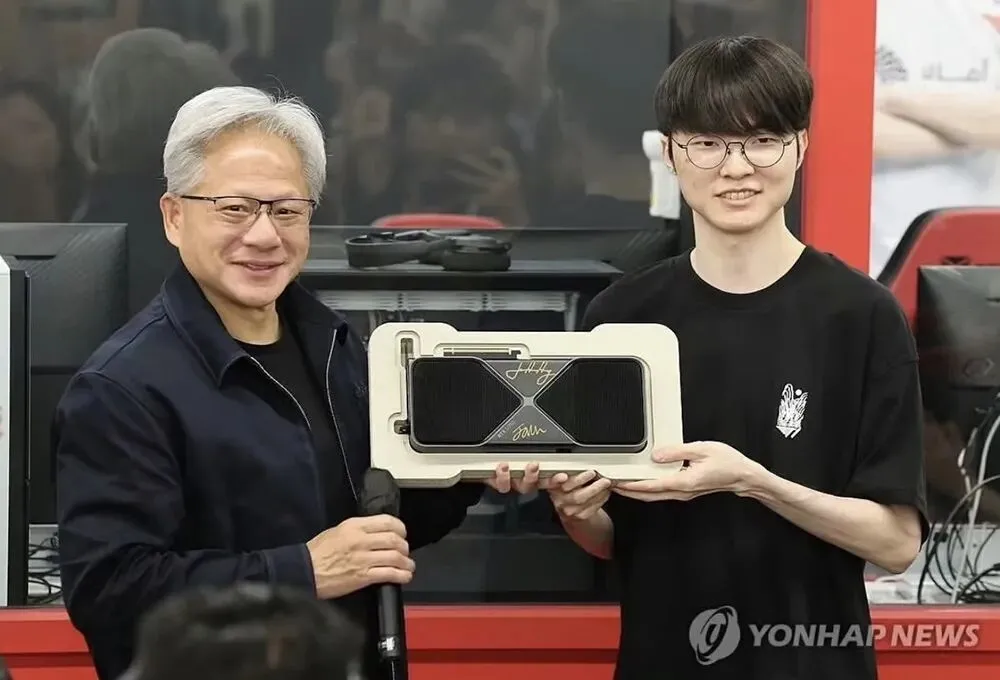
Jensen Huang takes a photo with Faker. Image Source: YONHAP NEWS
Given the influence of eSports and NVIDIA's historical path, it indeed makes sense for Huang to choose T1 Base Camp as his first stop. The reason why Huang is trusted by the public seems to lie here: besides aligning with the development of gaming, NVIDIA seems to have seized every trend of the times.
When a person consistently makes the right choices, he will undoubtedly gain the market's confidence.
In 2012, AlexNet made a stunning debut at the third ImageNet competition with a 15.3% error rate in machine automatic image recognition. When studying this groundbreaking progress, the CNN (Convolutional Neural Network) network design method and the NVIDIA GPUs that powered its massive computational resources became the turning point for NVIDIA's involvement in AI research. (Incidentally, among the three creators of AlexNet is Ilya Sutskever, co-founder of OpenAI.)
In 2015, NVIDIA launched the most powerful processor for training deep neural networks, the NVIDIA GeForce GTX TITAN X. From 2016 to 2020, the Pascal, Volta, Turing, and Ampere architectures were successively introduced. NVIDIA not only became the algorithmic foundation for internet companies but also a driver of artificial intelligence.
In the past few years, Huang has continuously created new concepts. Sovereign AI, Token Economy, AI Factory...
Behind these concepts are NVIDIA's repeated experiences and successful track records with trends, giving the market a prerequisite sense of smell and visionary imagination. Or rather, Huang and NVIDIA are using their industry stories to endorse new industries and tell a future worth believing in.
So, to conclude.
Behind the fried chicken, baseball, soju, barbecue, and meeting Faker, what else did Huang do?
He discussed embodied intelligence, humanoid robots, and new gaming applications built around NVIDIA's superchip RTX Spark with Chang Byung-gyu, chairman of game company KRAFTON (Pubg Corporation), and Kim Taek-jin, CEO of NCSOFT (abbreviated as NC).
Discussions about gaming, AI technology, and the robotic physical ecosystem have further come to the forefront.
At the same time, Huang also stated that NVIDIA would strengthen cooperation with LG Group in humanoid robots, electronic systems, and AI applications, and revealed plans to expand collaboration with Hyundai Group in autonomous driving, smart manufacturing, and robotics.
"Robotics is Korea's next major industry." This business tycoon is using "Jensen Huang" as an IP to outline a promising future for East Asia, the only non-Western region that has successfully modernized.
References:
[1] "A Comprehensive Analysis of Hong Kong IPOs and Investment Strategies," UBS International
[2] "The Sword of Damocles? A 26-Year Outlook on Hong Kong IPOs and Lock-up Expirations," Guangfa Securities
[3] "The Express Lane to Listing: A Dialysis and Practical Guide to Chinese Enterprises' Hong Kong IPO System," Wang He
-
![]()
Honda CEO Faces Vote of No Confidence Due to Alleged Neglect of China Market
-
![]()
The Flip Side of 618: New Arrivals Steal the Spotlight as Major Sales Event Hits Midpoint
-
![]()
Wang Chuanfu's Goal of Becoming the World's No.1 Relies on a 'Production Schedule'
-
![]()
Jensen Huang: The Embodiment of a Bull Market
-
![]()
Joint Interview with Five Major E-commerce Platforms: Ending Involution for a Healthier 618 Shopping Environment
-
![]()
Does It Become More User-Friendly Over Time? The Rising Product Prowess of Hunyuan Hy3 and Tencent Yuanbao's Quiet Resurgence
-
![]()
Gross Profit Margin, Supplier Payments, and Dividends Undergo 'Abrupt Shifts': Indicators of Tianbo Intelligence's IPO Performance Manipulation", "Tianbo Intelligence, gross profit margin, financial i
-
Top Ten in May Sales Rankings Feature No Fuel Vehicles: Has China’s Auto Market Undergone a Complete Transformation?