Honda CEO Faces Vote of No Confidence Due to Alleged Neglect of China Market
 06/11 2026
 329
329
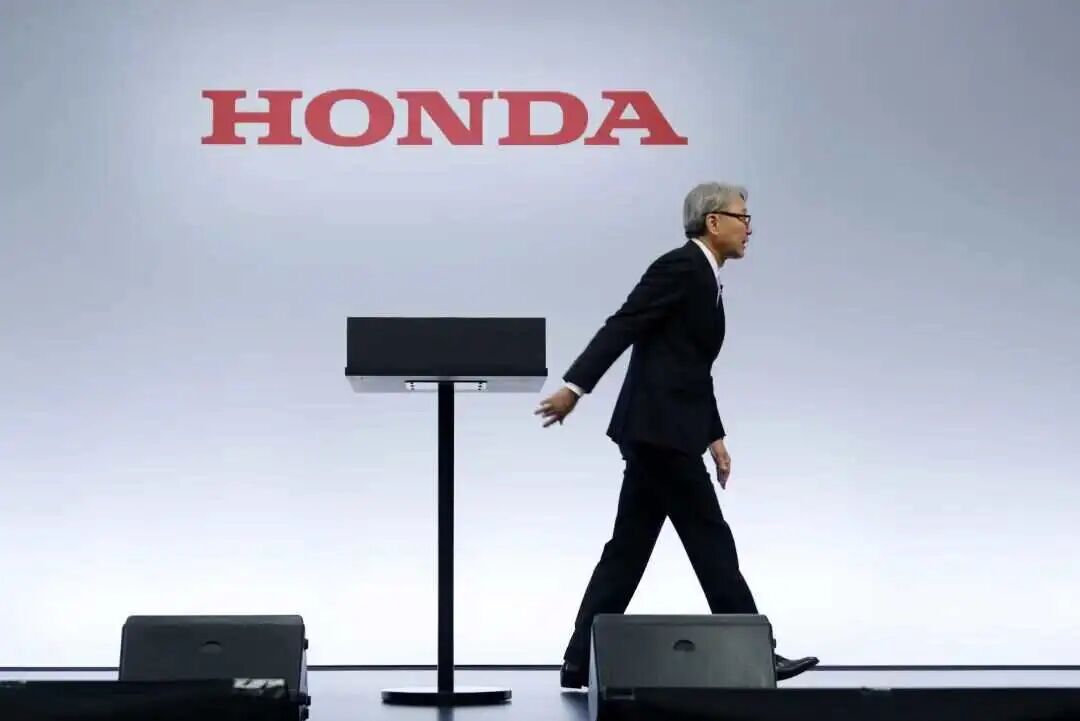
30% salary reduction over three months
Author | Wang Lei
Editor | Qin Zhangyong
Who could have predicted that the CEO of a well-established multinational automaker would face impeachment for allegedly neglecting the China market?
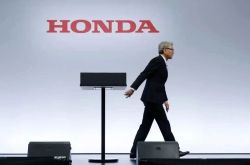
According to Reuters, a group of retired Honda executives, including fourth-generation CEO and former leader Nobuhiko Kawamoto, are planning to initiate impeachment proceedings against current President Toshihiro Mibe.
These veterans have compiled a list of charges against Mibe, focusing on two main points:
Since assuming office in 2021, Mibe has rarely visited China, resulting in a decline in market share from 8% to less than 3%. During his tenure, Honda has also recorded its first loss in 70 years, amounting to a staggering ¥423.9 billion ($2.7 billion).
On May 14, following the release of Honda's FY2025 annual report, the nearly 90-year-old former CEO Kawamoto stormed into Honda's headquarters, demanding Mibe's resignation.
Such a scenario—where a former CEO attempts to oust the current one—is uniquely Japanese.
01 Impeachment Proceedings Against the CEO
According to Reuters, several retired Honda executives have been holding secret meetings since late last year to discuss the multinational group's setbacks.
In their view, the primary culprit for these issues is the company's current CEO, Toshihiro Mibe.
They planned to impeach Mibe and, over the past few months, have prepared a written record accusing him of inadequate leadership, particularly his alleged neglect of China. Mibe has rarely visited China during his four-year tenure and has skipped important auto shows.
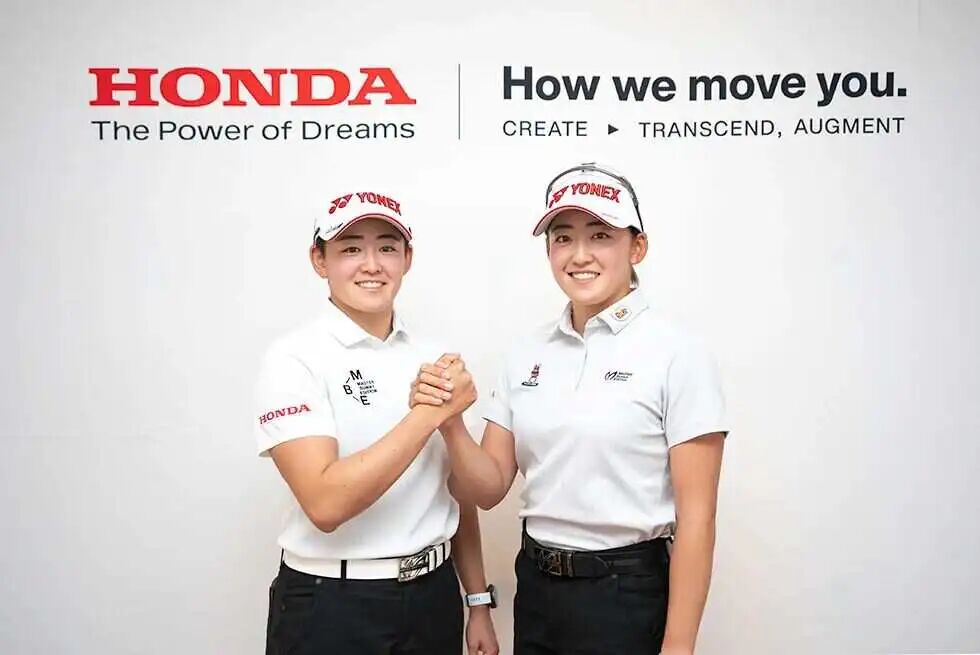
They also believe Mibe has been overly focused on Honda's sponsorship of golf, neglecting the company's core business. This includes playing golf with Honda-sponsored professional golfers Akie and Chi Iwai...
In May, Honda Motor announced its annual financial results for the year ending March 2026, revealing a final loss of ¥423.9 billion ($2.7 billion).
This plunge from an ¥835.8 billion profit in the previous fiscal year to a massive deficit marks the first annual loss for this representative of Japanese manufacturing since its listing in 1957—a 70-year first.
Following the announcement, controversy surrounding Honda President Mibe erupted, prompting the nearly 90-year-old former CEO Kawamoto to storm Honda's headquarters, demanding his resignation.
The first-ever loss was merely the tipping point. In the retirees' view, Mibe's detachment from the frontlines and disregard for the Chinese market—which saw market share plummet from 8% to less than 3%—along with misguided electrification decisions, were the core reasons for the crisis.
This may seem far-fetched, but it's worth noting that Honda has a longstanding tradition of "Genba" (on-site management), established by its late founder, Soichiro Honda. This principle requires managers to be present at the frontlines—factories, stores, and roads where products operate—to understand customers and competitors.
However, these veterans believe Mibe has abandoned Soichiro Honda's values.
Indeed, since Mibe took office in 2021, he has rarely visited China, with only two publicly documented trips, both occurring consecutively this year.
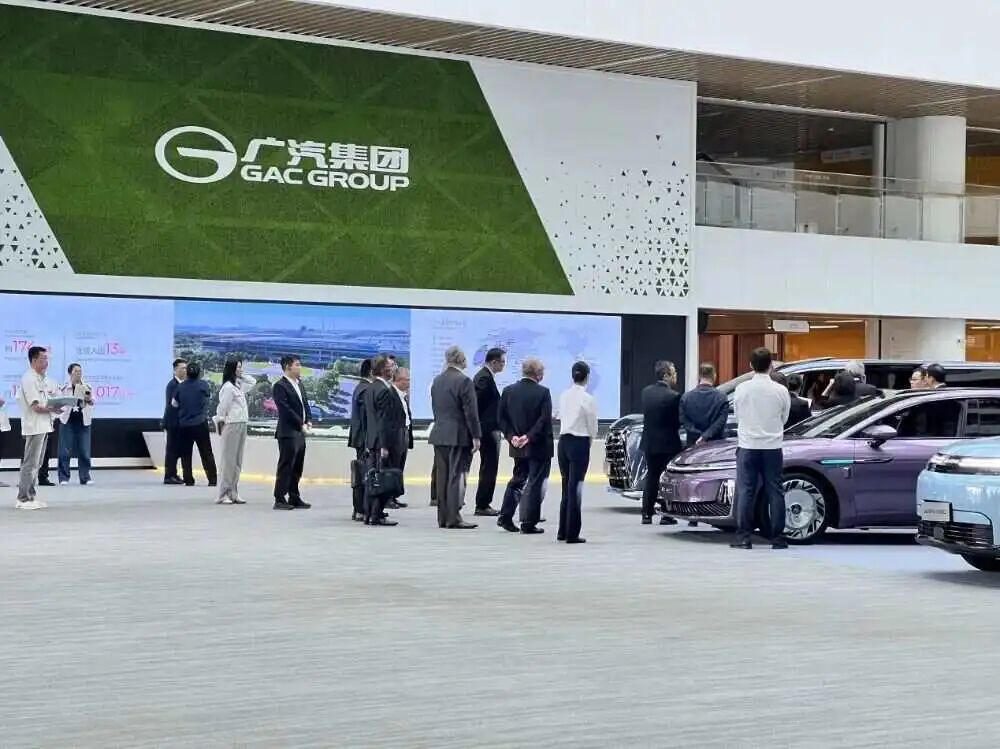
In March, he visited Shanghai for a three-day inspection, touring a major auto parts factory. In April, he quietly appeared at GAC Group's headquarters in Hualong, Guangzhou, likely related to renewing the joint venture with GAC Honda.
After never visiting before, two trips in two months this year seem more like damage control under internal pressure.
This isn't the first time Honda's retirees have publicly flexed their influence.
In 2015, former CEO Kawamoto warned then-President Takanobu Ito about quality and reliability issues, with several retired executives expressing internal dissatisfaction.
Days later, Honda announced Ito's resignation, with Takahiro Hachigo succeeding him as CEO.
However, Honda's governance has undergone significant changes since 2015. Reforms introduced independent external directors, requiring over half of Honda's three major committees to be external directors. Director candidates are now selected by the Nomination Committee based on the president's recommendations and approved by shareholders.
This means the retirees' internal influence has significantly diminished. While they can still intervene, they can no longer directly rewrite personnel decisions as before.
Thus, Mibe retained his position, with the board ultimately supporting his continued tenure but imposing a 30% pay cut for three months as accountability for the losses.
02 Reassessing China's Importance
To be fair, the retirees' urgency in impeaching the current CEO is understandable.
The numbers speak for themselves: Honda sold 1.62 million vehicles in China in 2020, but sales have declined for five consecutive years, falling to just 640,000 in 2025—a nearly 1 million unit drop and a 60% decline.
In May this year, sales plummeted to 28,300 units, nearly halving for the second consecutive month. Geely's Starry model alone outsold Honda's entire Chinese lineup in a single month. Reuters data also shows Honda's market share in China slid from 8% in 2020 to under 3% in 2025.
Even Mibe realized the gap between Honda and Chinese brands after inspecting the Chinese market in March, admitting to his entourage, "Against such competitors, we stand no chance."
After the inspection, he publicly concluded, "China has entered the smartphone era, while we're still using flip phones."
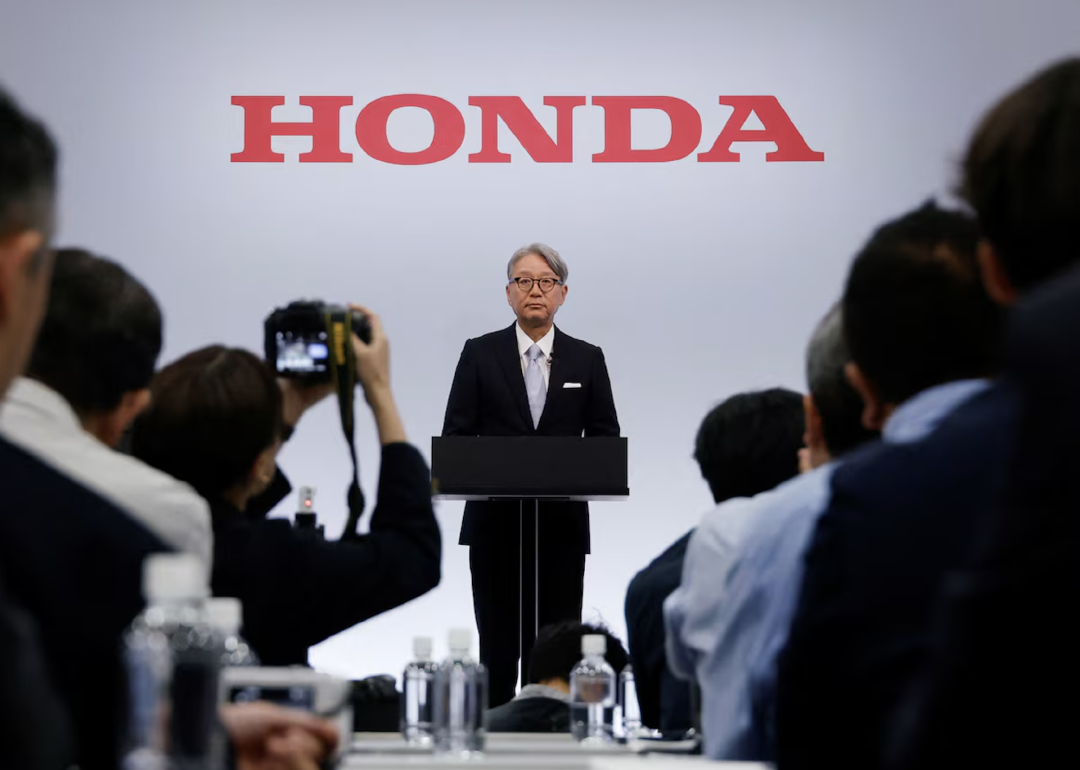
This was no exaggeration. Upon returning to Japan, Mibe shocked the auto industry by halting three EV projects in North America, including two near-production "0 Series" concept cars and an Acura RSX EV close to mass production.
Honda also ended its long-standing Afeela premium EV joint development with Sony and indefinitely froze its $11 billion Canadian EV supply chain project.
The electrification targets were revised downward: the 2030 global EV sales goal was cut from 2 million to 700,000–750,000 units, with the EV share target reduced from 30% to 20%.
This strategic retreat came at a steep cost. Write-offs and asset losses from these canceled projects could reach ¥2.5 trillion ($17.5 billion)—nearly Honda's total profits over the past three years.
Of this, ¥1.58 trillion ($11.2 billion) was recorded in FY2025, forcing Honda to report its first loss in nearly 70 years, with cumulative losses totaling ¥432.9 billion ($3 billion).
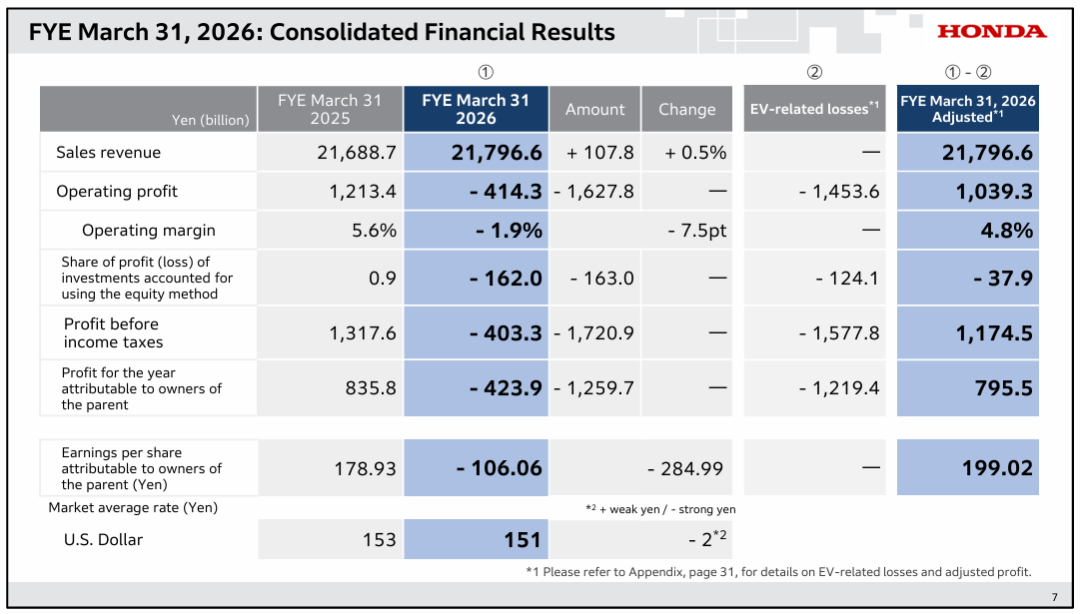
Excluding the ¥1.58 trillion impairment from the electrification strategy adjustment, Honda's adjusted FY2025 operating profit was approximately ¥1.04 trillion ($7.4 billion), down 14.4% year-on-year.
These figures suggest Honda's actual operating condition may not be as dire as the headline losses imply, but the challenges are real.
Back in 2021, when Mibe became Honda's president, he unveiled a grand electrification blueprint: investing ¥10 trillion in EVs and batteries, with a 2040 deadline to end global ICE vehicle sales.
He simultaneously advanced three EV product lines—North America's 0 Series, Acura EV sports cars, and the Sony-Honda Afeela brand—aiming to leapfrog in electrification across North America and China.
To execute this, Honda built a dedicated EV supply chain in Canada and two new energy factories in Guangzhou and Wuhan, China, launching EVs based on the e:N platform. Electrification became Honda's top priority, with all resources diverted to battery, motor, and electric control R&D.
But Honda bet heavily on North America, only to see policies shift unpredictably.
North America's policy pivot didn't accelerate toward EVs as Honda expected. Heavy investments in a mismatched market left the strategy in limbo.
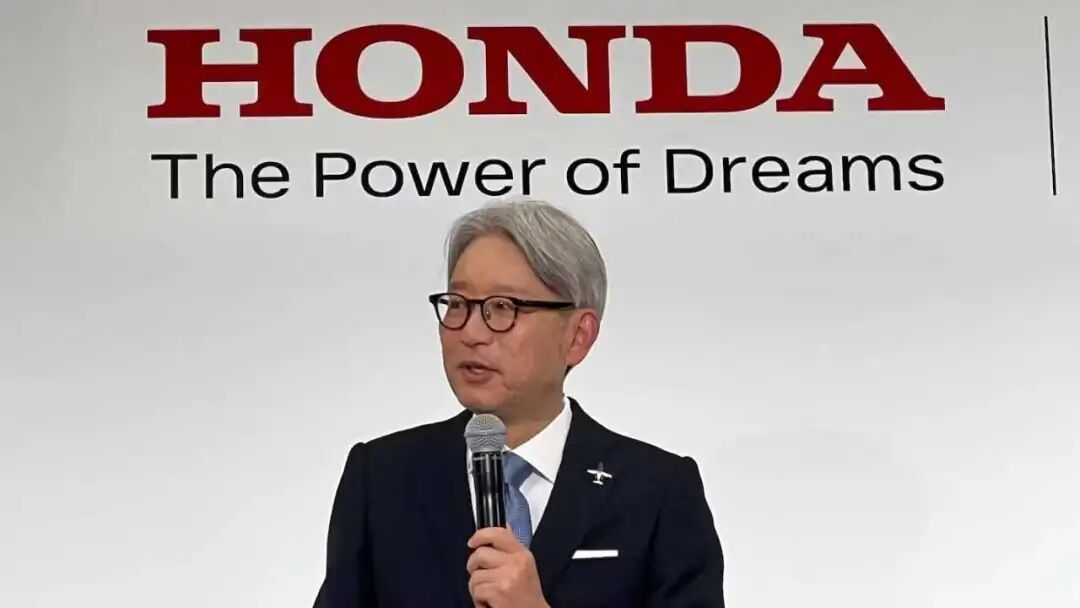
At a recent earnings briefing, Mibe admitted to misjudging global electrification momentum and competitor strength: "We underestimated China's complete new energy ecosystem and overestimated North America's long-term EV demand. Blind expansion of EV product lines proved financially ruinous."
Thus, doubling down on China became Honda's best chance at a turnaround—and this time, Mibe listened.
As the veterans emphasized, "Genba" (on-site management) was gospel in the ICE era and remains crucial for new energy. But being present isn't enough; Honda must empower local teams with full control over product definition, R&D, and supply chains.
Honda launched deep localization reforms, delegating product definition and R&D authority to Chinese teams, transforming GAC Honda and Dongfeng Honda from mere production bases into autonomous, locally controlled R&D hubs.
By 2027, GAC Honda will launch three new models featuring Huawei's HarmonyOS cockpit, Momenta's intelligent driving system, and CATL batteries—tailored to Chinese users' demand for intelligence and practicality. Dongfeng Honda's plans are similar.
Admitting mistakes, retreating, and pivoting—Honda has made its second bet on the future in short order. Now, the question is how effective this damage control will be.
-
![]()
Honda CEO Faces Vote of No Confidence Due to Alleged Neglect of China Market
-
![]()
The Flip Side of 618: New Arrivals Steal the Spotlight as Major Sales Event Hits Midpoint
-
![]()
Wang Chuanfu's Goal of Becoming the World's No.1 Relies on a 'Production Schedule'
-
![]()
Jensen Huang: The Embodiment of a Bull Market
-
![]()
Joint Interview with Five Major E-commerce Platforms: Ending Involution for a Healthier 618 Shopping Environment
-
![]()
Does It Become More User-Friendly Over Time? The Rising Product Prowess of Hunyuan Hy3 and Tencent Yuanbao's Quiet Resurgence
-
![]()
Gross Profit Margin, Supplier Payments, and Dividends Undergo 'Abrupt Shifts': Indicators of Tianbo Intelligence's IPO Performance Manipulation", "Tianbo Intelligence, gross profit margin, financial i
-
Top Ten in May Sales Rankings Feature No Fuel Vehicles: Has China’s Auto Market Undergone a Complete Transformation?