What Signals Does Alibaba's New Business Division Send?
 06/11 2026
 556
556
The AI business has moved beyond the initial investment phase and officially entered the commercialization return cycle.
The tech circle in June has been far from quiet.
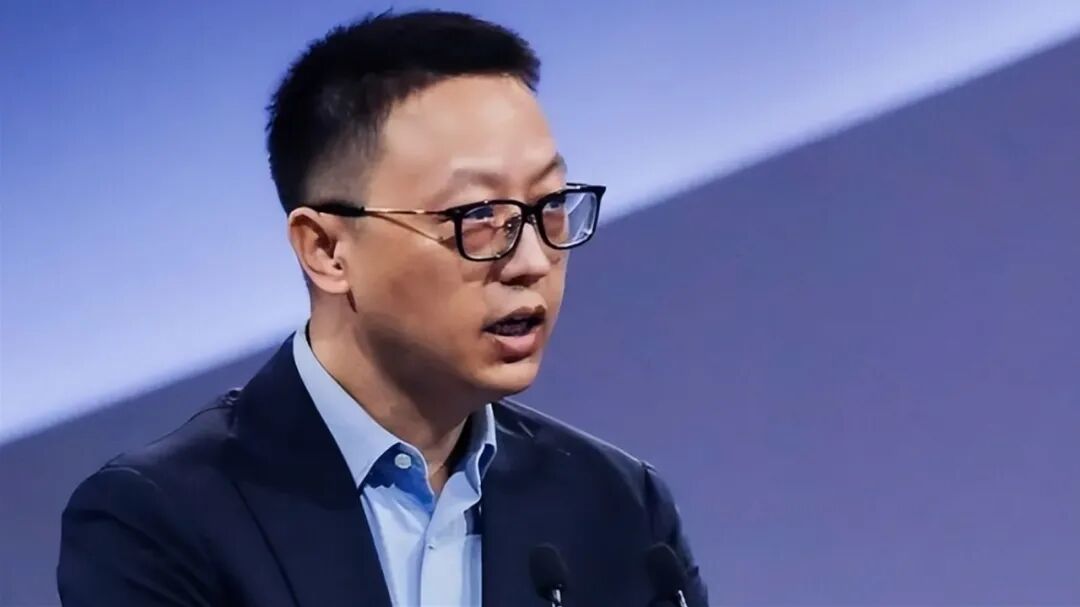
A few days ago, Alibaba unveiled its third wave of AI organizational adjustments in 2026. However, this time it was not a small-scale personnel change. Instead, it directly merged two major AI teams, the Tongyi Large Model Business Division and the Future Life Lab, to establish the new Token Foundry Business Division, led personally by Group CEO Wu Yongming.
At the same time, Zhou Jingren, the founder of Alibaba's Qianwen system, officially became the Group's Chief Scientist and took the lead in establishing the Alibaba AI Future Research Institute. Zheng Bo, the former head of the Future Life Lab, led star product teams such as HappyHorse and HappyOyster to join the new business division.
Once the news broke, the entire industry was discussing the same question: What is Alibaba's game plan this time?
Just over three months ago, Alibaba had just established the AlibabaTokenHub (ATH) business group, also led by Wu Yongming, consolidating AI-related units such as the Tongyi Lab, MaaS business line, Qianwen Business Division, Wukong Business Division, and AI Innovation Business Division under one organizational framework. Two months ago, he also formed the Group Technology Committee, with himself as the leader.
The signals released by the first two moves were already clear: reduce collaboration costs among different business lines and create synergy for AI at the organizational level.
Just a few months later, the Token Foundry Business Division was established, indicating that Alibaba's AI strategy has shifted from the "resource integration" phase to the "accelerated implementation" phase.
01
The Ambitions of the "Token Factory"
The name Token Foundry is quite intriguing. The term "Foundry" literally means a casting factory or metal plant. Combined with "Token," it takes on a deeper meaning. Alibaba aims to become a "Token Factory" and serve as a foundational supplier in the AI era.
This aligns with Alibaba's strategic direction. In March this year, when Alibaba established the ATH business group, it set a clear goal logic internally: "Create Tokens, Deliver Tokens, Apply Tokens." The establishment of Token Foundry now seems to be an extension and deepening of this logic.
From the perspective of organizational changes, before the merger, the Tongyi Large Model Business Division was responsible for foundational model research and development, while the Future Life Lab focused on exploring AI scenarios. With two separate teams and directions, although both pointed to the same overarching proposition, they belonged to different reporting lines, making collaboration costs unavoidable.
The Future Life Lab previously fell under the TaoTian Group and was later transferred to the newly established ATH business group, already engaged in AI application exploration. The Tongyi Large Model Business Division was also doing similar work, such as researching and developing video generation models, and released the latest version, Wanxiang 2.7, this year. With both sides working independently, resources were duplicated, and internal competition could easily lead to inefficiencies. After the merger, resources can theoretically be concentrated on the "most critical battlefield" to avoid a fragmented approach.
An industry insider commented to the media that the organizational changes brought about by the advent of the Agent era are significant: For chatbots, the model team can remain somewhat distant from the business. However, for Agents capable of autonomously executing workflows, the model team must understand business logic, data flows, and decision-making pathways.
Another easily overlooked but noteworthy detail is that Zheng Bo led projects like HappyHorse and HappyOyster to join the Token Foundry Business Division.
The name HappyHorse made waves in the AI circle this April when it anonymously appeared on the global authoritative AI blind testing platform ArtificialAnalysis, topping both the text-to-video and image-to-video categories, sparking extensive industry discussion and attention due to its performance.
The fact that a product from the Future Life Lab could suddenly achieve world-class results indicates that Alibaba has "hidden gems" internally. However, the question remains whether such high-quality products can be consistently produced and systematically brought to market. The inclusion of Zheng Bo's team suggests that Alibaba aims to embed this capability within a larger framework.
Of course, whether the organizational adjustment can truly solve collaboration issues remains to be seen. Merging is just the first step; subsequent cultural integration, process refinement, and goal alignment are the real challenges. Combining two departments is easy, but achieving true synergy is difficult.
At this point, Alibaba's AI organizational structure has become very clear: The ATH business group serves as the top-level framework, overseeing all AI businesses. The Token Foundry Business Division is responsible for model research and development and commercialization. The AI Future Research Institute focuses on exploring cutting-edge technologies. The MaaS business line builds model service platforms. The Qianwen Business Division creates C-end personal AI assistants. The Wukong Business Division builds B-end AI-native work platforms.
This four-tier architecture of "Research Institute - Foundational Models - Service Platforms - Application Products" ensures long-term technological innovation capabilities while addressing short-term commercialization needs. In three months, Wu Yongming has built an efficient organizational machine for Alibaba's AI.
02
Zhou Jingren's Transition: What is Alibaba Thinking?
Another noteworthy role change in this organizational adjustment is Zhou Jingren.
A key figure in Alibaba's Tongyi Large Model team, Zhou previously served as Alibaba Cloud's Chief Scientist, overseeing data intelligence businesses such as search, recommendation, and advertising for Alibaba Cloud, Taobao, and Alipay. At the end of 2022, he became Alibaba Cloud Intelligence's CTO and concurrently served as the Vice President of Alibaba's AI team, the DAMO Academy, and the head of the Tongyi Lab, building the Tongyi Large Model team from scratch and driving the Qwen series models from inception to global prominence.
The newly released Qwen-3.7 model achieved top-three global and top domestic Coding capabilities, gaining widespread recognition among developers and industry clients. In 2025, Zhou became an Alibaba Partner, the first CTO-level executive with a pure technical background to join the highest decision-making layer.
In his new role as Group Chief Scientist, Zhou will no longer be responsible for specific business management but will focus entirely on researching cutting-edge AI technologies.
The title of Chief Scientist is the highest academic honor in Alibaba's technology system. Zhou only became an Alibaba Partner last year. Receiving the highest academic title less than a year later is significant, indicating that Alibaba hopes he can "travel light," freed from specific business management to focus on longer-term technological challenges.
Such arrangements are not uncommon in the industry. OpenAI has a dedicated Superalignment team, and Anthropic also has its own frontier research department. When large model technologies reach a certain stage, someone needs to step away from daily product iteration and commercialization pressures to focus on longer-term technological breakthroughs.
This organizational design reflects Alibaba's strategic approach: balancing the present and the future. The Token Foundry Business Division handles productization and commercialization, with the CEO personally overseeing progress. The AI Future Research Institute focuses on frontier exploration, led by the Chief Scientist for foundational research.
Both lines must advance simultaneously, ensuring that the business does not fall behind in technological iteration while not sacrificing long-term competitiveness for short-term gains.
Zhou previously provided a clear perspective on the development trend of large models: "Large models are undergoing a core paradigm shift, from aligning with human preferences to aligning with task objectives. In the past, we pursued models that 'spoke well.' Now, we require models that 'can deliver.'"
Shifting from "looking good on paper" to "being reliable in practice" may better represent Alibaba's true attitude.
Regarding the future research directions of the AI Future Research Institute, official disclosures are limited. However, based on Zhou's previous technical judgments, capabilities such as autonomous planning, continuous iteration, and cross-tool collaboration—what is known as Agent capabilities—may be a key focus.
Zhou has explicitly stated that with the leap in capabilities of the Qwen-3.7 series models, Alibaba is making models truly the intelligent core of Agents.
03
A "Organizational Competition" Among Tech Giants
Looking at the entire industry, Alibaba's adjustments isolated are not. Over the past two years, almost all top AI companies have undergone similar organizational restructuring, following remarkably similar steps.
Previously, Google merged its Brain team and DeepMind, which had operated independently for nearly a decade, into GoogleDeepMind, led uniformly by Hassabis and reporting directly to CEO Pichai. Early last year, Google took it a step further, consolidating all AI engineering teams scattered across product lines under DeepMind, completing a unified AI organizational structure.
On Microsoft's side, in 2026, it reorganized the Copilot team, establishing a new Executive Vice President role reporting directly to CEO Nadella, aiming to shorten decision-making chains. Meta restructured its AI organization four times within six months in 2025, with the core direction of bridging the gap between the FAIR lab and product AI teams. Amazon merged its AGI team, self-developed chip and team, quantum computing team into a unified organization between 2025 and 2026, integrating the full chain from infrastructure to model research and development.
Behind these moves, three common patterns emerge: First, AI is shifting from "independent laboratory operation" to "deep integration with business." Second, reporting lines are elevated from vice president-level to CEO or president-level direct management. Third, models, infrastructure, and products are no longer under separate command systems but are integrated into the same operational unit.
Thus, Alibaba's move to establish the Token Foundry Business Division essentially aligns with this global trend. The difference is that Alibaba completed this dense (intensive) push from ATH to Token Foundry in just a few months, the fastest pace among domestic internet giants.
Ultimately, any organizational adjustment must deliver business results. Alibaba's bold integration of its AI business is backed by a critical timeline: In May, Alibaba Group Chairman Joseph Tsai and CEO Wu Yongming jointly issued a letter to shareholders, announcing that Alibaba's AI business had moved beyond the initial investment phase and officially entered the commercialization return cycle.
In other words, AI within Alibaba must gradually take on the responsibility of "increasing revenue." Financial reports show that in the fourth quarter of fiscal year 2026, Alibaba Cloud's external commercialization revenue growth accelerated to 40%, with AI-related product revenue achieving triple-digit growth for the eleventh consecutive quarter.
Wu revealed a more specific figure during the earnings call: AI model and application services, including the BaiLian MaaS platform, are expected to surpass 10 billion yuan in annualized recurring revenue (ARR) in the June quarter and exceed 30 billion yuan by the end of the year.
He also mentioned that API demand for the BaiLian platform has grown more than tenfold in the past six months, with "hardly any idle cards in our servers and many customers waiting in line." In the fiercely competitive AI sector, this state of supply exceeding demand is a significant competitive advantage.
Alibaba's newly released Qwen-3.7 model recently ranked fifth globally and first domestically on the ArtificialAnalysis large model intelligence leaderboard, gaining widespread recognition among developers and industry clients.
However, it is also important to note that while commercialization data is impressive, the competitive pressure remains high compared to peers. In the MaaS (Model as a Service) field, for example, Volcano Engine raised its MaaS target for the year from 10 billion to 15 billion yuan. Liu Weiguang, Senior Vice President of Alibaba Cloud Intelligence Group, also stated that he has set a military order for the sales team: MaaS revenue must account for no less than 20% of each client's total by the end of the year.
Competition in the MaaS track is becoming exceptionally fierce, and the establishment of the Token Foundry Business Division can be seen as Alibaba's new move at the MaaS table.
Looking at the timeline, Alibaba's actions in the AI field this year can be described as "high-frequency." This dense (intensive) rhythm reflects the reality: The window of opportunity in the AI industry is rapidly narrowing.
In 2026, the hype around parameter competition is cooling, replaced by a comprehensive competition in engineering capabilities, commercialization levels, and ecosystem completeness. ByteDance's Doubao has surpassed 200 million daily active users (DAUs), while Tencent's Hunyuan Hy3Preview has been widely applied in products like CodeBuddy, WorkBuddy, and Yuanbao.
It is worth mentioning that Alibaba's statement in its letter to shareholders this year that "AI business has moved beyond the initial investment phase and officially entered the commercialization return cycle" coincided almost simultaneously with ByteDance's announcement that Doubao would launch paid subscriptions. The fact that head (top) players are entering the commercialization fast lane at the same time means that competition based solely on technological and product innovation is evolving into a three-pronged race involving technology, products, and commercialization.
The establishment of the Token Foundry Business Division can be seen as Alibaba's strategic move at this critical juncture: a long-term layout (layout) for the future and an urgent response to the present.
— END —
-
![]()
Honda CEO Faces Vote of No Confidence Due to Alleged Neglect of China Market
-
![]()
The Flip Side of 618: New Arrivals Steal the Spotlight as Major Sales Event Hits Midpoint
-
![]()
Wang Chuanfu's Goal of Becoming the World's No.1 Relies on a 'Production Schedule'
-
![]()
Jensen Huang: The Embodiment of a Bull Market
-
![]()
Joint Interview with Five Major E-commerce Platforms: Ending Involution for a Healthier 618 Shopping Environment
-
![]()
Does It Become More User-Friendly Over Time? The Rising Product Prowess of Hunyuan Hy3 and Tencent Yuanbao's Quiet Resurgence
-
![]()
Gross Profit Margin, Supplier Payments, and Dividends Undergo 'Abrupt Shifts': Indicators of Tianbo Intelligence's IPO Performance Manipulation", "Tianbo Intelligence, gross profit margin, financial i
-
Top Ten in May Sales Rankings Feature No Fuel Vehicles: Has China’s Auto Market Undergone a Complete Transformation?