Can Siri AI Rejuvenate Apple's Fortunes?
 06/12 2026
 371
371
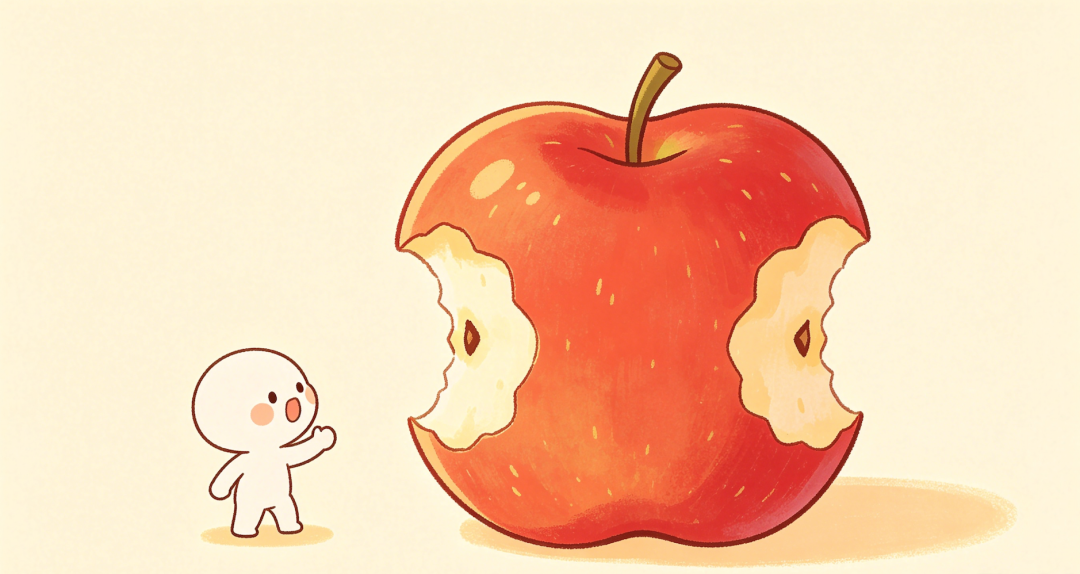
How long has it been since you last interacted with Siri?
Editor: Wen Ruyan
If you're an Apple aficionado, chances are you've vented your frustrations at Siri at some point in recent years.
What can it do now? Set alarms, check the weather—these basic tasks seem to be handled adequately. But the moment you pose a slightly more intricate query, the responses often descend into the realm of absurdity. Over time, many users have simply given up on Siri; at best, they might bark out a command like, "Hey Siri, wake me up at 7 tomorrow," and then abandon any further expectations.
This scenario is quite ironic, considering Siri's grand debut with the iPhone 4S in 2011. Apple's vision then was to "enable seamless, natural communication between humans and devices." Yet, over a decade later, Siri remains mired at the level of a rudimentary "voice command tool," showing little real progress.
It wasn't until 2026 that Apple finally decided to take decisive action.
At WWDC 2026, Apple could no longer contain its ambition. It rebranded Siri as "Siri AI" and announced a partnership with Google Gemini, aiming to create an AI assistant capable of going head-to-head with ChatGPT.
This move marked Siri's most significant transformation since its inception.
However, the capital market's response was measured, even somewhat skeptical.
Apple's stock price initially surged by over 3% on the day of the announcement but then plummeted, closing down about 1.9%, with its market value evaporating by over $85 billion overnight.
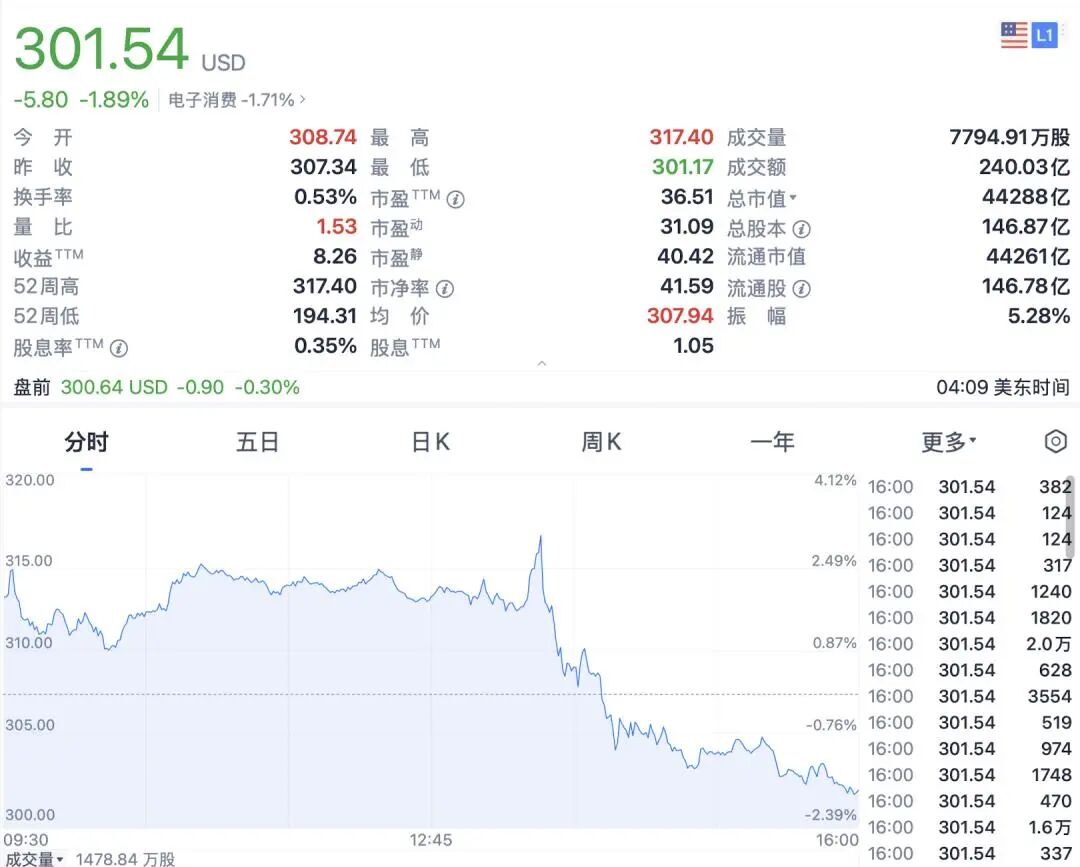
Apple's stock price performance
So, the crux of the matter is: Can Siri AI truly rejuvenate Apple's fortunes?
01 When the iPhone Loses Its Luster, Siri Misses the Boat
In truth, Apple's predicament extends beyond Siri's underperformance. The root cause lies in Apple's reliance on inertia in recent years.
Apple users are indeed accustomed to the stability of its ecosystem, the smoothness of its system performance, and the familiarity of its operation habits—all advantages that Apple has cultivated over the years. However, the issue arises when a company's products rely more on "inertia" than on delivering "fresh experiences." At that point, the ceiling for growth has already been reached.
Over the years, the iPhone's design has seen minimal changes since the full-screen iPhone X in 2017. The Dynamic Island replaced the notch, which was a modification, but the overall shape, feel, and the camera module on the back remain strikingly similar to models from three or four years ago.
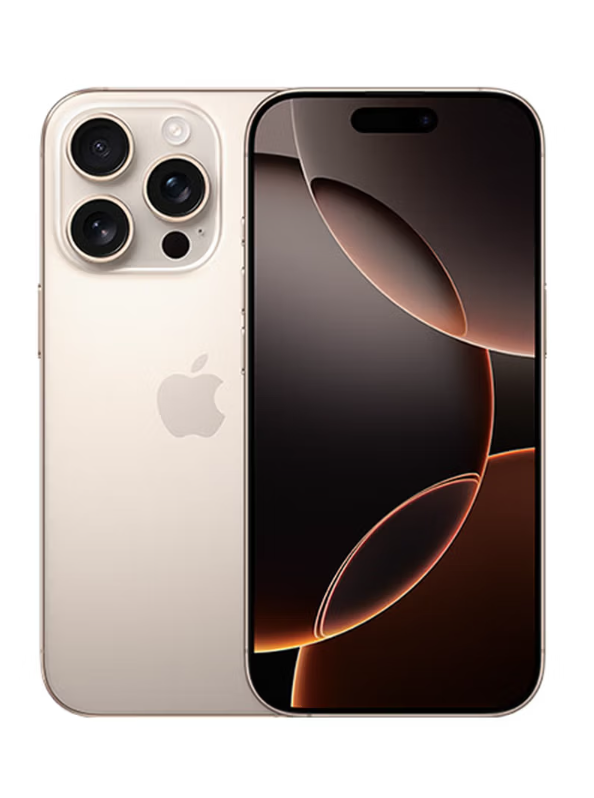
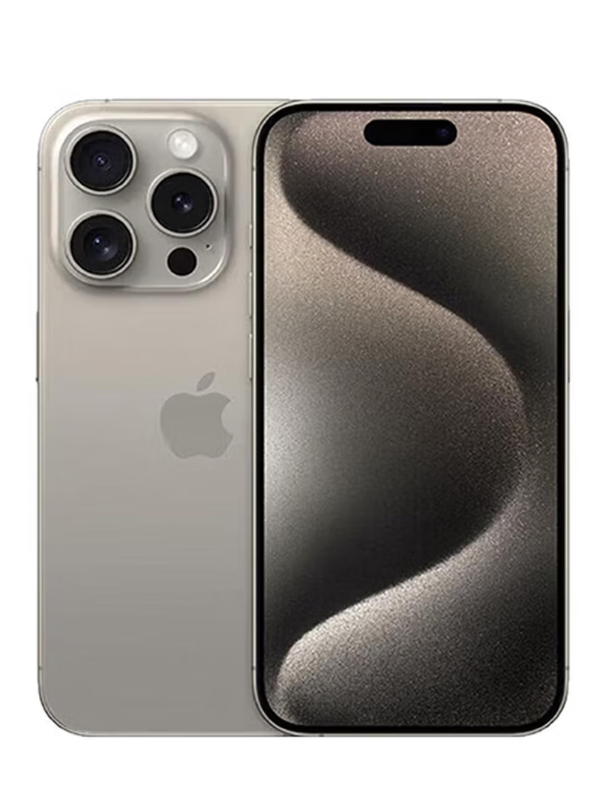
Chips have improved year after year, and cameras have gotten better annually, but it's increasingly difficult to find compelling reasons for users to upgrade because the "new" models look so similar to the "old" ones.
This kind of "incremental" iteration might not have mattered much before, as the iOS ecosystem could lock users in without much reason to leave.
But in recent years, Chinese flagship smartphones have rapidly evolved, comprehensively improving from imaging, screens, memory to system experiences. iPhone growth in the Chinese market has begun to face significant pressure. To stimulate sales, Apple has even significantly reduced prices across the iPhone 17 series.
When a company that relies on brand premium starts offering discounts during promotional events, it speaks volumes about the situation.
Now, let's talk about AI. At the end of 2022, ChatGPT burst onto the scene, and AI capabilities quickly became a new interaction gateway. Google and Microsoft rapidly followed suit, embedding large models into search, office systems, and operating systems, turning intelligent assistants from "tools" into "gateways."
What about Apple? In June 2024, it belatedly showcased an AI-powered Siri, promising a host of features. However, these features were repeatedly delayed in 2025 and still hadn't been fully delivered by 2026.
In two years, how far have competitors advanced, and how long has Apple remained stagnant? Users have a clear idea.
When users are already accustomed to using AI assistants for search, writing, and even work collaboration, Siri remains stuck at the "voice command" stage. This gap is no longer just an experience issue but a generational disconnect.
More realistically, users' "intelligent assistant" gateway has already been occupied by other products.
Whether it's Doubao, Qianwen, Kimi, Deepseek, or ChatGPT, users have formed new habits—asking AI first when they have a question, rather than turning to Siri.
This means that Apple isn't just "a little behind" but is actively losing a critical gateway.
Does the introduction of Siri AI offer a chance to reclaim this gateway?
02 Spending $1 Billion on Google: Pragmatism or Surrender?
The new Siri AI will be powered by Google's Gemini as its underlying model.
As early as 2025, Apple signed a multi-year licensing agreement with Google, paying around $1 billion annually to use Gemini's technology to drive Siri AI's core capabilities.
This is an extremely unusual move in Apple's history.
Apple has always been known for its independent approach—developing its own chips, operating systems, and maps. It would rather spend five or six years creating a slightly inferior product than use someone else's. This is part of the legacy left by Steve Jobs and the core logic behind Apple's ecosystem moat: only by controlling everything can we control the experience.
So, when Apple announced the introduction of Google Gemini, many people's first reaction was—if Steve Jobs were still around, this would never have happened.
Jobs and Google had a public falling out later in their careers. He believed Android was a "copy" of the iPhone and vowed to wage a "thermonuclear war." Allowing Google's technology to become the underlying engine for the iPhone's most core functionality would likely have been a humiliation to him.
But Cook chose a different path. Instead of spending three to five years catching up to industry standards, he opted to buy time with money. From a business decision perspective, this logic isn't flawed.
If the new Siri AI truly represents a leap in capabilities rather than just an advanced voice command executor—something Apple failed to achieve in two years of self-development but Google helped accomplish in one year—then the efficiency is high. However, there's an unavoidable structural issue here: what Apple spent $1 billion on is Google's technological capability, not its own moat.
In the past, Apple could outpace competitors by offering things others didn't have—superior A-series chip performance, a smoother iOS experience, and deep hardware-software integration. These were Apple's own strengths that competitors couldn't replicate in the short term.
But Gemini isn't one of them. Today, if Apple uses Gemini, any Android manufacturer can do the same. By using someone else's model to fill its own gaps, Apple has closed the gap but also given up differentiation in this area.
A more practical issue is the Chinese market. Gemini is unavailable in China, a well-known fact. What model the domestic version of Siri AI will use and whether it can deliver an equivalent experience remains unclear.
03 What Cards Does Apple Still Hold?
It must be acknowledged that Apple has always managed to stabilize itself, not by luck but because it still holds several highly valuable cards.
An irreplaceable closed-loop terminal ecosystem. To this day, Apple still controls one of the world's strongest terminal ecosystems. The seamless collaboration between iPhone, Mac, iPad, and Apple Watch remains unmatched by any other manufacturer in terms of perfect replication. This is an absolute barrier Apple has built over more than a decade, using countless user habits and massive amounts of data.
Underlying computing power from self-developed chips. At the core technology level, the performance and energy efficiency advantages of the A-series and M-series chips still lead in the short term. This is why Apple dares to run more computations locally, protecting privacy while reducing reliance on the cloud—a logic that only works because the local chips are powerful enough.
Ultimate system experience. This time, iOS 27 delivered peak-sensitivity performance upgrades at the system level. App launch speeds on iPhone and iPad improved by 30%, photo loading speeds after taking pictures increased by 70%, AirDrop transfer speeds rose by 80%, and file transfer speeds between external hard drives and iPads increased by up to 5 times.
Because of these strengths, Apple still achieves high sales volumes in the market, solidifying its core user base.
In the first quarter of fiscal year 2026, Apple's revenue in Greater China grew 37.9% year-over-year to $25.53 billion, with iPhone revenue increasing by 23.3%. IDC data also shows that in 2025, Apple ranked second in the Chinese market with a 16.2% share.
AI tech self-media "Houchangcun" believes that if we look at Apple's shipments in the Chinese market over the past five years from a long-term perspective, Apple still sits firmly at the main table in the current game. But this doesn't mean Apple can rest easy. Because in the next round, the key chip that will decide the outcome is called "AI."
To win the game of this era, it ultimately depends on when Apple can truly play its own ace.
04 Conclusion
In the final analysis, Siri AI is not a panacea for Apple's redemption but merely a hasty patch by Cook to catch up with the AI wave. By relying on the externally purchased Gemini model, Apple has quickly closed the capability gap in intelligent assistants but has completely abandoned its autonomous differentiation in the AI field. It also faces enormous challenges in adapting models for the domestic market.
In the short term, Siri AI may slightly slow down Apple's user attrition and stabilize its existing ecosystem advantages, but it cannot reverse its passive position in the industry. In the long run, if Apple continues to rely on external AI technology without building its own large model capabilities, it will always merely follow the industry's pace and struggle to redefine the next generation of human-computer interaction. Its hopes of returning to high-growth glory remain distant.
-
![]()
Tencent is a Mirror Reflecting Alibaba's Dilemma
-
![]()
Global Robotaxi Race Steps into Mass Production Phase
-
618 Battle Report | Weekly 3C Digital Rankings (June 1-7)
-
![]()
52,500 Square Meters: Weina Xingkong’s New Headquarters to Rise Here→
-
![]()
AI Pet Language Translator Priced at 799 Yuan: Whose Mind Can It Read?
-
![]()
Following First Loss in 70 Years, Honda Veterans Unite to Demand CEO's Resignation, Citing Three Major Failures! They Directly March into Headquarters to Demand His Dismissal
-
![]()
Zhu Mingming's Obsession with AI Pioneering: A Thorn in the Side of Rokid's Smart Glasses Privacy?
-
![]()
Insta360 Leads Global Market, Yet Profit Signals Remain Subdued