Xinliu Exclusive: Nubia Goes All-In on Its Second-Gen Doubao AI Smartphone
 06/16 2026
 401
401
[Abstract] Xinliu has exclusively learned that Nubia is set to unveil its second-generation Doubao AI smartphone, allocating all its core resources to this venture while temporarily scaling back its traditional smartphone lines.
Will Nubia's strategic move pay off?
Here's the full story:

"All-In": Nubia Bets the Farm
Sources indicate that ZTE Nubia's top brass has made a bold strategic pivot, focusing all core resources on the second-generation Doubao AI smartphone and temporarily halting development on other traditional smartphone lines. It's a high-risk, high-reward move.
Nubia initially gained recognition for its universal connectivity tech and high-end imaging smartphones. However, squeezed by market leaders like Huawei, Apple, Xiaomi, OPPO, and Vivo, its market share has dwindled to the fringes.
The partnership between the two firms couldn't have come at a better time. In December 2025, ByteDance and Nubia jointly launched the Doubao smartphone engineering prototype, the Nubia M153, priced at 3,499 yuan. It sold out immediately, with resale prices on secondary markets skyrocketing to 36,000 yuan at one point. For an engineering prototype, such market enthusiasm was extraordinary.
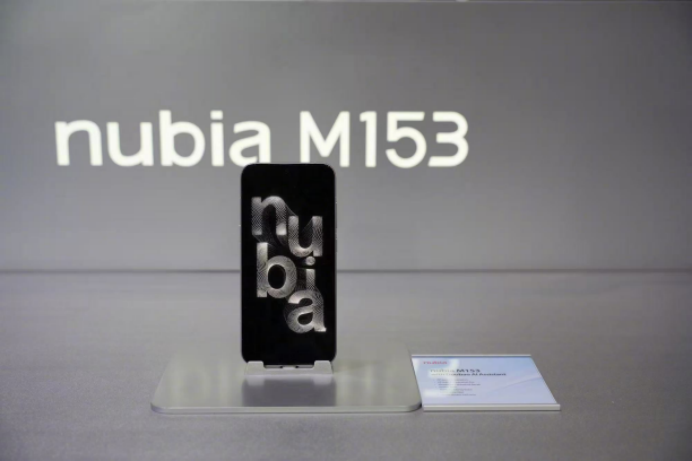
Image Source: Weibo
ByteDance has since deepened its collaboration with Nubia, officially launching the full-scale project for the second-generation Doubao smartphone assistant. The new Doubao AI smartphones will remain under the Nubia brand, with ZTE Group providing underlying communication tech and production support. Nubia, as an independent terminal brand, will handle all hardware execution and coordination.
According to Xinliu's exclusive sources, the second-generation Doubao AI smartphone is slated for release in the first half of 2026, featuring the fifth-generation Snapdragon 8 Elite mobile platform.

First-Gen Machine: Hype Meets Backlash
To grasp Nubia's resolve, one must first examine the first-generation Doubao smartphone's journey.
The Doubao smartphone assistant leveraged GUI Agent (Graphical User Interface Agent) technology, enabling users to voice their needs and have the AI complete tasks across apps: comparing prices and placing orders across platforms, batch-downloading files, and automatically booking itineraries—all without manual app switching, thanks to deep OS-level AI integration.
This approach fundamentally threatened established players. After launch, the first-gen Doubao smartphone faced unified resistance from internet giants like Meituan, Tencent, and Alibaba. The core issue? Doubao bypassed traditional traffic entry points and ad systems—critical revenue streams for these companies—by directly invoking app functions via its system-level AI assistant, disrupting their business models.
Under pressure, Doubao announced adjustments to its AI smartphone capabilities within a month, temporarily disabling operation permissions for financial apps, game incentives, and other scenarios. With core functionalities reduced, resale prices plummeted. Many wondered: Was this the end of their collaboration?
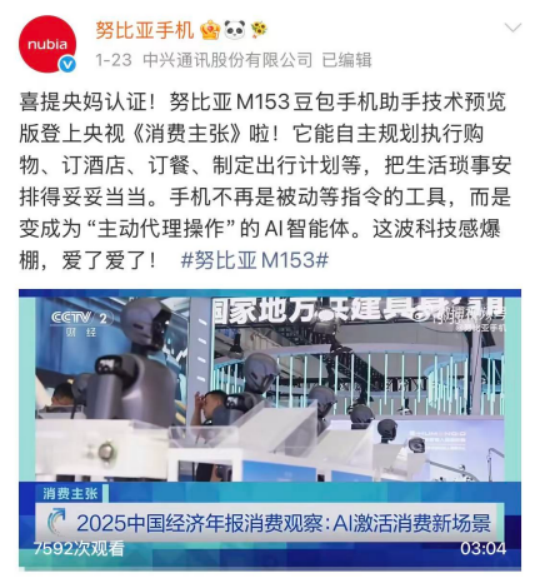
In January 2026, the Nubia M153 Doubao smartphone assistant's technical preview version was featured on CCTV Finance Channel's "Consumer Advocacy" program. Gaining official recognition, it entered the public eye, bolstering both sides' confidence in deepening their partnership.
In February 2026, Nubia President Ni Fei announced on the eve of MWC 2026 that they would launch an AI product to "redefine smartphones"—the second-generation Doubao smartphone.

Second-Gen Machine: Fixing Flaws, Fortifying Alliances
Current leaks suggest the second-generation Doubao smartphone will feature a comprehensive hardware upgrade, including the Snapdragon 8 Elite processor, a 6.78-inch LTPO straight screen, a 7,000mAh battery with 100W fast charging, and software-side Doubao smartphone assistant 2.0, which will significantly enhance autonomous cross-application task execution.
However, hardware upgrades are just the foundation; the ecosystem will determine the product's success. The core conflict from the first generation—AI system permissions clashing with app platform commercial interests—persists.
Reports indicate Doubao has negotiated permission openings with leading internet firms, securing necessary system interfaces for high-frequency scenarios like socializing, office work, and travel. This means the second-gen Doubao smartphone isn't just a tech upgrade but a bold attempt to redistribute industry interests.
Previous leaks suggested Honor and Vivo were in talks with Doubao for collaboration. However, these major players differ from Nubia; they won't launch independent "Doubao smartphones" but will adopt a lightweight licensing model, adding the "Doubao AI Smartphone" label as a suffix to new models—a technical licensing deal rather than Nubia's deep OS-level integration.
Currently, Nubia is the boldest—and only—hardware manufacturer willing to fully cede control. This is its unique value—and its risk. But Nubia seems to have no other option.

Epilogue: The AI Smartphone Battleground Intensifies
According to IDC's 2026 China Smartphone Market Outlook, AI smartphone shipments in China will reach 147 million units in 2026, accounting for over half (53%) for the first time. However, more than 90% will remain "App-driven traditional smartphones" with added AI features, failing to address fundamental human-computer interaction changes.
Nubia's Doubao AI smartphone aims to reconstruct human-computer interaction, replacing apps with a system-level AI as the unified entry point. This inevitably puts it in direct conflict with nearly all leading super apps. Meanwhile, manufacturers that simply slap "AI" on their phones without altering underlying logic have chosen a safer, more conservative path.
Xinliu believes: By concentrating all core resources on the second-generation Doubao AI smartphone, Nubia is taking significant commercial risks. Insufficient R&D investment in traditional models could disrupt normal product iteration cycles, failing to meet replacement demands from existing users.
Especially loyal users in imaging and gaming niches, whom the brand has cultivated over years, may face continued attrition risks, potentially further narrowing Nubia's foothold in the mass consumer market.
Meanwhile, TF International Securities analyst Ming-Chi Kuo revealed that OpenAI, with hundreds of millions of daily active ChatGPT users, has inquired about orders from Luxshare Precision, initiating custom contacts with plans to ship approximately 30 million OpenAI agent smartphones combined in 2027-2028. This figure is staggering and aligns with ByteDance's strategy.
In Xinliu's view, the 2026 smartphone industry's competition hinges on defining entry points: Will the old super-app-centric model persist, or will it evolve into a new form dominated by system-level AI? The second-generation Doubao AI smartphone represents the most aggressive mass-production attempt of the latter route in China.
*Header image generated by AI
- XINLIU -
-
![]()
Xingyuan Intelligence Unveils World Model ω-EVA, Elevating Embodied Intelligence to New Heights
-
![]()
Xinliu Exclusive: Nubia Fully Commits to Second-Gen Doubao AI Smartphone
-
![]()
No grace period for beginners! Saido Tech goes straight into battle from the start
-
![]()
Mercedes-Benz Slashes Price for Its Iconic Three-Pointed Star Emblem: All-Electric GLC Starts at 349,000 RMB
-
![]()
Ideal Livis Day: Ideal Declares 'Smart Cars' Dead
-
![]()
Zhuiguang S Captures Attention: A Review of the Latest High-Design New Cars from the MIIT
-
![]()
Xinliu Exclusive: Nubia Goes All-In on Its Second-Gen Doubao AI Smartphone
-
![]()
After ‘Cutting Through the Noise’ on 100,000 Orders, How Impressive Is BYD’s Tang?