Ideal Livis Day: Ideal Declares 'Smart Cars' Dead
 06/16 2026
 491
491
Today at Li Auto's Livis Day, Li Xiang stated that today's cars and phones are not truly intelligent, then unveiled a chip, two models, and an 'embodied intelligence' worldview 
The event did not start with technical details but instead had the cabin product manager present the 'experience' first. Her definition of interaction was unconventional: interaction is not about how many interfaces are stacked on the screen or how many animations are displayed, but rather 'the person who accompanies you every day in this space.'
She first reviewed the decade-long evolution: from the SEV that never officially launched ten years ago, to the four-screen setup in the Li ONE, the five-screen setup in the L789, and now the all-new L9 Livis. Over time, the number of applications in the car has increased, but Li Auto aims to 'find increasing understanding amid increasing options.' The design philosophy is defined by two words: restraint (returning to first principles, adding nothing unnecessary) and straightforwardness (no embellishments or flashy techniques, ensuring ease of understanding and responsiveness for all ages), ultimately aiming for a relaxed, trustworthy, and friend-like presence. 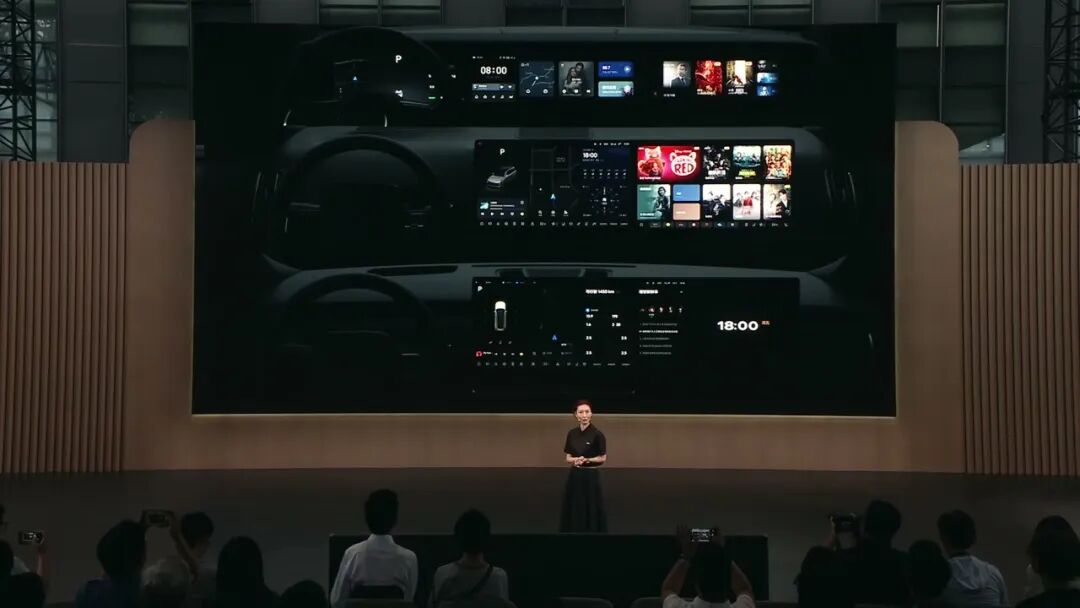
The most visible change is the 29-inch 6K one-piece ultra-wide panoramic screen without black dividers (92.4% screen-to-body ratio, 1000 nits). He mentioned trying mainstream 16:9 ratios, moderate widths, and even higher dimensions, but they were either hasty, unfriendly to the front passenger, or obstructed the driver's view. The final choice was this panoramic wide ratio. 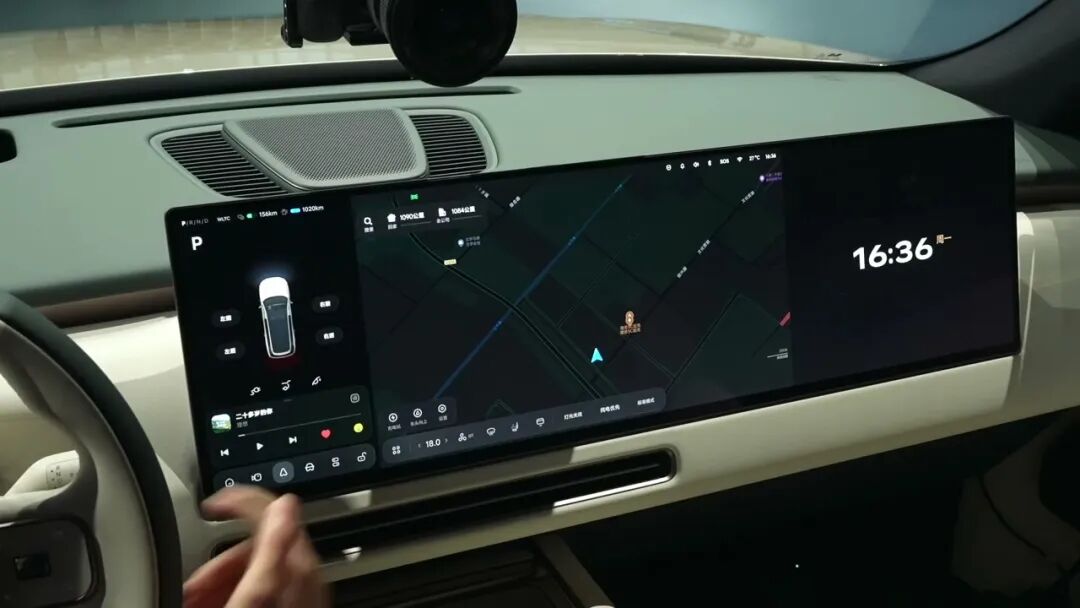
Next came the 'race history' of hardware, which was quite candid: the 820A automotive-grade chip in the Li ONE era lagged two years behind mainstream smartphones. By the 8155 and 8295 eras, it caught up to mainstream smartphone levels (users on Xiaohongshu and Douyin called it 'the Apple in the car'). For this generation, he claimed outright that the cabin hardware performance surpasses mainstream smartphones. It uses the globally premier Qualcomm Snapdragon 8797 Elite platform, with NPU 320 TOPS for running real-time AI models on the device. It is also the industry's first to achieve 90Hz high refresh rate + 180Hz touch sampling on a panoramic screen, with a self-developed underlying system to reduce touch latency. She specifically explained why it was challenging: this screen is connected to several others, demanding extremely high bandwidth—the L9 Livis's front display bandwidth is 23.5G, while the iPhone 17 Air's is only 7G, with a much longer signal path, ultimately achieving buttery-smooth performance.
Software interaction was described with two keywords:
Broader: The map opens to a 16-inch-level panoramic view, and the EID environmental perception is more expansive. In complex road conditions, the view is no longer confined to a small window. For video, it unfolds to a cinema-like experience.
More refined: Page openings, button toggles, menu slides, and control rebounds are all smooth and coherent (coherent). There is also real-time dynamic rendering with Gaussian blur, and the light changes with the wake-up position, linkage (interacting) with the ambient lighting.
Two colleagues demonstrated how one or two people can use this screen: the driver's display width is 1.5 times that of past dual screens. When parking, the EID automatically enlarges, and other apps shrink adaptively. A three-finger swipe enters a 'meditative space' with only driving-following and flowing light effects. The front passenger can expand the screen to a 1:1 split with the driver. When watching a movie together, the driver's content disappears, and the video width is 1.7 times that of dual screens, paired with front zero-gravity seats. He also emphasized that the panoramic screen's design taste is part of the interior—vinyl-like contoured surfaces, a meditative desktop surrounded by nebulae, and an ambiance reminiscent of mountains, tides, and sunrises.
Sound was another focus of this generation. He provided data showing that 78% of users' journeys are accompanied by music, so a new 9.3.6 Flawless Star Ring Theater audio system (peak 5440W, 28 speakers throughout the car) was introduced. It features nine horizontal surround speakers, three matrix subwoofers, and six overhead surround speakers, with an industry-first dual-zone layout of 5.2.2 in the front and 7.1.4 in the rear. Both zones can simultaneously play spatial audio, with system-level support for 96k high sampling. Even premium memberships on QQ Music and NetEase Cloud Music are fully utilized. In the second half of the year, there will be further upgrades in sound quality with partners. A special mention was made of the Livis Pods headrest speakers—back-to-back/horizontally opposed speakers combined with self-developed spatial audio algorithms ensure sound does not press from behind the head, cancel headrest vibrations, and pair with highly regarded soft pillows, making it a must-experience in showrooms.
In terms of the mobile ecosystem, this time it supports 'the largest and smoothest CarPlay in its class,' with deep integration with vehicle hardware (HUD-linked map display, steering wheel controls). Apple Music users enjoy an even better Dolby Atmos experience, with full support for mainstream flagship phone interconnections. He concluded by noting that over the past decade, Li Auto has insisted on not using off-the-shelf Android apps, instead adapting each app at the system level, prioritizing smoothness over quantity, and catering to everyone in the front passenger, second, and third rows.
This entire segment of meticulous experience was precisely to set up the next twist.
1. A Counter-Consensus Judgment: Today's 'Smart' Devices Are Not Truly Intelligent
Li Xiang shifted gears and made a rather provocative judgment: the 'smartphones' and 'smart cars' we have been calling for over a decade are not truly intelligent.
His reasoning is that the industry's generally recognized (recognized) 'smart' trifecta—software-defined hardware, real-time connectivity, and continuous upgrades—can only be considered 'function-driven,' essentially a stack of callable functions rather than a vibrant intelligent entity. He dissected this using three critical dimensions of smart cars:
In terms of safety, traditional intelligent driving systems, when encountering unfamiliar complex scenarios or extreme weather, default to handing control back to the driver—fully compliant with regulations but often the most dangerous moment for humans, as nearly half of intelligent driving accidents occur during this handover. In terms of capability, today's intelligent driving can only perform preset functions like 'go straight, turn left, turn right,' struggling with reversing or finding a safe spot to pull over like an experienced driver. In terms of efficiency, the more time-constrained or narrow the road (e.g., alleys), the less likely people are to use intelligent driving because it is slower than humans.
Therefore, he redefined 'true intelligence': it must prioritize human protection, learn human skills to complete tasks independently, and be more efficient than humans. He believes this judgment applies equally to humanoid robots and all future embodied intelligent products. The conclusion is that mere patches are insufficient; the entire system must be reconstructed around 'embodied intelligence.' Li Auto then provided answers across three dimensions: capability (models), chips, and products. This was the true axis of the entire event.
2. Capability: Retiring MindGPT, Introducing Two New Models (Cloud and Edge) + Mach VLA
The base model lead, Mr. Zhan Kun, spoke about the 'brain.' 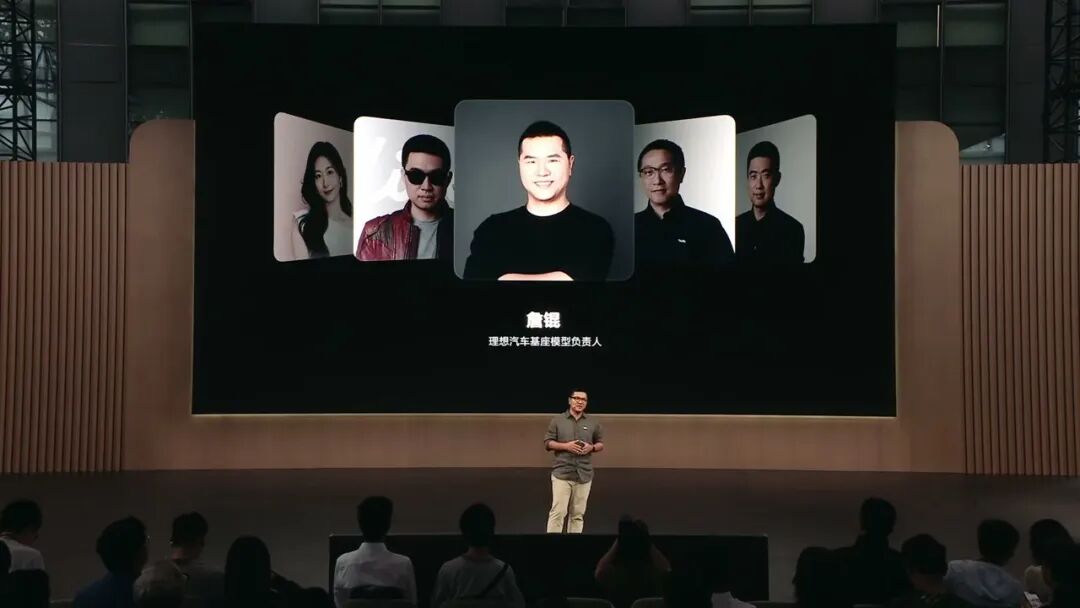
He compared the human brain to several parallel zones: language logic, thinking, and understanding instructions fall under 'linguistic intelligence,' while 3D visual perception and bodily motion control fall under 'machine intelligence.' Only when these are fused is a complete, usable embodied intelligence brain achieved (he specially (deliberately) noted that the brain region governing fear and emotions was intentionally excluded). 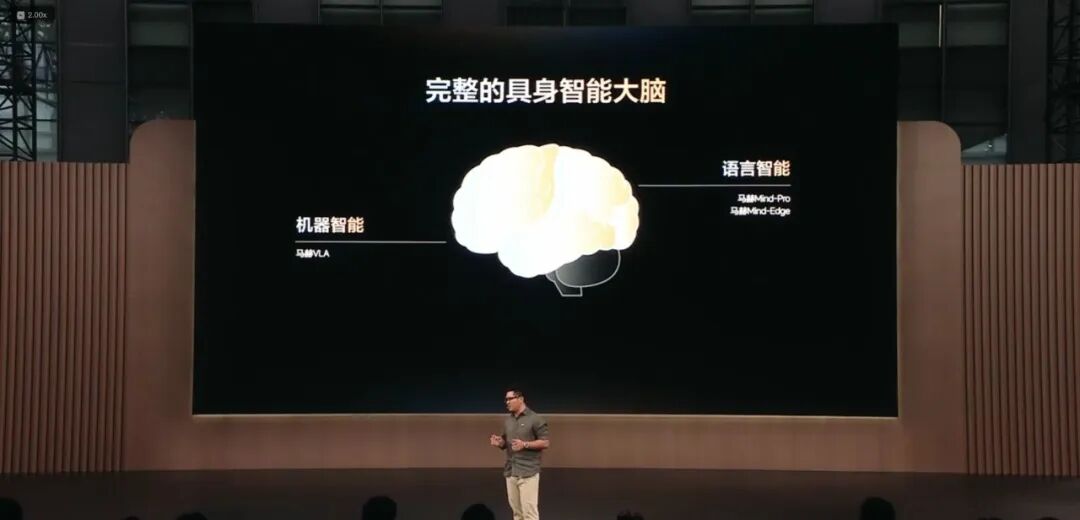
In the linguistic domain, Li Auto retired the familiar MindGPT as a 'warm-up' and introduced the new base large model, Mach Mind-4 series.
The cloud version is Mach Mind-Pro, positioned as a native Agent model. Officially, it ranks in the top tier across generally recognized (recognized) benchmarks like IFEval instruction following, LongBench-v2 ultra-long text, AIME26 advanced mathematics, and BFCL-v4 tool invocation. It also outperforms most mainstream models in Agent-specific rankings and real-world testing. More tangibly, its engineering metrics show a 38% reduction in average token consumption, a 47% reduction in redundant tool invocation rounds, a peak of 208 tokens/s, and inference efficiency more than double that of mainstream Agent models, backed by hundreds of business sandboxes and a self-developed hybrid RL training system. 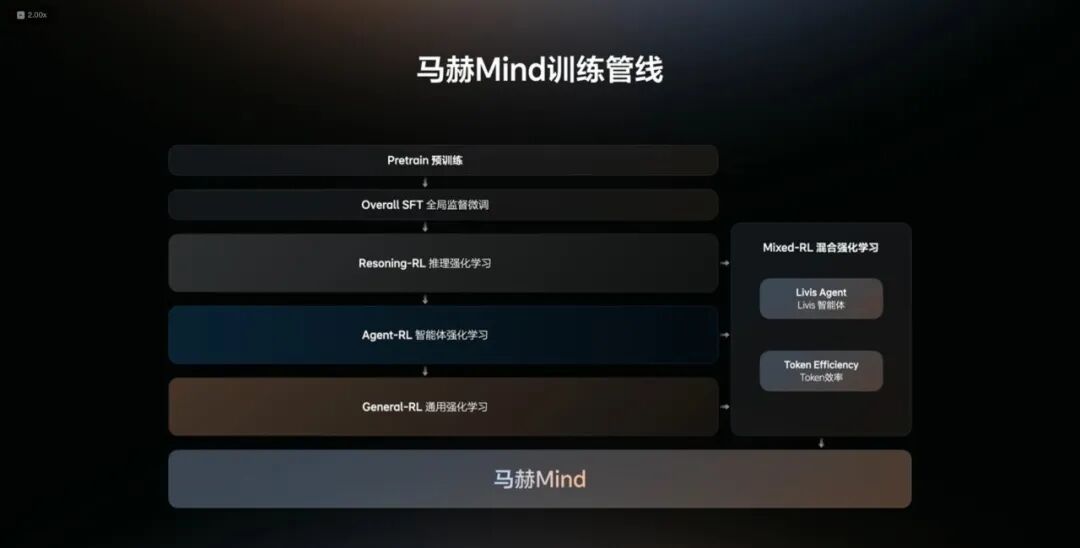
The edge version is Mach Mind-Edge, featuring multimodal streaming temporal modeling, always-on operation, entirely local execution on the vehicle, and no data upload. It emphasizes being 'not a crippled version of the cloud model but a native edge intelligence model designed for in-vehicle scenarios.'
In machine intelligence (intelligent driving), Zhan Kun candidly admitted weakness at the event. He said friends returning from the U.S. all told him the same thing—except Tesla, no domestic self-driving system is in the first tier. Last month, he personally drove FSD v14.3 in Silicon Valley for two weeks and returned with two thoughts: Tesla is incredibly strong, and the pressure is immense. He then outlined three upgrades for Mach VLA:
Safer—officially, as of June 14, Li Auto's intelligent driving systems have proactively avoided risks 17.27 million times, including 55,000 major avoidances, averaging about 12,000 proactive avoidances per day since 2022.
More efficient—the average human takes 0.45 seconds to react to danger and brake, with F1 drivers at 0.25 seconds. Mach VLA reacts in 0.28 seconds, approaching human physiological limits. At 120km/h, this extra fraction of a second translates to about 6 meters of additional braking distance. Behind this is a full-chain reconstruction from 'photon to wheel': visual input latency reduced by 47%, model inference chain shortened by 43%, drive-by-wire chassis response reduced by 38%, OS scheduling reduced by 28%, and end-to-end total latency reduced by 40%.
More capable—navigating around construction cones, slowing down for excavator arms, reversing to yield when space is insufficient, understanding gestures from security guards in yellow vests, and maneuvering through narrow rainy night alleys in Guangzhou's urban villages—these are 'human-like' capabilities.
Where does this capability come from? He cited three variables: dual Mach M100 in-vehicle computing power of 2560 TOPS, a 50% increase in imitation learning data, a 15-fold increase in reinforcement learning data, a 10-fold increase in model parameters, and a 15-fold increase in tokens processed per second. 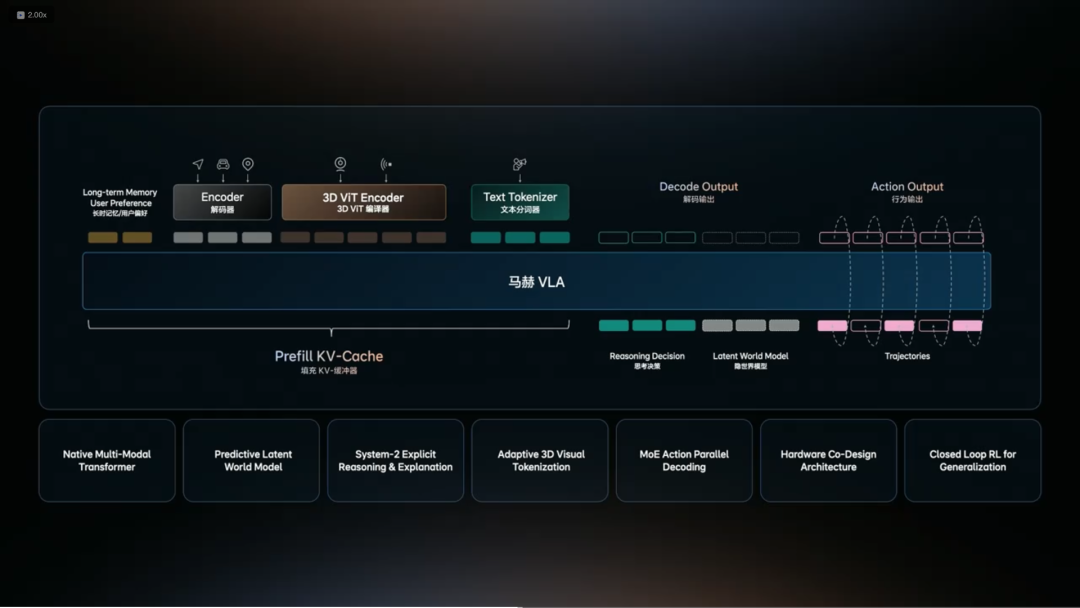
Architecturally, it unifies previously modular structures for perception, prediction, and planning into a native multimodal MoE large model, aligning 'seeing—understanding—thinking—acting' from the outset within a single framework. It also proclaims a three-dimensional integration of Mach VLA → Mach World Model → RL Info. 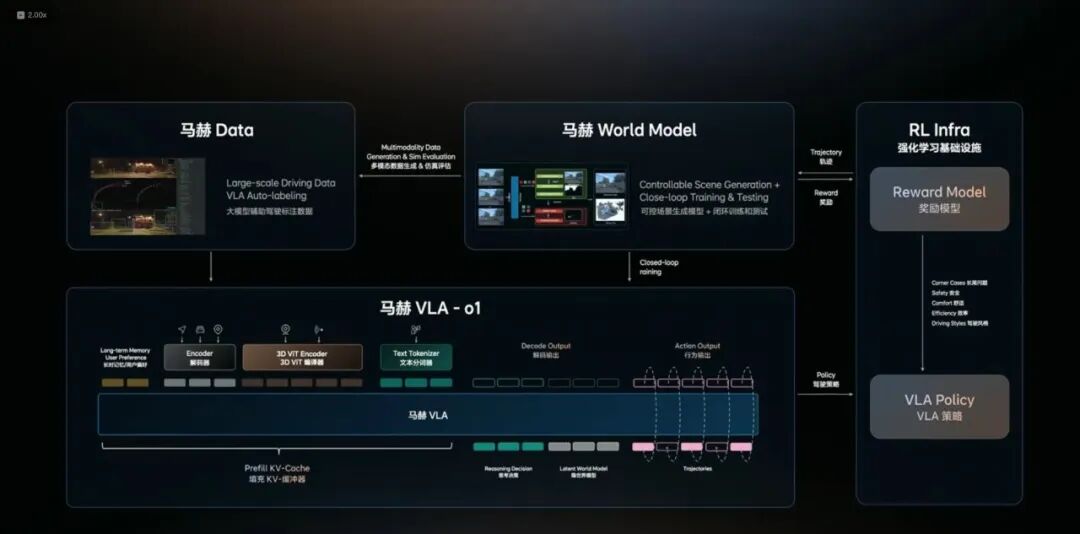
He specifically criticized the industry's obsession with LiDAR line counts: no matter how high (128, 256, 512 lines), LiDAR cannot read traffic light colors, understand road signs, or recognize security guard gestures. Therefore, Li Auto uses 3D ViT to enable the system to 'see and understand,' increasing visible distance by 50%.
3. Chip: Mach M100, the World's First Dataflow AI Chip
CTO Xie Yan's chip segment was the most information-dense part of the event. He first reviewed the disappearance of dual dividends from Moore's Law and Dennard scaling, as well as the seventy-year dominance of the Von Neumann architecture (instruction queues masking parallelism, wasting vast numbers of transistors on scheduling rather than actual computation). He then presented Li Auto's choice: dataflow architecture—removing the central instruction queue and letting data flow drive computation. This architecture was actually proposed by several MIT professors in the 1970s. Xie Yan encountered it during his graduate studies but noted it had not been commercially viable at scale until now because its advantages only emerge at sufficient computing scale, and programming/debugging are more challenging. AI computing, however, has brought together these prerequisites. 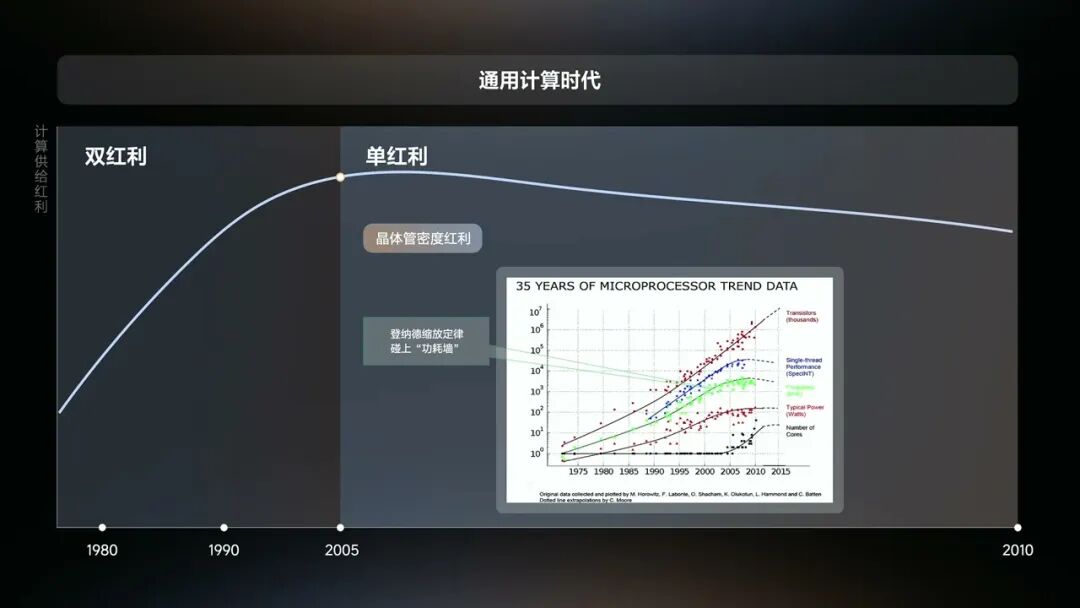
Key specs of Mach M100: 5nm automotive-grade process, 1280 TOPS per chip, actual operational efficiency exceeding 82% (much higher utilization than typical GPUs). Over half the wafer area is dedicated to the NPU, officially described as 56 computing units paired with data processing modules, interconnected via a mesh bus and data ring bus. The CPU is a 24-core Arm A78AE@2.3GHz for safety and system control, with 8 channels of LPDDR5X and 273GB/s bandwidth. 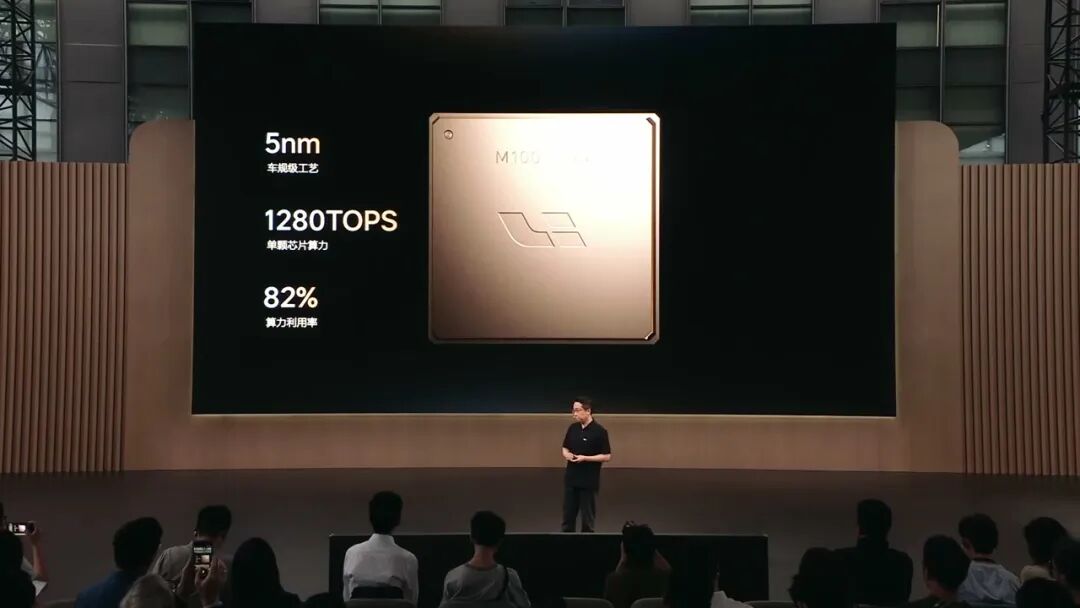
The comparison metrics are aggressive: On the core model, the effective computing power is 3 times that of NVIDIA Thor-U—and it's multiple times ahead, not just slightly leading. Even when deploying the Qwen3.5-35B general large model on the M100 and comparing it to a DGX Spark desktop supercomputer priced at around 40,000 RMB, officials claim a 2.7x faster prefill speed and a 1.5x faster decode speed. Academic endorsement comes from the architecture paper, *M100: An Orchestrated Dataflow Architecture Powering General AI Computing*, which was selected for the industrial track at ISCA 2026—Li Auto claims to be the first in the automotive industry history, with the team set to share their insights at the conference on June 30. 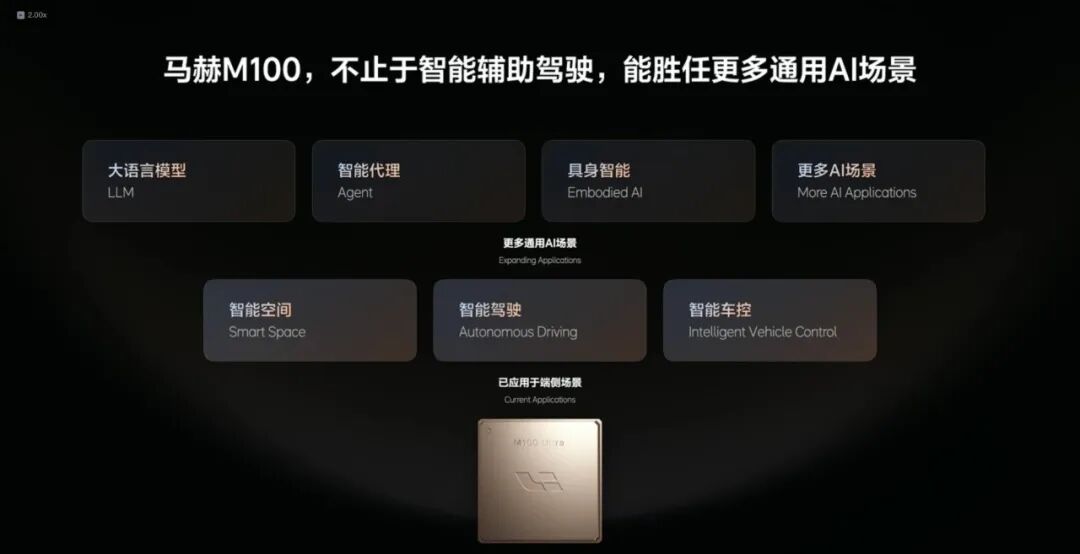
Additionally, Xie Yan stated that this chip is not limited to automotive applications but is designed for broader intelligent AI use cases.
Having a chip alone is not enough. Li Auto has developed the Xinghuan OS on top of the M100, emphasizing that it is AI-native from day one, with full integration of perception, decision-making, and execution. Paired with a full drive-by-wire chassis, it reduces end-to-end latency to 0.28 seconds, 40% faster than human response. Regarding safety, Xie Yan drew a comparison to Apple: Apple's security stems from designing chips and systems together from the power-on moment. Since vehicle chip attacks threaten lives, Li Auto has integrated key protection, trusted boot chains, and permission controls directly into chip design, achieving full-stack self-research across chips, compilers, operating systems, AI algorithms, and pre-controllers.
4. Product: A Car = Four Things
Finally, Li Xiang took the stage to discuss the product. He said many ask, *"Is embodied AI a robot, AI, or intelligent driving?"* He believes these are merely capabilities, not products. He redefined the car as four things:
An electric vehicle (embodied intelligence requires a body that can move and arrive),
A professional driver (not just assisted driving—understanding road risks and rules, completing trips independently),
An AI computer (more powerful than flagship smartphones or PCs, with unified memory and VRAM, built for large models),
A life assistant (you assign tasks, it understands your habits). Combined, these four aspects are not four products but one—Li Auto.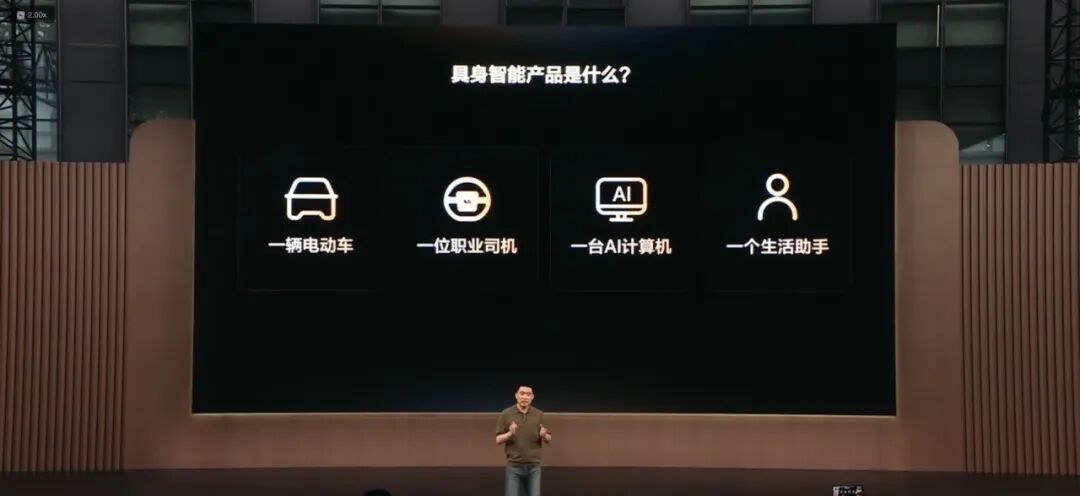
Two product managers conducted a series of real-time Livis Agent demonstrations (clarifying they ran on the actual model, not preset scripts): From rule-based commands like *"Close the windows, set ambient lights to orange, and AC to 18°C"* to complex tasks like *"A friend is flying CA1314 to Beijing, vegetarian—arrange a welcome dinner in Wangjing and plan the route,"* to *"A one-day tour of the Eight Great Sights of Yanqing"* (the Agent autonomously excluded two closed attractions), and finally, an ultra-complex multi-point task where *"The factory director"* picked up four children and a spouse in disorganized order, culminating in celebrating a birthday for the youngest child in Sanlitun (the demo even included a real-time *"fail"* and restart, adding authenticity). Vehicle control demonstrations included soothing a child in the second row to sleep (automatically lowering volume, playing lullabies, adjusting gentle airflow, and dimming lights), as well as the vehicle autonomously pulling over and communicating with the owner when lidar was obstructed, navigating to a Supercharger at Xinguozhan Exhibition Center (with the owner only speaking once), and executing a U-turn in a narrow space while *"politely communicating"* with oncoming traffic.
5. Upcoming OTA Schedule
Li Xiang said there are many updates planned for the second half of the year, but three key milestones stand out:
July: 30% overall improvement in intelligent driving efficiency, ensuring even novices can safely navigate scenarios like width-restricted barriers and height-restricted gantries. The demonstrated travel/tour guide Agent skills go live. The *"Car Friend Intercom"* feature for convenient group travel launches (more convenient than WeChat, no extra devices needed). The *"One Degree Every Two Days"* sentry mode debuts. The active suspension's convenient tire-changing capability also arrives in July. 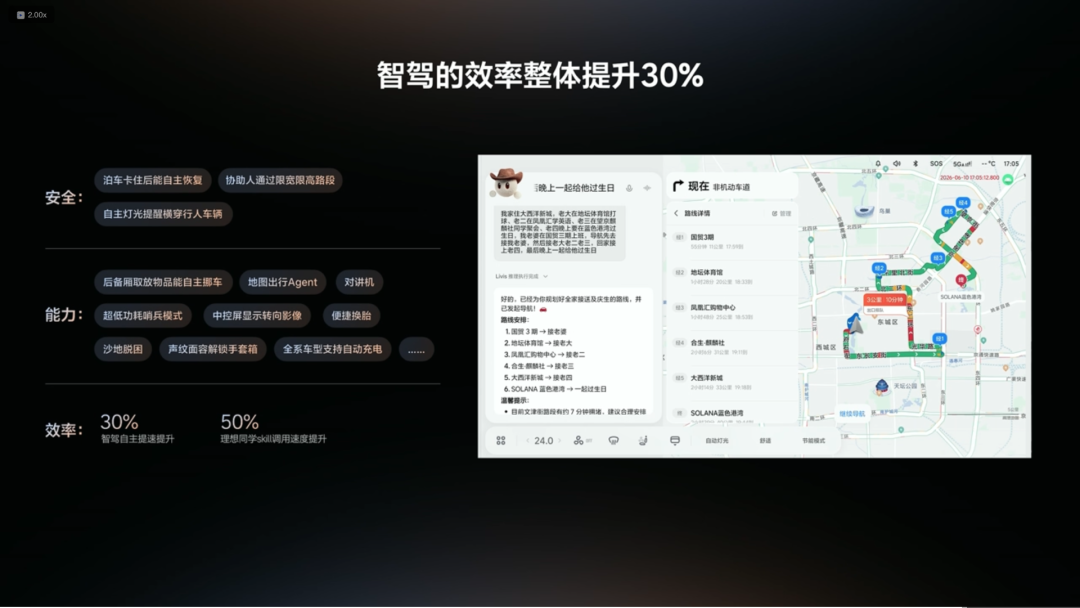
September: The system learns to reverse comprehensively like a human, handling narrow road meetings and reverse yielding. It manages complex road surfaces using active suspension, controls smart floor locks and garage doors at home, and connects the Agent to your computer and phone to access Feishu and WeChat information. The ultrawide CarPlay with lossless Apple Music quality for music enthusiasts launches. 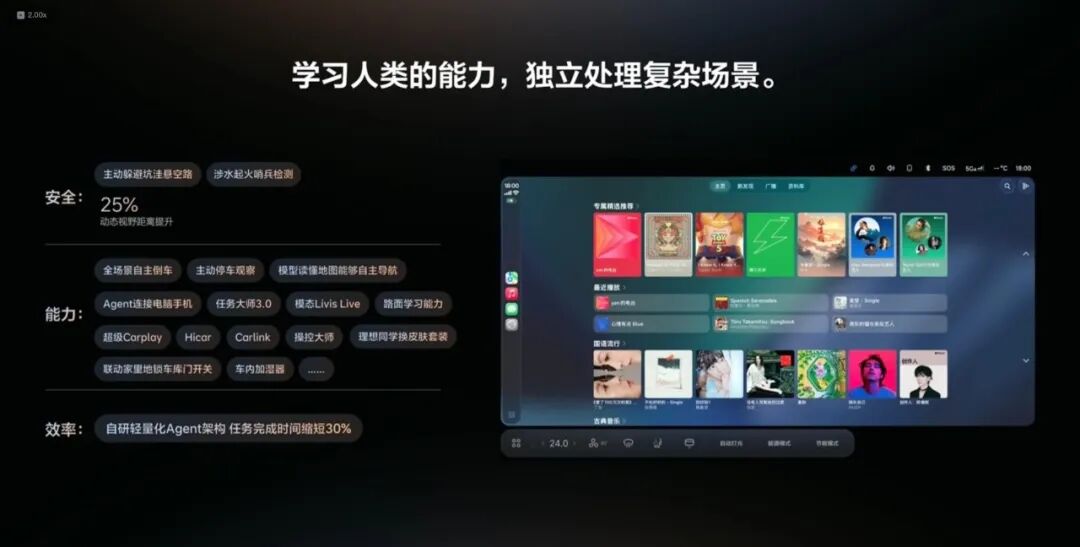
December: Safety and efficiency fully surpass human capabilities. When the driver accidentally exits by touching the steering wheel or fails to steer enough to avoid risks, Livis takes over like a professional racer to find the safest trajectory. It follows traffic police directions during dredge , automatically switches accounts via non-facial ID when approaching the vehicle, and syncs driving settings upon sitting down. The M100's potential is further unlocked, boosting response speed to 0.2 seconds—56% faster than humans, surpassing F1 driver reaction times, according to officials. 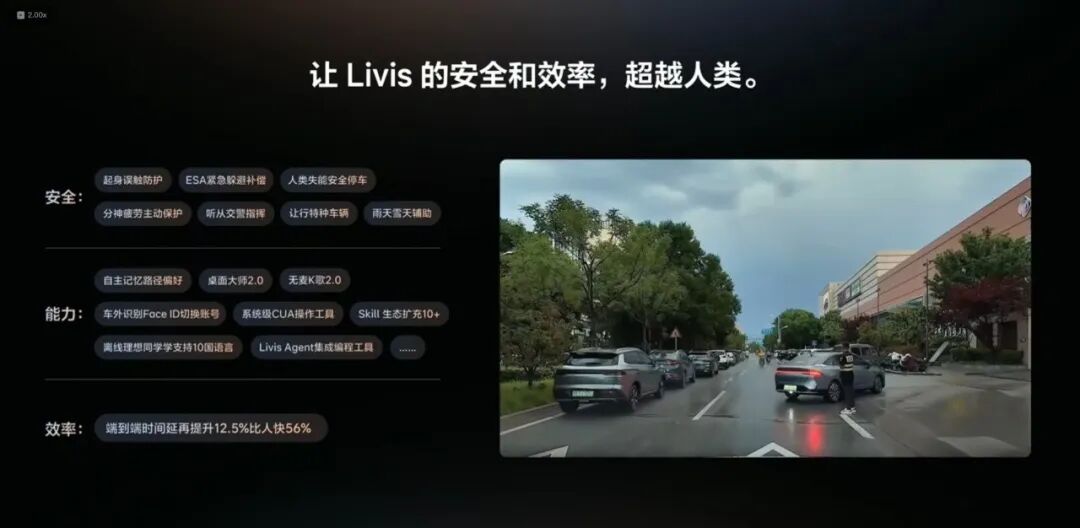
Additionally, the intelligent driving model's evolution roadmap: A new Mach VLA version rolls out to AD Max users in Q3, with overall capabilities aligning with Tesla FSD V14 by Q4. The rhythm (pace) is clear: July addresses *"high-frequency but awkward"* pain points, September extends the Agent from infotainment to *"vehicle control + external device connectivity,"* and December is when they truly claim *"surpassing humans."*
6. Industry Perspective: Analyzing the Launch Event
Noteworthy Strengths:
First, Li Auto is one of the few domestic automakers to achieve full-stack self-research across chips, compilers, operating systems, models, and pre-controllers. Their *"model-chip co-development"* approach mirrors Apple's vertical integration. Xie Yan himself used Apple as an analogy—the OS guides chip design, while the chip provides differentiated capabilities unavailable in off-the-shelf solutions. This is a true long-term competitive moat.
Second, if the dataflow architecture truly achieves 82% utilization in mass production, it challenges NVIDIA's GPU paradigm itself—far more significant than merely adding TOPS. Its selection for the ISCA industrial track suggests this is not just marketing hype.
Third, the *"embodied intelligence"* narrative is brilliant: It unifies cabin interaction, intelligent driving, and in-vehicle Agents—three previously siloed domains—into a single framework of *"safety/capability/efficiency dimensional upgrades,"* one dimension higher than competitors focusing solely on lidar line counts or screen sizes. The edge-native large model + Agent-based vehicle control is a differentiated direction unmatched by Huawei, XPENG, or Tesla's current roadmaps.
But a few cautions:
First, don’t be misled by raw compute numbers—Li Auto itself is most aware of this: Xie Yan’s team deliberately omitted TOPS in their ISCA paper, arguing that in the VLA/World Model era, pure AI matrix compute matters less—scalar and vector compute are key. In other words, the 1280/2560 figures shouted in the launch event are more for public appeal; true experience depends on effective compute and architectural efficiency. The real test lies in mass production—yield rates, capacity, per-unit costs, and scaling—factors not discussed in the launch but critical to this full-stack approach's viability.
Second, *"Q4 alignment with FSD V14"* is an extremely high bar. Li Xiang himself admitted the pressure. Tesla is not standing still, and alignment claims require time-based validation, not just launch-day announcements.
Third, while 17.27 million active risk avoidances are impressive self-reported data, they lack third-party standardization. *"Faster than humans"* robustness in long-tail extreme scenarios is the true litmus test.
Fourth, while the hyper-complex Agent demos (disorganized pickup of four children, Eight Great Sights tour) were stunning, they showcased capability boundaries rather than daily high-frequency needs. Moreover, ecosystem capabilities like Feishu, WeChat, CarPlay, and Apple Music depend heavily on third-party openness—Li Auto can only control half the equation.
Broadly, this launch signals a industry shift from *"software-defined vehicles"* to *"AI-defined vehicles."* Li Auto aims to seize paradigm-defining authority—pressuring suppliers like Horizon, NVIDIA, and Qualcomm while escalating the automaker chip self-research arms race.
Final Thoughts
Li Xiang’s closing remark at the launch was restrained: *"Li Auto insists on being the best version of itself, not expecting us to become someone else."* Paired with his narrative of *"building a mobile home in the past decade, now Empowering Life (endowing the car with life) in the next,"* the ambition is clear—he doesn’t just want a smarter car; he wants to redefine what a *"car"* is.
Whether this *"embodied intelligence"* represents a true paradigm leap or another half-step conceptual marketing campaign won’t be answered by launch applause. The truth lies in the July, September, and December OTA updates—and after the Mach M100 scales massively—in users’ real-world experiences in alleys, rainy nights, and those critical takeover moments.
*Unauthorized reproduction or excerpting is strictly prohibited.*
-
![]()
Xingyuan Intelligence Unveils World Model ω-EVA, Elevating Embodied Intelligence to New Heights
-
![]()
Xinliu Exclusive: Nubia Fully Commits to Second-Gen Doubao AI Smartphone
-
![]()
No grace period for beginners! Saido Tech goes straight into battle from the start
-
![]()
Mercedes-Benz Slashes Price for Its Iconic Three-Pointed Star Emblem: All-Electric GLC Starts at 349,000 RMB
-
![]()
Ideal Livis Day: Ideal Declares 'Smart Cars' Dead
-
![]()
Zhuiguang S Captures Attention: A Review of the Latest High-Design New Cars from the MIIT
-
![]()
Xinliu Exclusive: Nubia Goes All-In on Its Second-Gen Doubao AI Smartphone
-
![]()
After ‘Cutting Through the Noise’ on 100,000 Orders, How Impressive Is BYD’s Tang?