Mercedes-Benz Slashes Price for Its Iconic Three-Pointed Star Emblem: All-Electric GLC Starts at 349,000 RMB
 06/16 2026
 504
504
Lead
Mercedes-Benz has recently launched pre-sales for its all-electric GLC, with a starting price of 349,000 RMB. This move signals the brand's shift away from its previous 'retrofitted electric' models and overpriced strategies. As this 'comeback' model, boasting genuine specifications, goes head-to-head with the established value barriers of Chinese new energy competitors, will the three-pointed star emblem at this price point be a true game-changer for Mercedes-Benz in China, or will it mark the final, defiant swan song for German luxury in the Chinese market?
Published by | Heyan Yueche Studio
Written by | Cai Yan
Edited by | He Zi
Full text: 1,861 characters
Reading time: 3 minutes
Mercedes-Benz has announced the pre-sale price for its all-electric GLC, with an official launch expected in July. There is potential for the actual entry-level price to decrease further upon market release.
By setting the pre-sale price of the all-electric GLC at 349,000 RMB, Mercedes-Benz implicitly acknowledges, to a certain extent, the diminished premium value of its iconic three-pointed star emblem in the electric vehicle era. Will this belated display of sincerity and humility secure a renewed foothold for Mercedes-Benz in the Chinese market?
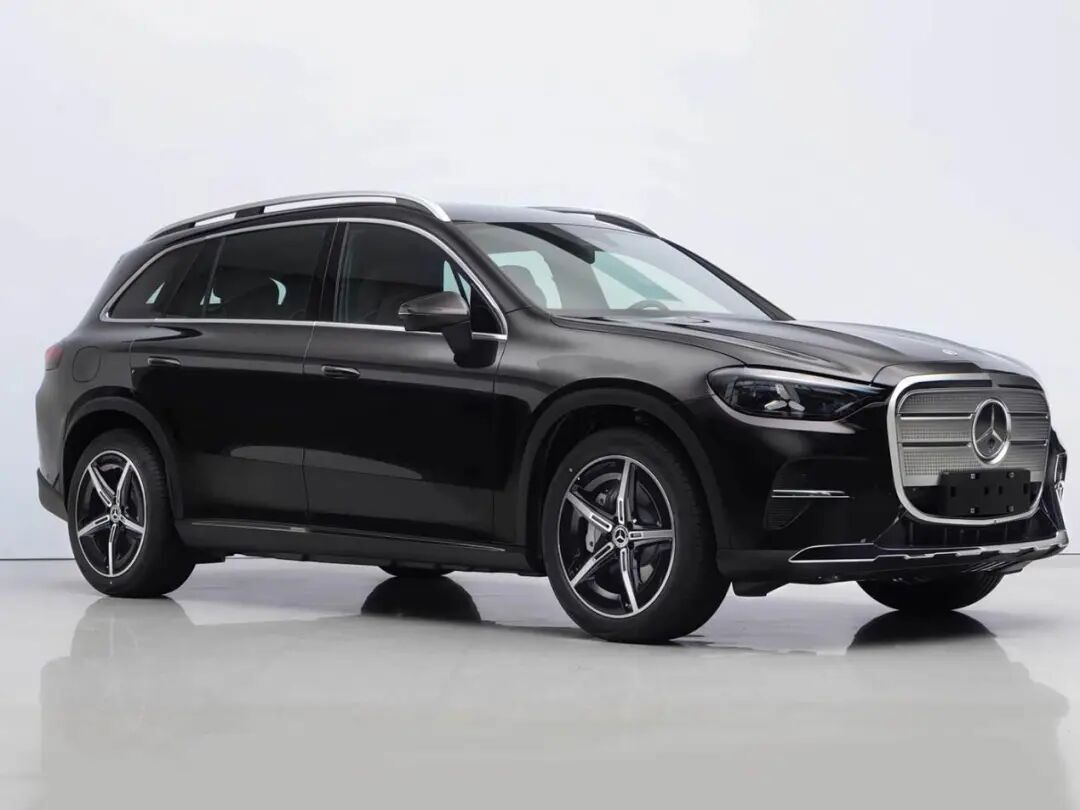
△ Can the Mercedes-Benz All-Electric GLC Uphold the Dignity of Traditional Luxury Cars?
Farewell to 'Retrofitted Electric': The Last Stand of German Luxury
On June 5, Mercedes-Benz opened pre-sales for its all-electric GLC, starting at 349,000 RMB. As the first domestically produced long-wheelbase model developed on the dedicated MB.EA electric platform, it marks Mercedes-Benz's formal departure from 'retrofitted electric' models and inflated pricing strategies in the Chinese market. Reflecting on Mercedes-Benz's electrification journey, its first all-electric model, the EQC, launched in 2019, was essentially a 'retrofitted electric' version of the fuel-powered GLC platform. It was equipped with an 80kWh battery and offered an NEDC range of just 415 kilometers, while the Tesla Model X of the same period already exceeded 500 kilometers in range. Subsequently, although Mercedes-Benz introduced the EQE and EQS based on the EVA platform, their market performance remained lackluster. The flagship EQS sold only about 200 units in the Chinese market in 2025, with cumulative sales of the entire EQ series falling short of 5,600 units in the first seven months of 2025.
The all-electric GLC represents the first truly purpose-built mid-size luxury SUV designed from the ground up for electric mobility. Compared to the fuel-powered version, its wheelbase is extended by 50 millimeters to 3,027 millimeters, providing an additional 128 liters of front trunk space. This fundamentally avoids the inherent drawbacks of retrofitted electric models, such as cramped space, higher energy consumption, and limited fast-charging capabilities.
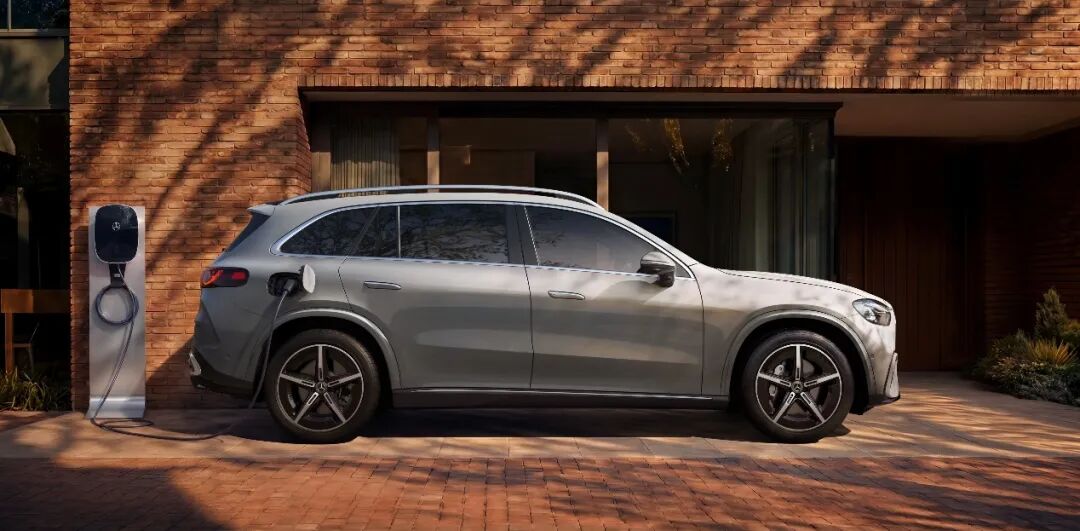
△ Mercedes-Benz All-Electric GLC Built on the MB.EA Electric Platform
In terms of electrification technology, the all-electric GLC showcases Mercedes-Benz's tangible progress in catching up. It features an 800V high-voltage architecture, an 85.5kWh ternary lithium battery, and achieves a maximum CLTC range of 703 kilometers. With a peak charging power of 320kW, the battery can charge from 10% to 80% in just 22 minutes. Notably, the vehicle boasts a class-exclusive electric two-speed transmission and a DCU four-wheel-drive disconnection device. Under normal driving conditions, the front axle is disconnected for rear-wheel-drive operation to reduce energy consumption, while instantaneously switching to four-wheel drive during rapid acceleration or on slippery roads, balancing efficiency for both urban commuting and highway cruising. The intelligent cockpit features a 39.1-inch MBUX Hyperscreen paired with an AI assistant 'Xiao Ben,' powered by the Doubao large model, capable of accurately recognizing various dialects such as Cantonese and Sichuanese. This level of localization far exceeds any previous Mercedes-Benz model. The intelligent driving system, jointly developed by Mercedes-Benz and Momenta, enables navigation-assisted driving for both urban and highway scenarios nationwide upon launch. It will achieve 'parking spot-to-parking spot' full-scenario intelligent driving capabilities via OTA updates within the year. At the chassis level, it comes standard with AIRMATIC air suspension derived from the S-Class and bidirectional 4.5-degree rear-wheel active steering, reducing the turning diameter to just 11.3 meters, striking an optimal balance between handling and comfort.
From the retrofitted EQC to today's native MB.EA platform, Mercedes-Benz has at least taken a step in the right direction, which deserves recognition. However, the starting price of 349,000 RMB is the most surprising aspect of this vehicle. It is nearly 100,000 RMB lower than the on-road price of the fuel-powered GLC L, indicating that Mercedes-Benz has finally realized a truth: in the electric era, the halo of the three-pointed star emblem is no longer sufficient to compensate for technological shortcomings. Sincere specifications and humble pricing define the true essence of this vehicle.
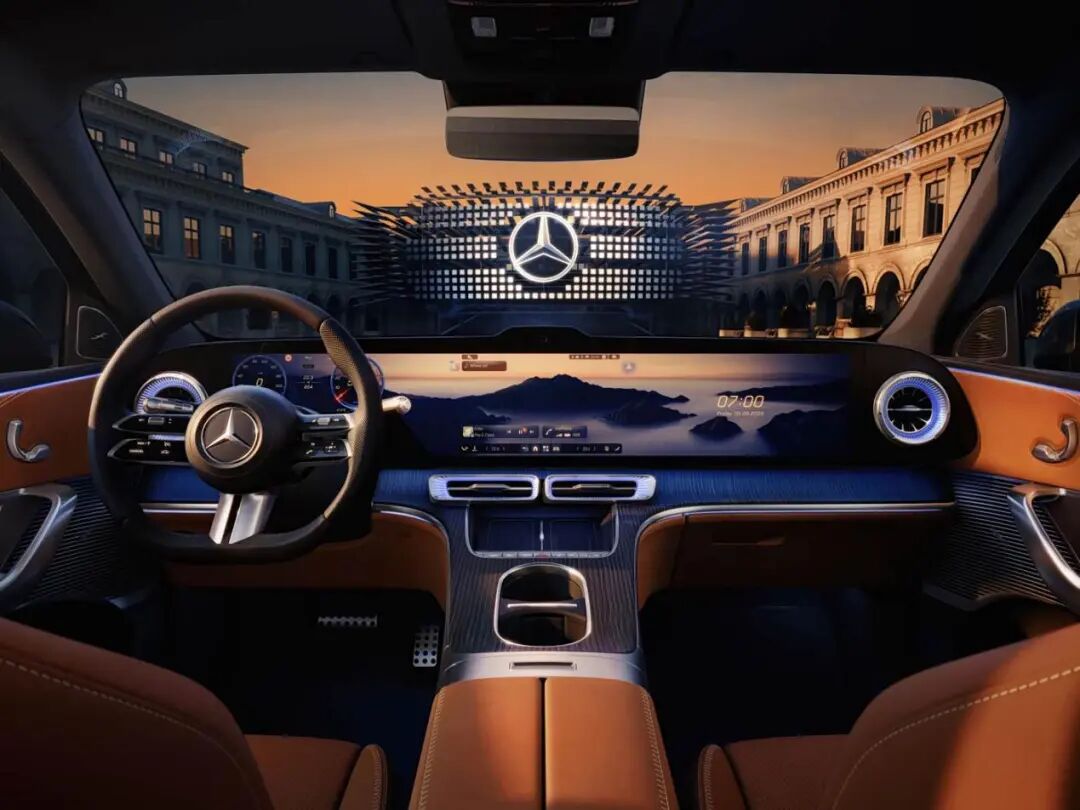
△ Mercedes-Benz All-Electric GLC Equipped with 39.1-Inch MBUX Hyperscreen
Luxury Brands at a Crossroads
The launch of the Mercedes-Benz all-electric GLC represents more than just the success or failure of a single model; it reflects the dilemmas faced by traditional luxury brands like Mercedes-Benz during the painful transition to new energy. Mercedes-Benz is not alone in this pressure. In 2025, BBA (Mercedes-Benz, BMW, Audi) saw their sales in China plummet across the board: Mercedes-Benz at 575,000 units, a 19.5% year-on-year decline; BMW at 625,500 units, down 12.5%; and Audi at 617,500 units, a drop of approximately 5%. The downturn intensified in the first quarter of 2026, with Mercedes-Benz sales plunging 27%, BMW declining 10%, and Audi falling 12%. The situation is even more dire in the new energy sector, where Mercedes-Benz's EQ series struggles to break 1,000 monthly sales, and the first all-electric EQC exposed retrofitting flaws after a recall notice recommended 'not charging beyond 80%.' By April 2026, China's new energy vehicle penetration rate had surpassed 60%, yet luxury brands collectively remain minor players, instead being surrounded and outpaced by domestic new energy rivals, widening the gap.
The Mercedes-Benz all-electric GLC is undoubtedly a strong contender. With a starting price of 349,000 RMB, a native MB.EA platform, 800V architecture, and a 703km range, it has the confidence to compete in the 350,000 RMB market segment. However, a single model is far from enough to turn the tide. In the second quarter of 2026, BBA simultaneously reduced dealer sales targets by 20% to 24% to alleviate channel pressure, reflecting the dilemma traditional luxury brands face between pricing and profitability. The strategic window for traditional luxury brands is rapidly closing. If they fail to replicate the reformative sincerity represented by the Mercedes-Benz all-electric GLC across their entire product lineup and establish research, development, and service systems in sync with local new energy rivals, the former 'luxury ceiling' of the fuel era may gradually lose its stature in China's new energy market. Conversely, if they seize this opportunity to accelerate comprehensive transformation, leveraging their deep engineering heritage and brand moat, traditional powerhouses may still regain their footing. However, this comeback battle allows no room for further setbacks.
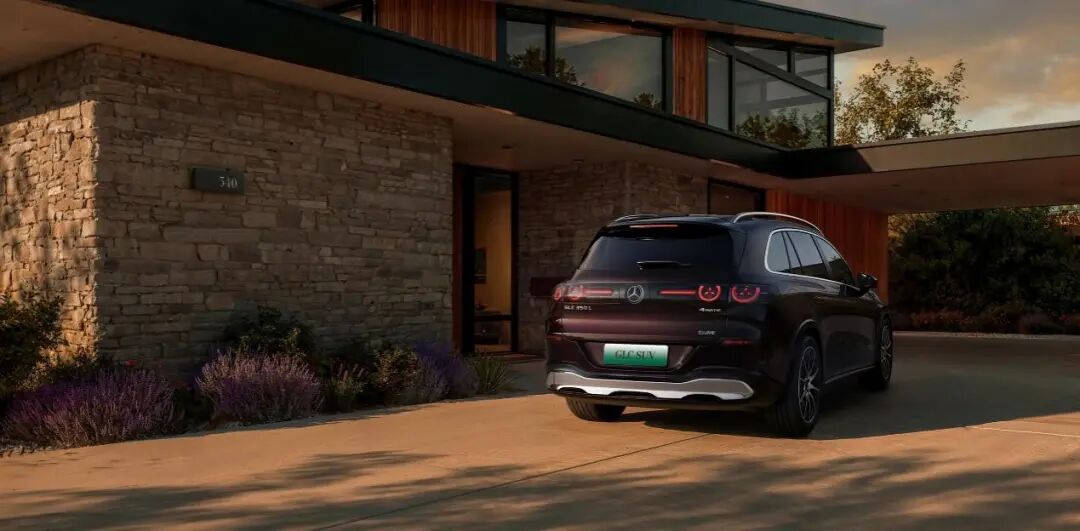
△ Mercedes-Benz's Electric Innovation Must Continue
Commentary
The challenge for luxury brands like Mercedes-Benz is not merely to build a good vehicle but to reconstruct an entirely new logic for engaging with the Chinese market in the new energy era. The three-pointed star emblem at 349,000 RMB may indeed become a turning point for Mercedes-Benz in China's electric battlefield. However, this requires more solid products like the all-electric GLC, along with sustained systemic innovation in product definition, technological pathways, and market strategies. Otherwise, this new model may merely serve as the last, defiant swan song for German luxury in China.
(This article is original to Heyan Yueche and may not be reproduced without authorization.)
-
![]()
Xingyuan Intelligence Unveils World Model ω-EVA, Elevating Embodied Intelligence to New Heights
-
![]()
Xinliu Exclusive: Nubia Fully Commits to Second-Gen Doubao AI Smartphone
-
![]()
No grace period for beginners! Saido Tech goes straight into battle from the start
-
![]()
Mercedes-Benz Slashes Price for Its Iconic Three-Pointed Star Emblem: All-Electric GLC Starts at 349,000 RMB
-
![]()
Ideal Livis Day: Ideal Declares 'Smart Cars' Dead
-
![]()
Zhuiguang S Captures Attention: A Review of the Latest High-Design New Cars from the MIIT
-
![]()
Xinliu Exclusive: Nubia Goes All-In on Its Second-Gen Doubao AI Smartphone
-
![]()
After ‘Cutting Through the Noise’ on 100,000 Orders, How Impressive Is BYD’s Tang?