GPT-5.6 Faces Access Restrictions: Could Overseas Supply Cuts Fuel Domestic AI Growth?
 06/29 2026
 564
564
Overseas Restrictions, Domestic Opportunities
Early on June 27, Beijing time, OpenAI officially launched the much-anticipated GPT-5.6 series models. However, unlike previous releases, GPT-5.6 is not freely accessible to the general public or small businesses; instead, it operates under a highly restrictive preview mode.
Specifically, the release schedule and access permissions were directly shaped by U.S. regulatory bodies, with only a select few, rigorously vetted companies and institutions gaining entry.
This situation mirrors recent events with Anthropic's flagship model, where U.S. authorities swiftly imposed stringent restrictions on its advanced iterations due to potential security risks and export control concerns, effectively barring regular commercial users from access.
As the world's leading AI productivity tools face external intervention and limitations, it becomes clear that the era of unrestricted competition in AI technology has drawn to a close. For businesses, relying solely on overseas general-purpose large models for digital and AI-driven transformation is becoming increasingly precarious.
Regulatory Intervention Reshapes AI Landscape: Safety and Compliance Become Business Imperatives
The restricted rollout of GPT-5.6, along with Fable 5 and Mythos 5, signals that cutting-edge AI technologies now encounter significant hurdles during development. The more advanced the model and the closer it approaches Artificial General Intelligence (AGI), the less accessible it becomes as a public commercial infrastructure.
According to official sources, GPT-5.6 excels in autonomous code generation, advanced cybersecurity defense and offense, and pioneering scientific experimentation. These very capabilities, however, have raised red flags among U.S. regulators.
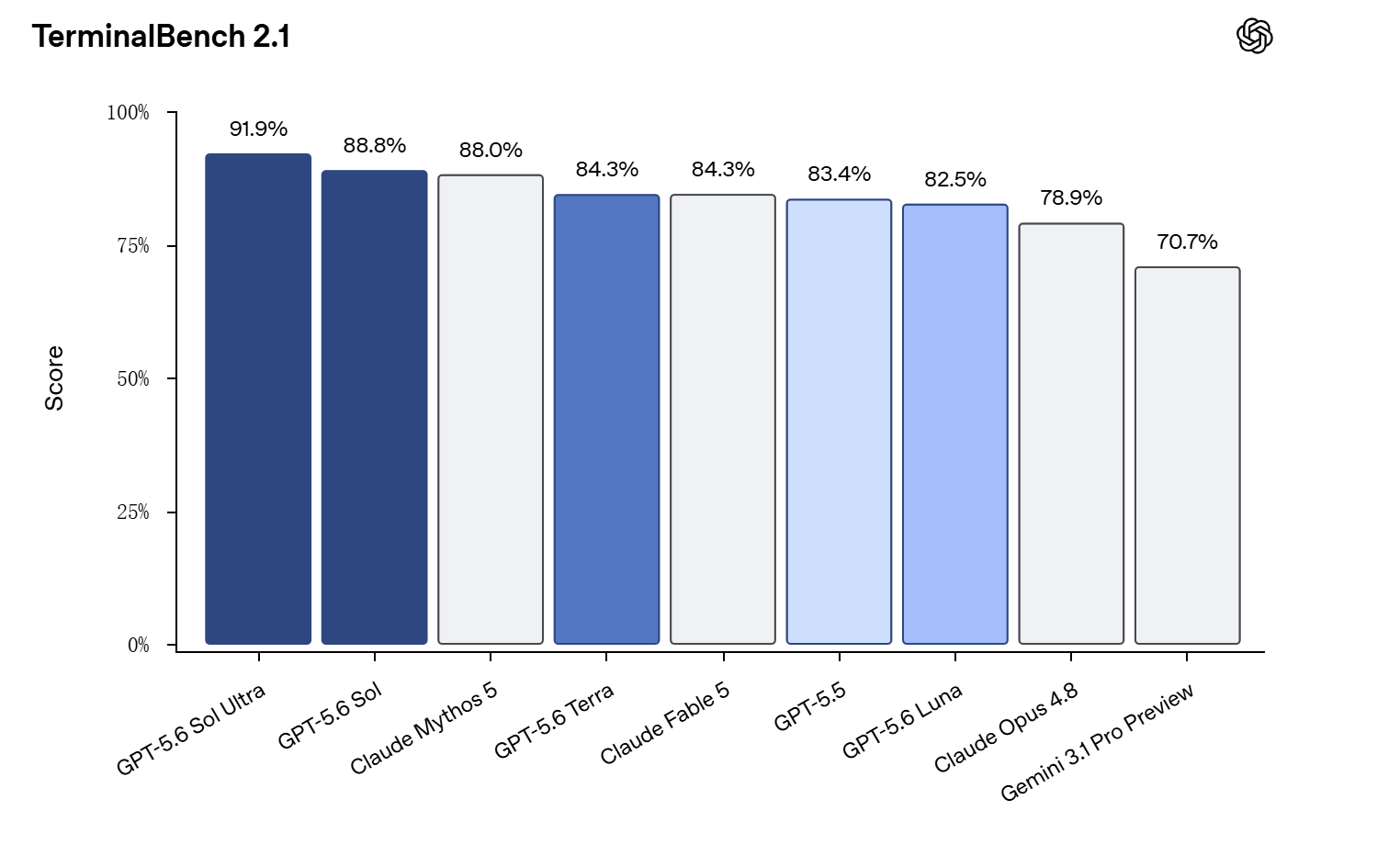
(Image credit: OpenAI)
Currently, regulatory oversight of large models has shifted from post-market accountability to pre-market access control. Previously, regulators worldwide focused on application-level issues like data privacy breaches and misinformation proliferation. The EU, renowned for its stringent privacy laws, has primarily fined AI companies for user privacy violations. For instance, in 2023, Italy temporarily banned ChatGPT due to information leaks, and in 2024, pressure from Ireland and the EU compelled Meta to cease using European user data for AI training.
Meanwhile, Chinese regulators introduced the Interim Measures for the Administration of Generative Artificial Intelligence Services in 2023, emphasizing intellectual property and personal information protection in AI governance. Additionally, generative AI services accessible to the public must undergo algorithm registration.
However, the U.S. authorities' client-by-client approval process represents the most aggressive regulatory stance, marked by significant administrative discretion. Under this system, leading overseas AI firms have effectively lost full control over their sales. Anthropic's prior isolation of core models and the current targeted release of GPT-5.6 are both outcomes of this regulatory model.
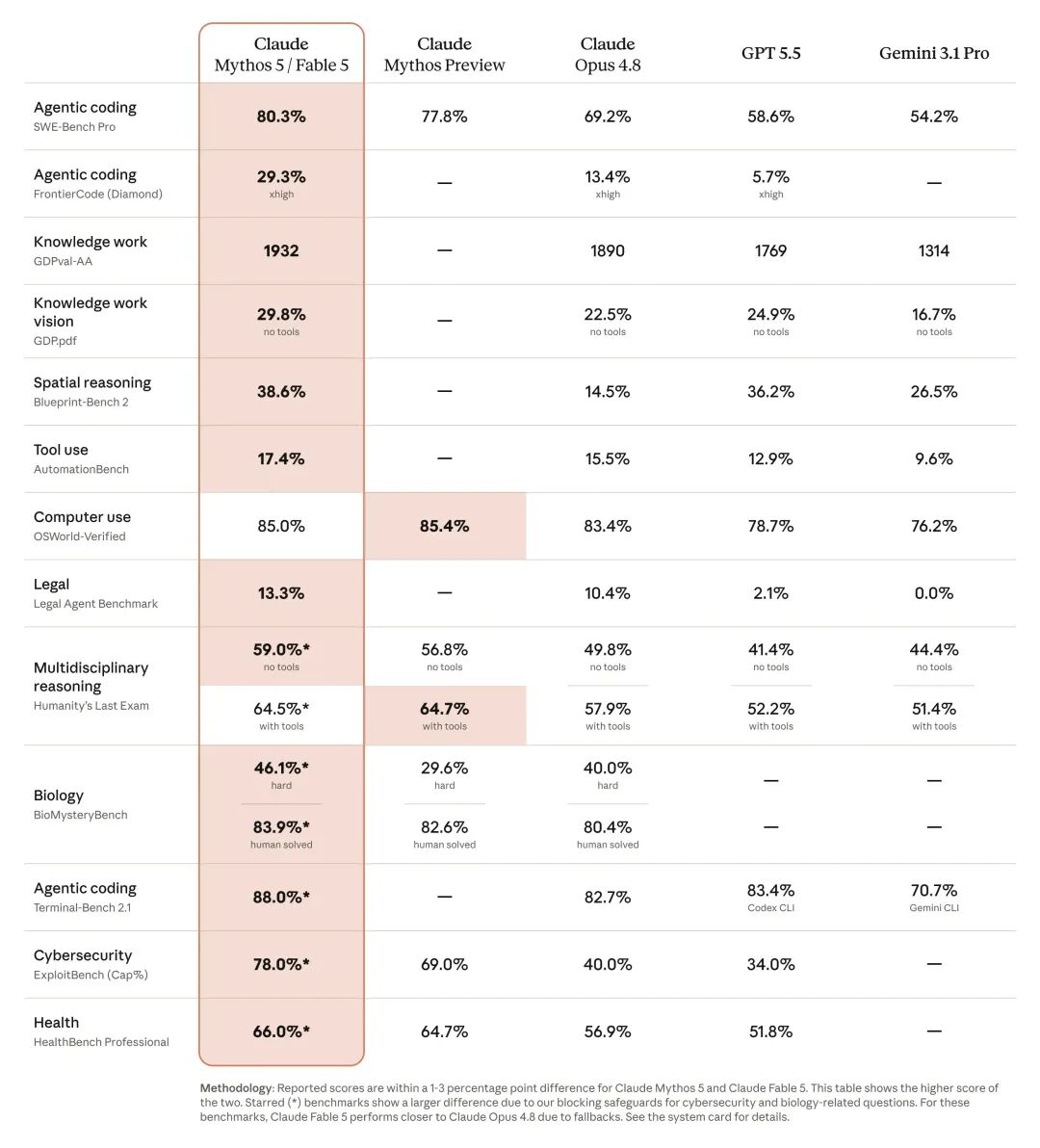
(Image credit: Anthropic)
For businesses globally seeking AI services, this external intervention spells disaster. Over the past few years, to keep pace with the AI revolution, many companies have deeply integrated overseas large models' cloud-based AI API interfaces into their customer service, risk management systems, and internal databases. This approach was straightforward and efficient—companies simply purchased technology and solutions from AI giants. But now, facing unpredictable regulatory mechanisms, this model has become highly vulnerable.
When deploying AI, safety and compliance have emerged as critical, non-negotiable factors. Compliance now extends beyond traditional legal adherence to encompass data sovereignty security. Imagine a multinational corporation whose daily operations heavily rely on an overseas AI system that could be abruptly shut down by a single regulatory ban—the associated risks are profoundly uncontrollable.
In the past, benchmark tests and performance metrics might have been key indicators for assessing a large model's commercial potential. However, moving forward, enterprise users will prioritize model compliance and stability. For instance, a localized model with only GPT-5.4-level technical capabilities but guaranteed compliance and uninterrupted supply could offer greater commercial value than the top-tier yet potentially supply-disrupted GPT-5.6.
Overseas Giants Cede Market Share: Domestic AI Seizes Opportunity
Historical precedents show that when external political interference disrupts a stable market ecosystem, it often creates a vacuum. While posing challenges for affected companies, it also presents unprecedented growth opportunities. Huawei serves as a prime example: faced with sweeping U.S. restrictions on chips, systems, and markets in previous years, Huawei initially encountered enormous difficulties but subsequently achieved successful domestic substitution. Its self-developed chips and HarmonyOS system have fully risen, becoming core advantages of Huawei's products and ecosystem.
The regulatory constraints on top large models from overseas giants like OpenAI and Anthropic have ceded a B2B market to domestic large models at a critical commercialization juncture. While the world's leading AI remains confined to a niche segment, the vast demand for AI from small and medium-sized enterprises, industrial giants, financial institutions, and overseas-expanding enterprises persists—offering domestic large models a breakthrough opportunity.
On June 17, Zhipu announced the launch and open-sourcing of GLM-5.2. Although this model still lags somewhat in overall capability compared to Claude Fable 5 and Claude Mythos 5, it demonstrates strong performance in long-term task scenarios. Shortly before Zhipu's new model release, Anthropic was compelled to restrict access to these two flagship models under regulatory pressure.
In contrast, GLM-5.2 is open-source, freely accessible, and unlimited in supply. Its stock price has soared, with a market value exceeding HK$900 billion. Moreover, Zhipu AI's API pricing has been raised multiple times this year, approaching that of overseas top models yet still in short supply.
Leitech (ID: leitech) attributes Zhipu's global popularity to two main factors: First, while Zhipu's large model capabilities may not match overseas leaders, they still rank among the industry's best, with robust Agent and application implementation capabilities. Zhipu provides B2B enterprises with numerous ready-to-use solutions to meet their cost-reduction and efficiency-enhancement needs. Second, Zhipu presents lower uncertainty risks compared to Anthropic's potential supply disruptions, making enterprise users more inclined to choose Zhipu.
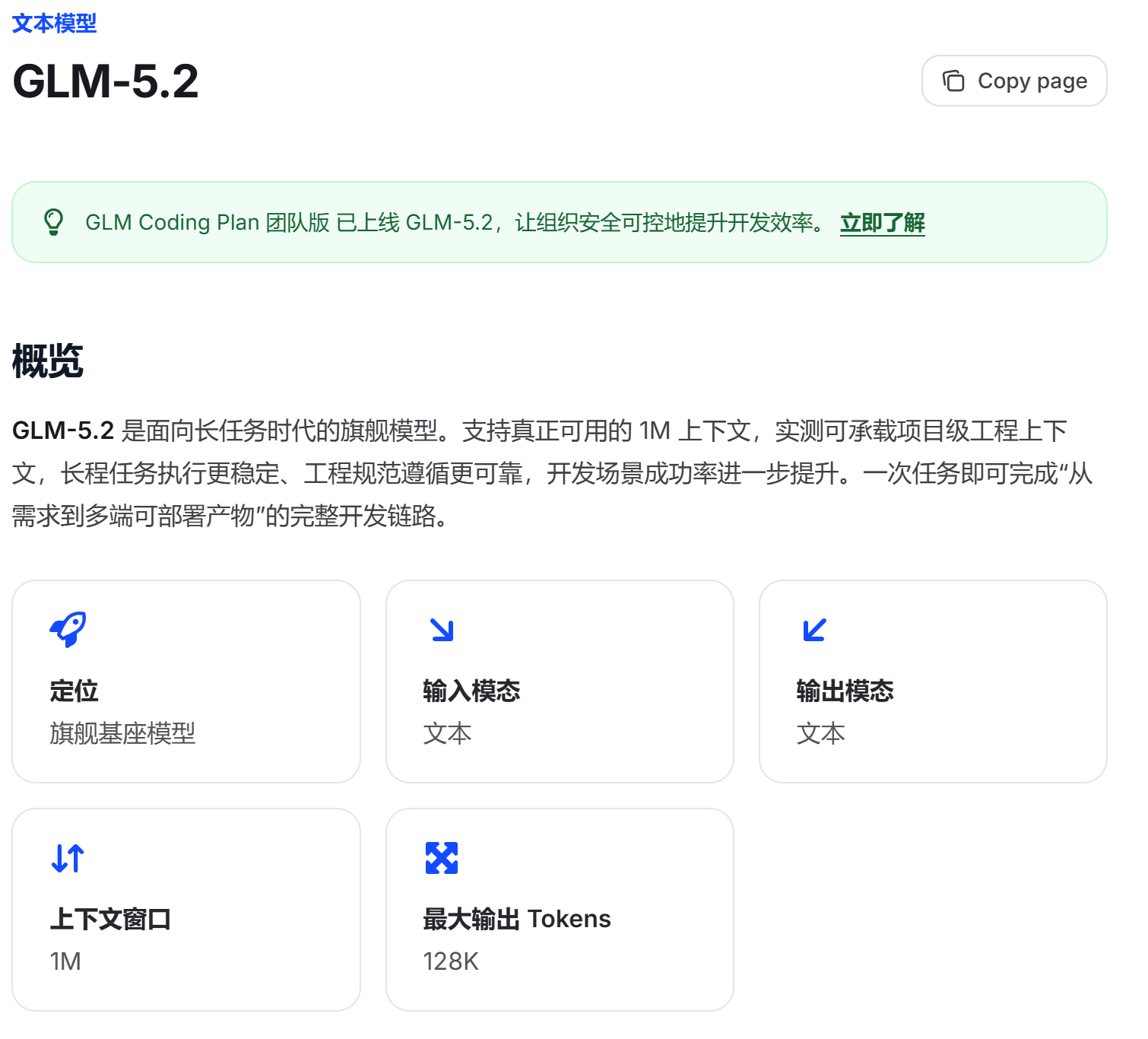
(Image credit: Zhipu)
Besides Zhipu, the domestic large model market includes leading firms like Alibaba's QianWen, ByteDance's Doubao, MiniMax, and DeepSeek. Their model offerings continue to evolve, with increasingly diversified commercialization strategies. For example, QianWen promotes upgrades to open-source large models, while Alibaba Cloud has achieved full-chain AI integration of interfaces, directly supplying customers with complete AI solutions. Doubao's paid professional version significantly enhances productivity, completing complex tasks faster and more stably; Seedance 2.0 is nearly unparalleled globally in video generation, having deeply penetrated the film and television creation industry.
The stringent restrictions on their own top models by countries across the ocean will inevitably drive many overseas enterprises to seek solutions in China. With a rich variety of vertical tracks and diversified commercial solutions, China's AI industry can meet their diverse needs. Meanwhile, domestic AI is entering a precious period of opportunity.
Enterprises Forge Their Own AI Paths: Open Source + Local Deployment as Strategic Breakthroughs?
As the AI wave surges, every industry undergoes transformation. Both individuals and enterprises widely experience AI anxiety—no one wants to be left behind. Many companies' initial response was to directly purchase technological solutions from AI giants, relying on them to empower their business operations, organizational structures, and even production processes with AI. However, the realization has dawned that AI supplies can be cut off, and using third-party cloud-based AI interfaces is essentially building on borrowed land. To truly mitigate risks, enterprises must transform AI capabilities into secure private assets.
Of course, it's impractical and uneconomical to expect all companies to develop AI from scratch and create their own large models. However, the explosive growth of open-source large model ecosystems provides foundational solutions for enterprises. In open-source communities like Hugging Face, excellent open-source models with parameters ranging from tens of billions to trillions abound. These models already offer sufficient basic reasoning capabilities and can serve as digital foundations for enterprises. By importing their own industry-specific private data, companies can customize exclusive models.
Additionally, the threshold for local deployment is not as high as perceived. Even individual users can run quantized versions of open-source large models on ordinary MacBooks with 16GB of memory released several years ago, deploying tools like Lobster to complete relatively simple AI tasks. For enterprises with larger budgets, utilizing several high-performance local servers or private cloud clusters can generally support internal AI operations. While hardware investment costs may increase initially, long-term savings on Token expenses and reduced uncertainty risks make it a worthwhile endeavor.
Furthermore, both enterprises and individuals are gradually shifting their focus from large models to Agents when it comes to AI. Simply put, compared to model parameters and performance scores, we care more about which real-world problems AI can solve. For most companies, they don't actually need the latest top models from OpenAI or Anthropic—what they need are capable Agents and Skills.
For example, in a corporate AI architecture, under a multi-Agent collaboration model, Agents for invoice parsing, compliance auditing, and code writing can work together, requiring only local small models for computational support to solve most problems.
When releasing GPT-5.6 this time, OpenAI categorized it into three tiers: Sol, Terra, and Luna, with differentiated capabilities. Despite OpenAI accepting advance reviews, all three versions were restricted by U.S. authorities, even the low-cost Luna version.
Currently, GPT-5.6 is only accessible to a select few customers, with plans to gradually expand access later. However, the list of open customers remains confidential, and no clear timeline exists for subsequent expansion. The release of this new large model has effectively become a black-box operation complicated by too many external factors.
In a harsh yet telling manner, it has shattered many companies' utopian fantasies of low-cost, zero-risk, borderless AI access. However, it objectively compels Chinese and even global enterprises to pivot, shifting from blindly pursuing the latest overseas top large models to actively grounding themselves in local ecosystems—a more reliable path to technological autonomy.
AI Large Model, OpenAI, GPT-5.6
Source: Leitech
Images in this article come from: 123RF Royalty-Free Image Library Source: Leitech
-
![]()
Luna Ultra Entangled in 'National Subsidy Fraud' Controversy, Insta360 Pushed to the Brink by DJI
-
![]()
People have long suffered from splash ads. Will the 'temporarily disappeared' traffic behemoth make a comeback?
-
![]()
GPT 5.6 Reclaims the Throne, Only to Face Strict Controls Again! Has AI Truly Reached a Turning Point?
-
![]()
When the Traffic Bubble Fades, AI Giants Start to Compete on 'Real Skills'
-
![]()
Wenxin Once Integrated Multiple Web Portals, but Its Impact Has Diminished
-
![]()
A 1.388 Million Yuan Answer Sheet: Insights into Huawei's Ultra-Luxury Car Strategy and Potential Concerns from the Debut of Zunjie S800 Grand Design and V800
-
![]()
Luna Ultra Mired in 'National Subsidy Fraud' Controversy, Insta360 Cornered by DJI
-
![]()
Legal Disputes, Share Unlock, and Pricing Controversies Converge: Insta360 Reaches a Pivotal Juncture