Luna Ultra Mired in 'National Subsidy Fraud' Controversy, Insta360 Cornered by DJI
 06/29 2026
 325
325
Author|Haotian
Insta360's eagerly awaited new release, the Luna Ultra, has found itself entangled in allegations of 'defrauding national subsidies.'
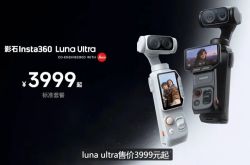
On June 10, 2026, Insta360 unveiled its inaugural Leica dual-camera gimbal camera, the Luna Ultra, explicitly announcing a starting price of 3,999 yuan for the standard package.
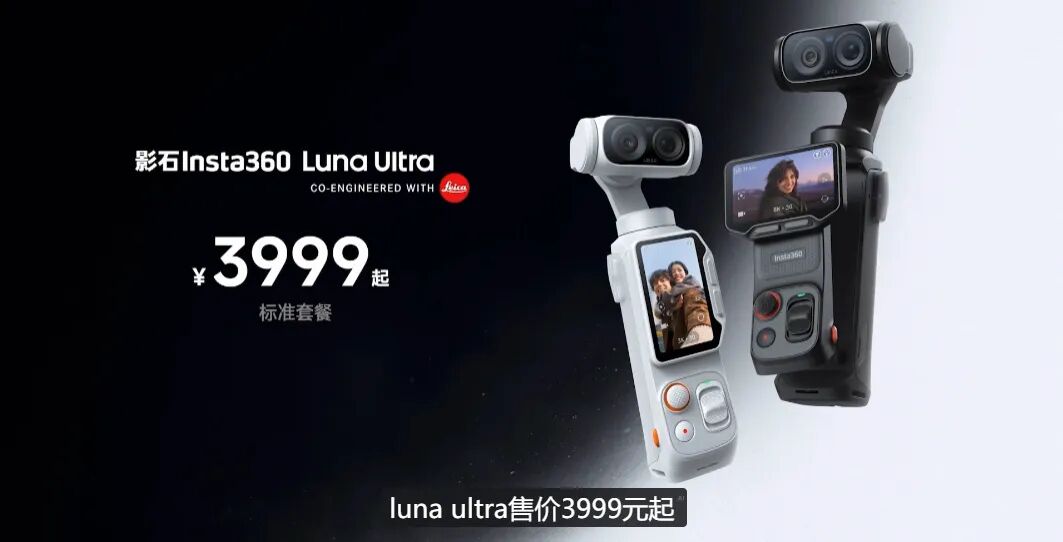
Image Source: Insta360
However, a significant discrepancy emerged when consumers attempted to purchase the product on e-commerce platforms. The original price of the Luna Ultra was listed as 4,729 yuan, with the final price of 3,999 yuan achievable only after applying a 15% 'national subsidy' and additional store discounts. Similarly, in offline stores where national subsidies were unavailable, the Luna Ultra was also discounted to 3,999 yuan.
In response to these findings, Insta360 staff informed the Strait Metropolis Daily that the pricing displayed at the Luna Ultra launch event was inaccurate, as it only showcased the discounted price of 3,999 yuan without indicating the original price of 4,729 yuan.
Insta360 customer service clarified that 3,999 yuan represents the post-promotion price for the standard version of the Luna Ultra. 'To ensure users enjoy the same 3,999 yuan discount in channels without national subsidies, the company has absorbed the subsidy amount originally covered by national support,' the representative elaborated.
Evidently, based on Insta360's explanation, the online discounts for the Luna Ultra predominantly rely on national subsidies. This has prompted numerous netizens to question whether Insta360 is improperly obtaining state subsidies and encroaching upon consumers' subsidy quotas.
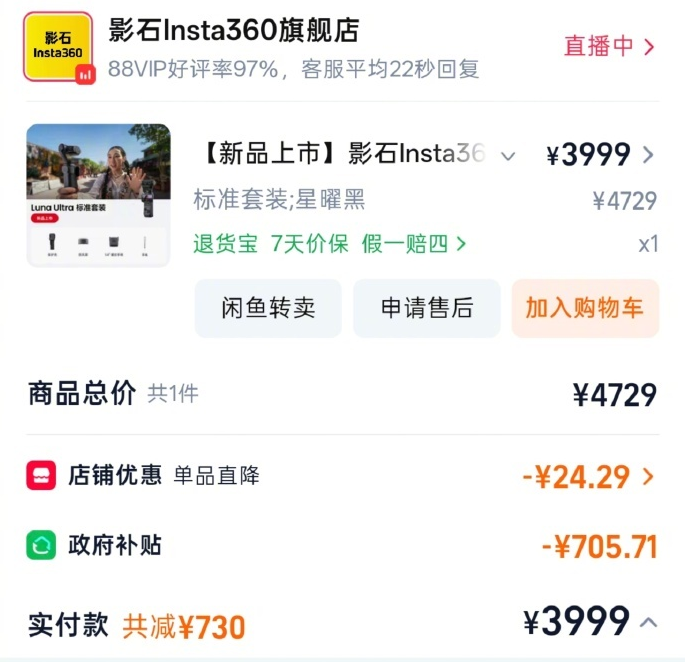
Image Source: Taobao
Faced with mounting public controversy, on June 22, Insta360 removed the national subsidy claim portal for the Luna Ultra from online channels and instead offered coupons to maintain the starting price of 3,999 yuan.
While it remains undetermined whether the Luna Ultra actually 'defrauded national subsidies,' its substantial launch discounts strongly suggest that Insta360 is experiencing significant anxiety.
Due to instability in its core panoramic camera business, Insta360 is pursuing diversification. Faced with formidable competitors, the company has resorted to aggressive price competition.
However, lacking technological and supply chain advantages, Insta360 has been unable to establish a robust competitive edge. This has not only sparked public controversy over alleged subsidy fraud but also trapped the company in a profit squeeze.
01 Insta360 and DJI Clash in the Gimbal Camera Arena
As the pioneer of the 'pocket gimbal camera' category, DJI had long dominated the market due to its strong first-mover advantage. IDC data reveals that in 2025, global shipments of handheld smart cameras reached 16.65 million units, with DJI accounting for 10.4 million units, or 62.4% of the market.
However, after achieving this lead, DJI did not rapidly iterate innovative products in response to consumer demand. Instead, it adopted a slow, 'drip-feed' update strategy. For instance, its Pocket series maintained a two-to-three-year update cycle and delayed incorporating optical zoom lenses, which consumers had long requested.
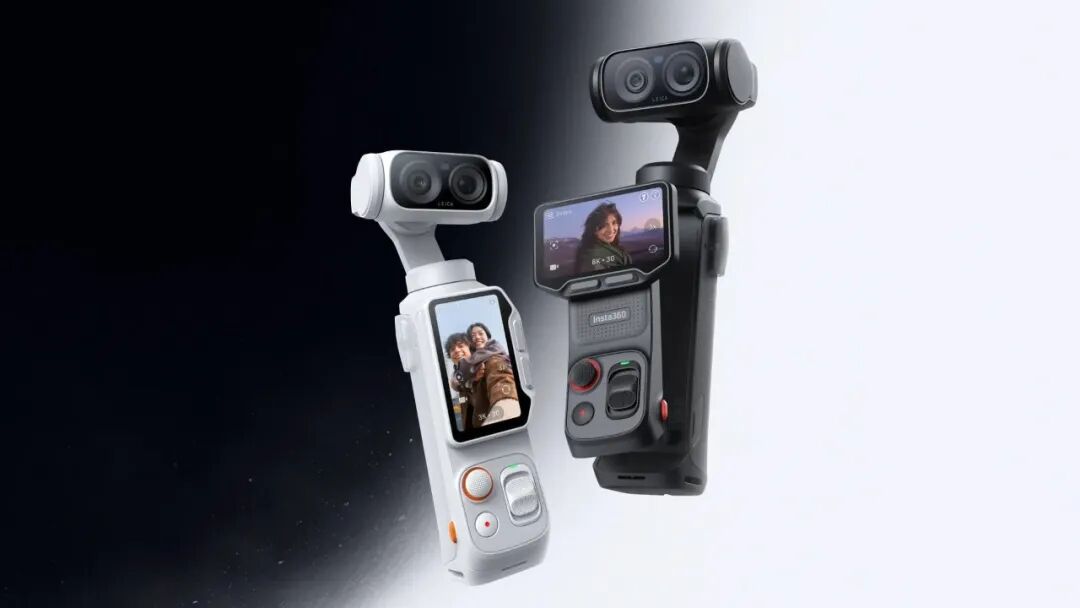
Image Source: Insta360
Observing a significant market vacuum behind DJI, Insta360 entered the gimbal camera market in June 2026 with the Leica dual-camera Luna Ultra. Equipped with a 1-inch primary sensor and a 1/1.3-inch Leica telephoto lens, it supports 6x lossless zoom, offering greater compositional freedom.
Additionally, while the Luna Ultra's overall design resembles DJI's Pocket series, it introduces innovations such as a detachable 2-inch OLED remote control screen for live monitoring and camera operation, enhancing shooting convenience.
Facing Insta360's aggressive entry, DJI did not remain passive but initiated a 'patent war.'
On June 10 and 11 (local time), DJI filed two patent infringement lawsuits against Insta360 and its affiliates in the U.S. District Court for the Eastern District of Texas, alleging that the Luna Ultra infringed on six core patents covering gimbal control systems, handheld gimbal integration, and target tracking technology.
Insta360 responded by filing a counter-patent lawsuit in the U.S., accusing DJI of infringing on six of its invention patents, including gimbal stabilization algorithms, gimbal pointing control, and camera smoothing anti-shake technologies.
Given the protracted nature of patent litigation, which cannot swiftly curb the Luna Ultra's growth, DJI did not rely solely on legal action. The company simultaneously launched a new product to directly compete with Insta360.
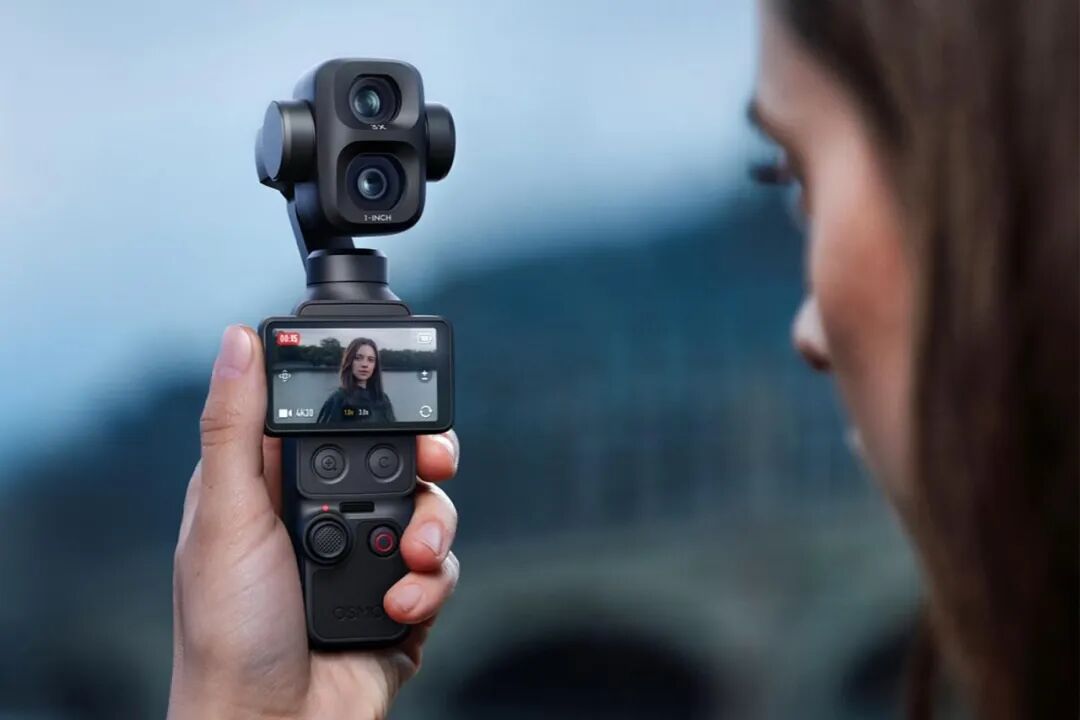
Image Source: DJI
On June 15, DJI released the Pocket 4P, also featuring a 1-inch primary sensor and a 1/1.28-inch telephoto lens. With 103GB of built-in storage (56GB more than the Luna Ultra), a new pearl white color option, and a starting price of just 3,799 yuan—nearly 1,000 yuan lower than the Luna Ultra's original price and even 200 yuan cheaper than the Luna Ultra's discounted price—the Pocket 4P undercut Insta360 on pricing.
The Luna Ultra's price disadvantage reflects Insta360's failure to establish a supply chain advantage comparable to DJI's.
For the market, the Luna Ultra's greater significance may lie not in the product itself but in reinvigorating competition in the gimbal camera sector. As DJI increases its investments, consumers stand to benefit from lower prices and higher-performing products.
02 DJI Strikes at Core Markets, Insta360's Foundations Waver
The clash between Insta360 and DJI in the gimbal camera market is no coincidence. Over the past few years, both companies have repeatedly crossed original business boundaries to invade each other's core territories. As their competitive landscapes increasingly overlap, a head-on collision became inevitable.
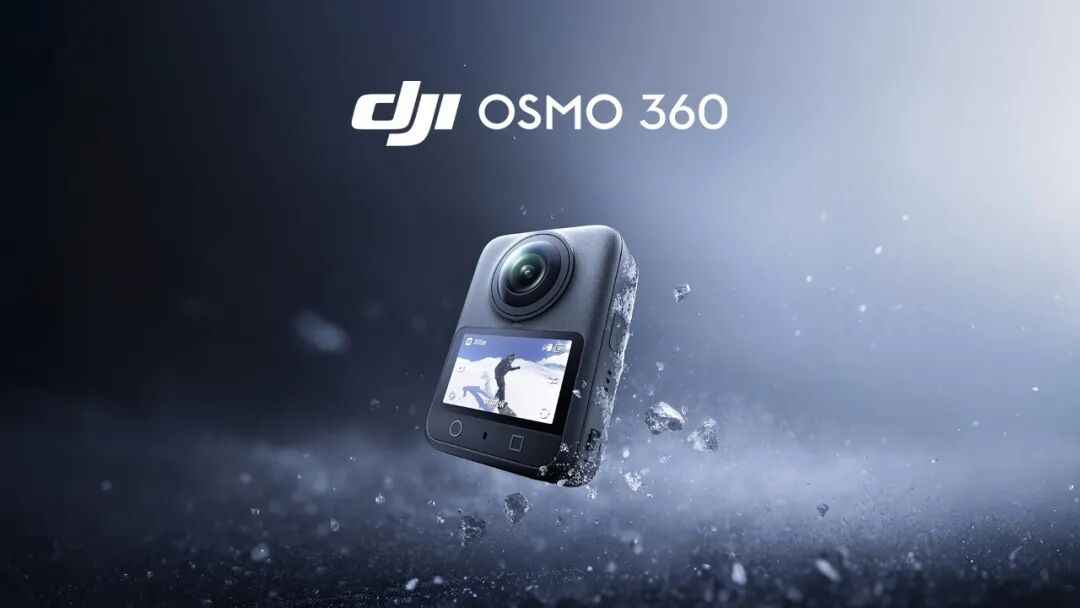
Image Source: DJI
In July 2025, DJI launched its first panoramic camera, the Osmo 360, priced at 2,999 yuan—about 800 yuan cheaper than Insta360's comparable X5 model.
Coinciding with the Osmo 360's release, Insta360 announced a joint venture with a third party to develop a consumer drone brand, Antigravity. In December 2025, Insta360 unveiled its first panoramic drone, the Antigravity A1, starting at 7,999 yuan.
While both companies invaded each other's markets, their outcomes differed starkly: DJI overtook Insta360 in the panoramic action camera segment, while Insta360's drones failed to pose a significant threat to DJI.
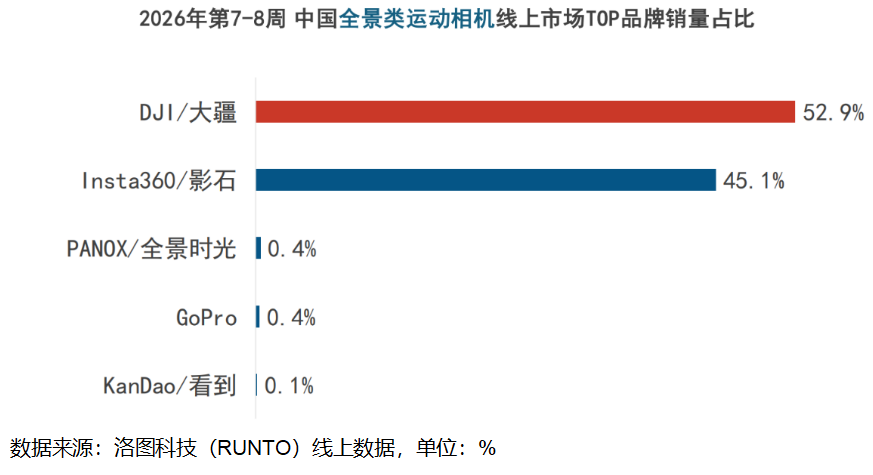
Image Source: LoTech
IDC data shows that in 2025, Insta360 held 66% of both global shipment volume and sales revenue in the panoramic camera market. However, LoTech data reveals that in Weeks 7-8 of 2026 (February 9-22), DJI captured 52.9% of China's online panoramic action camera market, 7.8 percentage points higher than Insta360.
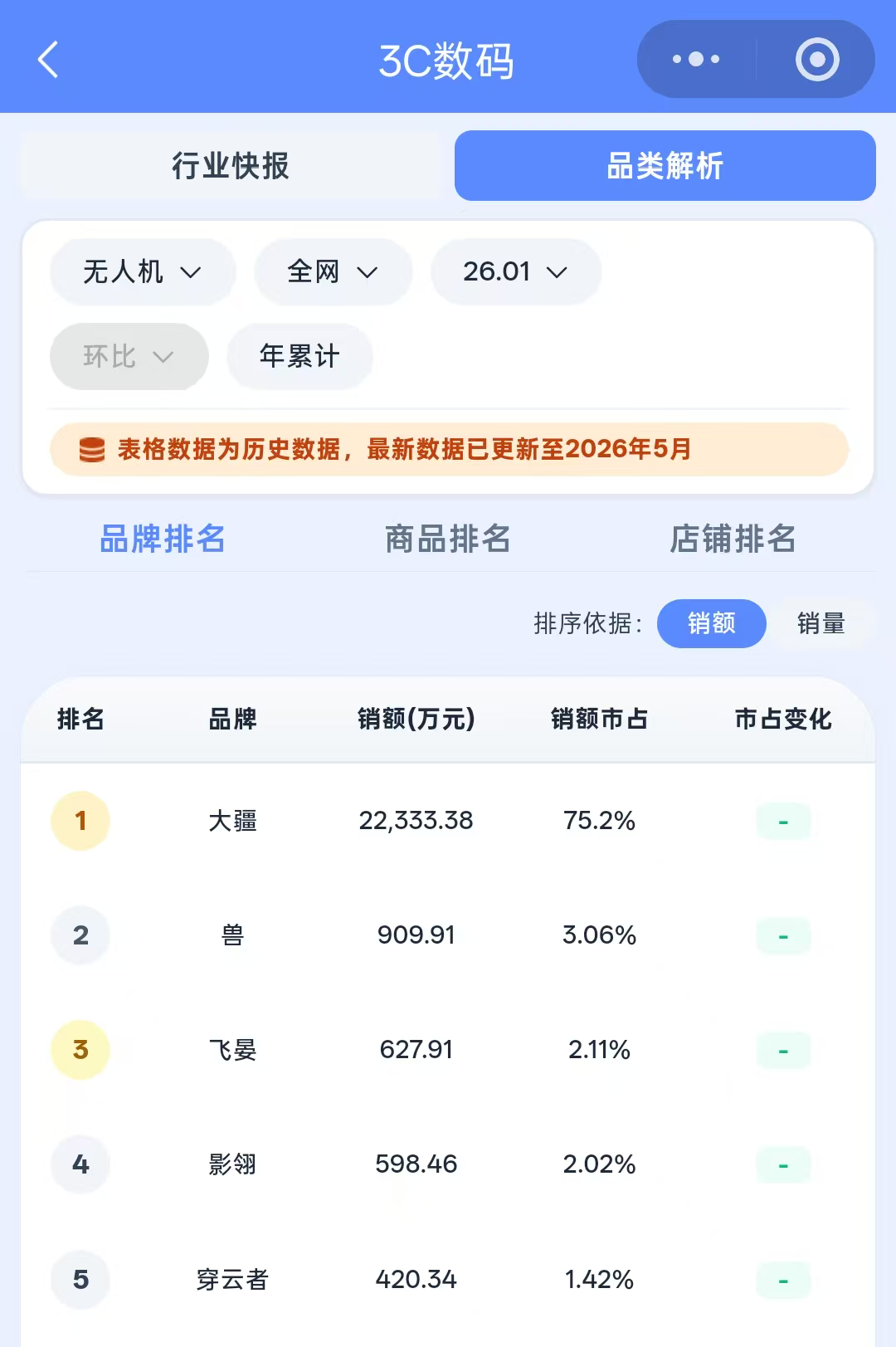
Image Source: Aowei Cloud
In contrast, Aowei Cloud data shows that in January 2026, DJI dominated China's online drone market with retail sales of approximately 223 million yuan and a 75.2% market share. Meanwhile, Insta360's Antigravity brand generated just 5.9846 million yuan in sales, a mere 2.02% share—effectively negligible.
Thus, Insta360's foray into gimbal cameras appears less like proactive expansion and more like a reactive move after failing to establish itself in the drone market.
Recognizing weaknesses in DJI's Pocket series regarding imaging capabilities and use cases, Insta360 targeted unmet market demands to attempt surpassing DJI. However, DJI swiftly countered with the cost-effective Pocket 4P, making it difficult for Insta360 to gain traction in the gimbal camera segment.
03 Diversification Strains Insta360's Profits
Insta360's aggressive diversification strategy, aimed at countering DJI, initially appeared to seize the competitive initiative. However, business expansion has dramatically increased costs, imposing significant operational burdens.
Due to the high technical barriers in drones, gimbal cameras, and other products, Insta360 has had to invest heavily in R&D to enhance product competitiveness.
Financial reports show that in 2025 and Q1 2026, Insta360's R&D expenses reached 1.529 billion yuan and 465 million yuan, respectively—up 96.95% and 100.59% year-over-year, with R&D expense ratios of 15.7% and 18.73%.
Insta360 explained, 'Our R&D investments focus on new categories like drones, gimbal cameras, and microphones, as well as custom chip development. We view these high-intensity strategic investments as essential for long-term growth and core capability enhancement.'
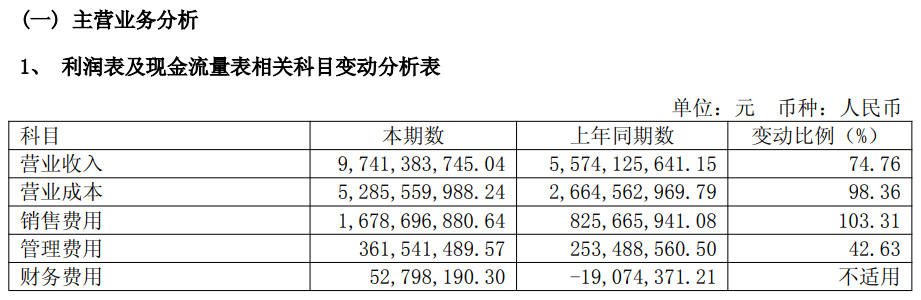
Image Source: Insta360 2025 Financial Report
Simultaneously, to amplify new product awareness, Insta360 increased marketing investments. In 2025 and Q1 2026, sales expenses reached 1.679 billion yuan and 449 million yuan, up 103.31% and 75.54% year-over-year, with expense ratios of 17.23% and 18.1%.
While these investments drove double-digit revenue growth, they also sharply increased costs, eroding profit margins. Financial reports show net profits of 929 million yuan in 2025 and 85 million yuan in Q1 2026, down 6.62% and 52.02% year-over-year, respectively.
Facing shrinking profits, Liu Jingkang, Insta360's founder, chairman, and CEO, attributed the situation to 'strategic pressures': 'Short-term profits face multiple pressures and buffers, all aimed at securing long-term growth and healthy development.'
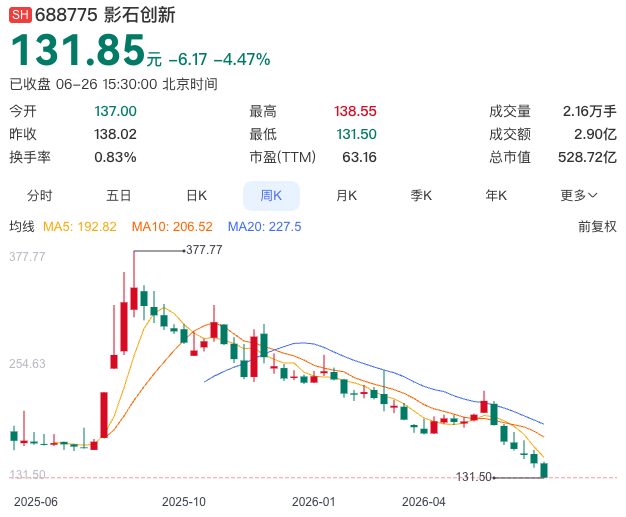
Image Source: Baidu
The capital markets, however, have shown impatience. As of June 26, 2026, Insta360's stock price closed at 131.85 yuan per share, down 65.1% from its September 2025 peak of 377.77 yuan.
Ultimately, the 'national subsidy controversy' surrounding the Luna Ultra is merely symptomatic of Insta360's deeper diversification challenges.
While it's understandable that Insta360 seeks a second growth engine as competitors erode its panoramic camera market share, the competitive dynamics in drones and gimbal cameras are far more complex and ruthless.
In recent years, Insta360 built unique advantages in the panoramic camera industry through user-friendly innovations, becoming a market leader. However, when forced out of its comfort zone to compete with DJI across multiple fiercer segments, fragmented innovations alone cannot rapidly reshape market dynamics. Only companies with superior technological accumulation, supply chain efficiency, and brand momentum can endure.
Thus, the Luna Ultra's market performance may matter less than whether Insta360 can transform its rising R&D investments into differentiated core competitiveness and chart new growth trajectories amid diversification. Without deep competitive moats, Insta360's diversification strategy risks becoming a profit-draining black hole.
Interactive Topic
Have you used Insta360 products? How do they compare to DJI's offerings?
This article is original content from Farsight and cannot be reproduced without authorization.
-
![]()
Depreciation Rate on Par with Mobile Phones: Just 40% Value Retention After Three Years—Why Do Battery Electric Vehicles Lose Their Worth?
-
![]()
Clearing Bugatti Stock Worth 7 Billion: Why is Porsche 'Cutting Ties'?
-
![]()
Don’t Dismiss Huawei’s Potential in Sedans Just Because the Shangjie Hasn’t Hit It Big Yet
-
![]()
Unsold Cars in China Find Success Overseas
-
![]()
Ghosn: Only I Can Save Nissan, Shareholders Beg Me to Return
-
![]()
Expanding Automobile Consumption: It's Time to Address the High Cost of Electric Vehicle Repairs
-
![]()
Luna Ultra Entangled in 'National Subsidy Fraud' Controversy, Insta360 Pushed to the Brink by DJI
-
![]()
People have long suffered from splash ads. Will the 'temporarily disappeared' traffic behemoth make a comeback?