People have long suffered from splash ads. Will the 'temporarily disappeared' traffic behemoth make a comeback?
 06/29 2026
 363
363
▲All images in this article are from the internet. Please contact us for removal if there is any infringement.
When will the splash ads end?
This article was first published in Shadow Memo by Mo Yingsheng.
“The splash ads are gone”—on the evening of June 23, 2026, this topic soared to the top of Weibo’s trending list.
Many netizens tested and found that Baidu Maps, Gaode Maps, and Tencent Maps—the three most widely used navigation apps—now directly opened to the map interface, with splash ads completely gone.
Some described the experience as “smooth.”
But amid the cheers, doubts lingered. The top comment in the trending discussion wasn’t “finally clean!” but “guess how long it’ll last—I bet less than a week.”
This skepticism didn’t come out of nowhere. In past years, splash ads would “temporarily vanish” during major sales or regulatory crackdowns, only to reappear with heightened sensitivity once the heat died down.
A/B testing, where only a small fraction of users see the compliant version, has long been an open secret in the industry.
Is this time truly different?

A fuse ignites nationwide outrage
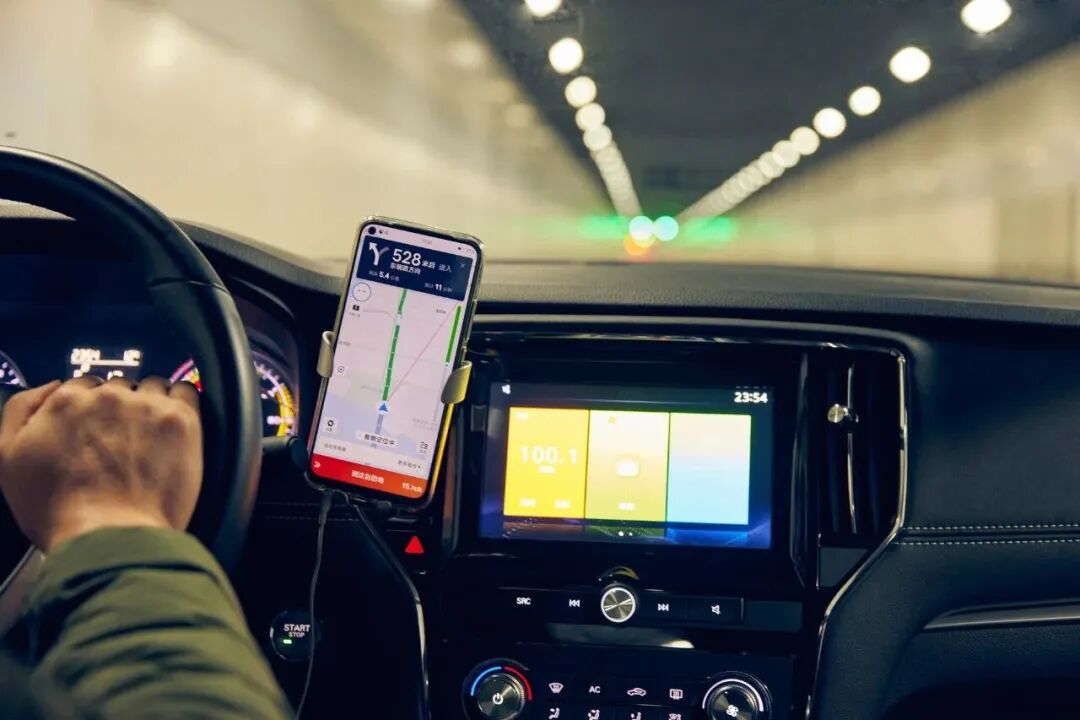
The direct catalyst for this crackdown was a video posted by an automotive blogger. In the video, the blogger described using voice commands to open a map app while driving, only to be hit with a splash ad. A bump in the road triggered the “shake-to-jump” feature, instantly redirecting to an e-commerce platform and closing the navigation interface.
His exact words: “I was flustered and nearly caused a major accident.”
The video quickly went viral, with the comments section flooded by drivers’ firsthand experiences. Some shared how even slight bumps triggered ads, covering the navigation screen and severely disrupting driving.
A city people’s congress representative recounted a real near-miss: a friend’s car vibrations triggered an ad popup while driving on the highway, distracting the driver and endangering safety.
Netizens even calculated the time wasted: during rush hour, opening navigation means 5 seconds of ads twice a day—3,650 seconds a year, equivalent to over an hour. That’s enough time to drive from Guangzhou to Shenzhen.
Soon after, “the splash ads are gone” dominated trending lists. Many users found that Baidu Maps, Gaode Maps, and other navigation apps had quietly removed splash ads.
Cover News tested 23 apps across lifestyle, social, shopping, and navigation categories and confirmed that 17 no longer showed splash ads. Apps like Taobao, JD.com, Xiaohongshu, and Douyin now opened directly to their homepages.
But the story was far from simple.
Saying “the splash ads are gone” wasn’t entirely accurate. After random testing 16 apps across travel, work, social, shopping, entertainment, and lifestyle scenarios, Cover News found:
Mainstream apps had significantly reduced splash ads, showing clear rectification results, but ads weren’t entirely gone.
Travel apps mostly opened directly to navigation, but some accounts or device models still showed short ads (<5 seconds) at specific times.
Shopping and lifestyle apps retained splash ad slots but reduced frequency, duration, and randomness.
Didi, Weibo, Zhihu, Damai, Tencent Video, and Caiyun Weather still had splash ads, just without the “shake-to-jump” feature. Even within the same app, experiences varied by device.
The so-called “disappearance” felt more like a targeted, “selective vanishing.”
More alarming was the public divide: some praised platforms for proactive rectification, while many suspected this was merely a temporary fix under public pressure, with ads likely to return once the heat faded.


Why are splash ads so “annoying”?
The frustration with splash ads runs deeper than irritation—it’s tangible harm.
A Legal Daily reporter tested 50 common apps and found over half had problematic popup ads.
Some automatically redirected to other apps upon opening. Others mimicked system alerts, while some stacked ads on top of existing ones.
Apps even featured “ad-within-ad” popups: a 30-second ad would interrupt with another 6-second popup. Returning to the original app meant enduring another splash ad.
Netizens dubbed this “time theft.” An ad might show a countdown of 18 seconds but actually run for over 30.
The “shake-to-jump” mechanism was even more infuriating. By design, it uses a phone’s accelerometer and gyroscope to detect motion.
When the user shakes the device, the accelerometer records movement across the X, Y, and Z axes, while the gyroscope tracks rotation angles.
Sensors activate as soon as an ad displays. If the shake meets a preset threshold, the system auto-clicks the ad.
The issue? How low that threshold is set. Tests showed that walking while holding a phone could easily trigger a redirect.
Netizens complained: opening an app should be “effortless,” but now the screen “jumps uncontrollably.” Trying to listen to music or watch a video becomes a battle against unexpected redirects.
Some apps even redirected or downloaded content without a deliberate shake. Given their high usage and diverse scenarios (walking, commuting), these apps were particularly disruptive, as phone movements frequently triggered ads.
This wasn’t just advertising—it was “technological bullying.” These invasive “full-screen ads” were the digital equivalent of “chronic hives.”
They severely degraded user experience, infringed on consumers’ right to choose and their privacy, and represented unfair competition by platforms.

Why do splash ads “persist despite bans”?
Knowing users hate them and regulations are tightening, why do splash ads refuse to die?
The answer: money.
Splash ad rates reportedly exceed $1 million per day. Analysts note that dominant apps in various sectors enjoy quasi-monopolies, giving platforms the confidence to act recklessly.
Data shows splash ads average a 5% click-through rate (CTR), with some apps reaching 12% or 8%.
Compared to other ad formats, splash ads dominate in visibility. Their full-screen nature makes them nearly impossible to ignore, with exposure rates far exceeding banner ads.
Developers earn higher eCPM (earnings per thousand impressions) from splash ads than other formats.
For many free apps, splash ads are the primary revenue stream. Calculations show that if an app with 5 daily active users generates 5 splash impressions per user at an average CPM of $30, each user contributes $0.15 daily.
With just splash ads, monthly revenue could reach $45,000. Adding in-feed, rewarded video, and interstitial ads boosts earnings further.
For hardware IoT apps, splash ad revenue can account for 79% of total income.
Second, the interest chains are too complex.
Control over splash redirect ads doesn’t lie solely with app developers. Major ad aggregation platforms like Baidu’s Baiqingteng and Tencent’s Youlianghui embed SDKs into apps, managing ad pushes.
Ad brokers and merchants tacitly approve deceptive tactics, while platforms profit from fake traffic generated by accidental clicks, forming a short-term profit alliance.
Third, violation costs are too low.
In legal cases, damages awarded for ad-related harm are typically small. For consumers, litigation costs outweigh potential returns. For developers, Illegal gains (illicit gains) far exceed minor fines.
The calculus naturally favors rule-breaking.
Finally, there’s the regulatory “cat-and-mouse game.”
Past years show that splash ads “temporarily vanish” during crackdowns or sales events, only to reappear with heightened sensitivity once the pressure eases. Some platforms even engage in outright “cat-and-mouse” tactics, hiding ads during scrutiny and resuming them afterward.
This transcends mere commercial nuisance—it’s “traffic hijacking” that flagrantly violates legal and ethical boundaries.
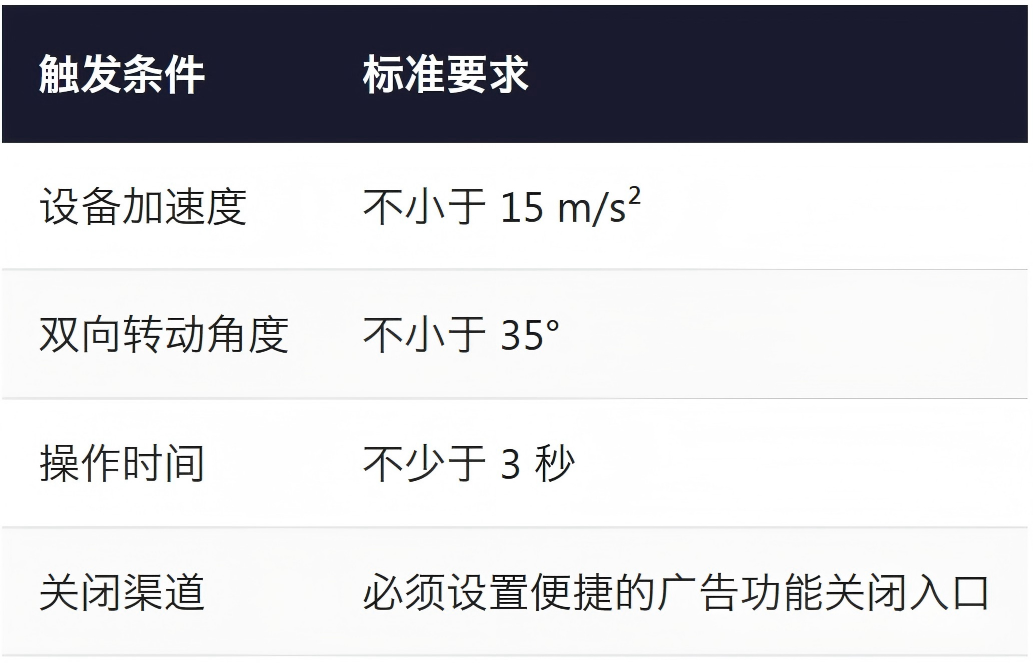
In 2023, the Ministry of Industry and Information Technology mandated that splash and popup ads must include easily accessible close buttons.
By July 2025, the National Cybersecurity Standardization Technical Committee quantified “shake-to-jump” thresholds: device acceleration must exceed 15m/s², rotation angles 35°, and operation time 3 seconds.
Everyday actions like walking, commuting, or checking the time must not trigger redirects. Regulations like the 2022 “Provisions on the Administration of Internet Popup Information Push Services” and the 2025 “Cybersecurity Standard Practice Guide—Security Requirements for Shake-to-Jump Ad Triggers” have drawn clear compliance lines.
Yet violations persist. The root cause? The “traffic-first” business model remains unchanged.
When platforms lack competitive content or services to retain users and drive conversions, they resort to forced popups and algorithmic coercion to harvest traffic.

A dangerous signal: stolen choice
If splash ads on regular apps are “annoying,” those on navigation apps are “life-threatening.”
Navigation apps operate differently from shopping or video apps. A single safety incident could incur costs—legal and reputational—far exceeding ad revenue.
Yet navigation apps pushed “shake-to-jump” ads to extremes: users activating navigation via voice while driving faced redirects triggered by bumps, replacing the map with e-commerce ads.
For a driver on the highway, such a scenario is catastrophic.
This “coercive” promotion breaches commercial ethics.
Some experts argue that an outright ban is unrealistic and propose classified regulation: navigation and other essential apps should prohibit popups and shake-to-jump ads entirely.
Entertainment apps relying on ad revenue and offering open-access content could moderately display ads within compliance frameworks.
This approach merits serious consideration. However, the core issue isn’t “how to regulate” but “why this must happen.”
The real anger toward splash ads stems not from their existence but from their coercive nature.
For most free content apps, advertisers pay for placement while users access content nearly cost-free—a mutually beneficial model.
Users don’t reject ads; they reject being forced, manipulated, or hijacked.
Splash ads often exceed recommended durations, have overly sensitive jump triggers, and hide close buttons in hard-to-reach corners (e.g., top-left/right instead of the easily clickable bottom-right). Designers never intended to let users close ads easily.
Ad countdowns stretch longer, while “skip” buttons vanish. Even slight movements trigger redirects. Opening an app becomes a nerve-wracking ordeal.
This isn’t “display”—it’s “hijacking.”
Developers must understand that forced splash ads are shortsighted. While they yield quick profits, they erode user trust and goodwill.
Relying on forced popups and accidental clicks may inflate exposure metrics temporarily but generates mostly fake, ineffective traffic. This harms user experience and diminishes real ad value for brands.
If users uninstall apps or switch to alternatives due to harassment, platforms lose their user base—their very foundation.
Apps that retain user loyalty do so through reliable design, quality content, and thoughtful services, not ubiquitous, intrusive, and irritating ads.

Epilogue
To revisit the opening question: Is this time truly different?
Array
Array
Array
Array
Array
Array
Array
Array
Array
Array
Array
Array
Array
-
![]()
Depreciation Rate on Par with Mobile Phones: Just 40% Value Retention After Three Years—Why Do Battery Electric Vehicles Lose Their Worth?
-
![]()
Clearing Bugatti Stock Worth 7 Billion: Why is Porsche 'Cutting Ties'?
-
![]()
Don’t Dismiss Huawei’s Potential in Sedans Just Because the Shangjie Hasn’t Hit It Big Yet
-
![]()
Unsold Cars in China Find Success Overseas
-
![]()
Ghosn: Only I Can Save Nissan, Shareholders Beg Me to Return
-
![]()
Expanding Automobile Consumption: It's Time to Address the High Cost of Electric Vehicle Repairs
-
![]()
Luna Ultra Entangled in 'National Subsidy Fraud' Controversy, Insta360 Pushed to the Brink by DJI
-
![]()
People have long suffered from splash ads. Will the 'temporarily disappeared' traffic behemoth make a comeback?