Is Simplification the Ultimate Goal of AI? How Powerful Can AI Be with a Unified Interface?
 06/29 2026
 525
525
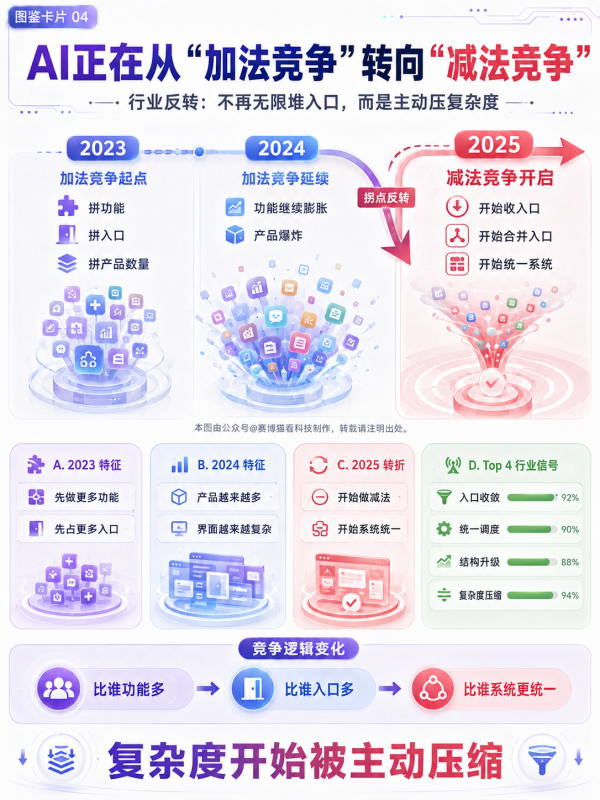
The AI community has been abuzz with activity lately. GPT-5.6 has just been unveiled, yet access for the average user is restricted. Domestically, Doubao has initiated paid subscriptions, heralding the dawn of the paid era for AI products. Meanwhile, Baidu has streamlined multiple access points, including ERNIE Web, ERNIE App, and ERNIE Assistant, into a single, unified gateway, and continues to provide it free of charge. One is escalating in cost, while the other is consolidating, but both trends converge on a single point: AI is transitioning from a landscape of "multiple competing applications" to a model of "unified entry point convergence."
Many perceive this as mere product adjustments, but the underlying transformation is structural. As AI begins to centralize its access points, it transcends its role as a mere tool and evolves into an entry point ecosystem. What does an entry point signify? It represents a shift in user relationships from transient "use-and-go" interactions to long-term binding engagements. It also indicates a product evolution from being mere feature providers to becoming task bearers.
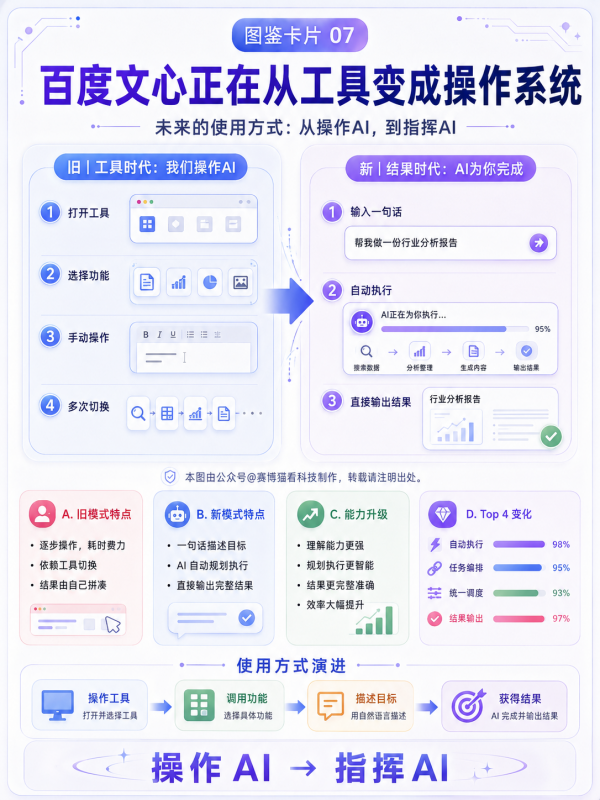
This trend is not exclusive to Baidu. OpenAI is transforming ChatGPT from a chat tool into a unified operational hub, seamlessly integrating writing, coding, searching, and image generation capabilities into a single interface. Google is consolidating its AI prowess into Search and Gemini. Apple is directly embedding AI into the system layers of iOS and macOS. Microsoft's Copilot spans across Office, Windows, and browsers. On the surface, functionalities are becoming increasingly diverse, but at their core, access points are becoming more centralized.
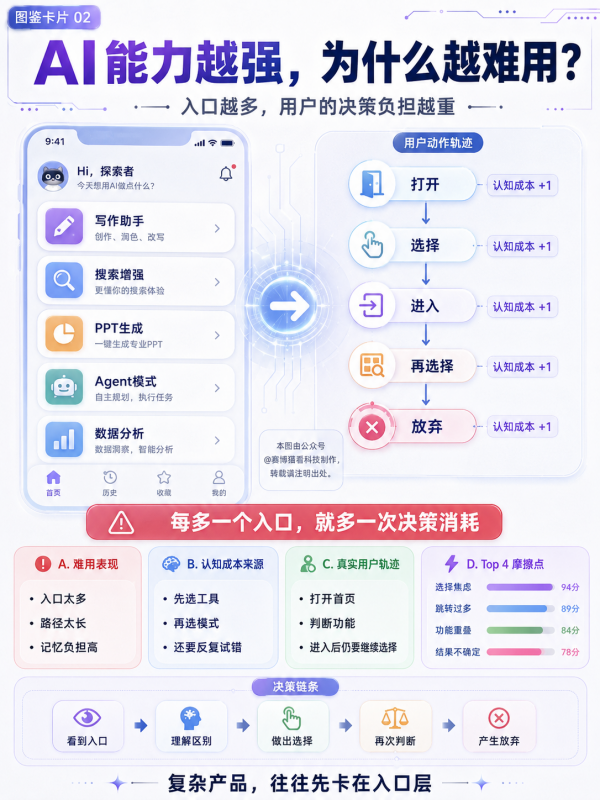
Why the push towards a unified entry point? The rationale is straightforward: users are weary of constant switching. Consider a typical scenario where you need to employ AI to accomplish a complex task involving writing, searching, analyzing, and generating images. If these capabilities are dispersed across different applications, you're forced to constantly switch, copy, restate your requirements, and align the context, which is both time-consuming and cumbersome. The issue isn't that AI lacks power; rather, it's that the usage pathway is too fragmented.
Consequently, the competitive landscape is shifting. The future will no longer hinge on whose model is superior but on whose "scheduling capability" reigns supreme: can it dissect tasks, invoke different tools, maintain contextual continuity, and orchestrate multi-step processes seamlessly? The capability gap among AI models will gradually narrow, but the disparity in system organization capabilities will widen.
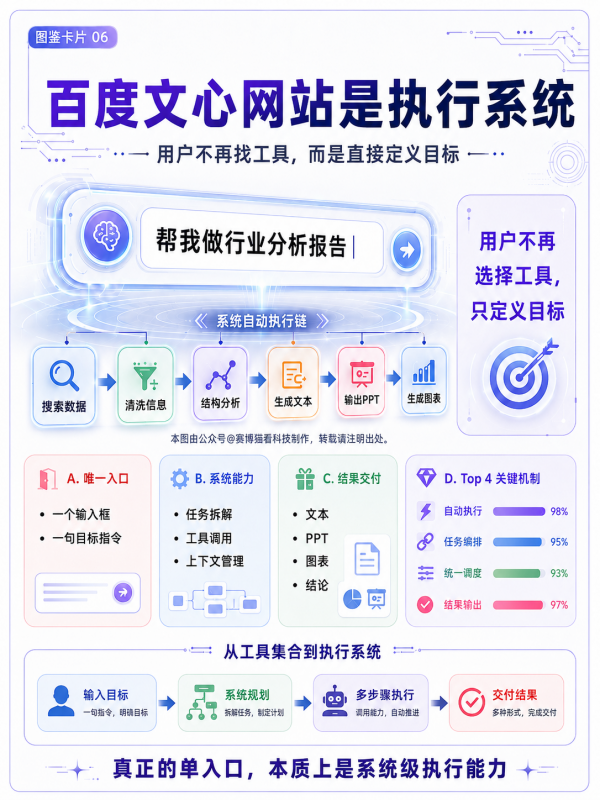
As these changes unfold, AI is also metamorphosing from a "super app" into an "operating system." Users will no longer be confronted with a plethora of feature buttons but with a single, intuitive entry point. As for which model is invoked behind the scenes or which steps are executed, users remain blissfully unaware; all they care about is the result.
Ultimately, the industry will coalesce into two distinct types of players: one category will comprise deeply specialized vertical tools, while the other will consist of unified entry-level systems. AI products boasting numerous features but offering fragmented experiences that require users to piece together processes manually will gradually fade into obscurity. AI is not becoming more convoluted; on the contrary, it's simplifying, leaving behind only a single, streamlined entry point.
-
![]()
Luna Ultra Entangled in 'National Subsidy Fraud' Controversy, Insta360 Pushed to the Brink by DJI
-
![]()
People have long suffered from splash ads. Will the 'temporarily disappeared' traffic behemoth make a comeback?
-
![]()
GPT 5.6 Reclaims the Throne, Only to Face Strict Controls Again! Has AI Truly Reached a Turning Point?
-
![]()
When the Traffic Bubble Fades, AI Giants Start to Compete on 'Real Skills'
-
![]()
Wenxin Once Integrated Multiple Web Portals, but Its Impact Has Diminished
-
![]()
A 1.388 Million Yuan Answer Sheet: Insights into Huawei's Ultra-Luxury Car Strategy and Potential Concerns from the Debut of Zunjie S800 Grand Design and V800
-
![]()
Luna Ultra Mired in 'National Subsidy Fraud' Controversy, Insta360 Cornered by DJI
-
![]()
Legal Disputes, Share Unlock, and Pricing Controversies Converge: Insta360 Reaches a Pivotal Juncture