WAIC Reveals Four Robust Innovations, Unveiling Joyson Electronic’s Dual-Track Strategy
 07/02 2026
 401
401
Each year, the World Artificial Intelligence Conference (WAIC) serves as a vital platform for leading industry players to demonstrate their technological prowess and strategic vision. Unlike many companies that chase fleeting AI trends or hype short-lived concepts, Joyson Electronic’s lineup at the 2026 exhibition stands out for its exceptional pragmatism and substance.
The company officially announced its focus on launching four core products: a robotic dexterous hand, a solid-liquid hybrid semi-solid-state battery, an embodied AI brain, and a third-generation AI head assembly.
This is not merely a random assortment of new products, nor is it the typical industry practice of showcasing prototype or conceptual machines. The four products strategically target the four core areas of interaction, computing power, execution, and energy, bridging the two high-value sectors of new energy vehicles (NEVs) and humanoid robots.
Joyson Electronic has long been perceived by the outside world as a traditional Tier 1 automotive component supplier. However, this launch event represents a concentrated implementation and public disclosure of its years of technological accumulation. Moving beyond conceptual hype, we objectively dissect Joyson Electronic’s true development landscape behind this product launch, considering industry status, technological foundations, real barriers, and potential risks.
01 Not Chasing Trends, But Addressing Shortcomings: Four Products Directly Tackling Industry Mass Production Pain Points
The biggest challenges in the current embodied AI and humanoid robot industries are not "conceptual advancement" but rather immature core components, high mass production costs, and limited deployment scenarios. Many technologies remain stuck in the laboratory phase, unable to meet the stable usage requirements of industrial or automotive-grade standards.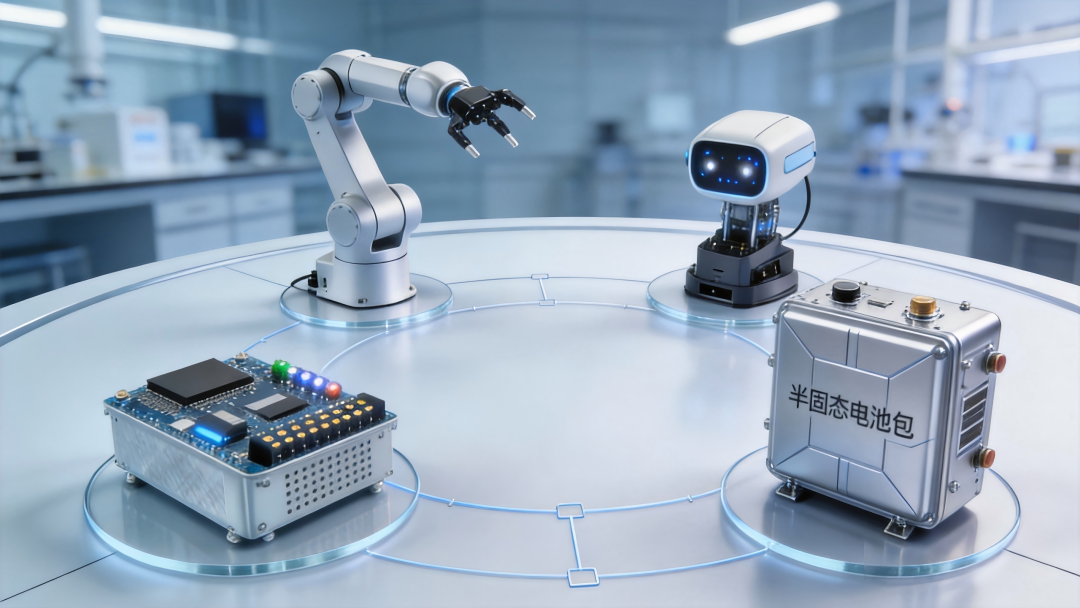
Joyson Electronic’s new products avoid flashy gimmicks and instead target practical pain points hindering industry progress.
The third-generation AI head assembly addresses the common shortcoming of "unnatural human-robot interaction" in robots.
Currently, most humanoid robots suffer from fragmented visual and voice interactions, with low recognition accuracy and stiff feedback, making them unsuitable for service, companionship, or precision tasks. Leveraging years of technological accumulation in automotive smart cockpits and multimodal interactions, this new head assembly integrates visual perception, voice noise reduction, emotion recognition, and head-neck servo movement.
Its core advantage lies not in parameter upgrades but in automotive-grade stability and integration capabilities. Compared to solutions that assemble modules from scattered procurements, Joyson’s integrated assembly significantly reduces adaptation costs and failure rates for complete machine enterprises, which is why it can continuously supply leading robot manufacturers.
The embodied AI brain fills the critical gap of "weak computing power and heavy reliance on the cloud" in robots.
Currently, many robots heavily depend on cloud computing power, with issues like network latency, failure during disconnections, and data security directly limiting deployment scenarios such as industrial sites and outdoor operations. This AI brain, essentially a high-computing-power domain controller adapted for humanoid robots, can run large models locally, enabling autonomous decision-making and real-time scheduling.
Its technological foundation stems entirely from R&D experience in intelligent driving domain controllers, giving it unparalleled advantages over pure AI startups in terms of high real-time performance, multi-sensor fusion, and stability under complex working conditions. It has already entered the sample verification stage with leading enterprises, with a clear path to commercialization.
The robotic dexterous hand clears the "final execution bottleneck" for humanoid robot deployment.
Whether robots can transition from demonstrations to practical use hinges on their end-effector capabilities. Traditional industrial grippers can only perform simple handling tasks and cannot achieve fine sorting, precision assembly, or flexible grasping. Joyson’s new dexterous hand replicates human hand movement logic, equipped with high-precision sensors and flexible joints, suitable for real-world operation scenarios in industrial manufacturing and commercial services.
More critically, this product leverages the company’s long-standing expertise in precision structural component manufacturing, balancing lightweight design, durability, and mass production feasibility, completing the robot’s "perception-decision-execution" closed loop.
The solid-liquid hybrid semi-solid-state battery serves as the core energy foundation spanning both sectors.
This is the most strategically valuable product unveiled. Currently, new energy vehicles pursue high range and safety, while humanoid robots are constrained by bulky batteries, short range, and unstable discharge. Both industries urgently need battery technology advancements.
The solid-liquid hybrid solution falls between traditional liquid batteries and all-solid-state batteries, avoiding the high costs and mass production difficulties of all-solid-state batteries while addressing the safety deficiencies and limited energy density of liquid batteries. This energy solution not only meets the upgrade needs of new energy vehicles but also specifically optimizes pain points like instantaneous discharge and lightweight range for robots, enabling a single technology to serve two trillion-dollar sectors.
02 The True Barrier: Not Single-Product Advancement, But Technological Reusability and Production Capacity Implementation
Countless companies are now cross-border deploying into robots and new batteries, but most face a fatal issue: fragmented technologies, non-interoperable R&D, and an inability to move beyond prototypes to mass production.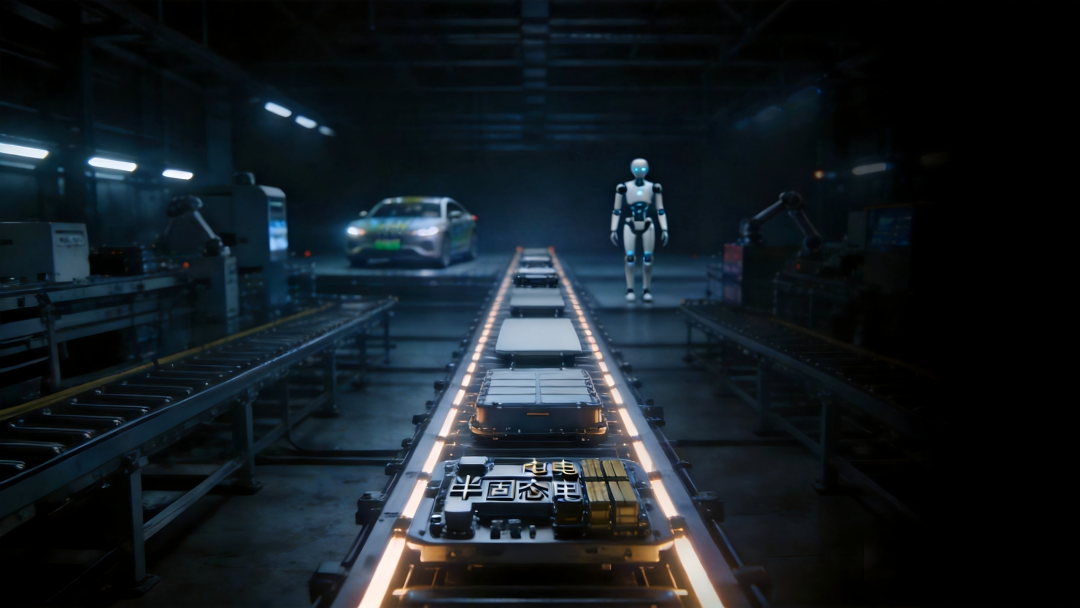
Joyson Electronic’s core competitiveness lies in its unique advantages as a long-standing automotive Tier 1 supplier, enabling technological synergy, production line synergy, and quality system synergy.
Automotive multimodal interaction technologies are applied to robot head assemblies; intelligent driving domain controller computing architectures are adapted for embodied AI brains; automotive BMS thermal management technologies evolve into semi-solid-state battery solutions; and automotive precision machining capabilities support dexterous hand mass production. What appears as cross-sector deployment is actually an extension and reuse of core technologies rather than cross-border trial-and-error from scratch.
This model brings two highly pragmatic advantages: diluted R&D costs and reduced mass production risks.
AI startups developing robots must build supply chains from scratch, validate manufacturing processes, and refine stability; traditional automakers pursuing intelligence lack accumulation in cutting-edge AI computing power and embodied AI algorithms. Joyson Electronic, positioned in the middle, uses mature automotive-grade manufacturing systems to implement cutting-edge AI technologies and leverages AI innovations to feed back into automotive intelligence upgrades, forming a bidirectional cycle.
This is Joyson’s core barrier distinguishing it from pure conceptual tech companies and traditional manufacturers.
03 Objectively Facing Reality: Beneath the Dividends, Prominent Shortcomings Remain
We do not blindly optimistic; from an industry and real business operations perspective, Joyson’s new product implementations still face unavoidable challenges, which investors and industry practitioners must view rationally.
First, new businesses cannot shoulder performance responsibilities in the short term.
Currently, the company’s core revenue and profits still rely on traditional automotive safety, smart cockpits, and new energy vehicle component businesses. Robot core components and semi-solid-state batteries are still in the stages of design validation and small-scale sampling, with large-scale commercialization requiring at least 1-2 years. In the short term, new businesses mainly lay the groundwork for value creation and cannot offset cyclical fluctuations in traditional businesses.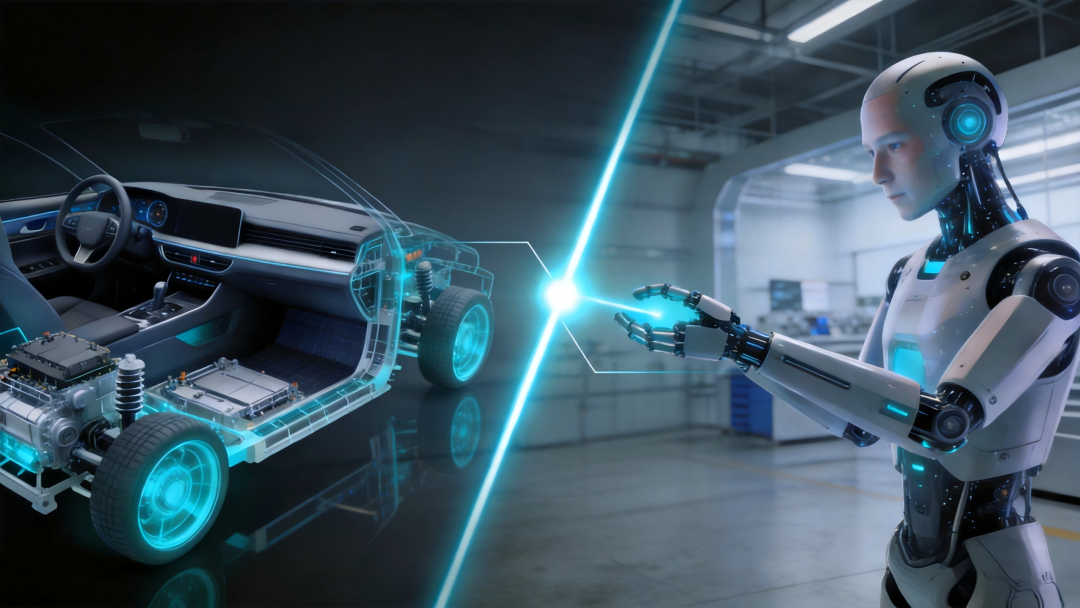
Second, the sector is crowded, with intensifying homogeneous competition.
Semi-solid-state batteries and core components for humanoid robots have become industry hotspots, attracting numerous automakers, tech companies, and startups. The industry will inevitably enter a fierce stage of price competition and customer acquisition. While Joyson’s automotive-grade manufacturing advantages are prominent, it still needs continuous breakthroughs in AI algorithm iteration speed and extreme cost control.
Third, sustained high R&D investment continues to suppress profitability.
Intelligent driving, embodied AI, and new battery technologies all belong to heavy R&D sectors requiring substantial ongoing investment to iterate technologies and refine products. Before new businesses generate significant profits, high R&D expenditures will continue to impact overall gross margins, requiring the company to rely on stable cash flow from traditional businesses to sustain funding for cutting-edge operations.
04 Long-Term Value Assessment: From Component Supplier to Dual-Track Tech Platform
Beyond short-term performance fluctuations, from a long-term industry trend perspective, Joyson’s unveiling of four new products signifies a clear strategic positioning: it is no longer merely a single automotive component supplier but a core Tier 1 platform spanning both intelligent vehicles and embodied AI sectors.
In the short term, the company’s nearly 100 billion in existing automotive orders provides stable cash flow and performance support, offering ample room for error in cutting-edge technology R&D—a confidence that most pure AI tech companies lack.
In the medium term, as semi-solid-state batteries gradually enter vehicles and robot core components are delivered in bulk, new businesses will transition from "cost centers" to "growth drivers," forming a pattern where traditional automotive businesses stabilize the foundation while intelligent new businesses enhance valuation. In the long term, amid the dual dividends of humanoid robot localization and automotive energy technology iteration, the platform advantages of technological synergy will continue to amplify. The industry’s ultimate competition has never been about single-technology leadership but rather a comprehensive contest of mass production capabilities, cost control, technological iteration, and customer resources—precisely Joyson’s long-term strengths.
In Conclusion
This WAIC product launch is not merely a technical showcase but a phased report card on Joyson Electronic’s years of strategic deep cultivation.
Instead of chasing short-term AI hype, the company has focused on addressing core pain points in industrial implementation, adopting a manufacturing-driven pragmatic approach to cutting-edge technology R&D. While real pressures exist from slow new business implementation and intensifying competition, in an era where intelligent vehicles and embodied AI—two trillion-dollar sectors—resonate, a company with technological foundations, mass production capabilities, and performance support possesses core potential to navigate industry cycles.
The key logic for observing Joyson Electronic in the future does not involve obsessing over short-term conceptual hype but rather closely monitoring two core indicators: first, the bulk delivery progress of robot core components, and second, the number of automotive OEM design wins for semi-solid-state batteries. These will determine whether its second growth curve can truly materialize.
-
![]()
MathWorks: Generative AI Holds Great Potential, Yet a Trusted Toolchain is Essential for Flawless Operation
-
![]()
Small Earphones, Big Business
-
![]()
Volkswagen Slashes 100,000 Jobs, Mercedes-Benz Axes Year-End Bonuses: What’s Ailing German Auto Titans?
-
![]()
Doubao Can No Longer Offer Free Services to 345 Million Users: China's Era of Free AI Is Drawing to a Close
-
![]()
How Can Chinese Small Home Appliances Conquer Southeast Asia Through 'Dimensional Competition'?
-
![]()
Why are top intelligent driving players betting on reinforcement learning?
-
![]()
June 2026 Automobile Complaint Index Rankings: Persistent Problems Ignite Grievances Among Long-term Vehicle Owners
-
![]()
Avita Takes Another Stab at HKEX Listing: Facing the Urgency of Sustaining Operations Amid 11.2 Billion Yuan Loss Over Three Years