A Bowl of Tomato Scrambled Eggs Can’t Define the Trillion-Yuan Household Robot Market
 07/02 2026
 375
375

Author|Mao Xinru
In recent years, we’ve witnessed countless robot demonstrations—robots walking, performing backflips, and even serving popcorn. Yet, most of these robots remain confined to labs, exhibition halls, or polished promotional videos.
However, recent developments suggest a shift.
Some companies have tasked robots with preparing Mapo Tofu in the kitchen—from ingredient preparation to stir-frying. While their movements may not be perfectly fluid, the entire process is completed. Others have placed robots in real home environments, where they perform simple tasks like making tomato scrambled eggs at the stove.
Robots may still appear clumsy, but they’re making one thing clear: they’re beginning to handle real household chores.
This marks a departure from past demonstrations of technical prowess.
The kitchen—and the home in general—is far from a standardized environment. Grease, clutter, and unexpected changes can disrupt algorithmic systems.
Thus, when a company chooses to deploy robots in homes, it’s essentially betting on whether its entire system can operate reliably over the long term.
Entering the home is no easy feat, but it’s becoming an increasingly attractive direction for more and more companies.
According to a Fortune Business Insights report, the global household robot market was valued at $13.9 billion in 2025 and is projected to reach $107.15 billion by 2034, growing at a compound annual rate of 25.47% from 2025 to 2034.
Behind these numbers lies more than just hype or technical experimentation.

Why are robots entering homes now?
The concentrated push of household robots into homes isn’t merely industry bandwagon-jumping—it’s driven by a convergence of technological readiness, market demand, and shifting capital attitudes.
First, technology has largely met the bar.
In the past, household robots could only handle simple, predefined tasks in standardized environments, making them ill-suited for complex home settings.
But with advancements in embodied AI technologies like Vision-Language-Action (VLA) and world models, the industry has begun to integrate perception, decision-making, and execution into cohesive systems.
Robots can now independently perform multiple compound household tasks, moving from lab demos to real-world home operations and officially crossing the threshold of technical feasibility.
As the ultimate non-structured environment, the home has become a core proving ground for general AI capabilities.
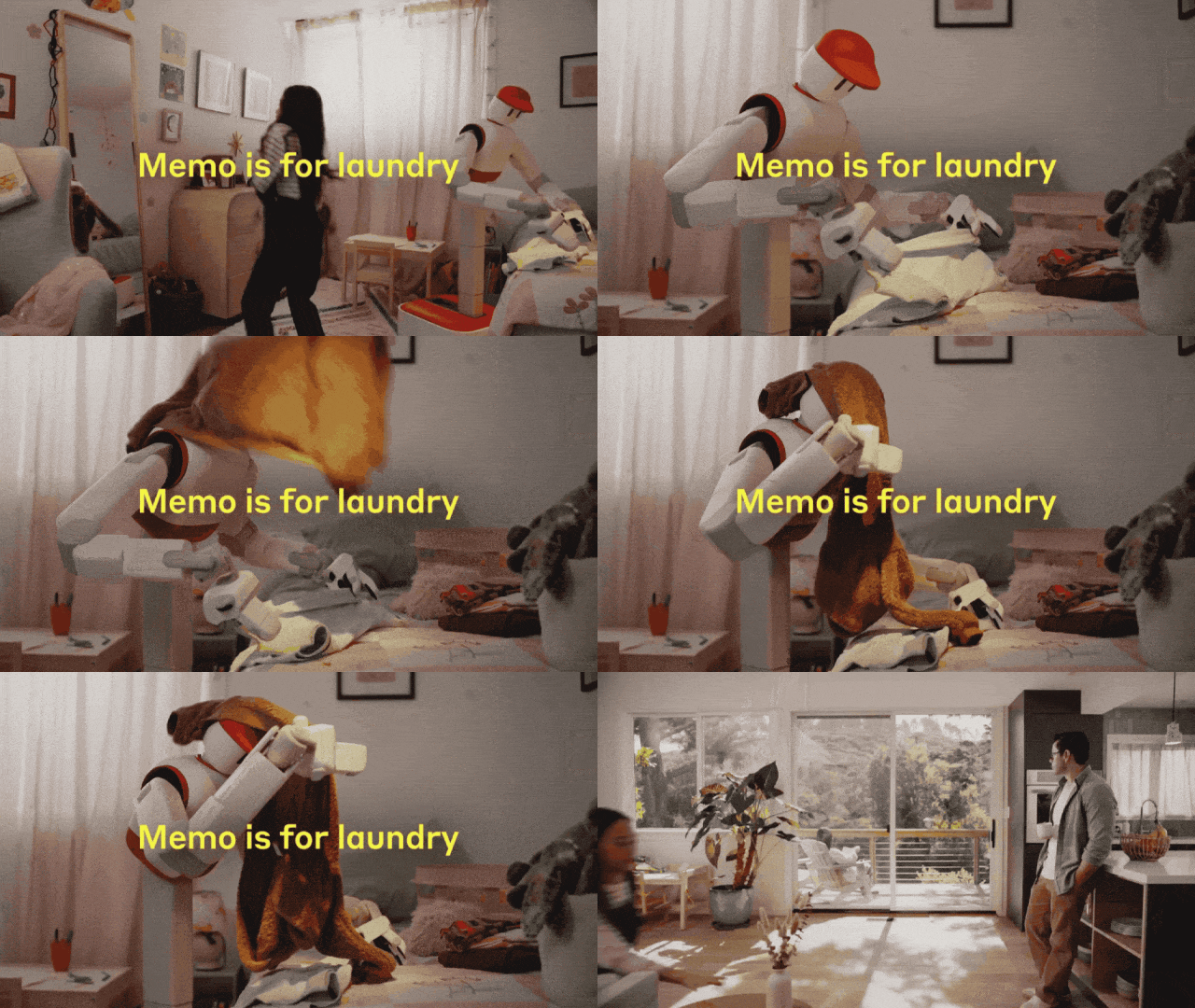
Second, there’s a significant gap in market demand.
China’s domestic service industry has long faced a mismatch between supply and demand. Fine-grained household needs from dual-income, solo-living, and elderly care households continue to grow, but the aging workforce and low interest among new entrants have widened the labor supply gap.
Meanwhile, human services suffer from instability, high turnover, inconsistent standards, and costly communication and coordination. The market urgently needs stable, standardizable intelligent alternatives, providing a solid demand foundation for household robots.
Finally, capital logic has shifted toward practicality.
Early-stage industry investment focused heavily on concepts and model parameters, creating obvious bubbles. By 2026, capital had abandoned pure technical storytelling, prioritizing projects that were deployable, scenario-driven, and scalable.
The high frequency and strong user stickiness of household scenarios make them an attractive breakthrough point for real-world applications.
Beyond that, deploying robots in homes offers strong long-term strategic value and short-term monetization potential.
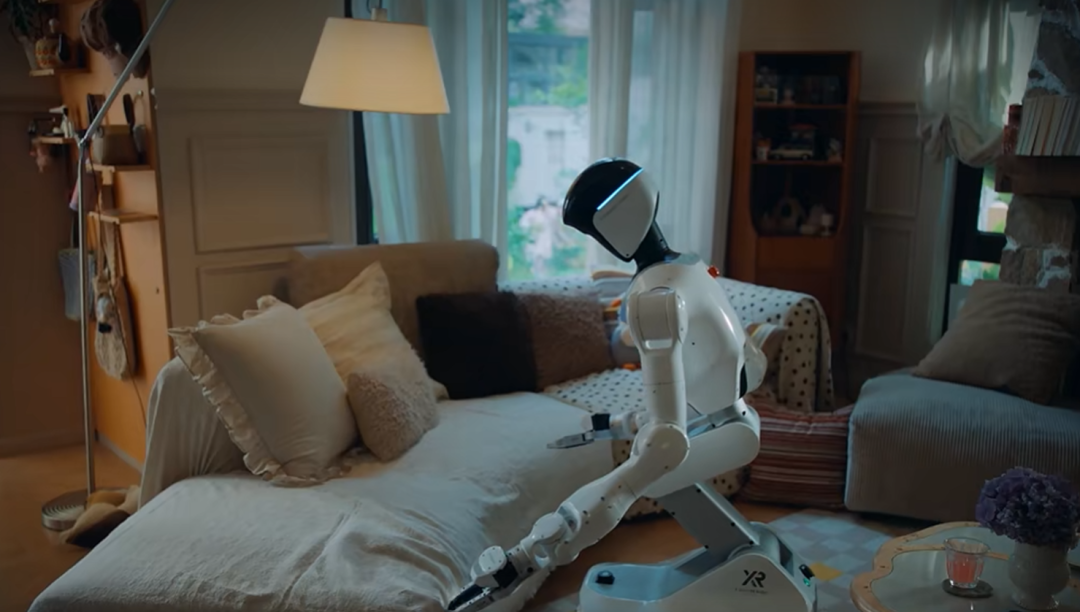
Real household environments continuously generate vast amounts of highly valuable non-structured interaction data—essential fuel for improving model generalization and physical execution precision.
By collecting data in homes, anonymizing it, and then collaborating with external partners or conducting joint R&D, companies can monetize this data to supplement revenue.
Overall, the industry hasn’t yet formed a complete commercial closed loop for robots in homes, and user price sensitivity and willingness to pay remain immature.
At this stage, companies’ primary goal in deploying robots en masse is to secure core scenarios, accumulate exclusive data, complete technological iteration, and lock in long-term first-mover advantages in the general robotics race.

Two paths, one destination
Currently, two domestic players have made substantial progress in household service robots: Independent Variable Robotics and Shiguang, a sub-brand of Jijia Vision.
Both rely on self-developed models and focus on highly non-structured real home environments.
But they’ve taken two distinct approaches: Independent Variable’s Robot as a Service (RaaS) and Shiguang’s Robot as a Product (RaaP).
RaaS emphasizes asset-light, rapid coverage.
Independent Variable has deep partnerships with offline domestic service platforms like 58 Daojia. Users don’t need to purchase hardware—they simply place an order via mini-program for a robot cleaning service priced at 149 RMB for about three hours.
Each service includes not just a robot but also a domestic worker and an engineer. The worker handles deep cleaning and on-site judgment, the robot manages basic organization and cleaning, and the engineer provides technical support.
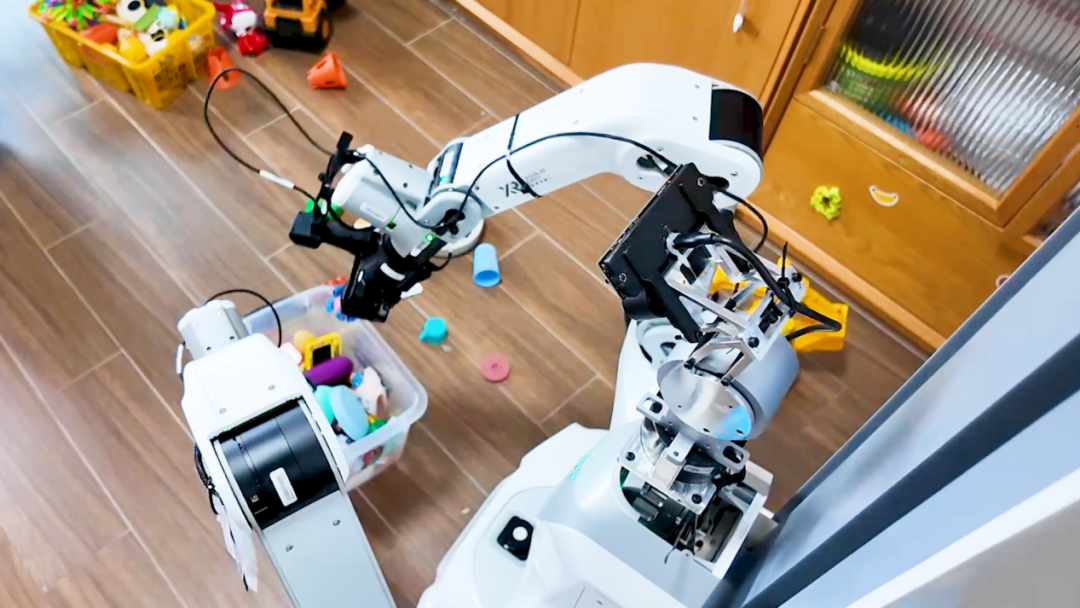
The robot uses a wheeled dual-arm design for stability and cost control, allowing single-use access to users and eliminating the decision barrier posed by expensive hardware.
Independent Variable plans to deploy 1,000 robots by 2026, using service data to drive model iteration.
The company also released its self-developed embodied AI foundation model, WALL-B, which continuously optimizes hardware and algorithms using collected service data.
The core logic: scale services, use scale to acquire data, and use data to fuel technology.
RaaP takes an asset-heavy, deep-experience approach.
Shiguang places robots in households long-term, targeting mid-to-high-end users’ full-scenario household needs.
Its general-purpose humanoid robot, Shiguang S1, runs on a self-developed model capable of environmental understanding and autonomous planning.
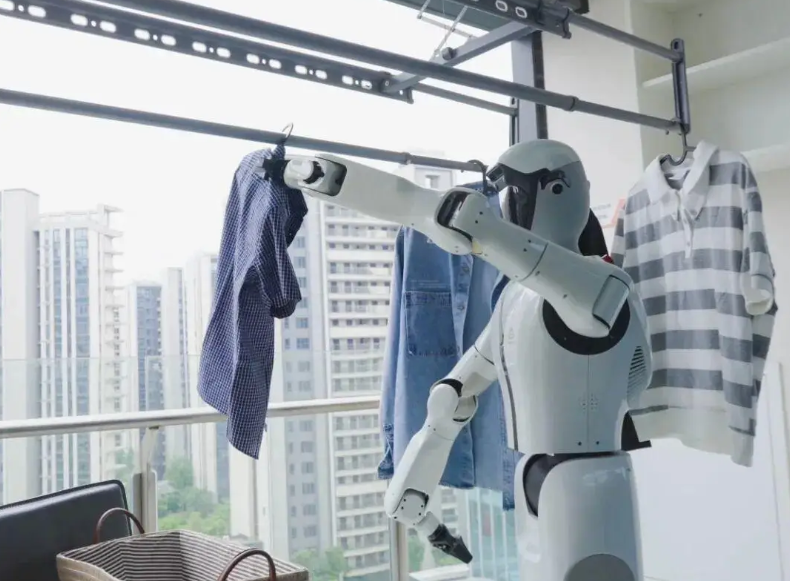
In terms of deployment, Shiguang has secured a 100-unit order from Hubei Science & Technology Investment and placed its first batch of robots in the Guanggu Zhiyu Future Talent Apartments for scenario testing. The service is initially free to users and hasn’t yet launched commercial pricing.
Technologically, it relies on a self-developed Dual Pyramid Physical AGI system, focusing on improving physical execution precision and complex scenario adaptation.
Currently, each Shiguang S1 costs about 200,000 RMB, with plans to reduce the base price to under 100,000 RMB by the first half of next year.
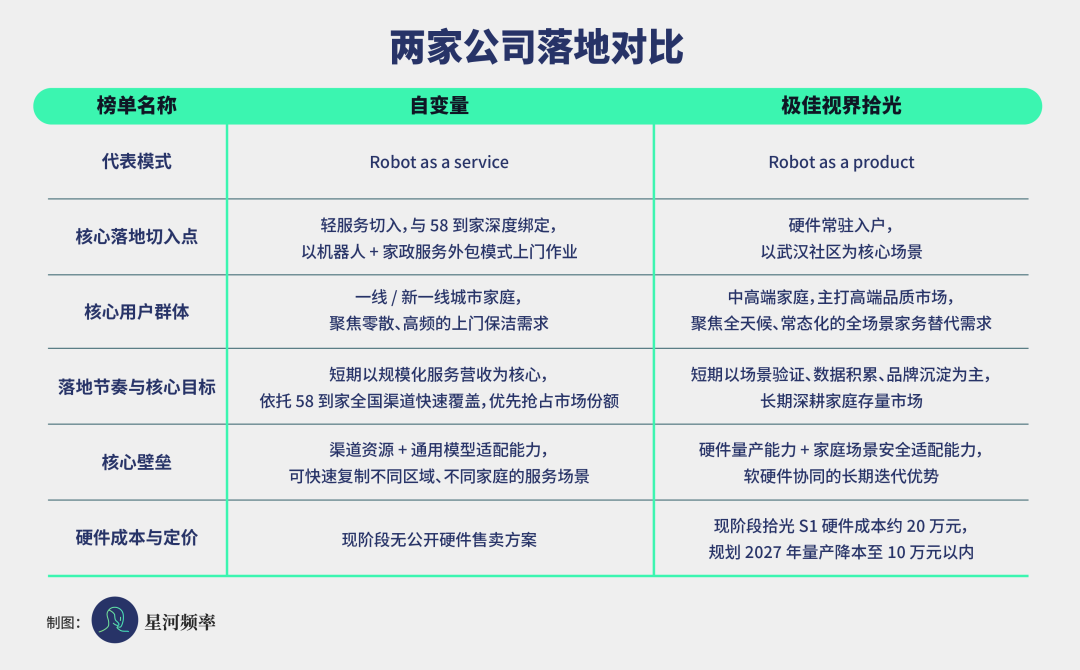
These two paths have different emphases: Independent Variable scales quickly through lightweight on-site services to accumulate scenario data, while Shiguang uses long-term in-home deployment to refine service capabilities and build brand recognition.
Together, they cover different market tiers and outline two main commercialization routes for household embodied AI.

Can robots in homes break even?
Bringing robots into homes still feels idealistic today.
While the Shiguang S1 can independently complete a full microwave-heating process and Independent Variable’s human-robot collaborative cleaning has entered real homes, these breakthroughs are exciting but far from a sustainable business—there’s still a long road ahead.
To turn in-home robots into a consistently profitable venture, two core questions must be answered: How to scale deployment? How to achieve true cost-effectiveness?
Let’s first examine commercialization paths. Three models show potential:
The first is an outright purchase model, similar to cars.
Users buy the robot hardware upfront for long-term use, paying only minor maintenance and upgrade fees. This offers the lowest long-term costs but requires high initial investment, making it suitable for mid-to-high-end households.
The second is a Didi-style on-demand single-use model.
Users pay no hardware costs and schedule robot services as needed, billed per visit or hour. This zero-barrier, flexible approach suits sporadic household needs and is an effective early-stage customer acquisition strategy.
The third is a subscription service package.
Users pay monthly, quarterly, or annually for fixed-duration, fixed-frequency robot home services, including hardware use, maintenance, model upgrades, and fault coverage. This balances flexibility and stability.
Of course, before full automation, a longer-lasting transitional phase will likely involve human-robot collaboration.
Robots won’t immediately replace domestic workers—instead, they’ll integrate into existing service systems as tools, with humans providing oversight and intervention. At this stage, robots enhance individual efficiency.
With the business model clarified, let’s crunch the numbers.
The logic is simple: treat the robot as a fixed asset and compare its annual costs to hiring a domestic worker.
For simplicity, we’ll use the outright purchase model as our baseline—other models essentially restructure cash flows around this logic.
First, costs:
Assume a household robot costs 300,000 RMB with a five-year depreciation cycle, yielding 60,000 RMB in annual depreciation. Add maintenance, insurance, cloud services (~30,000 RMB), and energy consumption (~3,000 RMB), for a total annual cost of ~93,000 RMB.
Now, value:
Since household scenarios can’t be valued by working hours × hourly wage, we use:
Annual equivalent value = Efficiency × Effective hours × Hourly wage × Stability premium
Assuming an industry-average hourly wage of 50 RMB, 1,650 annual effective hours (real demand), 25% efficiency, and a 1.5x stability premium (no sick leave, no communication costs):
Annual value = 50 × 1,650 × 25% × 1.5 = 30,937.5 RMB.
This leaves a clear gap versus the 93,000 RMB annual cost.
Critically, annual maintenance and computing costs (~33,000 RMB) alone exceed the robot’s total labor value—meaning even if manufacturers gave away the hardware, households would still operate at a loss.
To visualize, let’s break down scenarios:
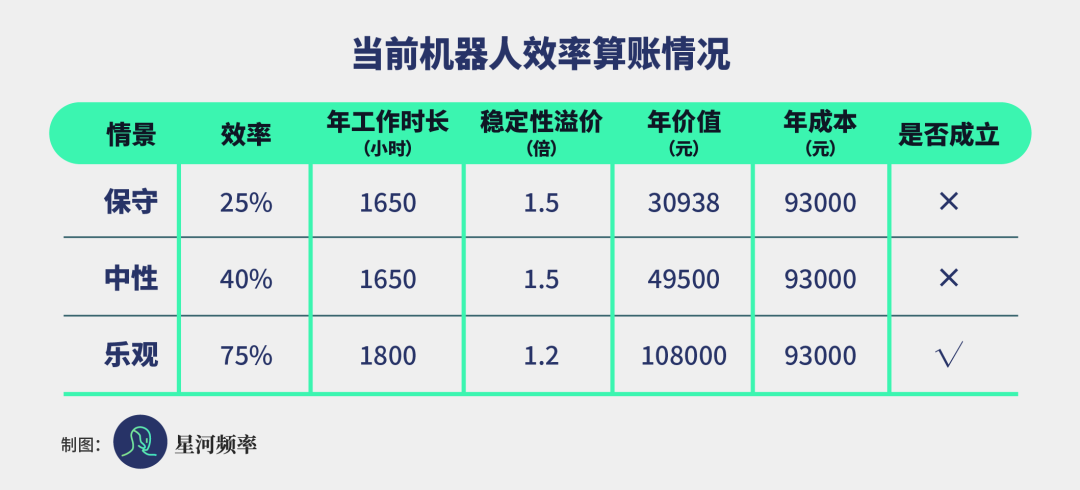
At current capability levels (20–40% efficiency), robots struggle to cover costs.
For a 300,000 RMB robot to break even in five years, its efficiency would need to approach 75%—still 2–3x beyond current capabilities.
This calculation assumes robots must fully replace a part-time domestic worker, but real-world deployment won’t follow that path.
For one, robots will initially handle fragmented, high-frequency tasks not worth hiring a person for.
They may also boost human worker efficiency through collaboration or, in service-based models, be shared across multiple households.
In other words, while “1 person = 1 robot” accounting doesn’t work, robots could redefine how household services are delivered, offering more flexible calculation spaces.
This raises the question: Who will pay for these robots, and why?
Because household consumption decisions aren’t purely rational.
Robots don’t quit or take sick leave, offering inherent stability. They also avoid the psychological burden of employer-employee dynamics—real premiums for high-income households.
For them, a 300,000 RMB robot isn’t just labor—it’s cutting-edge tech experience and a future investment.
However, relying solely on the positioning as a toy for the wealthy is clearly not enough to sustain this business.
The real turning point requires two curves to converge simultaneously: the cost of robots dropping from 300,000 to below 100,000, and efficiency climbing from 25% to over 75%.
Only then can the payback period be shortened to a range acceptable to ordinary households, allowing home robots to truly transition from ideal to reality.
Today's home robots are far from economically viable when considering pure financial metrics. However, this is also the norm for early-stage industries.
Looking back at new energy vehicles ten years ago, concerns about range anxiety, inconvenient charging, and high prices were each sufficient to 'sentence the industry to death.'
Yet, the reality is impressive, with the penetration rate of new energy vehicles now exceeding 50%.
Technological iteration is never linear but exponential.
Today, whether it's Zibianliang or Shiguang, they may not have provided standard answers, but at least they are laying the problems bare.
At present, the hourly wage for a housekeeper falls within the range of 50 to 100 yuan, or potentially even higher. In contrast, robots, burdened by their substantial total cost of ownership and relatively low efficiency, currently incur actual hourly costs that significantly surpass those of human labor.
Nevertheless, the moment the two trajectories—cost reduction and efficiency enhancement—cross paths, the economic viability of robots in domestic settings will become a tangible reality; it is merely a question of when.
In this context, today's home robots can be likened to an ongoing, long-term experiment.
They demand both time and patience. Over the forthcoming years, the majority of endeavors may appear flawed and could even experience fluctuations.
Yet, it is precisely these seemingly nascent and imperfect stages that progressively transform the envisioned future into a testable and verifiable reality.
Instead of hastily drawing conclusions, it might prove more rewarding to maintain a watchful eye with a touch of curiosity.
Numerous figures and scenarios that currently seem untenable often serve as the launching pad for genuine transformations in the days to come.
-
![]()
MathWorks: Generative AI Holds Great Potential, Yet a Trusted Toolchain is Essential for Flawless Operation
-
![]()
Small Earphones, Big Business
-
![]()
Volkswagen Slashes 100,000 Jobs, Mercedes-Benz Axes Year-End Bonuses: What’s Ailing German Auto Titans?
-
![]()
Doubao Can No Longer Offer Free Services to 345 Million Users: China's Era of Free AI Is Drawing to a Close
-
![]()
How Can Chinese Small Home Appliances Conquer Southeast Asia Through 'Dimensional Competition'?
-
![]()
Why are top intelligent driving players betting on reinforcement learning?
-
![]()
June 2026 Automobile Complaint Index Rankings: Persistent Problems Ignite Grievances Among Long-term Vehicle Owners
-
![]()
Avita Takes Another Stab at HKEX Listing: Facing the Urgency of Sustaining Operations Amid 11.2 Billion Yuan Loss Over Three Years