Jensen Huang Strikes Again with a Bold Claim! China Unveils a 60 Billion Yuan AI Fund to Compete – Who Will Triumph in the AI Showdown?
 01/23 2026
 639
639
At the Davos Forum, the smiling visage of NVIDIA's CEO, Jensen Huang, masked a declaration brimming with audacity—asserting that the global lifeblood of AI computing power rested firmly in his grasp. Meanwhile, at a Beijing press conference, officials from the Ministry of Industry and Information Technology (MIIT) calmly unveiled the establishment of a 60 billion yuan national AI fund, igniting a silent yet intense AI war. 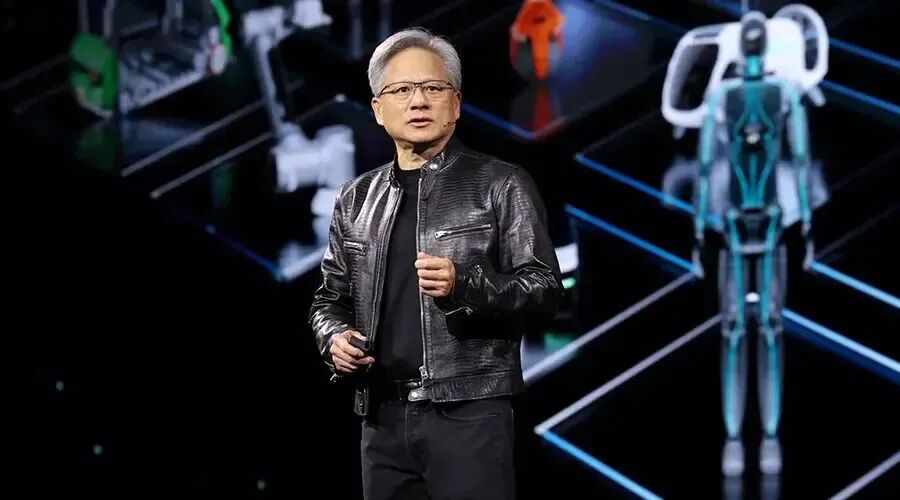
“AI is poised to become history's most expansive infrastructure endeavor,” Huang proclaimed at the Davos World Economic Forum, his trademark smile concealing an unwavering confidence. This confidence is rooted in NVIDIA's commanding over 90% global market share in AI chips, coupled with the fervent acquisition of NVIDIA H100 and B100 chips by cloud service providers.
MIIT data reveals that China is currently home to over 4,000 AI-related enterprises, with the industry's scale continually expanding. However, the chip bottleneck remains a stubborn obstacle.
The announcement by MIIT that the national AI fund would reach 60 billion yuan and focus on cutting-edge domains such as humanoid robots immediately sent ripples through the capital markets, signaling an impending upheaval.
On January 22, the Tencent Cloud Partner Conference unfolded as planned, with the commercialization trajectory of the Hunyuan large model taking center stage. From policy shifts to capital influxes, from technological advancements to market dynamics, a trillion-dollar AI war has commenced.
PART 01
Chip War
Computing power serves as the oil of the AI era, with Jensen Huang's NVIDIA emerging as the Standard Oil of this digital age.
NVIDIA's fiscal year 2025 third-quarter earnings report unveiled that its data center business revenue soared to $14.51 billion, marking a staggering 279% year-over-year surge. Behind this figure lies a global tech arms race to train large models.
Meta, Microsoft, Amazon, and Google are all amassing tens of thousands of NVIDIA GPUs. This overwhelming demand emboldens Huang to declare at Davos, “The demand for computing power will persistently outstrip supply.”
Domestic contenders like Huawei Ascend and Cambricon are striving to break through. China now boasts over 80 AI chip design firms spanning the entire spectrum from training to inference. Yet, limitations in process technology and software ecosystems render this pursuit particularly arduous.
A pivotal investment avenue for MIIT's 60 billion yuan fund is to surmount computing power bottlenecks. This endeavor transcends mere chip acquisition; it entails constructing a comprehensive and autonomous ecosystem from the foundational architecture to upper-layer applications.
PART 02
Application Battlefield
Beneath the computing power war lies a fierce competition for application scenarios. MIIT's emphasis on humanoid robots is far from coincidental.
The global humanoid robot market is projected to surpass $20 billion by 2030, with China, as a manufacturing powerhouse, enjoying inherent advantages in application scenarios. While Tesla's Optimus has showcased astonishing strides, Chinese startups are accelerating their pursuit.
The signals emanating from the Tencent Cloud Partner Conference are equally unequivocal: the commercialization of large models has entered a substantive phase. The Hunyuan large model is permeating multiple vertical sectors, including finance, education, healthcare, and government services, generating tangible value.
The deepening of AIoT from the perception layer to the decision-making layer signifies that AI is no longer confined to “seeing and hearing” but is also evolving to “think and decide.” Power grid load forecasting, precision agriculture, and AI-assisted medical diagnosis are all harnessing AI to address traditional industry pain points.
PART 03
Capital Trends
The capital market serves as the most sensitive barometer. In the fourth quarter of 2024, several renowned fund managers coincidentally increased their stakes in AI and humanoid robots.
The movement within the PCB sector is also noteworthy. The explosive growth of AI servers has spurred demand for high-end PCBs, with related firms generally reporting positive earnings previews. While this may appear to be the tail end of the supply chain, it is, in fact, evidence of the transmission of AI hardware demand.
The establishment of the national AI fund is poised to catalyze several times more social capital investment. These 60 billion yuan are not the terminus but a vane guiding trillions in capital flows.
From an investment standpoint, AI has transitioned from conceptual hype to value discovery. Firms capable of genuinely resolving industry pain points and achieving commercial closures will continue to garner favor from the capital market.
China's vast user base, rich data resources, and complete manufacturing chain provide a unique global environment for AI application implementation.
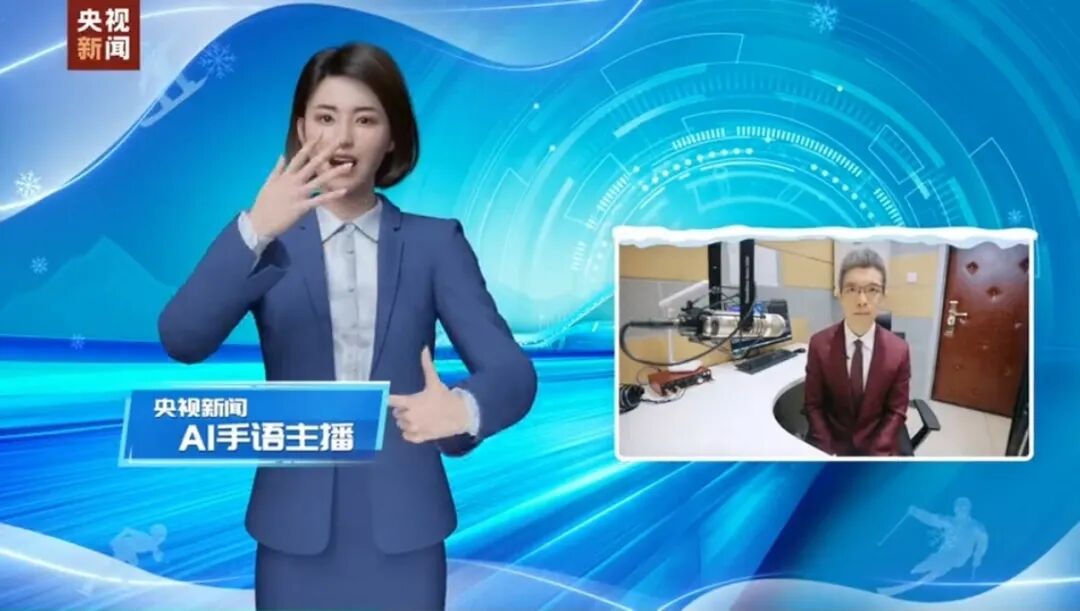
The AI sign language anchor at the Beijing Winter Olympics accurately translated event commentary into sign language movements; in multiple Shanghai hospitals, AI-assisted diagnosis systems aid doctors in detecting early lesions; in the Pearl River Delta's smart factories, industrial vision systems achieve millimeter-level precision detection.
Behind these seemingly minor application scenarios lies the pragmatic progress of China's AI industry.
While international giants vie in general-purpose large models, Chinese AI firms are concentrating on vertical sectors. This differentiated approach may hold the key to breaking through.
MIIT's 60 billion yuan fund investment direction is unambiguous, and the capital market's choices are equally evident. The question now looms: Can China forge its own path in this AI competition that will shape the future?
In the symphony of chips, algorithms, data, and applications, every note must resonate with precision. This war, devoid of smoke, yet determines the landscape of national competition.
And the ultimate answer will be inscribed in the optimization of every code, the breakthrough of every algorithm, and the implementation of every scenario.
Editor | Qingshan
Qiyingmen
Insightful, Knowledgeable, Interesting
With Readers | With Stories | With Reverence
-
![]()
Li Shufu's Lesson in 'Abstract' Thinking: With Speed Dividends Peaking, What Will Drive China's Auto Industry Through the Next Two Decades?
-
![]()
World’s Pioneering! Automated Production Line for Million-Scale Volume Holographic Waveguides Launched in Tianjin
-
![]()
Cars Can't Be Made with the 'Quick Buck' Mentality: Li Shufu's Candid yet Impactful Remarks
-
![]()
Can You Snag a Complete Trio of Digital Gadgets for 10,000 Yuan? AI Recommendation Showdown: How Trustworthy Are Doubao, DS, Qianwen, Kimi, and Yuanbao?
-
![]()
DingTalk Undergoes Leadership Overhaul Amid Alibaba’s AI Strategy Unveiling
-
![]()
Revealing the Myth of the '10 Billion Subsidy': Pinduoduo Faces Heightened Scrutiny with Its '100 Billion Initiative'
-
![]()
Yousu's '70,000-Character Long Essay' Resonates with Alibaba Executives' 'Cultural Awareness'
-
Analysis | SpaceX is about to land on Nasdaq. Where is the breakthrough point for China's commercial aerospace?