Is Baidu Netdisk Trying to Earn Money to Sustain Operations?
 01/26 2026
 663
663
Produced by Xiahai Fallsea
Written by Hu Buzhi
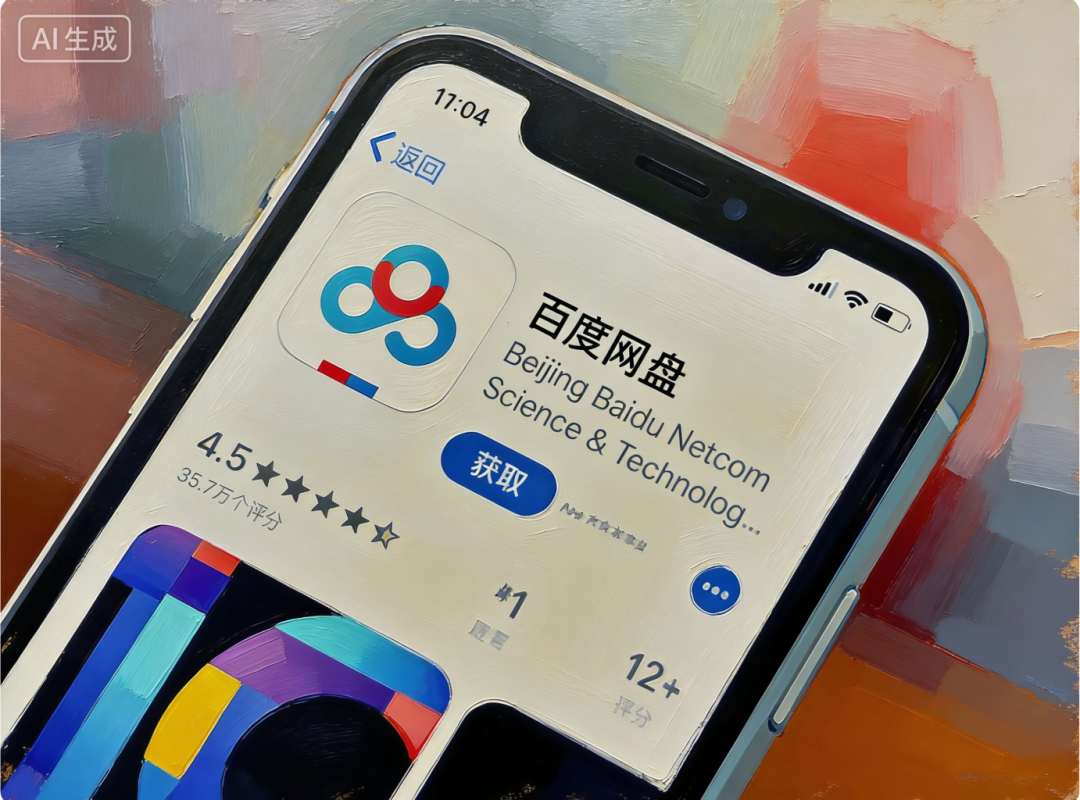
On January 23, 2026, an internal email regarding organizational restructuring at Baidu shed light on the transformation anxieties plaguing this seasoned internet giant. Baidu Wenku and Netdisk were officially merged into the 'Personal Super Intelligence Group (PSIG),' led by Group Vice President Wang Ying, who reports directly to Li Yanhong. This reporting structure bypasses several hierarchical levels, a rare occurrence in Baidu's recent organizational adjustments.
The harsh reality prompting this move is evident: Advertising revenue has declined for several consecutive quarters, with core online marketing revenue dropping by 15% year-on-year in Q3 2025. The once-lucrative revenue stream is no longer shining brightly. While the AI business has witnessed rapid growth, its annual revenue of approximately 10 billion yuan is insufficient to offset the advertising decline. Commercialization efforts remain mired in the dilemma of 'acclaim without profit.' New ventures like smart cloud and autonomous driving are either low-margin or still incurring significant losses.
With growth curves plateauing across the board, Baidu has turned its attention to Netdisk and Wenku, two 'non-core' businesses. Is this integration a temporary 'lifesaving' tactic or a long-term strategy to reconstruct growth logic? Is Baidu truly relying on Netdisk to 'sustain operations'? How many insurmountable hurdles lie on the path from an advertising-driven model to a subscription-based revenue stream?
Signals of Architectural Restructuring
The establishment of PSIG is not a hastily assembled business combination but the inevitable outcome of Baidu's continuous adjustments over the past two years. In February 2024, Baidu Wenku was upgraded from a business department to a division, with Wang Ying simultaneously promoted to vice president. This marked the elevation of document tool businesses to a strategic level. In August of the same year, the consumer-facing Netdisk business was transferred from the Smart Cloud Group (ACG) back to the Mobile Ecosystem Group (MEG) under Wang Ying's supervision, achieving initial synergy between 'Wenku + Netdisk.'
The current restructuring represents the third and most crucial step: upgrading the two products from 'business collaboration' to 'ecosystem integration' and branding them under the 'Personal Super Intelligence' banner. This signifies Baidu's ambition to transcend storage and document services, creating a one-stop personal office platform encompassing content creation, storage management, and AI empowerment. The 1,200-person team size, dedicated office space in Penghuan Building, and direct access to the CEO all convey the same message: PSIG has become Baidu's 'top priority project' for transformation.
Wang Ying's track record lends credibility to this bet. As the former senior vice president of Sogou, she joined Baidu in 2021 and transformed Wenku into the 'most successful AI-reconstructed product' within three years. Li Yanhong publicly commended her at internal meetings for 'finding the right path for AI implementation.' Under her leadership, Wenku shifted from a 'document library' to an 'AI creation tool,' surpassing 40 million paying users and achieving net profits twice that of WPS—a 'scalable and profitable' capability that Baidu desperately needs.

Baidu's bet on the Netdisk ecosystem is essentially a choice of the 'highest certainty' growth path. Compared to the performance of Baidu's major business lines, the two products under PSIG stand out as 'outliers': Baidu Wenku has emerged as a 'cash cow.' In 2025, it achieved annual revenue exceeding 2 billion yuan, with AI monthly active users surpassing 97 million and daily active users growing by 230% year-on-year. Its 40 million paying users rank second globally among AI products, trailing only Microsoft Copilot. More critically, its profit model has proven viable—through value-added services like AI writing, PPT generation, and paper polishing, it has achieved dual monetization of 'content + tools' with profit margins significantly higher than the industry average.
Baidu Netdisk, however, presents a mix of 'potential and risk.' With 700 million total users, it boasts a solid user base. In January 2025, AI functionality daily active users grew by 90% year-on-year, and AI-related revenue surged by 120% annually. However, its 7% payment rate and over 1 billion yuan in losses in 2024 highlight its critical commercialization shortcoming (weakness). As a capital-intensive business, Netdisk's server storage and bandwidth costs increase linearly with user data volume, while current membership pricing (9.9 yuan/month, 98 yuan/year) struggles to generate substantial profits after covering costs.
The synergy between the two has become Baidu's breakthrough point. In Q3 2025, Baidu's AI applications, including Wenku and Netdisk, generated 2.6 billion yuan in revenue, with nearly 300 million monthly active users, making it Baidu's largest personal AI application matrix. Baidu hopes to break through growth bottlenecks by leveraging 'Wenku's content ecosystem + Netdisk's storage capabilities + AI empowerment tools'—Wenku can expand storage scenarios through Netdisk, while Netdisk can enhance conversion efficiency by tapping into Wenku's high-paying user base.
Compared to other business lines, this synergistic value is even more precious: Advertising continues to shrink, smart cloud growth (31%) remains low-margin, autonomous driving has accumulated over 17 million orders but still burns cash, and iQIYI is trapped in a vicious cycle of declining revenue and high content costs. Among all businesses, only PSIG has both scale and a clear subscription-based monetization path, making it Baidu's most reliable 'breadwinner' for now.
Dilemma of Subscription-Based Transformation
Baidu's core goal is to reconstruct its model from 'advertising-driven' to 'subscription-based' through PSIG. However, in China's internet ecosystem, where 'free is king,' subscription-based transitions are always an uphill battle. The two major PSIG products face multidimensional challenges, reflecting the broader industry's struggles with subscription models.
Baidu Netdisk's biggest dilemma lies in its 'free user dependency + capital-intensive costs' deadlock. Among its 700 million users, 93% are free users who consume bandwidth and storage resources without generating revenue. Industry estimates suggest that the annual cost Baidu Netdisk incurs for free users far exceeds the revenue it generates from side businesses like advertising.
Even attempts to drive paid conversions face triple resistance: First, inherently low user willingness to pay. As a tool product, users' core demand for Netdisk is 'storage and transmission,' with weak demand for paid value-added services. Compared to Wenku's 'content necessity + AI tools' payment logic, Netdisk's value perception is weaker—users are willing to pay for AI tools like 'paper writing and PPT creation' but reluctant to pay for 'larger storage space and faster download speeds,' especially with alternatives like Alibaba Cloud Disk and Tencent Weiyun available. Pricing-wise, Baidu Netdisk's annual fee of 98 yuan, while slightly lower than Alibaba Cloud Disk's 99 yuan, is higher than Tencent Weiyun's 118 yuan but lacks differentiated value, failing to attract price-sensitive users.
Second, price wars in the industry. Alibaba Cloud Disk rapidly rose with a 'free forever' strategy (later shifting to paid plans) and formed price pressure through bundled pricing (350–400 yuan/year). Tencent Weiyun leverages the WeChat ecosystem, with 80% of its 420 million registered users accessing it through WeChat, giving it a natural advantage in social sharing scenarios. To defend its 65% market share, Baidu Netdisk must maintain low pricing, further squeezing profit margins.

Third, erosion of the membership system by gray-market activities. On platforms like Xianyu and Xiaohongshu, renting and sharing Baidu Netdisk member accounts has become an industrial chain, with transactions like 1 yuan/day or 5 yuan/week readily available. These gray-market operators register accounts in bulk and resell partial rights, directly diverting paying users and undermining the exclusivity of the membership system. It is estimated that the industry loses billions of yuan annually from account sharing, with Baidu, as the market leader, being the most severely affected.
More critically, Netdisk's cost structure struggles to support the profit logic of subscriptions. Server, bandwidth, and data security costs grow linearly with user data volume, while membership revenue growth depends on payment rate increases—a 'cost growth outpacing revenue growth' dilemma that means even doubling the payment rate to 14% may not achieve profitability.
Compared to Netdisk, Baidu Wenku's subscription-based transition has been smoother but faces a 'growth ceiling' and 'value dilution' dilemma. With 40 million paying users and 97 million monthly active users, its core user base is largely saturated, leaving subsequent growth dependent on payment rate increases and ARPU growth—both paths fraught with challenges.
Diminishing marginal growth effects are inevitable. In Q4 2025, Wenku's subscription revenue grew by 21% year-on-year, down from 23% in Q3, indicating a growth bottleneck at its current user base. To break through, it must either expand new user groups or tap into the payment potential of existing users. The former faces competition from AI-native apps like DeepSeek and Doubao—on PC web, Baidu Wenku's 19.75 million monthly active users slightly trail Tencent Yuanbao but lag far behind DeepSeek's 52.52 million and Doubao's 25.72 million. The latter requires continuous AI feature iterations to sustain user payment willingness.
The sustainability of the content ecosystem poses another challenge. Baidu Wenku hosts 1.4 billion documents, including 420 million professional pieces, with significant costs for copyright procurement, review, and maintenance. As copyright awareness grows, publishers and authors demand higher licensing fees, while user expectations for content quality rise, squeezing profit margins.
More subtly, balancing commercialization and user experience is tricky. To boost paid conversions, Baidu Wenku once set a 60% paid interception rate, leading to significant user churn. Lowering it to 20% improved user experience but directly impacted short-term revenue. Additionally, some users report 'low-price inducement auto-renewal' issues—e.g., a 0.9 yuan trial automatically converting to an 18 yuan monthly charge—which may boost short-term payment rates but erode brand trust and harm long-term retention. This 'having it both ways' dilemma is common in subscription-based transitions for all content products.
Baidu's transformation dilemma essentially reflects four inherent paradoxes of China's internet subscription models, which also plague Alibaba, Tencent, and other giants in their membership businesses:
1. The paradox of thresholds and scale. Subscription models rely on payment thresholds to screen high-value users, but platforms' pursuit of scale forces them to lower thresholds repeatedly—e.g., long-video platforms' '3 yuan for the first month' deals or e-commerce membership bundling—ultimately diluting benefits for high-value users and leaving low-value users with little long-term retention incentive, creating a 'high acquisition cost, low retention' vicious cycle. Baidu Netdisk's free user dependency and Wenku's low-price inducements are manifestations of this paradox.
2. The collapse of pricing systems. When Taobao 88VIP and JD Plus bundle multiple benefits under a 'one-price-covers-all' model, the value boundaries of single memberships blur entirely. Baidu Wenku's annual fee, while just at the hundred-yuan level, faces users accustomed to 'free document access' with far lower payment acceptance than overseas users. Meanwhile, Netdisk's membership price wars have shattered user price expectations, making them resistant to price hikes.
3. Insufficient irreplaceability of benefits. Whether Netdisk's storage services or Wenku's document resources lack absolute barriers—users can easily migrate data across cloud services or access free documents elsewhere. This contrasts with overseas models like Netflix or Spotify, which rely on 'exclusive content/music libraries' to lock in users. Without such exclusivity, Baidu struggles to build subscription stickiness.
4. Mismatched organizational capabilities. Baidu's long-standing focus on advertising has shaped a 'traffic-oriented' organizational structure and performance system, but subscription models require 'user value-oriented' capabilities, including refined operations, user service, and AI tool iteration. This genetic organizational difference often pushes Baidu to prioritize short-term revenue over long-term user value, hindering subscription growth.
Overseas Breakthrough
While domestic transformation hits bottlenecks, Baidu views overseas business as a 'second front' for subscription-based transitions. Whether through PSIG's AI tool expansion or global layouts in autonomous driving and digital humans, high hopes are pinned on these efforts. However, overseas market competition and localization barriers mean it cannot serve as an 'immediate remedy' but rather a long-term strategic investment.
Southeast Asia has become Baidu's AI overseas launchpad, driven by its massive population, rapidly growing digital economy, and low barriers to AI tool adoption. Baidu now has over 100 million users in Southeast Asia, with its overseas AI product 'Ernie Bot' exceeding 15 million users, up 40% quarter-on-quarter, showing strong momentum.
PSIG's path to overseas expansion has become clear: leveraging Huiboxing digital humans as a gateway to enter the e-commerce live-streaming sector in Southeast Asia. Following its success in Brazil, Baidu replicated this model in Southeast Asia, forming partnerships with mainstream platforms such as Shopee and Lazada to offer digital human live-streaming solutions. Its primary advantage lies in cost control—while human hosts in Brazil charge 1,000–1,500 yuan per hour, the monthly operating costs for digital humans are just 1% of those for human teams. This cost advantage is equally relevant in Southeast Asia, where labor costs are on the rise.
Data indicates that among the live-streaming rooms served by Huiboxing digital humans in Southeast Asia, 20% of digital human hosts outperform local human hosts in terms of order generation efficiency, while 50% lead in OPM (orders per thousand exposures). By 2025, Baidu's digital human overseas revenue reached 1.2 billion yuan, with Brazil contributing 360 million yuan. Southeast Asia emerged as the fastest-growing market, becoming PSIG's core source of overseas revenue.
However, challenges remain. Southeast Asia has become a competitive battleground for Chinese tech firms, with Alibaba, Tencent, and ByteDance already active in e-commerce, social media, and AI tools. This exposes Baidu to intense, homogenized competition. Additionally, inadequate localization remains its biggest weakness—the linguistic, cultural, and consumer habit differences across countries require digital humans to adapt to local scripts and scenarios. This demands high technical iteration and operational capabilities from Baidu.
If Southeast Asia serves as the "testing ground" for AI tools, then Europe and the U.S. represent the "arena" for Baidu's autonomous driving technology. In 2026, Baidu Apollo will partner with Uber and Lyft to launch Robotaxi trials in London, initially deploying dozens of vehicles and scaling up to hundreds. This marks the first entry of Chinese autonomous driving technology into a European capital and the first global collaboration model of "Chinese technology + U.S. platform + European market."
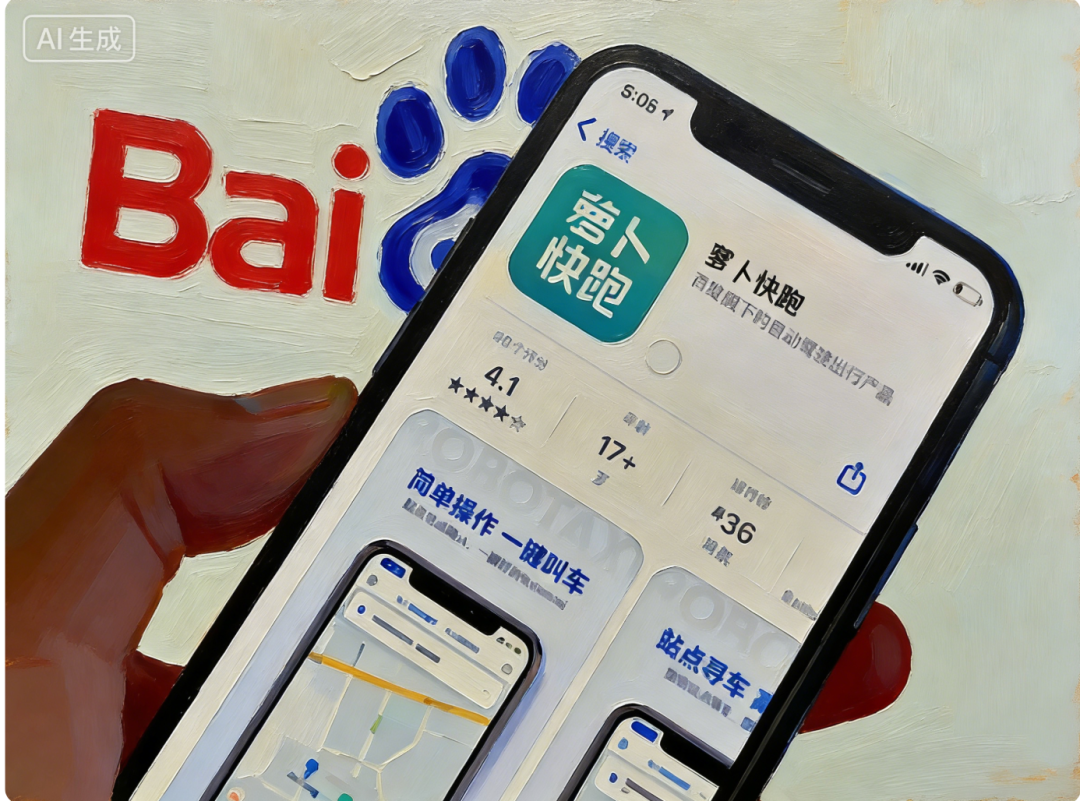
The significance of the London pilot extends beyond commercial implementation to technological endorsement. The UK has enacted the Self-Driving Vehicles Act 2024, clarifying accident liability for autonomous entities and removing a core obstacle to commercialization. Meanwhile, Baidu's accumulated experience in right-hand-drive urban operations in Hong Kong enables rapid adaptation to London's traffic regulations. The success of this pilot will lay the groundwork for Baidu's autonomous driving expansion into other European and American cities while enhancing its global brand influence.
Nevertheless, the risks in European and American markets far outweigh the opportunities. Firstly, the competitive landscape is highly concentrated, with local players like Waymo and Wayve possessing deep-rooted technological expertise and operational experience. As a latecomer, Baidu must overcome dual barriers of technology and brand recognition. Secondly, geopolitical factors cannot be overlooked, as fluctuations in U.S.-China relations and EU regulatory policies may impact business expansion. Thirdly, costs are prohibitively high, with vehicle modifications, compliance certifications, and operational maintenance in Western markets far exceeding domestic expenses, making short-term profitability unattainable.
Overall, Baidu's overseas business has the potential to become a new growth driver, but realizing this potential will take time and is unlikely to alleviate domestic transformation pressures in the short term.
The positive factors lie in its technological advantages and replicable business models. Baidu's technological accumulation in AI and autonomous driving has reached international advanced levels, with Luobo Kuaipao accumulating over 17 million orders—surpassing Google Waymo's 10 million—demonstrating its capacity for technological export. Meanwhile, the commercialization models for digital humans and AI document tools have been validated in Brazil and Southeast Asia, enabling rapid expansion through "technology licensing + revenue sharing." Additionally, overseas markets offer significantly higher customer pricing—as Li Yanhong noted, ride prices abroad are typically several times higher than in China, yielding stronger unit economic benefits.
However, short-term limitations are also evident. Firstly, market education costs are high, as Baidu's brand recognition overseas lags far behind giants like Google and Microsoft, requiring substantial investment in brand-building and user education. Secondly, regulatory compliance is challenging, with vast differences in privacy protection, data security, and industry standards across countries increasing operational costs and risks. Finally, the investment-to-output cycle is long, as both autonomous driving and AI tools demand sustained long-term investment without generating substantial short-term revenue.
Industry analysts generally believe Baidu's overseas business could enter a phase of scaled profitability between 2028 and 2030, becoming a significant revenue stream. However, its contribution to overall performance will remain limited in the next 2-3 years. For Baidu, which urgently needs to "support its family," overseas business represents "hope for the future" but cannot resolve "immediate challenges."
Conclusion
Returning to the original question: Does Baidu really rely on its cloud storage service to "support its family"? The answer is "both yes and no."
In the short term, PSIG is indeed Baidu's most reliable "breadwinner." Amid shrinking advertising revenue, slow AI monetization, and immature new businesses, the profitability of Baidu Library and the user base of its cloud storage form the "foundation" during Baidu's transformation, buying time for long-term strategies like AI commercialization and overseas expansion. This choice to "rely on the cloud storage ecosystem for survival" is an inevitable result of current pressures.
However, in the long run, Baidu's ambitions extend far beyond "surviving on cloud storage." The core value of PSIG lies in exploring a scalable monetization path of "AI + subscription fees" for Baidu—using Library and cloud storage scenarios to cultivate user habits of paying for AI tools, ultimately replicating this model across other business lines like smart cloud and autonomous driving. The essence of this integration is Baidu's attempt to use PSIG as a "testing ground" to reconstruct its underlying logic from "traffic monetization" to "value monetization."
This transformation is destined to be a protracted battle, with success depending on three critical variables:
First, whether PSIG can break through commercialization bottlenecks. Cloud storage must raise its paid conversion rate from 7% to at least 15% while increasing ARPU through AI features to achieve profitability. Library, meanwhile, must break through growth ceilings by sustaining rapid paid-user growth while controlling content costs. This requires continuous optimization in user operations, product innovation, and pricing strategies to overcome industry paradoxes in subscription models.
Second, whether organizational capabilities can align with transformation needs. Baidu must shed its "advertising DNA" entirely, establishing a "user value"-centric evaluation system and corporate culture while strengthening capabilities in refined operations, localized services, and AI technology iteration. The replicability of Wang Ying's team's success across the entire group will be pivotal to the transformation.
Third, whether overseas business can deliver breakthroughs as scheduled. Overseas markets represent Baidu's "second growth curve" for subscription-based transformation, with scaled progress directly determining its long-term valuation. Balancing short-term investments with long-term returns and finding equilibrium between technology export and localized operations remain core challenges.
For the broader internet industry, Baidu's transformation holds benchmarking significance. It marks the definitive end of traditional advertising-driven models while revealing the difficulties—and inevitability—of subscription-based transitions. As AI technology reshapes industry landscapes, Baidu's "cloud storage gamble" is not merely a survival battle for the company but a microcosm of Chinese internet firms' transition from the "traffic era" to the "value era."
This war has no shortcuts; only by trading time for space and continuously iterating amid trials and errors can new growth answers emerge. Whether Baidu succeeds may find its answer in core metrics like PSIG's paid conversion rate, AI revenue share, and overseas order volumes over the next three years.
-
![]()
Li Shufu's Lesson in 'Abstract' Thinking: With Speed Dividends Peaking, What Will Drive China's Auto Industry Through the Next Two Decades?
-
![]()
World’s Pioneering! Automated Production Line for Million-Scale Volume Holographic Waveguides Launched in Tianjin
-
![]()
Cars Can't Be Made with the 'Quick Buck' Mentality: Li Shufu's Candid yet Impactful Remarks
-
![]()
Can You Snag a Complete Trio of Digital Gadgets for 10,000 Yuan? AI Recommendation Showdown: How Trustworthy Are Doubao, DS, Qianwen, Kimi, and Yuanbao?
-
![]()
DingTalk Undergoes Leadership Overhaul Amid Alibaba’s AI Strategy Unveiling
-
![]()
Revealing the Myth of the '10 Billion Subsidy': Pinduoduo Faces Heightened Scrutiny with Its '100 Billion Initiative'
-
![]()
Yousu's '70,000-Character Long Essay' Resonates with Alibaba Executives' 'Cultural Awareness'
-
Analysis | SpaceX is about to land on Nasdaq. Where is the breakthrough point for China's commercial aerospace?