Three Core Capabilities of Cloud Service Providers in the AI Era
 03/17 2026
 510
510
In the past few years, if you asked a company why they were moving to the cloud, the answer would most likely be "to save money" or "for convenience." Outsourcing servers to cloud providers and paying on demand like utilities was indeed more cost-effective than building an in-house data center. However, if you still approach selecting a cloud service provider with this mindset today, you might find yourself like a traveler with an old map, unable to locate the entrance to the new world.
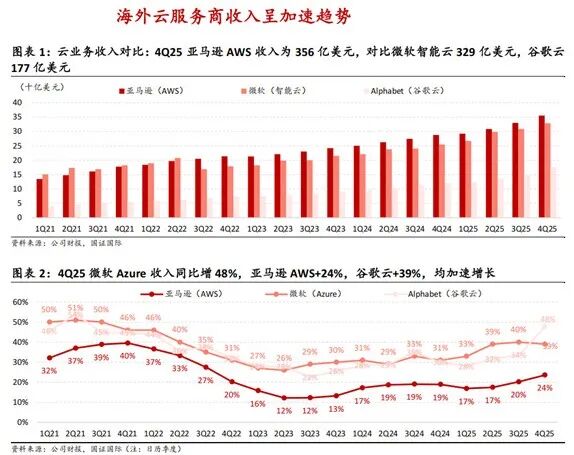
This is because the rules of the cloud services game are undergoing a systemic transformation driven by AI. The landlord, who once merely provided "raw computing power," is now being forced by the market to rapidly evolve into a comprehensive service provider capable of delivering "fully furnished spaces" and even deploying "intelligent butlers."
01. Industry Scenario Capabilities: From Movers to AI Architects
To understand the magnitude of this transformation, consider the changing mindset of customers. A partner at Deloitte China recently shared an interesting observation: Previously, customers would first ask, "How much does it cost?" Now, more and more customers start by asking, "How is your computing performance? How efficient is it?" Only if these questions are satisfactory do they proceed to ask about the price, and they are willing to pay more for better performance.
Behind this detail lies a fundamental shift in enterprise demand for cloud services. For a long time, cloud services essentially played the role of a "digital warehouse," providing standardized computing and storage space. However, in the AI era, enterprises need not just a cold, empty room but a turnkey, even "intelligent" home. They want to train models and deploy intelligent applications directly on the cloud, hoping that the cloud platform can not only store data but also extract insights from it.
This is akin to the evolution of the rental market. In the past, tenants were satisfied with just a bed to sleep on; now, they demand not only fully furnished rooms but also a full suite of smart appliances and even an AI butler to respond to their needs at any time. For enterprise customers, this "AI butler" is the AI capabilities provided by the cloud platform—from underlying chip optimization and framework support to upper-layer model services and intelligent agent development tools.
This shift in demand directly signals the end of an era reliant solely on scale effects and price wars. Industry insiders admit that the traditional "first half" of public cloud, driven by resources, has reached saturation. Simply selling API calls (Tokens) is not a sustainable business because "the volume looks large, but the stickiness is extremely low." The real moat lies in whether a provider can help customers solve practical problems and integrate into their specific business processes.
Therefore, competing on scenarios is poised to become the starting gun for a new race, compelling cloud providers to undergo a painful self-reinvention. They can no longer afford to be mere movers of computing power but must become architects of enterprise AI transformation.
The difficulty of this transformation lies in the requirement for cloud providers to possess full-stack technological penetration. Previously, cloud providers only needed to manage servers, networks, and storage, leaving application development to the customers. However, to enable AI to run faster, more cost-effectively, and more stably, cloud providers must now extend their reach both upward and downward.
Downward, this means delving into the chip and hardware layers. AI training and inference have insatiable demands for computing power, yet GPU chips are both expensive and scarce. Leading cloud providers have begun developing their own chips or optimizing underlying scheduling systems to the extreme.
Upward, it means delving into application scenarios and industry knowledge. Financial customers need intelligent risk control capable of identifying risks, manufacturing customers need visual quality inspection that can spot defects at a glance, and gaming customers need intelligent NPCs capable of real interactions with players. These needs vary greatly, with no one-size-fits-all solution. This requires cloud providers to truly "understand the industry" and even collaborate with ecosystem partners to encapsulate deep industry knowledge and AI capabilities into out-of-the-box "intelligent agents."
02. Ecosystem Co-Creation Capabilities: From Transactional to Value Co-Creation
Against this backdrop, the relationship between cloud service providers and their customers may also undergo a transformation.
In the past, the completion of a transaction often marked the end of the service—customers received resources and figured things out on their own, while cloud providers received payment and considered their task complete. However, in the AI-driven cloud era, the transaction becomes the starting point for cooperation. When a manufacturing company purchases cloud services to train quality inspection models, it does not just want a bunch of login credentials; it hopes that the cloud provider will send experts to the factory floor to understand the production conditions, the morphological characteristics of product defects, and even assist in deploying the model to edge devices for real-time feedback. This deeply integrated process transforms cloud service providers from mere tool sellers into co-creators in enterprise digital transformation.
This qualitative change in the relationship also redefines the logic of value exchange. Customers no longer pay for computing power itself but for the problems it solves; cloud providers no longer compete on who has the largest data centers but on who can help customers implement AI faster and see business returns sooner. As a result, we see more and more cloud platforms introducing "outcome-oriented" cooperation models, such as charging based on model call effectiveness, sharing in business growth, or even jointly incubating industry solutions and sharing innovation proceeds. It is like a landlord not only renting you a house but also participating in your home business, thinking together about how to create more value with that space.
It is foreseeable that future competition in cloud services will no longer be an arms race of resource scale but an ecological contest of value creation capabilities. Those cloud providers who can truly immerse themselves in industries and face challenges alongside their customers will find their irreplaceability in this AI wave.
03. Security and Compliance Capabilities: From Technical Support to Core Competitiveness
With the migration of massive amounts of data to the cloud, security and compliance capabilities are no longer just technical support at the backend of cloud service providers but have become a core competitiveness determining their market position.
The AI era introduces entirely new dimensions of risk. Training large models relies on vast amounts of data, often involving user privacy, trade secrets, and even national security. The consequences of data breaches or model "poisoning" are unthinkable. Meanwhile, AI regulatory frameworks are accelerating globally, such as the EU's
Security and compliance capabilities have thus become the cornerstone of trust between cloud providers and their customers. For enterprises, choosing a cloud service provider is not just about selecting technology but also about selecting a partner who can share legal and reputational risks. By building a full-chain security system from data encryption and access control to model output, as well as meeting diverse global compliance certifications, cloud providers are effectively reducing the risk costs for customers in adopting AI. This capability transforms AI's "possibilities" into commercial "feasibility."
In the AI era, where technologies are converging, security and compliance are key to building differentiated advantages. They elevate cloud service providers from mere technology providers to trusted guardians in enterprise digital transformation, undoubtedly representing their most core and difficult-to-replicate competitiveness.
04. Conclusion
The potential evolution of cloud service providers in the future is essentially a redefinition of value. From being a cost-effective digital warehouse to becoming a knowledgeable and industry-savvy intelligent partner, the role of cloud providers is undergoing a qualitative leap. As AI transforms computing power from a resource into a capability and tools into intelligent agents, the relationship between enterprises and the cloud is also elevating from a simple transaction to deep value co-creation.
The cloud of the future will no longer be a cold data center but a warm soil for innovation. Choosing a cloud service provider is essentially selecting a companion to navigate through the AI fog—not just providing a path underfoot but jointly mapping out the journey ahead.
- End -
-
![]()
AI Giants Start Borrowing to Fuel Computing Power Race
-
ByteDance Initiates Largest B2B Structural Adjustment, This Time It's Truly Different
-
![]()
Let's Talk About Kingsoft Office's Mid-Year Outlook and the True Strength of Its AI-Powered Office Solutions
-
Despite 150 Million Users, Struggles Persist: AIShige Faces Tough Competition from Seedance and Kling in AI Video Monetization
-
![]()
Ensuring Safe Gear Shifting in the Automotive Industry: Transitioning from 'Product Oversight' to 'Full-Chain Governance'
-
![]()
Net Profit Soars to $133.7 Billion! Azure Revenue Tops $100 Billion, with AI Fueling Microsoft's Growth
-
![]()
Before 6G Hits the Market, the U.S. Forges a 'Rules Alliance': What Challenges Await Chinese IoT Enterprises?
-
![]()
Intelligent Driving's 'Little Blue Light' Faces Ban: Night Glare and Cut-in Risks Prompt Official Action