Is 'Data Scarcity' More Fatal Than 'Computing Power Shortage'? Is It Bringing Disaster?
 07/29 2026
 535
535
SHEN MOU
Original: Shenmou Finance and Economics (chutou0325)
Currently, the most frequently mentioned anxiety in the AI industry is undoubtedly the shortage of computing power. News about the scarcity of NVIDIA GPUs is common, with prices soaring as a result. Taking the H100 as an example, its market price has at one point been hyped to over $40,000, more than twice its official price, while delivery times have extended to several months. This mismatch between supply and demand has driven up training costs for AI companies and filled the market with anxiety.
However, when we shift our focus from large models to embodied intelligence, we find that the computing power shortage seems more like 'growing pains'. What keeps practitioners awake at night is another deep-seated bottleneck that has already arrived: 'data scarcity'.
According to industry estimates, training an embodied model with general-purpose generalization capabilities requires tens of millions or even billions of hours of real-world operational data. Yet, as of early 2026, the total amount of high-quality physical interaction data available globally is only about 500,000 hours, leaving a gap of over 99%. This means that the current data foundation for embodied intelligence is still more than two orders of magnitude away from achieving true general-purpose generalization capabilities. This is not a gradual gap but a fundamental disconnect.
Embodied intelligence has hit a 'data desert' wall that is even harder to overcome than the computing power shortage.
01 'Computing Power Shortage' Is an Engineering Problem; 'Data Scarcity' Is a Dimensional Disaster
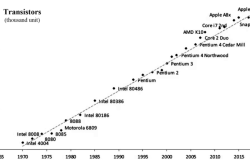
In the past, Moore's Law allowed the number of transistors on a single chip to double every 18 months. Computing power costs continued to decline, with NVIDIA's H100 FP8 computing power nearing 2 petaFLOPS, representing a significant drop in unit computing power cost compared to the V100 five years ago. TSMC's CoWoS packaging capacity is also expanding orderly, with monthly output increasing from about 14,000 wafers in 2023 to around 70,000 in 2025, and expected to reach 130,000 by the end of 2026.
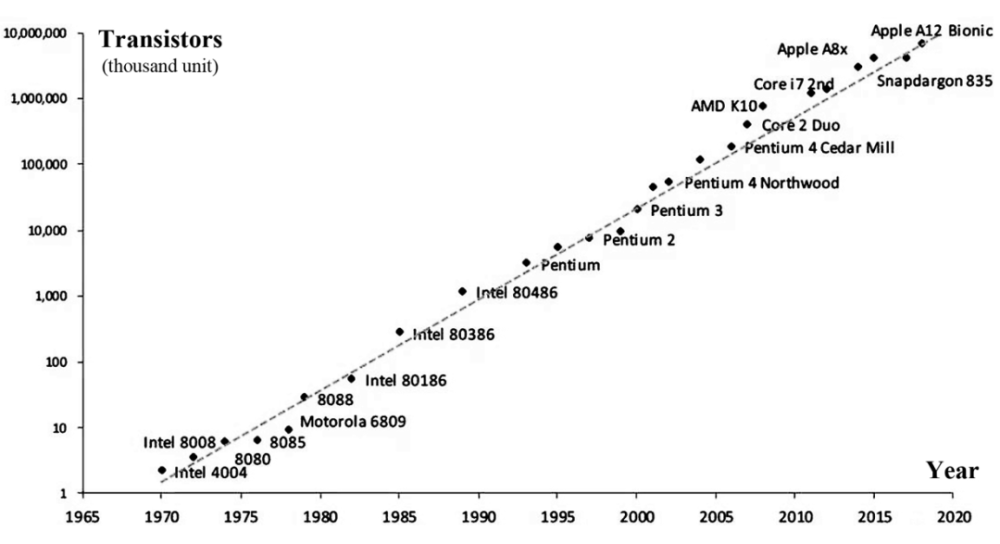
From this perspective, the computing power bottleneck is a capacity (capacity) issue with a clear expansion cycle. However, embodied intelligence faces the infinite complexity of the physical world, which is more like a dimensional disaster.
Firstly, data cannot be 'crawled'. Large language models can consume textual materials accumulated by humans over millennia on the internet, such as GPT-3, which has about 45TB of data. However, robots aiming to understand the physical world lack ready-made 'textbooks'.
Consider the everyday action of 'twisting a bottle cap', which humans perform intuitively. Behind it lie countless hidden variables in the physical world, such as the material of the bottle cap and the frictional force of the threads. These variables are precisely what the internet, as a 'granary for large models', has never stored.
So, while large models measure the world with 'words', embodied intelligence needs to perceive the physical reality with 'actions'. This difference in nature makes the data desert far more daunting than the computing power race.
Moreover, embodied intelligence has far stricter requirements for data 'quality' than large models. In large model training, typos or grammatical flaws can still be handled. For example, GPT-3's training data may include colloquial, misspelled, or even punctuation-missing sentences like ' I'm really good at Kaisen today ' ('I'm really happy today'), but the large model can still extract subject-verb-object patterns from a large amount of standardized text and learn normal expressions.
In contrast, the data patterns in embodied intelligence are far less clear than words, and the types, severity, and impact of noise on the model are difficult to define. For example, noise such as camera frame rate jitter, joint encoder delay, and force sensor drift during data collection cannot be simply searched and replaced like textual typos.
Ding Yan, co-CTO of Luming Robotics, once pointed out that many UMI data collection devices on the market lack sufficient hardware capabilities, resulting in misalignment between the visuals and actions, making the collected data 'unfit for training pipelines'. This means that data collection for embodied intelligence faces a 'quality threshold' from the outset, where low-quality data not only fails to aid training but may even pollute the model. The latter is 'laborious,' while the former may be 'useless.'
Furthermore, data for embodied intelligence cannot be migrated and reused like computing power. For example, NVIDIA's GPU architecture, evolving from A100 to H100, continuously improves computational efficiency for different tasks, allowing model training to upgrade seamlessly. However, embodied intelligence is highly hardware-dependent. A 1.6-meter-tall robot and a 1.8-meter-tall robot performing the same 'bending down to pick up' action may have completely different joint angles, center-of-gravity shifts, and grasping angles. Thus, data collected by the former may be invalid for the latter. This results in natural isolation of data for embodied intelligence, forming independent 'data islands.'
From this perspective, computing power is a reusable standardized resource, and its cost and accessibility will inevitably decline with technological advancement and capacity expansion. In contrast, data is a 'non-standardized product' deeply bound to specific hardware and scenarios, requiring re-accumulation for each robot model and deployment. Fundamentally, the computing power shortage is temporary and solvable, while data scarcity is a long-term, structural core bottleneck.
02 Three Parallel Approaches: Real Machines, UMI, and Simulation—Still Breaking Through in Data Collection
Facing the dilemma of 'data scarcity', the industry is currently exploring three main technical routes: real machine teleoperation, unbodied UMI collection, and simulation-synthesized data. These represent trade-offs between precision, scale, and cost, but none has yet perfectly balanced all three.
Let's first look at real machine teleoperation. This is the earliest approach, using VR devices, motion capture suits, etc., to remotely operate real robots and record action data one by one. The advantage is high data authenticity, directly usable for training the same robot model. For example, Unitree's full-stack data collection and training solution based on the wheeled humanoid robot G1-D allows the collected data to be directly used for training the same G1-D robot model.
However, the cost is staggering. The Beijing Humanoid Robot Innovation Center invested in a nearly 5,000-square-meter data collection site and deployed 120 robots for data collection, with site and equipment investments reaching tens of millions of yuan. Zhiyuan Robotics has built a large-scale data collection center, deploying about 200 robots and operating with hundreds of data collectors in shifts. Site and equipment depreciation, along with labor costs, constitute long-term and high fixed expenses.
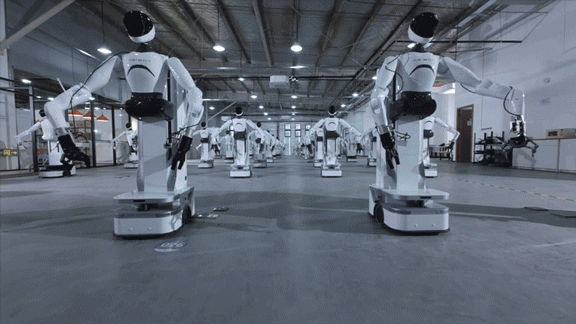
(Source: Zhiyuan Robotics)
Currently, real machine teleoperation is like handcrafted precision work—highly accurate but slow and expensive. This mode may be more suitable as a primary data source for high-value-added scenarios, such as medical surgery or special operations. Relying on it to build a data foundation of billions of hours may be unaffordable for robot manufacturers given their current financial reserves.
The UMI approach decouples collection devices from the robot body, using handheld lightweight grippers and cameras operated by humans in real-world scenarios to collect data. Dayan Technology, for example, collaborated with unmanned supermarkets and front-end warehouses, having staff wear collection devices while working normally, thereby collecting data in daily life. Thus, UMI is like using semi-automatic tools—still requiring human effort but significantly faster and cheaper.
However, the Shanghai Jiao Tong University team led by Lu Cewu pointed out that scaling embodied models faces the challenge of balancing 'authenticity and quality' in data collection. Specifically, UMI uses handheld devices, making it difficult to ensure consistent camera angles and gripper postures during each collection, resulting in inconsistent data formats. After large-scale collection, massive low-quality data requires extensive manual post-processing for screening and alignment, potentially increasing overall costs. Thus, while UMI lowers the collection threshold, it buries 'data quality landmines' in more conceal (subtle) places.
The simulation synthesis route completely abandons real machines, directly generating massive training data in simulation engines. For example, Kuawei Intelligence's open-source toolchain EmbodiChain trains VLA models using 100% synthetic data, which can be directly deployed on real robots, achieving virtual-to-real transfer. Nokia, in collaboration with NVIDIA, built an 'AI data flywheel' based on the Isaac simulation platform, boosting agent training speed nearly tenfold.
However, the issue is that simulation is, after all, 'simulated.' No matter how refined the simulation environment is, it cannot fully replicate real life. The Stanford University '2026 AI Index Report' shows that task completion rates in simulation environments can reach 89.4% but plummet to about 12.4% in real-world household scenarios. This reveals a harsh reality: models trained in simulations are 'top students' in the lab but perform poorly when stepping into the 'examination hall' of the real world. The virtual-real gap remains an insurmountable hard threshold for the simulation route.
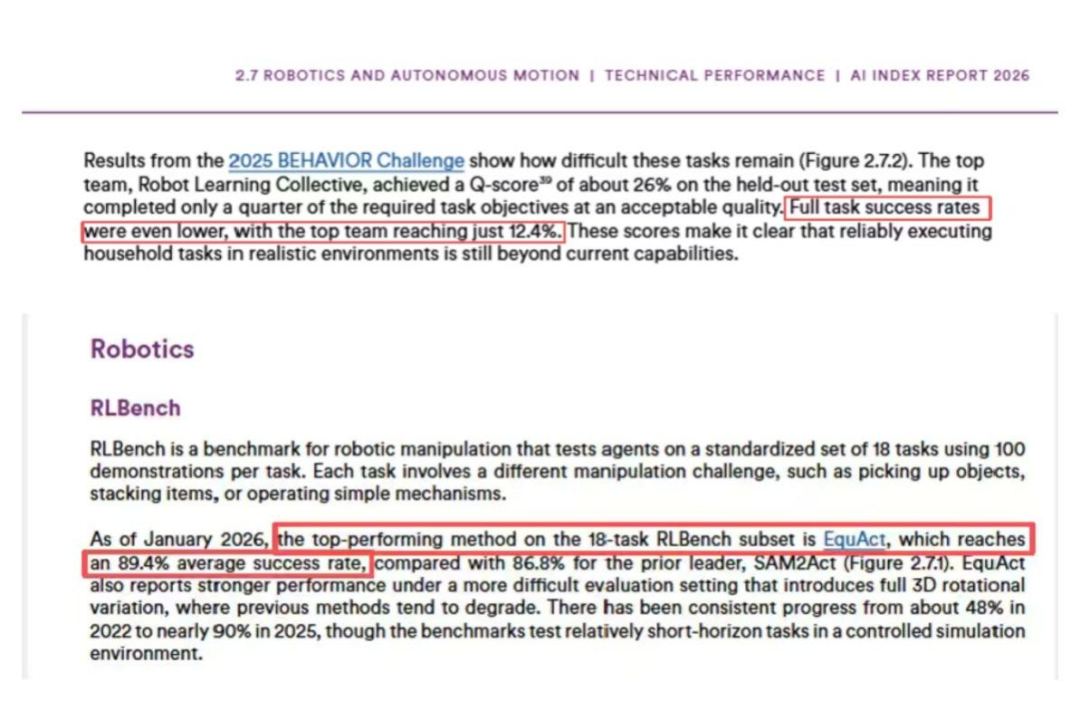
(Source: Stanford University '2026 AI Index Report')
Each of the three routes has its pros and cons and will continue to be explored in parallel for different scenarios in the short term. Real machine teleoperation maintains precision limits, UMI focuses on large-scale collection, and simulation synthesis covers extreme scenarios. In the long run, UMI, balancing authenticity and low-cost scalability, may become the main force in breaking through data scarcity.
03 The 'Prisoner's Dilemma' of Data Collection and the Uncertain Industry Optimal Solution
Regardless of the route, all seem stuck at the same deadlock: data cannot simultaneously satisfy the 'scale, quality, cost' triangle. Every company invests but cannot go far. Facing such a dilemma, from a rational industry-wide perspective, the optimal solution may be to open-source data—share data, dilute costs, and avoid duplicate collection.
Some market pioneers have already taken action. Leju Robotics, in collaboration with Unitree, Alibaba Cloud, and others, built China's first national-level open-source embodied intelligence data community, OpenLET, which has open-sourced over 60,000 minutes of real machine datasets for industry use. Jupai Intelligence open-sourced a large-scale dataset, RW-RL-Dataset, for real robot reinforcement learning in June 2026. These attempts provide valuable references for the industry and prove that data sharing is technically feasible.
However, open-sourcing remains an idealistic pursuit for a minority, with more companies choosing the path of commercialization. JD treats data collection as an independent business, planning to mobilize up to 600,000 participants to accumulate 10 million hours of video data within two years and has already launched an embodied intelligence data trading platform, initially offering 2,000 hours of high-precision labeled 'datasets' to targeted users. Zhujing Intelligence completed the country's first transaction of embodied intelligence datasets at the Jiangsu Data Exchange, containing about 25,000 structured data entries covering office, supermarket, catering, and housekeeping scenarios. Luming Robotics created a 'data supermarket' for customers to purchase standardized operational data online. Gao Jiyang, CEO of Xinghaitu, once explicitly pointed out that the industry currently has a strong 'private ownership' attribute toward data. Thus, data is seen more as a core asset and tradable commodity for enterprises rather than an open-source public resource.
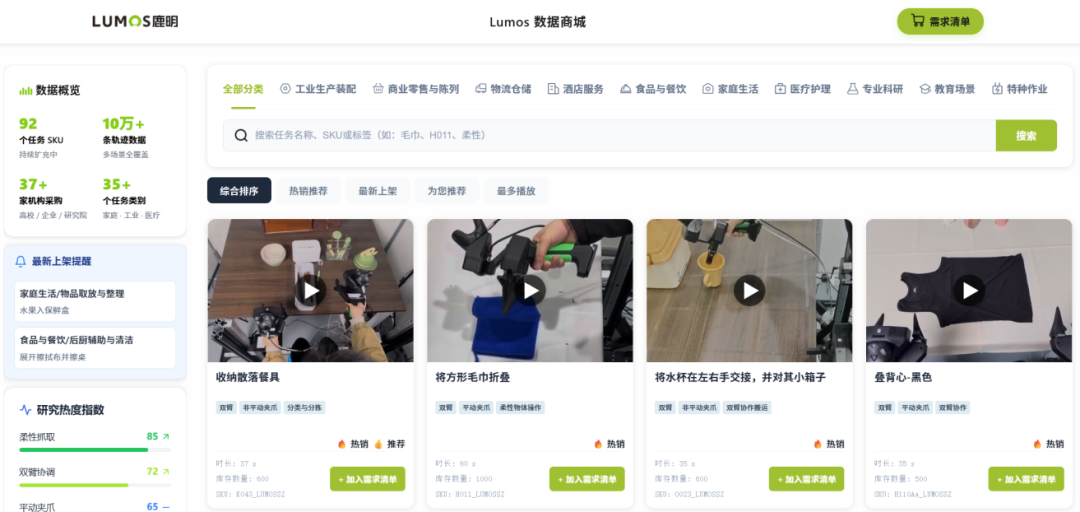
(Source: LUMOS Luming)
While data sharing benefits the entire industry, under commercial logic, whoever open-sources first may allow competitors to replicate their results at low cost. Thus, no company wants to 'make wedding dresses for others,' while fearing being overtaken. Individuals protect their interests, ultimately leading to industry-wide duplicate collection and inefficiency. This is the classic 'prisoner's dilemma.' Sharing is a utopian ideal, but reality is sliding toward 'every man for himself.' Currently, unless strong industry standards and benefit distribution mechanisms emerge, the industry's 'optimal solution' may remain a vision for a long time.
04 From 'Data Feeding' to 'Self-Iteration': When Will the Data 'Singularity' Arrive?
If the industry is destined to break through individually, what is the most likely direction? Perhaps we can find inspiration from the evolution of large models, such as enabling machines to move from 'being fed' to 'autonomously foraging.'
The development of large models has validated this path. NVIDIA's research team developed the Eureka system, enabling AI to generate multiple solutions and self-screen, acting like programmers engaging in 'self-criticism' and improvement. Eureka outperformed human experts in 83% of tasks, boosting robot performance by an average of 52%. Kimi K2 allowed agents to practice in a 'sandbox' through a tool simulator, accumulating experience and self-iterating through continuous interaction with the simulated environment.
The common logic of these two cases is that agents no longer passively wait for human-fed data but autonomously generate training signals through environmental interaction. Perhaps we can borrow this logic to achieve self-iteration in embodied intelligence.
The 'data singularity' for embodied intelligence may not lie in data volume accumulation but in forming a 'collection → training → deployment → re-collection' closed loop (closed loop).
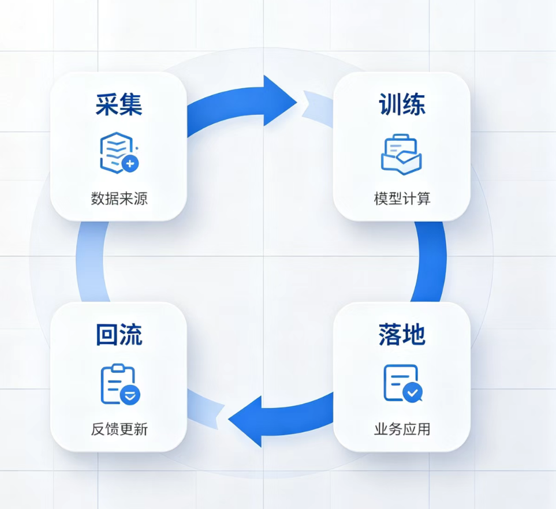
The LWD system proposed by Shanghai Chuangzhi College and the Zhiyuan Embodied Research Center embodies this philosophy. It enables robots to continuously accumulate interaction experience in real tasks, including successful trajectories, self-recovery after trial and error, and human-guided failure cases, all fed back for continuous model fine-tuning and optimization. Through this mechanism, the average success rate of a single general strategy trained by LWD in long-term complex tasks reached 0.95, far surpassing traditional behavioral cloning's 0.76 and offline reinforcement learning baseline's 0.86.
This result shows that closed-loop iteration is not just theoretical but a proven effective path. Following this thought process (train of thought), imagine a scenario: after a robot learns to 'twist a bottle cap,' it encounters a slippery cap during application, successfully opens it after adjusting torque, and records this 'unexpected experience' for feedback and model updates before redeployment to all robots. Thereafter, all robots learn to handle slippery caps. Extended further, each robot's unique encounters can become shared experiences for the entire robot fleet. Once this closed loop is established, robots may no longer rely on continuous human feeding but autonomously evolve in real-world scenarios.
In short, for embodied AI, computing power can be purchased, but experience in the physical world must be accumulated firsthand. Whoever takes the lead in enabling robots to complete the flywheel of 'self-iteration' in the real world will be more likely to define the industry landscape in the next phase. This long marathon may not be about who has more GPUs, but who can enable robots to better 'understand' the physical world.
* The image is sourced from the internet. Please contact us for removal if there is any infringement.
-
![]()
McKinsey 2026 Mobility Report: Consumers Are Redefining What Makes a 'Good Car'
-
![]()
Duan Jianjun Spearheads Premium Project as Volvo Sets Sights on Rivaling Zunjie with New Flagship Model
-
![]()
Absent from New Energy Vehicle Rural Promotion, Leapmotor Turns Its Gaze Overseas
-
![]()
Reclaiming Global Dominance! Apple’s Market Cap Surges to $5 Trillion in Cook’s Epic Finale
-
![]()
Sales Soar: Has Ora Staged a Remarkable Comeback?
-
![]()
What Kind of AI Phones Do We Actually Need?
-
![]()
DingTalk, Feishu, and WeCom's Silent 'March Eastward'
-
![]()
Is 'Data Scarcity' More Fatal Than 'Computing Power Shortage'? Is It Bringing Disaster?