Reclaiming Global Dominance! Apple’s Market Cap Surges to $5 Trillion in Cook’s Epic Finale
 07/29 2026
 557
557
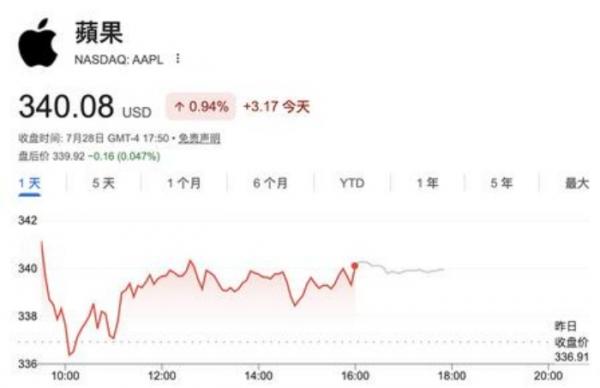
On the morning of July 28 (Eastern Time), Apple’s stock price climbed 1% in early trading, briefly propelling its market capitalization past the $5 trillion milestone and reclaiming the global crown by surpassing NVIDIA. In my perspective, this achievement is not merely a numerical milestone for Apple but a telling indicator of the evolving investment logic surrounding tech stocks in today’s capital markets.
In recent years, Apple has faced criticism for its perceived underinvestment and sluggish progress in generative AI. Meanwhile, tech behemoths like Alphabet, Microsoft, and Meta have poured hundreds of billions of dollars into AI infrastructure, only to find themselves grappling with mounting cash flow pressures and uncertain profitability. This has led to a notable shift in market sentiment.
In stark contrast, Apple has exhibited remarkable prudence in its AI capital expenditures, with AI-related spending accounting for a mere 2.5% of its projected revenue—a stark difference from the roughly 39% ratio observed among cloud service providers. This “light AI” approach, which eschews reckless spending and prioritizes fiscal discipline, is now being re-evaluated by the market as a highly coveted “safe-haven attribute.” In essence, capital markets are reappraising Apple, transforming it from an AI laggard into a bastion of stability.
Indeed, Apple’s light AI strategy is a masterstroke. It represents a low-capital-intensity path to ecological integration, sharply contrasting with the heavy-asset model of cloud providers who invest heavily in building their own data centers. On one hand, Apple leverages compute leasing and on-device AI. Rather than hoarding GPUs or constructing massive computing clusters, Apple spends approximately $1 billion annually to lease computing power from Google and license the Gemini model, effectively shifting much of the computational cost to users’ existing hardware (on-device NPUs).
On the other hand, Apple pursues direct ecological monetization. With 2.5 billion active devices worldwide, Apple seamlessly integrates AI features into system-level interactions, driving a new wave of iPhone upgrades and deepening the stickiness of its service ecosystem—all without the need for lengthy validation of cloud-based returns. Clearly, Apple’s unique “device-first” approach to AI monetization is both sophisticated and effective.
Despite the symbolic importance of Apple’s $5 trillion market cap, the company still confronts numerous practical challenges, primarily in the following three areas:
① Intraday spike ≠ sustained dominance: Apple’s stock price peaked at $342.89 during trading, hitting a market cap of $5.036 trillion, but closed at $340.08, just shy of the $5 trillion mark.
② Hardware profitability pressures: Plagued by global AI-driven shortages of storage and memory chips, Apple has raised prices on some MacBook and iPad models, eroding hardware gross margins.
③ AI implementation speed: While Apple is collaborating with local AI giants like Alibaba and Baidu to advance AI features for the Chinese market and plans to unveil an upgraded Siri this autumn, the jury is still out on whether its AI products can truly drive mass user upgrades and generate new revenue streams.
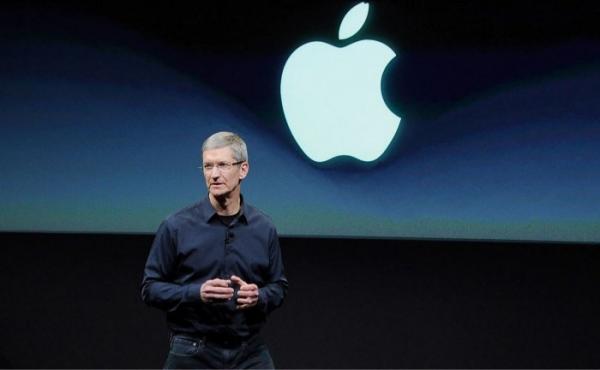
Notably, this market cap milestone coincides with a pivotal leadership transition at Apple. Current CEO Tim Cook will officially step down on September 1, passing the baton to Senior Vice President of Hardware Engineering John Ternus. The earnings report set to be released this Thursday (July 30) will mark Cook’s final earnings call. Markets will be watching closely to see if this report validates Apple’s ability to maintain robust cash flow while unlocking new growth opportunities, setting the stage for the next management team’s tenure.
Overall, Apple’s $5 trillion market cap is not merely a speculative bubble but a pricing correction by capital markets, reflecting a business model characterized by “low capital intensity, a robust ecosystem, implementable AI, and stable cash flow.” It signals a shift in market focus from “who owns the most compute power” to “who can convert compute power into sustainable commercial value.” However, the durability of this valuation premium ultimately hinges on Apple’s AI implementation speed and subsequent financial performance.
In the short term, buoyed by safe-haven capital, AI expectations, and new product cycles, the high valuation appears justified. But in the medium to long term, its ability to sustain the $5 trillion threshold will depend on whether on-device AI can translate into revenue growth and whether its hardware business can overcome growth bottlenecks. By the way, this milestone also heralds a fundamental shift in the AI industry’s development logic: Compute power is merely the foundation; only companies with closed-loop monetization ecosystems that are close to end-users will emerge as the ultimate value leaders in the AI era. What’s your take?
-
![]()
2026 Semi-Annual Report | Electric Two-Wheelers: Domestic Sales Drop 12.6% in H1—Which Brands Are Defying the Downturn with Explosive Growth?
-
![]()
Exclusive Insight from Qualcomm! The 'Affordable VR Dream' Teeters on the Edge
-
![]()
McKinsey 2026 Mobility Report: Consumers Are Redefining What Makes a 'Good Car'
-
![]()
Duan Jianjun Spearheads Premium Project as Volvo Sets Sights on Rivaling Zunjie with New Flagship Model
-
![]()
Absent from New Energy Vehicle Rural Promotion, Leapmotor Turns Its Gaze Overseas
-
![]()
Reclaiming Global Dominance! Apple’s Market Cap Surges to $5 Trillion in Cook’s Epic Finale
-
![]()
Sales Soar: Has Ora Staged a Remarkable Comeback?
-
![]()
What Kind of AI Phones Do We Actually Need?