What Kind of AI Phones Do We Actually Need?
 07/29 2026
 482
482
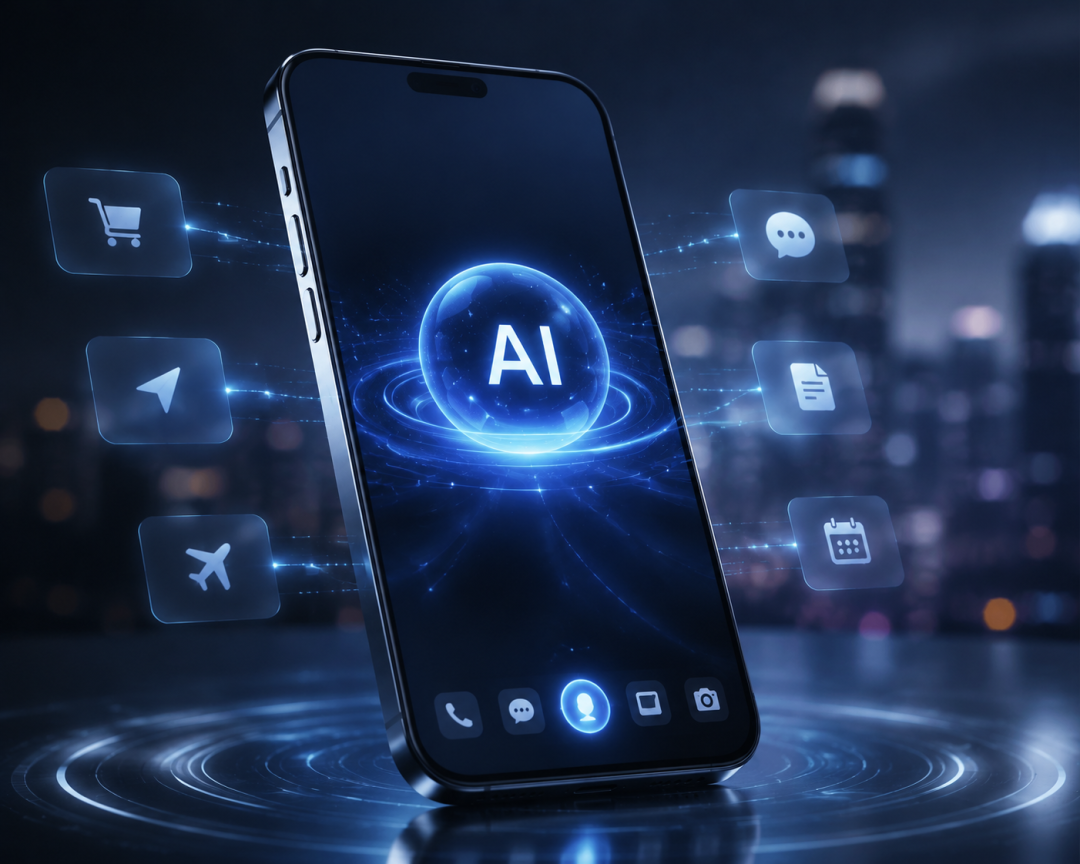
As the industry shifts focus from crafting AI personas to competing for intelligent agents that 'execute tasks for users', AI phones are shedding their 'smartphone' identity and transforming into gateways that redefine human-service relationships.
This is not merely a competition of model or computing capabilities, but a power struggle over 'who connects users, allocates traffic, and controls data'.
Editor | Meng Wen
This July, AI phones hit the 'restart button'.
On one hand, regulatory approvals are being granted. On July 15, China's Cyberspace Administration authorized seven large AI models—including Apple Intelligence, Huawei Xiaoyi, and OPPO AndesGPT—for 'on-device AI', marking the first standalone approval for mobile-side AI.
On the other hand, oversight is tightening. The same day, China's 'Interim Measures for Managing AI-Powered Personified Interactive Services' took effect, prompting ByteDance's Doubao and Alibaba's Qianwen to disable certain emotional companionship features. Attempts to make AI your 'cyber lover' are being reevaluated.
This dual approach reveals China's governance logic for AI phones: Making AI human-like is easy; having AI act on your behalf is the real challenge.
As the industry shifts focus from crafting AI personas to competing for intelligent agents that 'execute tasks for users', AI phones are shedding their 'smartphone' identity and transforming into gateways that redefine human-service relationships. In this device-agnostic evolution, who will claim the throne of next-gen intelligent terminals?
Why Are AI Phones Suddenly 'Everywhere'?
The recently concluded WAIC resembled an 'AI phone beauty contest'. Honor showcased a dancing mechanical gimbal, StepFun unveiled an AI agent OS built from scratch, and even internet giant ByteDance demonstrated cross-app automation via Nubia's hardware.
Amid this hype, smartphones without large AI models seem outdated. Yet, this fervor is merely a bonfire lit by manufacturers in a market downturn.
Screen refresh rates hit 120Hz, camera sensors reached one-inch, and fast charging surged to 240W—yet consumer upgrade desire keeps declining.
Counterpoint predicts global smartphone shipments will drop 13.9% YoY to 1.08 billion units in 2026, a historic low, due to rising storage costs. China's market faces similar pressure, with multiple agencies projecting 2026 shipments at 278 million units, still on a downward trend.
In contrast, AI phones are defying the trend.
Counterpoint forecasts GenAI smartphones will account for 45% of global shipments in 2026 and 52% in 2027. IDC expects China's next-gen AI phone shipments to reach 147 million units in 2026 (+31.6% YoY), capturing 53% of the market. The AI phone market is projected to soar from RMB 321.9 billion in 2025 to RMB 1.22 trillion in 2029.
Behind this capital and manufacturer embrace of AI lie three 'unavoidable calculations'.
The most direct pressure comes from shrinking hardware margins. Storage chip prices have skyrocketed, with Q2 DRAM contract prices up over 50% QoQ and NAND nearing 75%. In budget phones, storage costs now account for 65% of total BOM; in mid-to-high-end models, over 30%. Relying on hardware markup is no longer sustainable.
This forces manufacturers to seek new business models—a sustainable 'bloodstream'. Subscriptions, software revenue sharing, data monetization... all require AI to 'get things done'. Chatting may boost engagement but doesn't generate revenue. Only by handling real transactions like ride-hailing, ticketing, shopping, and transfers can commercial viability be achieved.
The grander ambition lies in controlling data. Traditionally, phone makers were mere 'app distributors', with no say over which software users chose or where they spent. But if AI gains system-level permissions to execute cross-app tasks, manufacturers can, for the first time, capture user behavior data—a far more lucrative prospect than hardware sales.
Calculating these three factors reveals that storage price hikes, subscription model needs, and data lock-in desires cannot be fulfilled by persona-based AI agents like 'virtual lovers' or 'AI best friends'.
Moreover, such products teeter on regulatory red lines. With the 'Interim Measures for Managing AI-Powered Personified Interactive Services' now enforced, services attempting emotional connections, inducing addiction, or blurring virtual-real boundaries are prime targets for crackdowns.
The industry needs AI to deliver a commercially viable story. Thus, companionship AI—which burns cash, carries high compliance risks, and generates little substantive value—is being actively phased out.
Approved, but Also Restrained
The retreat of persona-based AI agents doesn't cool AI phones—quite the opposite. The industry is shifting bets from 'chatting with you' to 'acting for you'.
The July 15 Filing Announcement (filing announcement) offers the best lens to understand today's competitive landscape.
Prior to this, 988 generative AI services had completed filings nationwide, but this marked the first dedicated list for mobile-side AI.
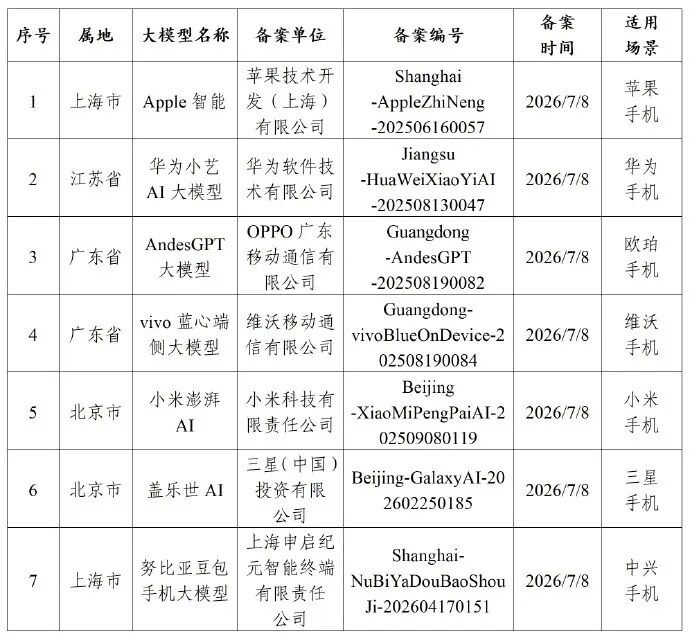
On-device large models run locally, generating content without cloud transmission, rendering traditional review firewalls ineffective. This Special filing (special filing) establishes rules for 'AI residing in phones'.
With filings secured, manufacturers gain a 'passport'—but also a 'straightjacket'.
Apple's China-specific Apple Intelligence, long delayed, now has legal clearance. Domestic players gain assurance that compliant tech routes can accelerate.
Yet freedom has limits. While edge AI emphasizes 'local inference, no data upload', regulators demand 'content interceptable, behavior traceable'. The current compromise: 'edge inference + cloud review'. On-device models incorporate safety filters, abnormal behaviors trigger cloud logging, and model updates require filing approvals.
In essence, edge AI isn't truly 'decentralized'. Through OTA updates, regulators and manufacturers retain control over models' lifespans.
An industry analyst sums up the frustration: 'Just because the model understands doesn't mean the system can execute; just because the system can execute doesn't mean apps will cooperate; even if apps cooperate, payment, fulfillment, and after-sales must align.'
To balance computing power, privacy, and compliance, 'edge-cloud synergy' is touted as the optimal solution—though it's merely a 'structural compromise' under current tech constraints.
Edge-cloud synergy promises best-of-both-worlds but faces constant friction.
Challenge 1: The insurmountable computing gap. Flagship phones' NPUs exceed 100 TOPS by 2026, but running a 7B-parameter model for logic reasoning (reasoning) takes 3 minutes with potential errors; mid-range phones freeze for 5 minutes on image recognition. Full cloud reliance? Costs would crush profits.
Challenge 2: The privacy dilemma. The smarter AI gets, the more data it needs. But with data local, AI is 'blind'. The current solution: 'tiered anonymization'. Sensitive data stays on-device; anonymized semantic features upload to cloud. Apple's Private Cloud Compute exemplifies this, but it's essentially 'trust Apple' rather than 'technologically foolproof'.
Challenge 3: The ecosystem wall. Full edge AI would reduce phone makers to 'hardware conduits', contradicting their AI phone ambitions. Edge-cloud synergy lets them retain cloud gateway status and data monetization opportunities.
Thus, different players tell different stories within this framework: Apple emphasizes privacy, Huawei stresses autonomy, OPPO/Vivo focus on experience, while StepFun seeks control. All claim 'edge-cloud synergy', but their power plays differ sharply.
Tech hurdles may yield to computing power, but application-layer 'walls' are hardest to scale.
In March, Nubia and ByteDance's Doubao launched the M153 AI phone at MWC, stunning overseas audiences. Its GUI Agent technology simulates user operations without app API access, enabling cross-app search, price comparison, and ordering. U.S. investor Taylor Ogan hailed it on X as 'the world's first true smartphone'.
But the product struggled in China.
The reason is simple: When AI can execute cross-app tasks, it threatens super apps' dominance. WeChat, Taobao, banks... these platforms know that once AI controls access, their traffic, user relationships, and business models built around apps will be reshaped. None will willingly become mere 'execution nodes' in AI's call chain.
In June, WeChat began collaborating with phone makers via A2A (Agent-to-Agent) mode. Phone assistants request actions from WeChat, which completes messaging or video calls under dual authorization. Seen as a breakthrough, it proves apps won't be replaced—they're just redefining open boundaries.
The ultimate test lies in AI coordinating calendars, maps, ticketing, payments, and social services to complete multi-step tasks like 'arrange travel and notify colleagues for a Beijing meeting next week'. Every link involves platform interests. Who opens up, how much, and which operations require human confirmation will determine AI phones' future.
This is, fundamentally, a struggle for 'access control'. Apps once controlled user time; platforms controlled transaction data. Now, AI agents offer phone makers a chance to reclaim the gateway. If AI can execute tasks via a single command, the access point shifts from individual apps to the AI wake-up phrase.
This raises questions of authority: When AI clicks, orders, or transfers for you, who holds final decision power? The phone maker? Model provider? App platform? Or you?
This is not merely a competition of model or computing capabilities, but a power struggle over 'who connects users, allocates traffic, and controls data'.
Three Paths, Three Futures
The answer remains unwritten, but the pieces are moving. Recently, Honor, StepFun, and Nubia (Doubao 2nd-gen phone) showcased their 'world's first' AI phones at WAIC, offering a preview of 'next-gen AI phones'.
Honor Robot Phone: A Device with 'Limbs'
On July 18, Honor unveiled the Robot Phone, the world's first robotic smartphone. Its standout feature is a four-degree-of-freedom titanium alloy mechanical gimbal atop the chassis. Beyond understanding complex commands and automating cross-app tasks, it physically interacts—rotating to respond or dancing to music. In demos, a single command executed 'birthday trio': cake ordering, ride-hailing to restaurant, and KTV reservation.
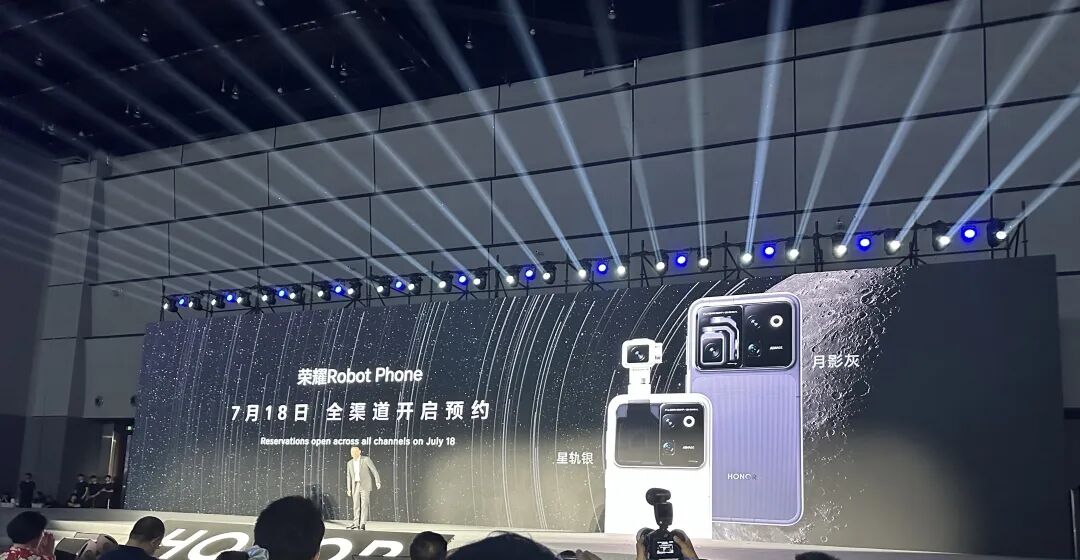
Honor upgraded its OS to AgenticOS, attempting to redesign the phone around intelligent agents from hardware to ecosystem layers. CEO Li Jian defines AI's future: 'AI will evolve beyond cold tools, moving from operating systems to embodied interactions, becoming human-like partners that redefine our relationship with the physical world.'
Honor bets on altering phones' physical form to enhance AI's real-world interaction capabilities.
StepFun STEPX Neo: Rebuilding the 'Foundation'
At the launch, Yin Qi admitted hardware's high barriers—friends advised against it—but to create pure AI-native devices, StepFun had to build hardware to fully unleash large models' potential. Unlike industry norms of bolting models onto existing OSes, Step AOS reconstructs the Bottom level framework (underlying framework) from scratch for native agent operation.
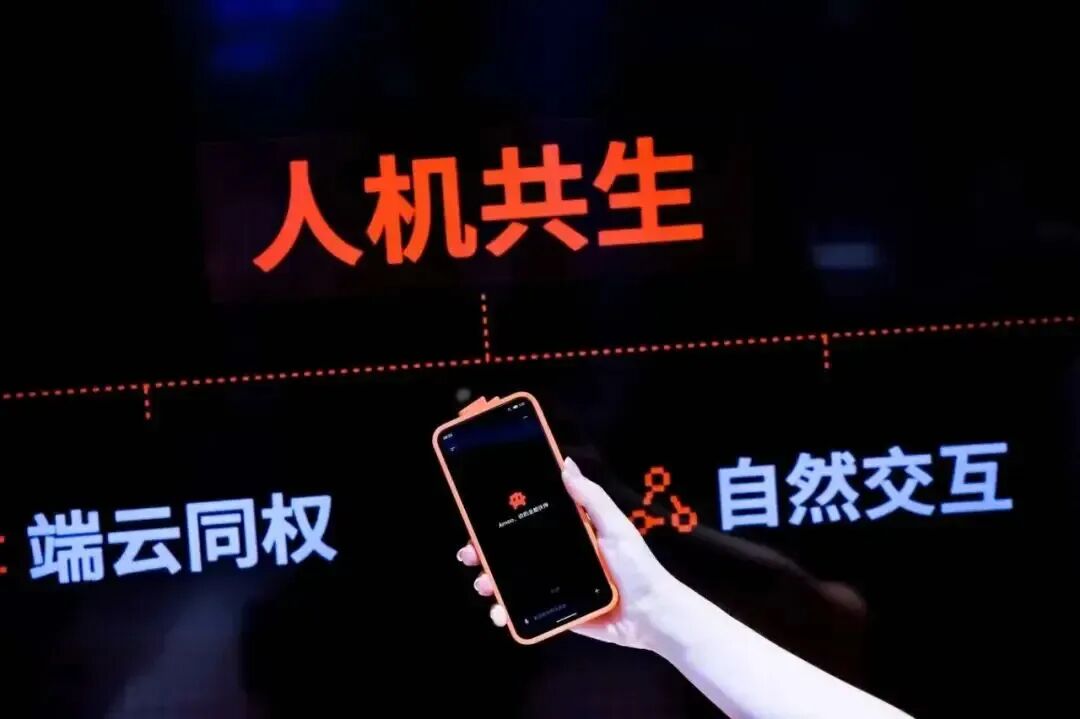
Yin Qi compared it to traditional systems: They merely open a 'small door' for AI, making it a 'guest'. Step AOS rebuilds the foundation, creating a complete environment where AI is a 'native resident'. This approach posits that future phones' core unit won't be apps, but 'tasks'.
Users make requests, and AI allocates resources to complete tasks. STEPX Neo is also the only agent phone currently to have passed the L3 highest-level certification of the "Classification of Terminal Intelligence for Artificial Intelligence." What StepFun is betting on is that the operating system will become the biggest new gateway in the AI era.
Nubia NaviX Ultra (Doubao Second-Generation Phone): "Sailing Out by Borrowing a Boat" in the Old Ecosystem. Instead of taking the extreme route of modifying hardware or rewriting systems, Nubia, in collaboration with ByteDance, has chosen to deeply integrate with super apps. The first-generation M153 once relied on GUI Agent to simulate clicks for cross-application operations, but the second-generation model has shifted to A2A/MCP protocol collaboration, no longer forcibly navigating interfaces but instead having intelligent agents built into apps execute tasks on behalf of users. The advantage of this approach is compatibility with mature ecosystems and avoidance of risk control issues; the disadvantage is being constantly constrained by the platforms' willingness to open up and the extent of that openness.
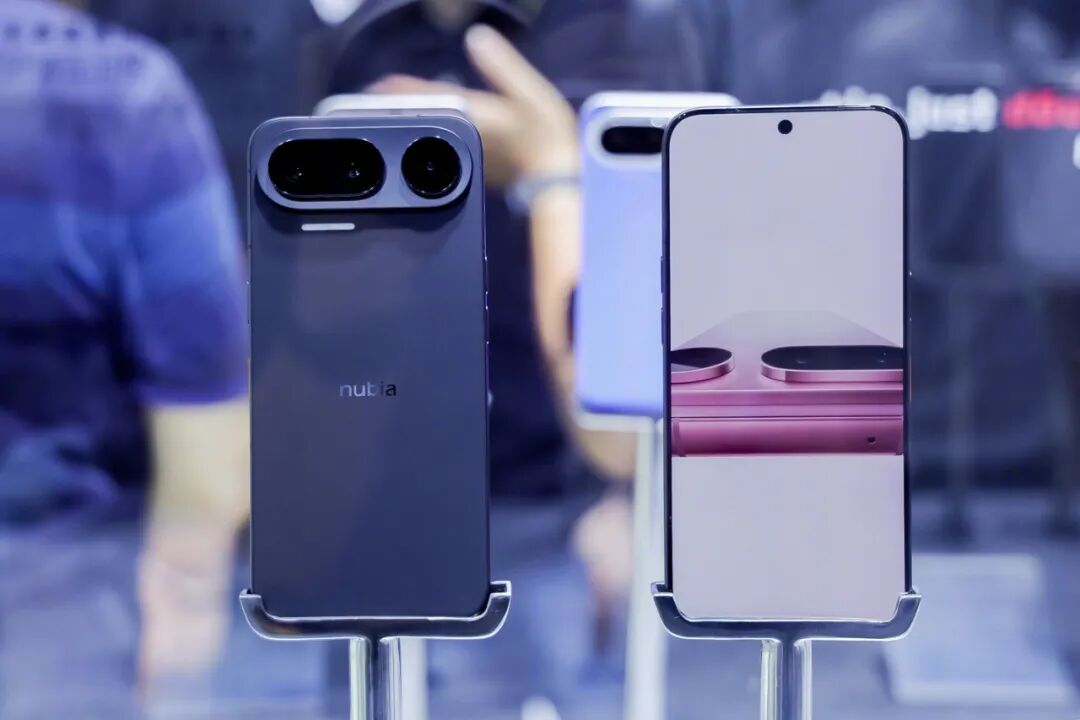
Nubia NaviX Ultra. Image source: IT Home
The three approaches have no absolute advantages or disadvantages, but they all share the same ultimate question: When AI takes over execution rights, who sets the boundaries?
Writing this, I can't help but wonder if the concept of an "AI phone" itself is a false proposition.
Analysis from World Communication Network points out that the key trend in the terminal market in 2026 is the "weakening of the core status of smartphones." PCs are recovering, cloud computers are rising, and AR glasses and wearable devices are flourishing.
If the ultimate goal of intelligence is seamless empowerment and proactive service, then it should not be confined to the form of a "phone." Physical limitations such as screen size, battery life, and heat dissipation precisely constrain the AI experience.
Honor's addition of a gimbal to its phones may look cool, but it is actually using more complex hardware to compensate for the inherent shortcomings of the phone form factor. Meanwhile, OpenAI is exploring AI operating systems while also deploying personal devices such as earphones, glasses, and watches. This seems to point to a judgment: The ultimate gateway to the AI era may not necessarily be a screen held in hand but rather a "personal intelligent agent" that can exist independently of a screen, provide 24/7 companionship, and enable natural interaction.
Conclusion
Returning to the original question, what kind of AI phone do we actually need? It should definitely not be a "phone with added AI functions"—that is merely a superficial feature that can be easily replicated. Instead, it should be an intelligent terminal that understands your intentions and proactively helps you resolve issues.
This means it must be a "trustworthy butler" rather than just another traffic harvester. The criterion for judgment is simple: Is its AI helping you save time and reduce complexity, or is it just trying to keep you engaged, grant more permissions, and pay more? Building trust is far more difficult than stacking parameters.
Second, it must address the chronic issue of ecosystem fragmentation. Whether by using the A2A protocol to make super apps "proactively open the door" or by reducing reliance on old ecosystems through technical approaches, the goal is to break down the "walls." However, the prerequisite for interoperability is establishing a cross-terminal, cross-platform security authorization standard, which requires joint endorsement from phone manufacturers, model providers, internet platforms, and even developers.
More importantly, it needs to achieve a leap in human-machine relationships:
From "humans navigating across apps" to "AI navigating across apps," enabling services to find users rather than users seeking services;
From passive responsiveness to proactive service, allowing AI to understand your long-term preferences, thereby pushing privacy protection to an unprecedentedly complex level;
From finger tapping on screens to natural interaction, making language the new UI, which requires AI's comprehension capabilities to truly reach "human-like" communication standards.
Ordinary consumers do not need to be swept up in the concept of an "AI phone" but should simply assess whether it truly possesses system-level proxy operation capabilities rather than just "talking the talk" by generating answers; whether it genuinely makes things easier for you in real-world scenarios like booking tickets, processing reimbursements, and arranging business trips.
In the short term, products with mature ecosystems and rich scenarios are more likely to make us feel the value of AI; extending the timeline, AI capabilities will gradually become standard in mid-to-high-end phones, just like 5G and imaging do today.
What is truly worth discussing is not whether AI phones have a future but rather how much authority we are willing to delegate to AI when it can execute tasks on our behalf and how we should define human agency.
In the past, smartphones transformed the relationship between humans and information; the next generation of AI terminals will transform the relationship between humans and tools.
When tools become sufficiently intelligent and even acquire "agency" capabilities, the endpoint of this transformation will have long surpassed the realm of a mere phone.
-
![]()
McKinsey 2026 Mobility Report: Consumers Are Redefining What Makes a 'Good Car'
-
![]()
Duan Jianjun Spearheads Premium Project as Volvo Sets Sights on Rivaling Zunjie with New Flagship Model
-
![]()
Absent from New Energy Vehicle Rural Promotion, Leapmotor Turns Its Gaze Overseas
-
![]()
Reclaiming Global Dominance! Apple’s Market Cap Surges to $5 Trillion in Cook’s Epic Finale
-
![]()
Sales Soar: Has Ora Staged a Remarkable Comeback?
-
![]()
What Kind of AI Phones Do We Actually Need?
-
![]()
DingTalk, Feishu, and WeCom's Silent 'March Eastward'
-
![]()
Is 'Data Scarcity' More Fatal Than 'Computing Power Shortage'? Is It Bringing Disaster?