Absent from New Energy Vehicle Rural Promotion, Leapmotor Turns Its Gaze Overseas
 07/29 2026
 524
524
Can its overseas channel advantages hold up in the long term?
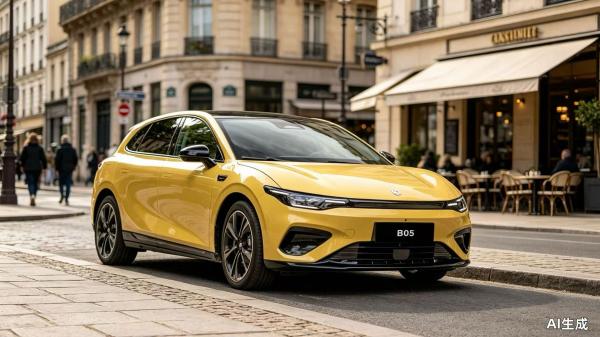
Not long ago, the New Energy Vehicle Rural Promotion initiative was rolled out, presenting consumers with a list of 155 models that offered a wealth of choices.
However, Leapmotor, renowned for its cost-effectiveness, had not a single model included on this list, leaving many scratching their heads in confusion.
After all, models priced over 200,000 yuan, such as the Xiaomi SU7 and Tesla Model 3, made it onto the New Energy Vehicle Rural Promotion list. Leapmotor, with mainstream products hovering around the 100,000 yuan mark and some models even dipping below 70,000 yuan, was conspicuously absent from the event. Why?
Moreover, while Leapmotor was missing from the New Energy Vehicle Rural Promotion, it witnessed a surge in sales in overseas markets. What was the driving force behind this?
In today's fiercely competitive Chinese new energy vehicle market, how has Leapmotor, a rising star in the industry, managed to quickly carve out a niche for itself overseas? Can Leapmotor, with the backing of the Stellantis Group, amplify its advantages in the future?
Why didn't Leapmotor participate in the New Energy Vehicle Rural Promotion? After engaging in conversations with several Leapmotor employees, Pan Ge uncovered that the reasons appear to fall into three main categories:
The first reason is late registration.
A Leapmotor employee named A Jing shared with Pan Ge, "The New Energy Vehicle Rural Promotion list isn't a strictly curated award list. If an automaker applies, there's a high chance of being selected."
In 2024 and 2025, Leapmotor's mainstream models at the time, including the T03, C01, C10, and C11, all secured a spot on the New Energy Vehicle Rural Promotion list.
This year, Leapmotor's mainstream models available in 4S stores, such as the A05, A10, and B10, are all newly launched models. From the perspective of application timing, they likely missed the registration window.
The second reason is prior market penetration.
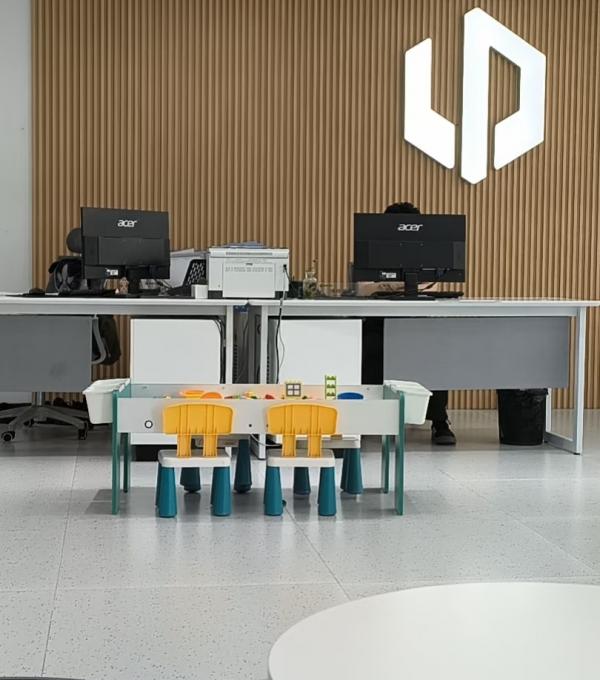
Leapmotor salesperson Xiao Chen explained to Pan Ge, "The New Energy Vehicle Rural Promotion aims to make purchasing as convenient for rural residents as it is for urban dwellers. Leapmotor already has numerous stores in close proximity to rural areas, so people there can easily purchase Leapmotor vehicles even without the promotion."
Relevant data reveals that by the end of 2025, Leapmotor had 993 stores across mainland China, with roughly 53% located in third-tier and lower cities and 313 stores (about 32%) in county-level areas.
The third reason is insufficient profit margins.
Employee A Jing told Pan Ge, "Participating in the rural promotion requires financial support. Leapmotor's profit margins are already razor-thin, while other automakers still have room for profit, so they naturally opt to participate."
It's evident that unlike many new energy vehicle brands, whose primary challenge is insufficient sales, Leapmotor, despite its robust sales performance, is grappling with declining profit margins.
In the first half of 2026, Leapmotor delivered a cumulative total of 356,500 vehicles, marking a year-on-year increase of 60.8%. In June alone, it delivered 93,000 vehicles, a year-on-year surge of 95%.
However, its financial report indicated that in the first quarter of 2026, Leapmotor achieved revenue of 10.82 billion yuan, an 8% year-on-year increase. Nevertheless, it incurred a quarterly loss of 390 million yuan, three times that of the same period last year. The curse of increasing revenue without a corresponding rise in profits has now befallen Leapmotor.
Why has Leapmotor's profit declined despite its growing vehicle sales?
This could be attributed to its extreme cost-effectiveness strategy, especially the popularity of the A10 series, which has squeezed Leapmotor's profit margins.
The financial report shows that in the first quarter of 2026, Leapmotor's gross profit margin was 9.4%, a decrease of 5.6 percentage points compared to the 15% in the fourth quarter of 2025.
Furthermore, the increase in research and development and other related expenses has also put pressure on its cost side.
In the first quarter of 2026, Leapmotor's research and development expenses were 1.04 billion yuan, a year-on-year increase of over 30%, accounting for approximately 9.6% of expenses, an increase of 1.6 percentage points compared to the same period last year.
From initially following in the footsteps of Li Auto to becoming the Uniqlo of the automotive industry, Leapmotor, relying on a strategy of small profits but quick turnover, has seen its sales figures become increasingly impressive, but its operational pressure has also mounted.
Finding its own unique path in the fiercely competitive new energy vehicle market has become a problem that Leapmotor needs to ponder. To this end, Leapmotor seems to have set its sights on overseas markets.
In the first quarter of 2026, Leapmotor exported 40,901 vehicles, a year-on-year increase of 442%, accounting for 37.1% of its total sales. In 2025, Leapmotor exported only 67,052 vehicles for the entire year.
In March 2026, Leapmotor registered over 11,000 vehicles in the European market, a year-on-year increase of 754%. Among them, 5,513 vehicles were registered in the Italian market, a year-on-year increase of 2,827%. In the Italian pure electric vehicle market, Leapmotor ranked at the forefront with a 33.5% market share.

Nowadays, new energy vehicle companies are flocking to expand overseas, but issues such as establishing sales outlets and distribution systems often hinder their overseas expansion progress.
As a rising star in the new energy vehicle industry, why has Leapmotor been able to achieve explosive sales in overseas markets in a short period? The core reason seems to lie in finding the right partner.
In October 2032, the European Stellantis Group acquired approximately 21% of Leapmotor's equity, becoming its single largest shareholder. The joint venture company, Leapmotor International, in which Stellantis holds a 51% stake, is responsible for Leapmotor's overseas sales-related business.
Leveraging Stellantis's extensive sales network, Leapmotor has entered over 40 overseas markets and more than 1,000 overseas stores, successfully promoting its products on a global scale.
However, has Leapmotor, with its surging overseas sales, achieved higher profits?
Taking the Leapmotor C10 model as an example, its price in the EU market is approximately 39,000 euros, equivalent to about 300,000 yuan. The same model in the Chinese market is priced at around 150,000 yuan, twice as expensive as in China.
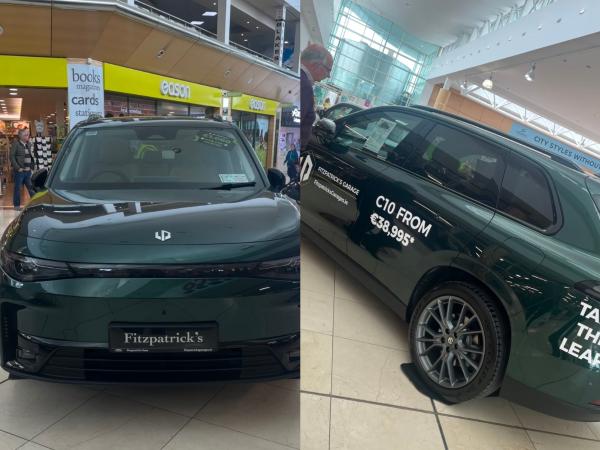
Apart from costs such as ocean freight and distribution, Chinese vehicles entering the EU market are also subject to a maximum tariff of 45.3%. After accounting for these costs, Leapmotor's profit margins are still not substantial.
In addition to importing complete vehicles, Leapmotor's cooperation with Stellantis seems to be taking on a new dimension. The CEO of Opel, a brand under the Stellantis Group, recently stated that Opel will jointly develop an SUV with Leapmotor, planned for production at a factory in Spain in 2028.
In this way, relying on its cooperation with Stellantis, Leapmotor seems to have gained significant advantages in automotive overseas expansion.
However, Leapmotor in overseas markets currently faces some issues that are constraining its sales and reputation.
Firstly, in the European market, there are numerous restrictions on vehicle infotainment systems and intelligent driving, which diminish Leapmotor's competitive edge.
Xiao Ye, a German international student who owns a Leapmotor T03, told Pan Ge, "The BYD Dolphin outperforms this Leapmotor T03 in terms of workmanship and power, but the Leapmotor is more budget-friendly."
At the same time, Xiao Ye also mentioned, "German law prohibits screen projection while driving, so the screen projection function is automatically locked when the car is started, rendering vehicle-device interconnection unusable. However, offline navigation is available, but it's not as good as Google's real-time navigation. The vehicle's music playback is also acceptable."
A Xiang, who purchased a Leapmotor C10 at a Stellantis store in Italy, told Pan Ge, "BYD sells very well in Italy, and Chery and MG are also available. Even many Chinese people in Italy don't know that Leapmotor is a Chinese-made vehicle."
Regarding the driving experience, A Xiang said, "This car offers good value for money locally. The only downside is the lack of CarPlay. Additionally, the vehicle infotainment system has too many restrictions in the EU, making it inconvenient. Currently, only LCC (Lane Centering Control) is available for intelligent driving. While screen projection is possible when driving in Italy, it's not very user-friendly. Sometimes, when replying to a message on my phone, the map navigation disappears."
Secondly, in some markets outside Europe, Leapmotor's distribution system is still in disarray, which also constrains its sales growth.
For example, in Malaysia, Leapmotor vehicles are sold through a combination of Stellantis and other dealers, a model that can easily lead to cutthroat competition.
Xiao Liang, a Malaysian Chinese, told Pan Ge, "I was interested in the Leapmotor C10 before, but because other stores offered better discounts, the salesperson I was initially in contact with warned me that these stores with better discounts might not provide adequate after-sales service. In the end, I procrastinated and chose another brand."
On the other hand, A Mei, also in Malaysia, said that Leapmotor is not well-known in Malaysia. She only learned about the brand and placed an order after seeing introductions from automotive bloggers online.
Previously, an Australian netizen, recommended by a Chinese friend, went to a local Leapmotor 4S store. After finally finding the store, he saw a notice on the door: 'Please contact sales at the BYD store next door.'
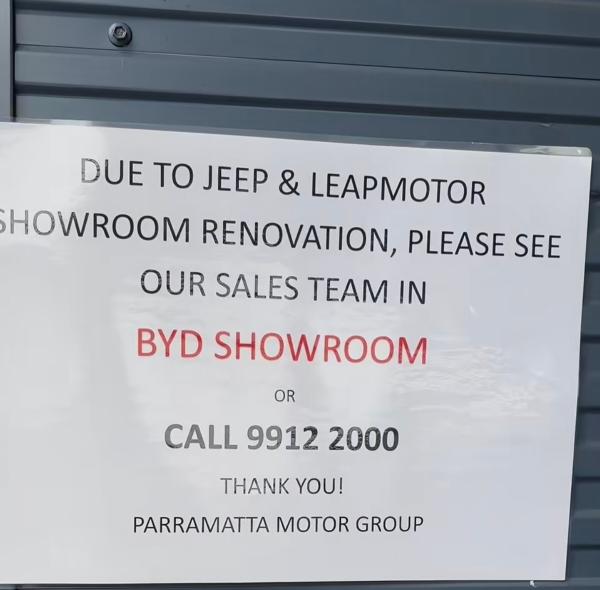
He went to the BYD store next door and told the salesperson he wanted to test drive the Leapmotor B10, only to find during the test drive that the salesperson knew little about Leapmotor but was very familiar with BYD.
Through these examples, it's clear that while Leapmotor has achieved remarkable results in overseas markets, this success relies more on Stellantis's distribution network rather than the inherent competitiveness of its products.
In the future, when domestic new energy vehicle brands such as BYD, Chery, and Geely establish comprehensive distribution networks in overseas markets, what cards does Leapmotor have to play against these domestic competitors?
-
![]()
2026 Semi-Annual Report | Electric Two-Wheelers: Domestic Sales Drop 12.6% in H1—Which Brands Are Defying the Downturn with Explosive Growth?
-
![]()
Exclusive Insight from Qualcomm! The 'Affordable VR Dream' Teeters on the Edge
-
![]()
McKinsey 2026 Mobility Report: Consumers Are Redefining What Makes a 'Good Car'
-
![]()
Duan Jianjun Spearheads Premium Project as Volvo Sets Sights on Rivaling Zunjie with New Flagship Model
-
![]()
Absent from New Energy Vehicle Rural Promotion, Leapmotor Turns Its Gaze Overseas
-
![]()
Reclaiming Global Dominance! Apple’s Market Cap Surges to $5 Trillion in Cook’s Epic Finale
-
![]()
Sales Soar: Has Ora Staged a Remarkable Comeback?
-
![]()
What Kind of AI Phones Do We Actually Need?