Qianwen App Rolls Out Paid Office Membership: A 'Dual-Track' Strategy with Qianwen Office?
 08/11 2026
 331
331

The Office Application Rivalry: Qianwen vs. Doubao
Author: He Jian
Editor: Zhang Wen
Cover Design: Dune 2
On August 10th, hot on the heels of Doubao's introduction of paid services, the Qianwen App officially launched its premium offerings. The Qianwen App's Office Assistant Professional Membership comes in three tiers: Premium at 19 RMB/month, Elite at 49 RMB/month, and Flagship at 128 RMB/month, with corresponding annual rates of 200 RMB, 568 RMB, and 1499 RMB. Targeted primarily at office environments, Qianwen Professional Membership provides users with increased usage quotas for features such as Office Assistant and AI PPT compared to non-paying users.
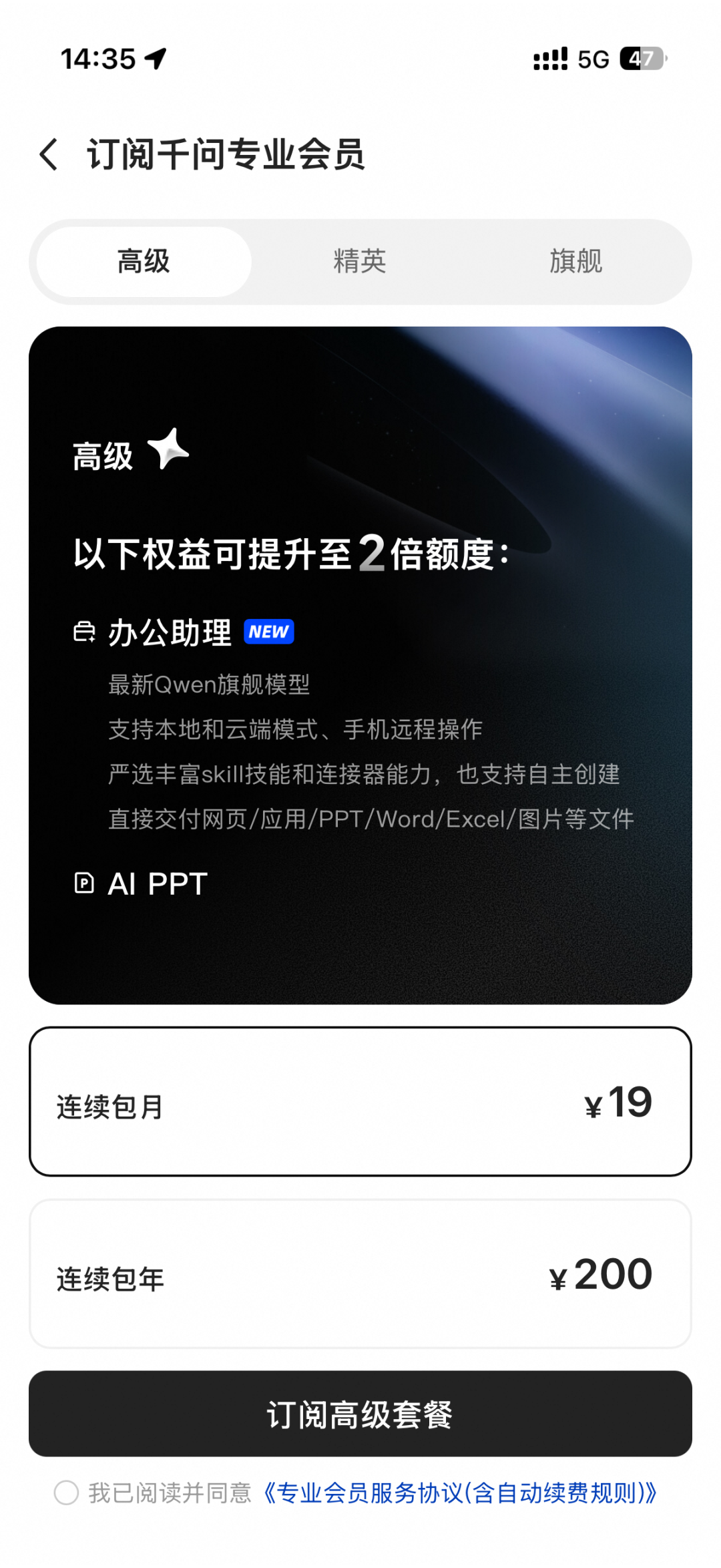
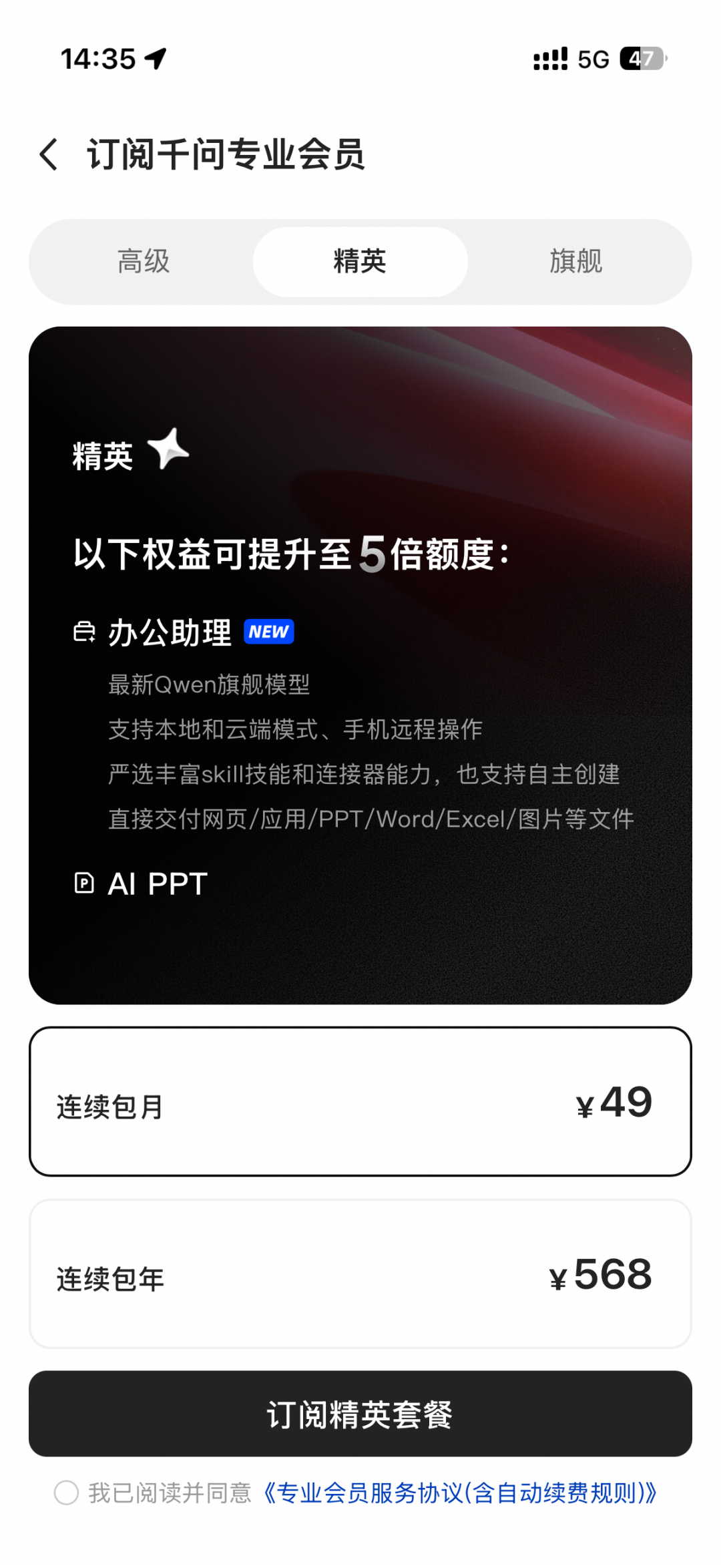
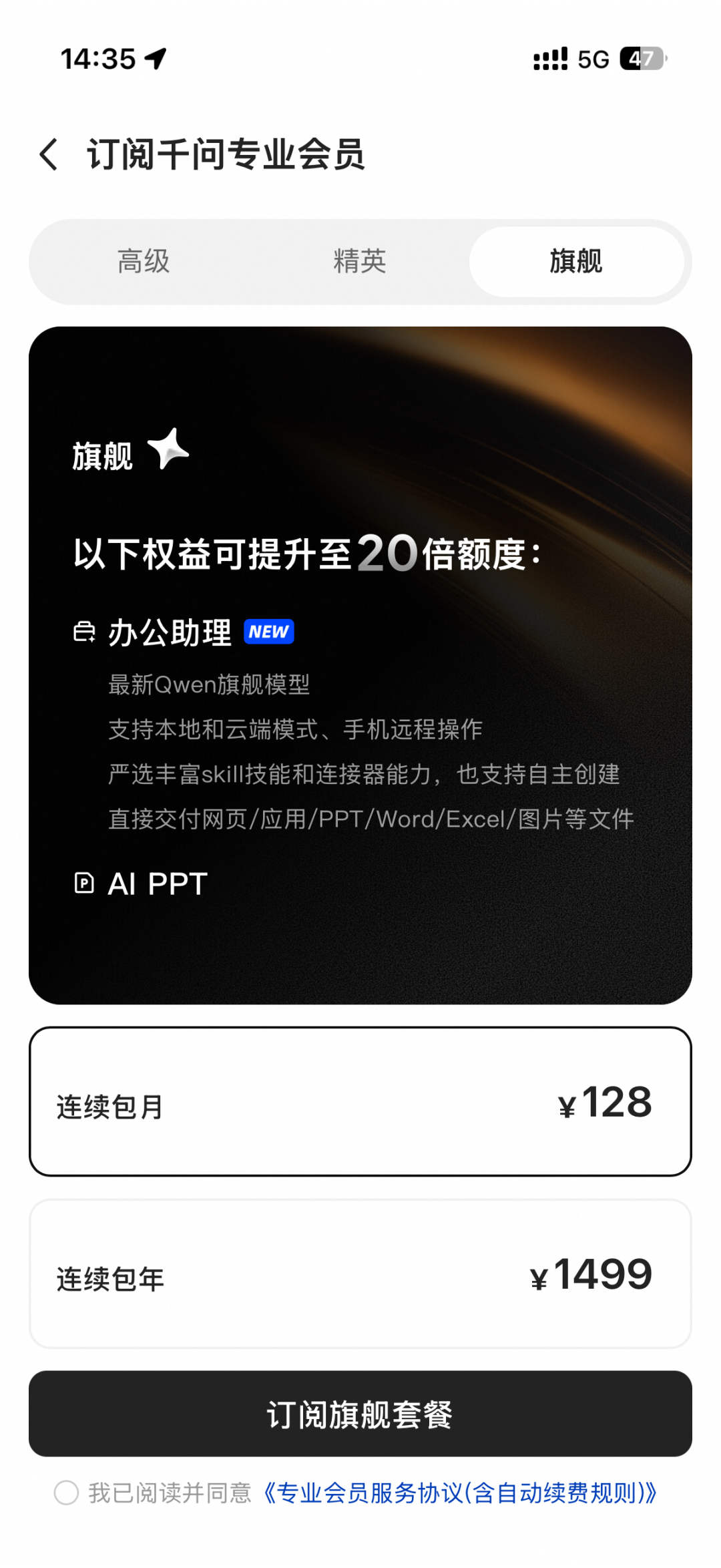
Qianwen App Professional Membership
In contrast, Doubao Professional Edition's pricing is set at 68 RMB/month, 200 RMB/month, and 500 RMB/month. However, the usage quotas vary; Doubao's 68 RMB/month standard package offers five times the quota of the free version, whereas Qianwen's 19 RMB/month Premium package only doubles the quota.
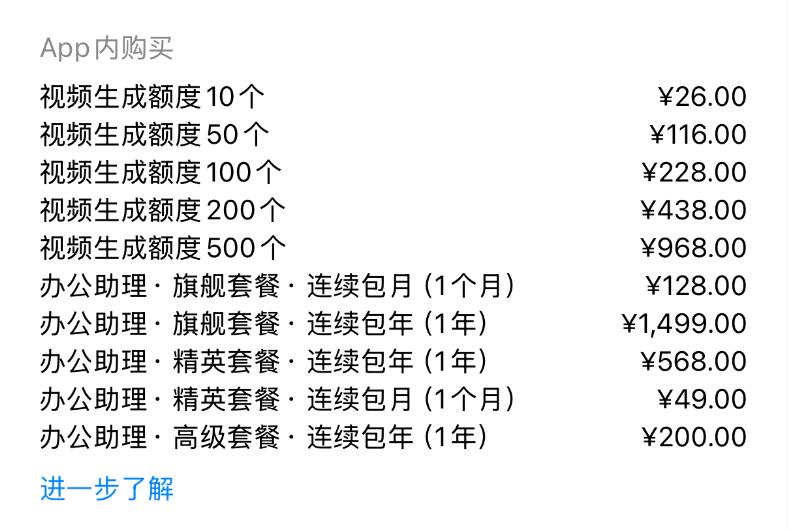
Apple's App Store has also synchronized and updated the Qianwen App membership information.
Prior to this, on August 7th, Qianwen unveiled a suite of new features, including Thinking & Research, Scheduled Tasks, Office Assistant, and Voice Calls, enabling users to tackle more complex office tasks. The most notable addition is the 'Office Assistant' feature, which seamlessly integrates with users' personal apps such as Notes, Calendar, and Mail, and supports computer and browser operations. It leverages various Skills to autonomously complete multi-step tasks.
This feature is particularly prominent in the desktop version. Upon launching the updated Qianwen desktop app, users will notice a layout reminiscent of OpenAI's Codex, with the ability to toggle between 'Daily' and 'Office' modes in the top left corner. Chat history on the Daily page syncs with the mobile version, while tasks on the Office page resemble those in Codex, displayed locally but supporting remote connections with mobile devices.
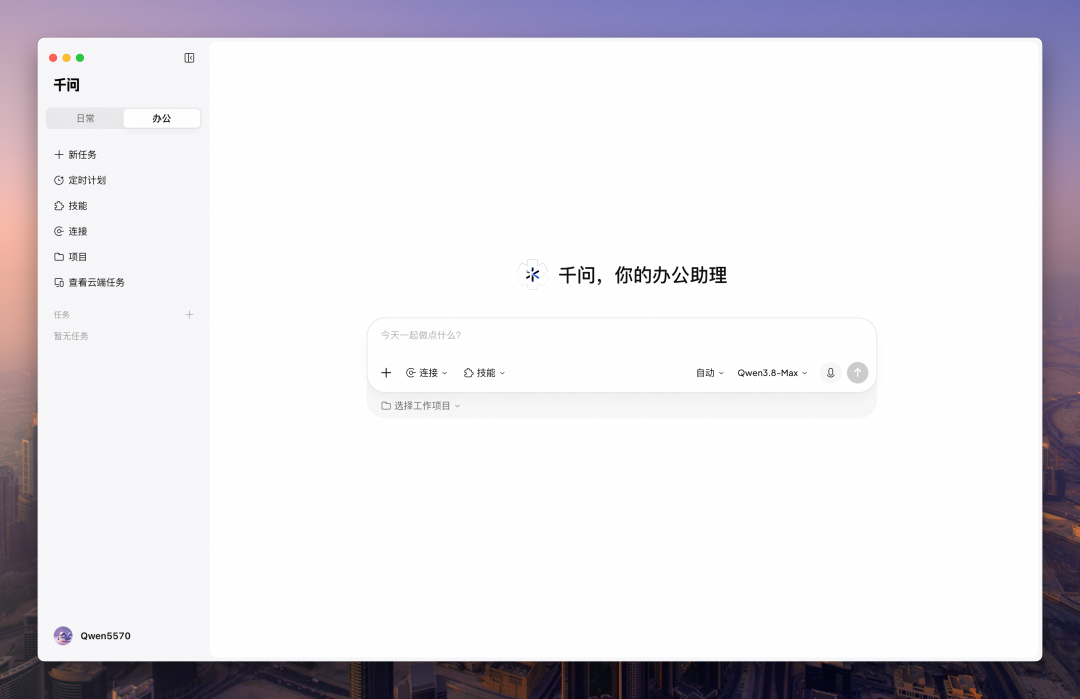
Qianwen Desktop Version
In essence, the Qianwen App is no longer content with being just a mobile assistant for ordering milk tea or takeout; it now aims to make inroads into the desktop office market.
However, just a week before Qianwen App enhanced its office capabilities, 'Qianwen Office' (QwenWork) officially entered public beta. Despite being part of the same ecosystem, the two products are developed by different teams and were not initially seen as competitors. Yet, as AI increasingly focuses on office scenarios, their market positions are beginning to overlap.
Moreover, the office interfaces of the Qianwen App and 'Qianwen Office' are nearly identical, and the similar naming conventions are likely to confuse consumers—which Qianwen Office are you referring to?

Qianwen Office
The Qianwen App is spearheaded by Wu Jia from the Qianwen Business Division and is officially positioned as 'creating the best personal AI assistant.' In addition to the Qianwen App, it also offers C-end application products like Kuake. 'Qianwen Office,' on the other hand, is led by Chen Yusen, who recently took over from Wu Zhaozhao, and integrates three products: QoderWork, Wukong, and MuleRun.
As a result, despite sharing the 'Qianwen' brand, Qianwen Office has little synergy with the original Qianwen App. For instance, logging into 'Qianwen Office' requires a separate account and cannot be done using the original Qianwen credentials, though DingTalk scanning is supported.
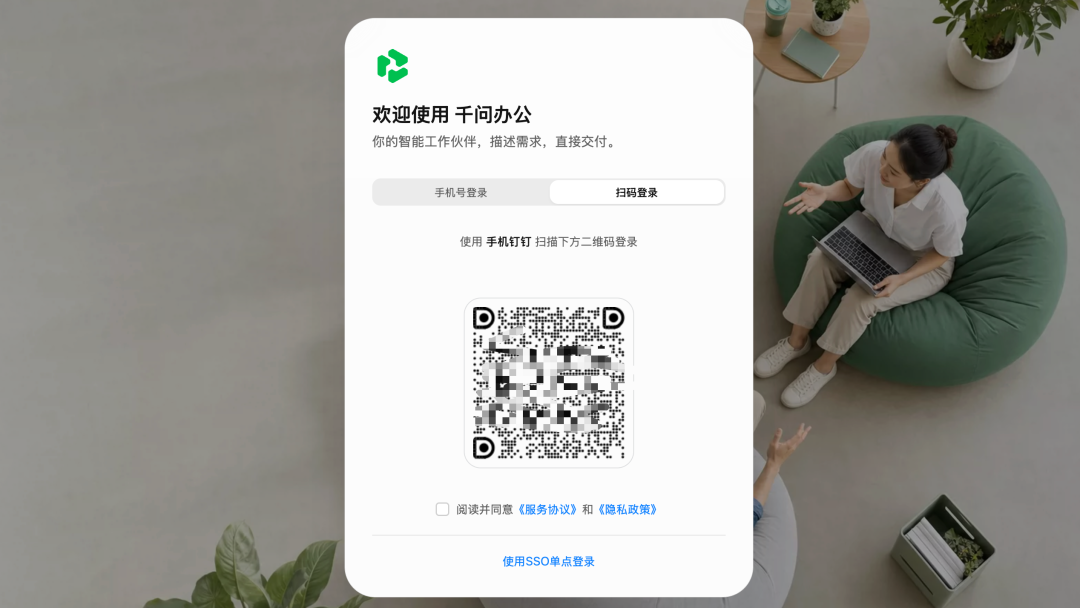 Qianwen Office Login Page
If the Qianwen App was Alibaba's flagship AI product in the first half of the year, heavily subsidizing milk tea orders, then 'Qianwen Office' has now emerged as Alibaba AI's rising star.
According to previous reports by Huxiu, Alibaba has internally identified 'AI Office' as a strategic direction in the AI field. Organizationally, the core entity driving 'AI Office' is the 'Qianwen Office Business Division,' formed by integrating the original Wukong business and two internal secret Agent lines (Q-Team, S-Team). Huxiu noted that senior executives like Wu Yongming now participate in key Qianwen Office meetings.
Qwen 3.8-Max was officially released on August 3rd and was immediately integrated into the still-in-public-beta 'Qianwen Office.' The Qianwen App, however, had to wait until August 7th to announce support for Qwen 3.8-Max.
The Qianwen App, once affectionately known as 'Sweetie' for its milk tea ordering capabilities, now seems to be playing second fiddle to 'Qianwen Office.' Despite updating its office functions, the Qianwen App has not fully leveraged Alibaba's B-end resources, whereas Qianwen Office has already integrated DingTalk IM from the outset.
There are also nuanced differences between the two. Alibaba emphasizes that Qianwen Office's key feature is to enhance organizational productivity, fully targeting the enterprise market. In contrast, the Qianwen App is officially designed to serve individual C-end users.
Nevertheless, as both products target AI office solutions, some competition is inevitable, and an internal 'horse race' is likely to ensue.
When exploring the new office functions of the Qianwen App, nearly all demonstration tasks are highly relevant to work scenarios. 'Qianwen Office' has not neglected individual users either; it supports individual access and defaults to personal membership purchase pages.
Moreover, the AI office market is still in its infancy. Cultivating usage habits among C-end users is crucial for potential enterprise adoption.
Previously, OpenAI ran both ChatGPT and Codex product lines in parallel but eventually integrated them, even renaming the updated Codex as ChatGPT.
Compared to Qianwen Office, the Qianwen App's office functions may only have the advantage of being more affordable. The starting price for Qianwen Office membership is 78 RMB/month, more than four times the starting price of Qianwen App membership.


© All rights reserved by Shanshang. No reproduction without authorization.
-
![]()
The 'New Car Death Effect' Hits Series 9 Flagship SUVs
-
![]()
Seres Faces a New Crossroads: AITO’s Shift and the Uncertainty Surrounding Saidou’s Arrival
-
![]()
Buying Huawei’s Intelligent Driving Six-Seater for 100,000 Yuan: Can Fengxing Emulate the Success of Huawei-Powered S Model? | Mingjing Pro
-
![]()
The Tipping Point for AI Computing Power Domestic Substitution in China
-
![]()
Industry Projection: Will Xiaomi Auto Surpass 1 Million Annual Sales by 2028?
-
![]()
Qianwen App Rolls Out Paid Office Membership: A 'Dual-Track' Strategy with Qianwen Office?
-
![]()
Stocking 10 Million Units, Pushing Thickness Limits: Can Apple's First Foldable Break the Market Stalemate?
-
Has the Token Price War Come to an End with DeepSeek's Substantial Price Increase and QianWen's Potential Partial Fees?