Industry Projection: Will Xiaomi Auto Surpass 1 Million Annual Sales by 2028?
 08/11 2026
 441
441
In the rapidly evolving landscape of China's new energy vehicle (NEV) sector, Xiaomi Auto emerged as a relatively late entrant. By the time it stepped into the market, numerous NEV startups had already faced closure. Consequently, upon its launch, skepticism arose regarding its market timing and sales prospects.
Yet, Xiaomi Auto, backed by the visionary leadership of Lei Jun, boasts two distinct advantages over its NEV counterparts: a mastery of marketing strategies and an innate ability to create online buzz. The brand's initial offerings, two high-end models priced above 200,000 yuan, are both pure electric vehicles—a sedan, the Xiaomi SU7, and an SUV, the Xiaomi YU7. The former rivals the Tesla Model 3, while the latter goes head-to-head with the Tesla Model Y.
Regardless of debates over design similarities, the aesthetic appeal and sporty design of these models resonate well with young consumers. Coupled with Xiaomi Auto's marketing prowess and the use of premium materials, both models have witnessed remarkable sales since their debut.
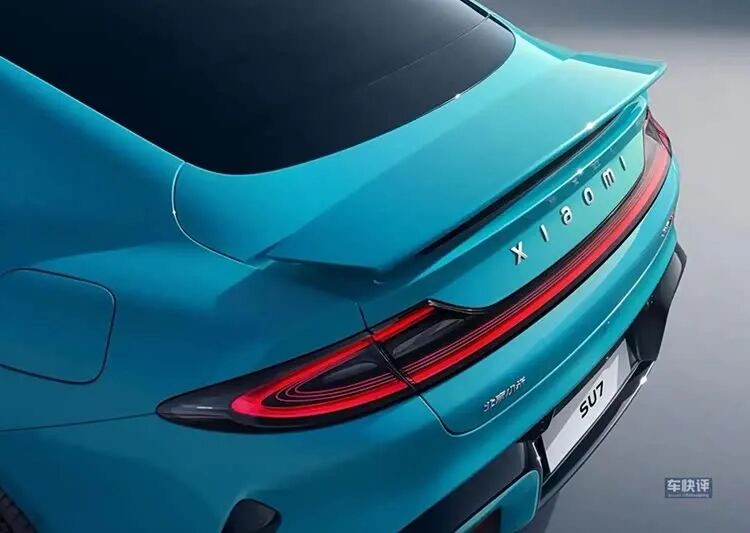
The Xiaomi SU7 has consistently topped the charts as China's best-selling mid-to-large sedan for several months running. Although the Xiaomi YU7 was recently surpassed by the Li Auto L6 as the best-selling mid-to-large SUV, it still maintains a position within the top three. Notably, among domestic NEV startups' pure electric sedans and SUVs priced above 200,000 yuan, only the Xiaomi SU7 and Xiaomi YU7 have outperformed the Tesla Model 3 and Model Y in terms of sales.
Buoyed by the strong sales performance of these models, Lei Jun, Chairman of Xiaomi Auto, has set an ambitious annual sales target of 550,000 units for 2026.
However, a closer look at Xiaomi Auto's sales data for the current year suggests that Lei Jun's optimism may be premature. In the first half of the year, Xiaomi Auto sold a cumulative total of 180,317 units. Assuming July sales exceeded 30,000 units, the cumulative deliveries for the first seven months would range between 210,000 and 220,000 units. Even at the upper end of this estimate, Xiaomi Auto has only achieved 40% of its annual target within the first seven months. This implies that over the remaining five months, the company must accomplish 60% of its yearly goal, or 330,000 units, averaging 66,000 units per month.
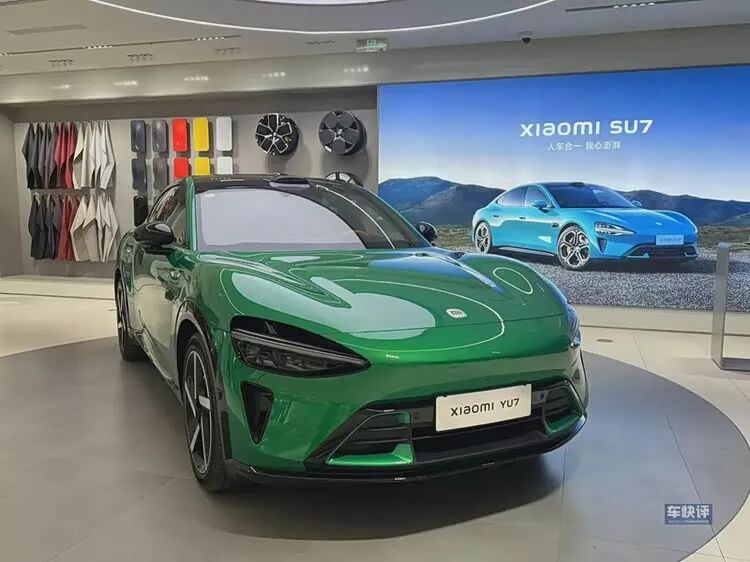
Achieving this sales target presents a significant challenge for Xiaomi Auto at present. Although the upcoming models from Xiaomi Pengcheng, the N70 and N90, have recently generated considerable excitement, they are still in the pre-sale phase and have yet to reach actual market delivery. Thus, the entire sales burden currently rests on the shoulders of the Xiaomi SU7 and Xiaomi YU7.
From this vantage point, while it is not entirely out of the realm of possibility for Xiaomi Auto to meet its 2026 sales target of 550,000 units, the likelihood appears slim. Nevertheless, at this critical juncture, a forecast from a reputable institution has injected a dose of confidence into Xiaomi Auto's prospects.
According to media reports, the international investment bank Goldman Sachs has projected Xiaomi Auto's sales for the next three years. Specifically, it anticipates full-year deliveries of 500,000 units in 2026, escalating to 770,000 units in 2027. More impressively, it predicts that Xiaomi Auto's cumulative deliveries will reach 1,036,000 units by 2028.
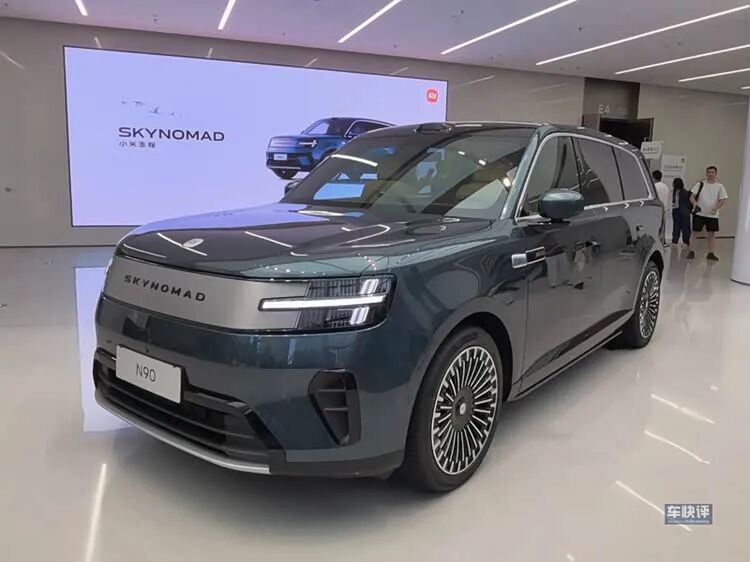
The institution's bullish sales forecast for Xiaomi Auto is underpinned by the anticipated performance of two extended-range hybrid SUVs from Xiaomi Pengcheng. Deliveries of Xiaomi Pengcheng models are expected to reach approximately 117,000 units in 2026, with the Pengcheng N70 delivering 240,000 units and the N90 delivering 110,000 units in 2027. Factoring in growth in overseas markets, the conclusion is that Xiaomi Auto will surpass the 1 million unit sales milestone by 2028.
To date, no domestic NEV startup has achieved annual sales of 1 million units. If feasible, Leapmotor might become the first to reach this milestone this year. So, the question remains: do you believe Xiaomi Auto, as a latecomer, will become the second NEV startup to achieve annual sales of 1 million units?
Copyright Notice: This article is original content from CheKuaiping. Republication requires explicit authorization. Any unauthorized reproduction or plagiarism of text or images will result in legal action. Some images in the article are sourced from the internet, with copyright belonging to the original authors. If your work is used, please contact us for compensation or removal.
-
![]()
The 'New Car Death Effect' Hits Series 9 Flagship SUVs
-
![]()
Seres Faces a New Crossroads: AITO’s Shift and the Uncertainty Surrounding Saidou’s Arrival
-
![]()
Buying Huawei’s Intelligent Driving Six-Seater for 100,000 Yuan: Can Fengxing Emulate the Success of Huawei-Powered S Model? | Mingjing Pro
-
![]()
The Tipping Point for AI Computing Power Domestic Substitution in China
-
![]()
Industry Projection: Will Xiaomi Auto Surpass 1 Million Annual Sales by 2028?
-
![]()
Qianwen App Rolls Out Paid Office Membership: A 'Dual-Track' Strategy with Qianwen Office?
-
![]()
Stocking 10 Million Units, Pushing Thickness Limits: Can Apple's First Foldable Break the Market Stalemate?
-
Has the Token Price War Come to an End with DeepSeek's Substantial Price Increase and QianWen's Potential Partial Fees?