Buying Huawei’s Intelligent Driving Six-Seater for 100,000 Yuan: Can Fengxing Emulate the Success of Huawei-Powered S Model? | Mingjing Pro
 08/11 2026
 452
452
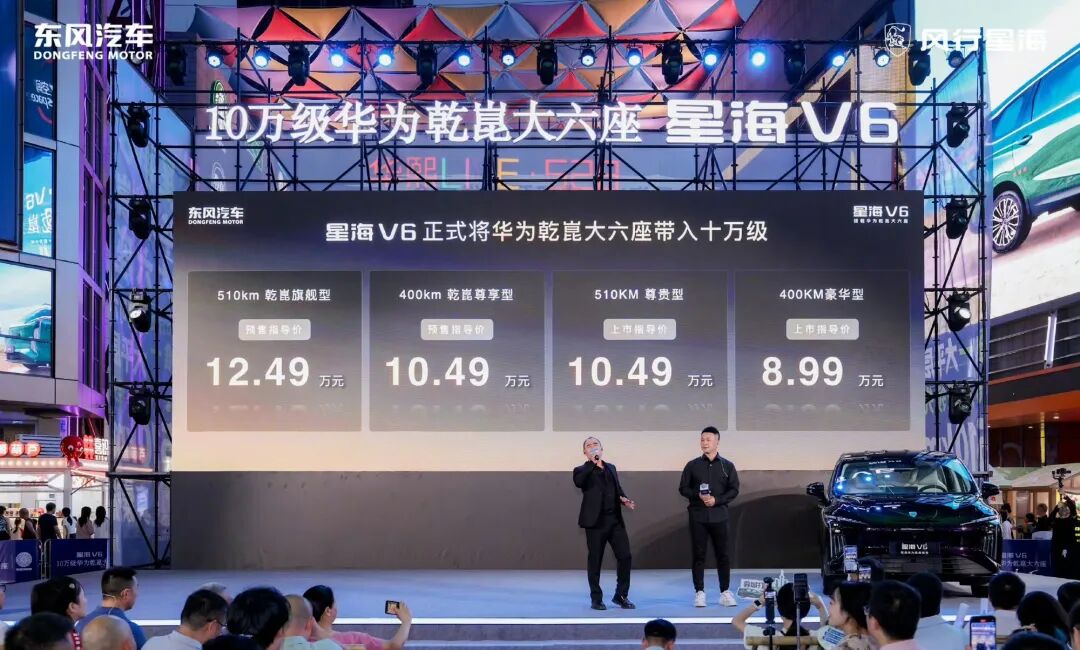
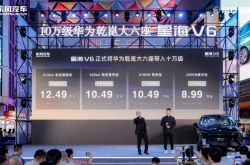
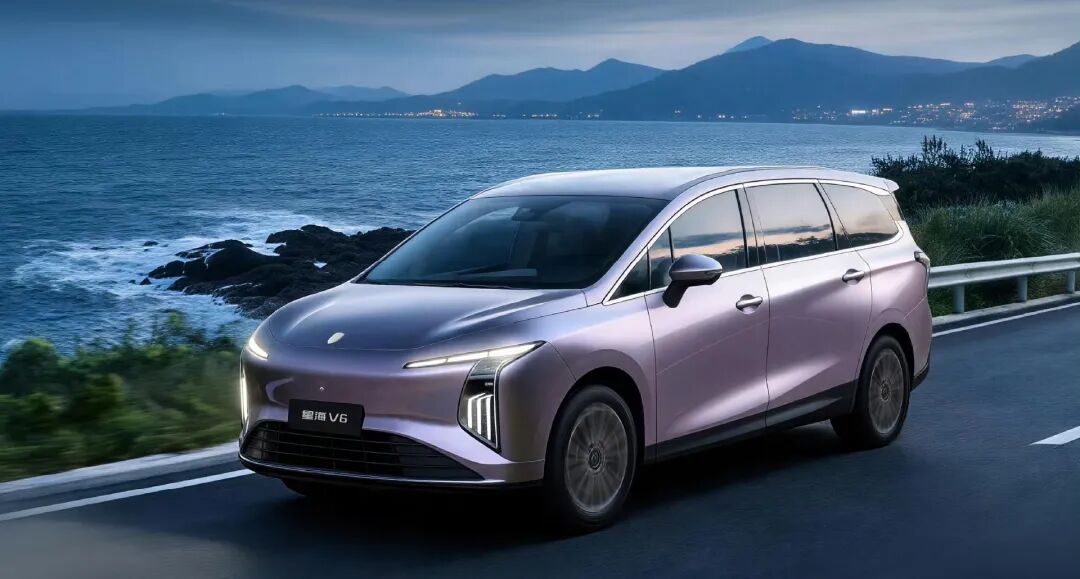
Huawei Qiankun Intelligent Driving for just 100,000 yuan? Yes, you read that correctly. This is the headline-grabbing feature of the newly launched Huawei Qiankun Intelligent Driving system. The Xinghai V6, which commenced pre-sales in Chengdu on August 8, has brought the entry point for Huawei Qiankun Intelligent Driving down to the 100,000-yuan price bracket. The vehicle is available in two pre-sale versions: the 510km Qiankun Flagship model, priced at 124,900 yuan, and the 400km Qiankun Premium model, priced at 104,900 yuan. Additionally, two more versions have been announced for market release: the 510km Prestige model, with a guide price of 104,900 yuan, and the 400km Luxury model, with a guide price of 89,900 yuan.
It remains uncertain whether the Xinghai V6, targeting the six-seater market, draws inspiration from the success of Wuling's Huajing S in Liuzhou. The Huajing S currently enjoys monthly sales exceeding 7,000 units, making it the most successful product under Huawei's supplier model. However, Fengxing's ambitions diverge from Wuling's: while Wuling aims to penetrate the high-end market, Fengxing hopes to leverage Huawei Qiankun Intelligent Driving to revitalize and salvage its passenger vehicle segment. Currently, Fengxing's passenger vehicle lineup has fully transitioned to the "Xinghai" series, encompassing the Xinghai V9, Xinghai T5, and Xinghai S7, which cover sedans, SUVs, and MPVs, forming a comprehensive product range.
From a market performance standpoint, the three Xinghai models have sold just over 10,000 units in the first half of the year. Among them, the Xinghai T5 performed best, with 1,822 units sold in June, but its total sales for the first half of the year amounted to only 5,567 units. The other two models collectively sold 7,280 units in the first half of the year, with 4,798 units (Xinghai S7) and 2,482 units (Xinghai V9) sold, respectively. Unless these are ultra-luxury vehicles priced over a million yuan, such sales figures would signal a severe crisis for any automaker. The same holds true for Fengxing.
Fengxing was once a dominant force under Dongfeng. From 2009 to 2016, Dongfeng Fengxing's production and sales volume surged from just 50,000 units to 260,000 units within seven years, achieving a compound annual growth rate exceeding 30% and ranking eighth in sales among independent brands. In 2016, Dongfeng Fengxing's annual passenger vehicle sales exceeded 200,000 units, reaching 261,300 units, but then experienced a gradual decline.
In 2017, Dongfeng Fengxing's cumulative sales dropped to only 221,800 units, a year-on-year decline of 17%, marking the first negative growth for Dongfeng Fengxing in over a decade. By 2020, annual sales had fallen below 100,000 units, settling at 96,300 units, a year-on-year decline of 17.06%. Sales rebounded slightly to 120,000 units in 2021-2022 but then declined again in 2023-2024, with annual sales dropping to just over 80,000 units, primarily supported by the Lingzhi commercial MPV. New energy vehicle models (Leiting, Xinghai series) generally sold a few thousand units each annually, failing to generate significant growth.
This collaboration with Huawei can be viewed as Fengxing's last-ditch effort in the passenger vehicle market. Currently, no products in the market below 150,000 yuan are equipped with Huawei's intelligent driving system, making it a rare and unique offering. This has a very positive impact on market expansion. However, Fengxing has opted for the less capable Huawei ADS SE for intelligent driving, and its actual performance remains to be seen. Secondly, doubts linger about whether intelligent driving is a decisive factor in purchasing decisions in the 100,000-yuan automotive consumer market.
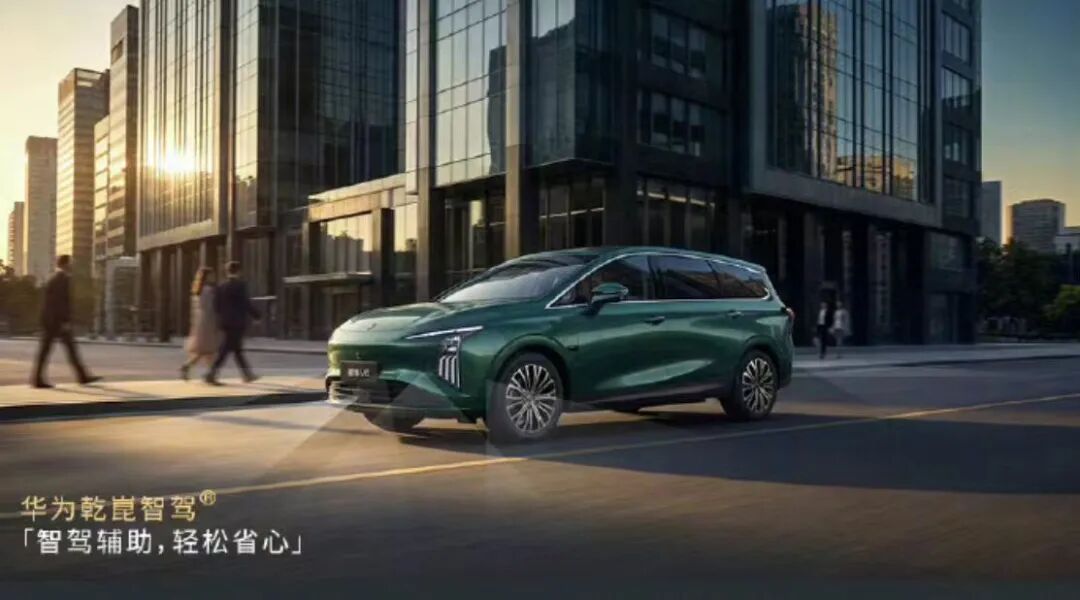
Looking at past cases, Shenlan previously adopted Huawei's system in its 150,000-yuan product range, but sales were lackluster. Instead, the lower-priced S05 performed better. This year, Shenlan, which has been closely aligned with Huawei, has opted for a more cost-effective intelligent driving solution from Horizon Robotics. Therefore, Fengxing is taking a calculated risk. In fact, due to product cost constraints in this price range, the Fengxing Xinghai V6 ultimately had to choose between Huawei's cockpit system and Qiankun Intelligent Driving. This adds another layer of significance to its "high-stakes gamble." For consumers in the 100,000-yuan range, whether intelligent driving or the cockpit system has a greater impact on their decision-making will soon become evident.
The Xinghai V6 is not the first product in the 100,000-yuan range to offer advanced intelligent driving capabilities. Previously, XPeng, BYD, and Leapmotor have all launched products following a similar strategy. Earlier this year, the inclusion of LiDAR in products priced below 100,000 yuan was seen as a symbolic move in the industry's "democratization of intelligent driving." Products in the industry seem to confirm this trend. For example, the Leapmotor A10, equipped with LiDAR (indicating higher-level intelligent driving capabilities), achieved monthly sales exceeding 20,000 units.
According to Mingjing Pro, the 505 Enjoy and 505 LiDAR versions of the Leapmotor A10 once accounted for over 75% of its sales. This suggests significant demand for intelligence in the 100,000-yuan consumer market. However, the positioning and customer base of the A10 and the Fengxing Xinghai V6 differ slightly, introducing uncertainty. From the perspective of Xinghai's customer base, a significant proportion has commercial uses. Terminal sales data provided by Dasouche shows that for the Xinghai S7, 2,881 units, or about 30%, were sold to "individuals" in the past year. This implies that its users may have higher requirements for basic configurations such as range.
Of course, the product settings of the Xinghai V6 take this factor into account. The previously launched 510km Prestige model has a guide price of 104,900 yuan, while the 400km Luxury model has a guide price of 89,900 yuan. The Qiankun versions are priced 20,000 yuan higher. This pricing strategy indicates Fengxing's hope to break away from its current user structure and achieve brand upward expansion, rather than becoming a marginalized ride-hailing brand.
However, a price difference of 20,000 yuan is a substantial expense for consumers at this stage. Whether Huawei Qiankun Intelligent Driving can penetrate the market below 150,000 yuan hinges on this gamble by Fengxing. If successful, it would be a new milestone achieved by Huawei's technology.
Of course, this also suggests another potential product strategy: expanding the battery capacity or switching to CATL batteries to achieve a range of over 650km. This would also justify a price increase of 20,000-30,000 yuan.
For Fengxing, competition in the current passenger vehicle market is fierce. Its core market in earlier years was the light passenger vehicle market represented by the Lingzhi. However, in recent years, the market share of this segment has gradually declined, with sales plummeting rapidly. Under such circumstances, Fengxing should actually focus on its core markets with limited resources, maintain its base, and then seek further growth, rather than continuing to expand its product lineup. As competitors generally enter the era of CNG, hybrid, and native electric multi-powertrains, it's time for the Lingzhi to undergo a significant product upgrade.
Regardless, the emergence of the Xinghai V6 indicates Fengxing's determination to compete in the 100,000-yuan large six-seater market. After leveraging Huawei's strengths to the fullest, whether Fengxing can reverse its market fortunes depends on this move. Since entering the new energy era, Fengxing has been adjusting itself and trying to regain its footing, experiencing many setbacks along the way. After this collaboration with Huawei, can it follow in the footsteps of its neighbor, Wuling, and forge a new path?
-
![]()
The 'New Car Death Effect' Hits Series 9 Flagship SUVs
-
![]()
Seres Faces a New Crossroads: AITO’s Shift and the Uncertainty Surrounding Saidou’s Arrival
-
![]()
Buying Huawei’s Intelligent Driving Six-Seater for 100,000 Yuan: Can Fengxing Emulate the Success of Huawei-Powered S Model? | Mingjing Pro
-
![]()
The Tipping Point for AI Computing Power Domestic Substitution in China
-
![]()
Industry Projection: Will Xiaomi Auto Surpass 1 Million Annual Sales by 2028?
-
![]()
Qianwen App Rolls Out Paid Office Membership: A 'Dual-Track' Strategy with Qianwen Office?
-
![]()
Stocking 10 Million Units, Pushing Thickness Limits: Can Apple's First Foldable Break the Market Stalemate?
-
Has the Token Price War Come to an End with DeepSeek's Substantial Price Increase and QianWen's Potential Partial Fees?