Stocking 10 Million Units, Pushing Thickness Limits: Can Apple's First Foldable Break the Market Stalemate?
 08/11 2026
 538
538
Thin and light, but with fatal flaws.
With Apple's autumn event just a month away, rumors about the new foldable iPhone Ultra are already swirling, almost eliminating the need for an official announcement.
Recently, the YouTube channel fpt. released a set of render videos of Apple's first foldable phone, revealing a wealth of information from design to color schemes. Combined with leaks from the supply chain over the past six months, the form, specs, pricing, and even stock levels of the iPhone Ultra are now largely without suspense .
Lei Technology (ID: leitech) has compiled the most reliable information currently available to see if Apple's years of refining a foldable screen can satisfy the market.
Following Samsung and Huawei, Apple Adopts Expansive Foldable Design
In terms of form factor, Apple has not opted for a vertical clamshell design or followed Honor and OPPO's tall and narrow horizontal fold approach. The iPhone Ultra adopts an expansive foldable design with a nearly 4:3 aspect ratio, featuring a 5.5-inch screen when folded and about 7.8 inches when unfolded—slightly smaller than the iPad mini's 8.3-inch screen but significantly larger than any current iPhone.
From the renders released by fpt., the device resembles a small tablet rather than an elongated phone when unfolded, aligning with the iPad mini's usage logic. Interestingly, Samsung's Z Fold8, released in July, also shifted to a similar widescreen route, and Huawei's Pura X Max, launched earlier this year, features the same expansive foldable form. The alignment among these three giants is unlikely a coincidence, suggesting that widescreen designs indeed offer advantages in reading, document handling, and multitasking scenarios.

(Image source: fpt.)
The two core selling points of foldable screens are thinness and the absence of creases. Multiple leaks suggest that the iPhone Ultra measures just 4.5mm at its thinnest point when unfolded and about 9 to 9.5mm when folded. For comparison, Apple's thinnest device currently is the 13-inch iPad Pro at 5.1mm, while the iPhone Air is 5.6mm thick. Achieving a 4.5mm thickness for a foldable phone represents a significant engineering feat. In terms of materials, titanium handles the mid-frame's structural integrity, while aluminum alloy aids in heat dissipation and weight control, balancing strength and lightness.
Apple has invested considerable effort in eliminating screen creases, with leaks indicating that the company spared no expense to achieve a nearly invisible crease to the naked eye. Reported crease depths are under 0.15mm, with crease angles below 2.5 degrees.
The hinge is another noteworthy feature, utilizing liquid metal (amorphous alloy) for enhanced resistance to bending and deformation compared to traditional titanium alloys. This should significantly reduce sagging issues after hundreds of daily folds and unfolds.

(Image source: fpt.)
Its display is supplied by Samsung, featuring a new Apple-customized process that embeds touch sensors directly into the display panel, reducing overall thickness by about 19% compared to traditional solutions. The cover glass is primarily supplied by domestic provider Lens Technology, with Corning providing raw materials for Lens to strengthen and cut the final product.
In summary, the iPhone Ultra, as Apple's first foldable, boasts three main advantages: the expansive foldable design enhances practicality, ultra-thinness improves portability, and material upgrades enhance reliability.
However, based on existing leaks, the iPhone Ultra also compromises on several aspects, particularly omitting key features for the sake of Extremely thin and light (ultra-thinness and portability). Most notably, it has only two rear cameras—no telephoto lens, just a main and an ultra-wide lens. This means a top-tier foldable flagship likely priced around 20,000 yuan may offer inferior telephoto capabilities compared to the Published during the same period (concurrently released) iPhone 18 Pro.

(Image source: fpt.)
In reality, the claim that omitting the telephoto lens is necessary for thinness doesn't fully hold up for foldables. Samsung's recently released Z Fold8 Ultra, for instance, measures just 4.1mm when unfolded yet features a complete triple-camera setup, including a telephoto lens supporting 3x optical zoom. Moreover, the iPhone Ultra essentially uses a panel solution provided by Samsung.
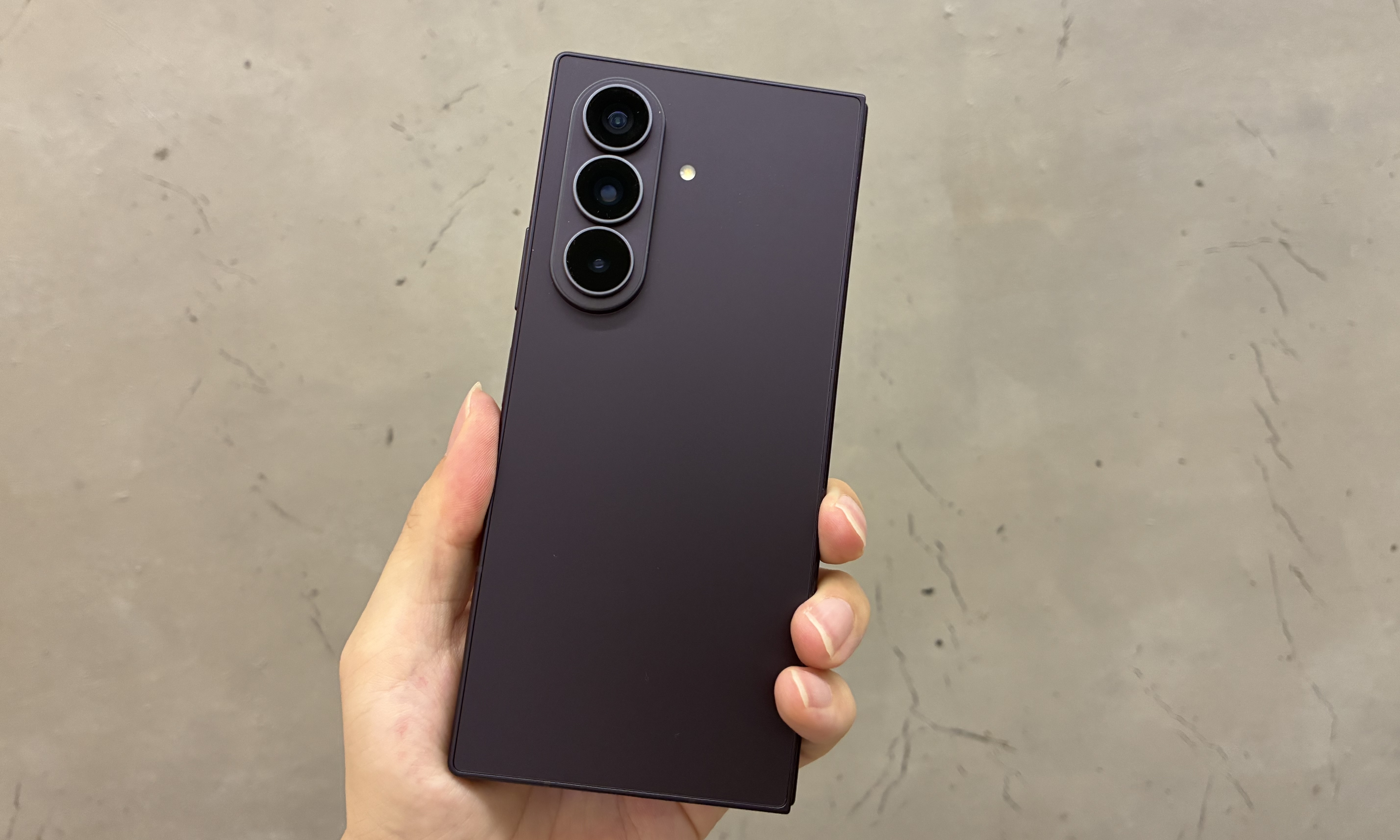
(Image source: Lei Technology)
The omission of the telephoto lens on the iPhone Ultra likely stems from Apple's cautious approach. As its first foldable, Apple prioritizes controlling production complexity and engineering risks, reducing uncertainty while managing costs. Apple likely believes that the core value of a foldable lies in its large unfolded screen experience, relegating photography to a lower priority. The question remains whether consumers at this price point will accept such a compromise, as their expectations for photography are unlikely to diminish simply because it's a foldable.
Another easily overlooked detail is the removal of the SIM card slot. It is now almost certain that the iPhone Ultra supports only eSIM, following the same route as the iPhone Air. While North America has fully adopted eSIM, and Japan and Europe are rapidly transitioning, eSIM adoption in mainland China remains limited. Although all three major carriers offer eSIM services, the experience is subpar, requiring in-person activation, business handling for device swaps, and limitations on the number of lines that can be activated.
In other areas, the battery is rumored to feature a dual-cell design with a capacity of 4883mAh. Considering the power consumption of the 7.8-inch inner screen, this capacity is adequate but not generous. For comparison, the iPad mini 7 has a 5000mAh battery, and in my personal experience, its battery life under cellular networks is mediocre, often failing to last a full day outdoors. As a smartphone, the iPhone Ultra will face more diverse usage scenarios and higher frequency of use than a tablet, so expectations for its battery life should be tempered.
In terms of core performance, the iPhone Ultra does not appear to compromise, featuring the A20 Pro chip built on TSMC's 2nm process. Details about the chip's performance remain scarce, but it is confirmed that the A20 Pro will feature an upgraded packaging method, bringing the onboard memory closer to the chip to enhance communication speeds. Coupled with NPU performance upgrades, on-device AI capabilities will see significant improvements.
The iPhone Ultra will have 12GB of memory, which is merely adequate for its class. Independent tech journalist Gao Canming revealed in an August 5 blog post that Apple is urgently procuring memory chips for the iPhone 18 Pro series and iPhone Ultra to ensure supply after launch.
Placing additional orders a month before the event suggests either Apple's lack of confidence in initial production capacity or higher-than-expected initial demand compared to supply chain estimates. This also indicates that memory price increases are affecting Apple, as even an ultra-premium model like the iPhone Ultra receives a conservative memory configuration.
Apple's entry into the foldable market is set to shake up the entire industry.
Samsung, having just released the Z Fold8 series at the end of July, covers mainstream foldable forms and continues to dominate the foldable category. Years of foldable experience have brought the Z Fold8 to a mature stage in hinge reliability, multitasking split-screen, and software adaptation depth, giving Samsung a clear advantage over Apple in overseas foldable markets.
Huawei's Pura X Max pioneered the expansive foldable category earlier this year, complemented by HarmonyOS's cross-device collaboration, securing its share in the high-end market. At least in the domestic market, the Huawei Pura X Max is likely to become the iPhone Ultra's strongest competitor.
Huawei has deep technical accumulation in foldable materials and reliability research, boasting an extremely rich and well-updated foldable product lineup, maintaining a leading position in the foldable market.
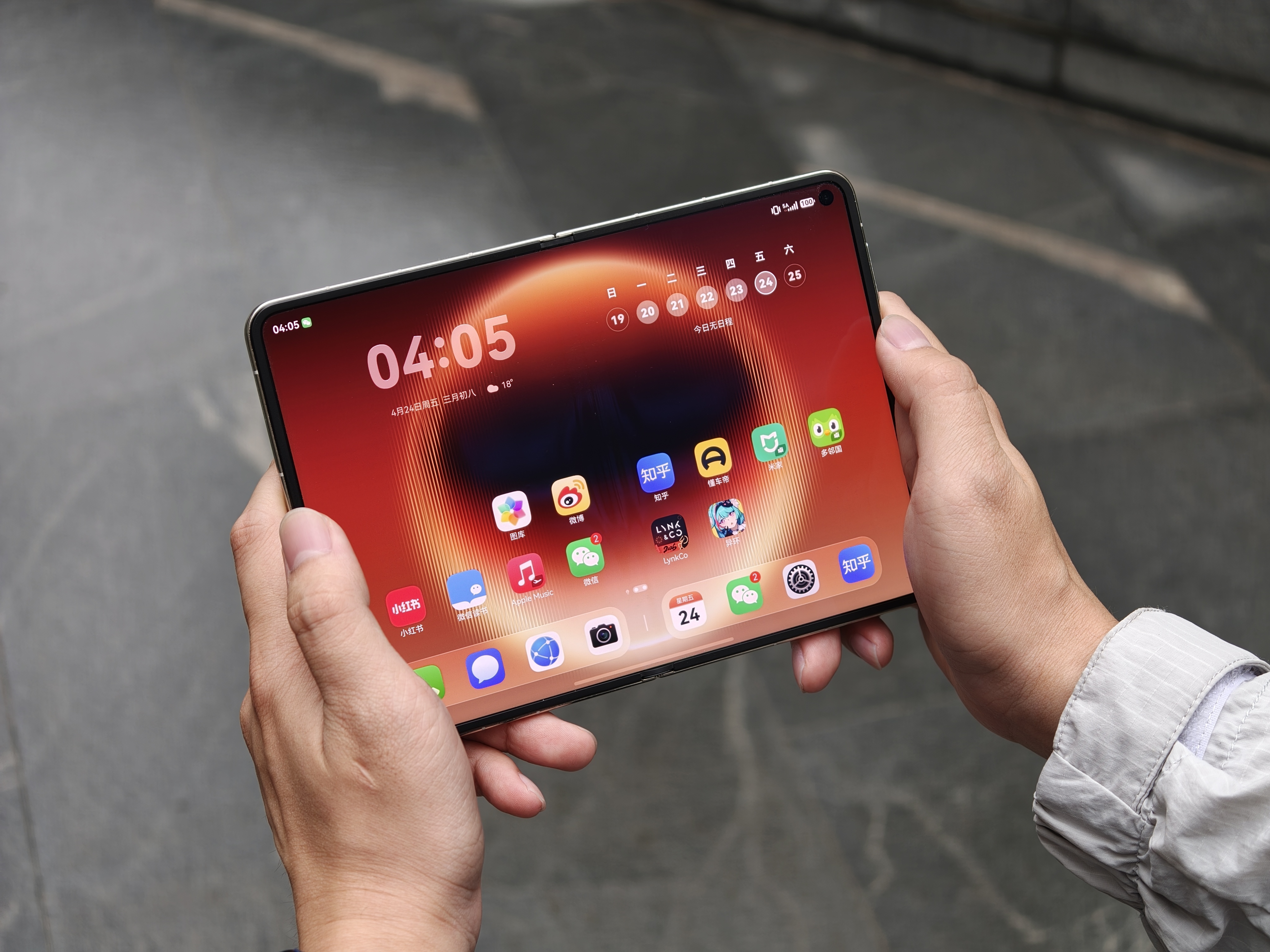
(Image source: Lei Technology)
Additionally, Xiaomi's first expansive foldable model, the MIX Fold 5, is expected to launch in Q3, featuring the self-developed Xuanjie O3 chip and Pengpai OS 4.0. With a 7.6-inch unfolded screen and a 6000mAh battery, it is priced around 10,000 yuan. Compared to the iPhone Ultra, the MIX Fold 5's main advantages include stronger battery life, more competitive pricing, and superior imaging capabilities.
OPPO, vivo, and Honor have all released heavyweight foldable models this year, remaining active in the market and set to compete in the second half of the year. The iPhone Ultra is entering a mature, highly competitive market.
Of course, Apple's strengths are also evident. The iOS ecosystem's adaptation for foldables began at WWDC, with developers required to support split-screen and hover interactions for foldable screens. iOS 27 also includes system-level optimizations for large-screen scenarios. Apple's brand appeal and user loyalty are unmatched, giving it the confidence to price the iPhone Ultra around 20,000 yuan.
Previous supply chain reports indicate that Apple has prepared around 10 million units of the iPhone Ultra this year, showing strong confidence in its first foldable product's market performance.
However, Apple's disadvantages are also apparent. Beyond the configuration shortcomings mentioned earlier, Apple may lack product experience. After all, this is a first-generation product, while competitors are already on their seventh or eighth generations.
Foldables present unique engineering challenges, including long-term hinge reliability, screen durability after tens of thousands of folds, and app adaptation logic between large and small screens. These aspects cannot be perfected overnight. Whether Apple can deliver a polished product definition and software experience from the start is questionable. Any first-generation foldable is likely to have flaws.

(Image source: fpt.)
Nevertheless, market institutions remain optimistic about the iPhone Ultra's prospects. According to a DigiTimes report released on August 5, global foldable smartphone shipments are expected to grow by 20% year-over-year in 2026, with the iPhone Ultra seen as a key driver of this growth.
According to IDC and other agencies, global foldable shipments in 2025 were around 20 million units. A 20% increase would put 2026 shipments at approximately 24 million units. This means Apple will contribute to some of the growth while also capturing a portion of Android's existing market share.
Another noteworthy point from the event is Apple's leadership transition. According to an April announcement, John Ternus will officially succeed Tim Cook as CEO on September 1, with Cook becoming executive chairman of the board. This means the September 9 iPhone event will be Ternus's debut. Launching a foldable—a product of this magnitude—at his first product event underscores Apple's internal Degree of emphasis (level of importance).
Looking back, the iPhone Ultra's product logic is clear: it aims not to compete with Android rivals on features and specs but to redefine the foldable experience in Apple's signature style. Its advantages include a 4.5mm-thin body, nearly invisible creases, and iOS's software integration for foldables. However, the lack of a telephoto lens, mediocre battery life, and high pricing are likely to be dealbreakers for users.
Ultimately, the iPhone Ultra is not just a test of how mature the foldable form factor is but whether Apple's brand can persuade users to pay a premium for a first-generation, imperfect product. For the foldable market, Apple's entry is the biggest variable, with a single model's 10 million-unit volume propelling foldables from a niche category into the mainstream. This may be Apple's greatest contribution to the foldable market.
Apple iPhone Ultra Foldable
Source: Lei Technology
Images in this article are from 123RF's licensed library. Source: Lei Technology
-
![]()
The 'New Car Death Effect' Hits Series 9 Flagship SUVs
-
![]()
Seres Faces a New Crossroads: AITO’s Shift and the Uncertainty Surrounding Saidou’s Arrival
-
![]()
Buying Huawei’s Intelligent Driving Six-Seater for 100,000 Yuan: Can Fengxing Emulate the Success of Huawei-Powered S Model? | Mingjing Pro
-
![]()
The Tipping Point for AI Computing Power Domestic Substitution in China
-
![]()
Industry Projection: Will Xiaomi Auto Surpass 1 Million Annual Sales by 2028?
-
![]()
Qianwen App Rolls Out Paid Office Membership: A 'Dual-Track' Strategy with Qianwen Office?
-
![]()
Stocking 10 Million Units, Pushing Thickness Limits: Can Apple's First Foldable Break the Market Stalemate?
-
Has the Token Price War Come to an End with DeepSeek's Substantial Price Increase and QianWen's Potential Partial Fees?