He Shocked Silicon Valley, Yet Felt Every Day That the Company Was on the Brink
 08/12 2026
 409
409
A war where no one dares to stop.
By Zhang Jingbo, Hua Shang Tao Lue
In July 2026, Yang Zhilin won a war that many believed was impossible.
The release of Kimi K3, with 2.8 trillion parameters, became the world's largest open-source model, prompting Silicon Valley to reevaluate this 34-year-old Chinese entrepreneur.
The world cheered for this victory, but the man in the spotlight wasn't as excited as imagined.
【01 The Man Who Forced OpenAI to Lower Prices in 13 Days】
How explosive was Kimi K3?
Officially released on July 17, it approached or even surpassed top U.S. large models in some coding benchmarks. Within 30 minutes of release, Hugging Face received over 4,000 likes and quickly topped the trending charts.
For many overseas developers, this was the first time a strange (unfamiliar) name appeared at the center of the table.
Just 13 days later, OpenAI announced an 80% price cut, suddenly accelerating the global AI industry's price war.
Yang Zhilin, standing at the center of the table, didn't show the excitement of a winner. In his view, the biggest trap for entrepreneurs isn't failure—it's when everyone thinks you've won.
In fact, this wasn't Kimi's first win.
As early as early 2024, Kimi experienced a surge, with its long-text capabilities and aggressive monthly spending of over 100 million yuan driving user growth. Top-tier capital like Alibaba and Sequoia joined in, sparking Kimi concept stocks in the market.
At the time, many believed Moonshot AI might have secured the first ticket to the AI era.
Just as everyone cheered for his victory, the young AI genius shocked the audience at Tianjin University's Entrepreneurship Forum:
“Sometimes, I wake up every day feeling like the company is about to collapse.”
The students laughed, but Yang Zhilin was serious. He had repeatedly expressed this sense of survival crisis in public.
This wasn't unfounded worry.
Soon, in late 2024, models like Doubao emerged. By January 2025, DeepSeek's debut rapidly stole users away.
In just half a year, Kimi's monthly active users nearly halved.
The market quickly shifted to DeepSeek, prompting Yang Zhilin to reflect on whether his bets aligned with market demands.
That spring, Liang Wenfeng was invited to the National Private Enterprise Symposium in Beijing, sitting alongside renowned entrepreneurs like Ren Zhengfei and Jack Ma.
On the other side, Yang Zhilin was trapped. Some thought they were on the brink.
Around that symposium, Yang Zhilin made the most critical decision in Kimi's history: slashing ad spending, halting derivative product lines, and shutting down nearly all market collaborations.
He personally cut the traffic advantage gained from spending over 700 million yuan the previous year.
For an AI startup that rapidly broke through via product innovation, the most dangerous move wasn't failure—it was voluntarily slowing growth. But Yang Zhilin had no choice.
He needed to pivot Kimi.
For the next half-year, Moonshot AI nearly vanished from public view. No high-profile launches, no dense (intensive) marketing—a once-overnight AI sensation suddenly fell silent.
Outsiders began to speculate: Had it fallen behind? Missed its window?
But internally, the direction shifted. Abandoning traffic chases, Yang Zhilin returned to his most familiar battlefield: the model itself.
The cruelest part of the AI industry is that applause always belongs to the next company. After a trend passes, yesterday's star is quickly overshadowed by new stories.
Some fade into obscurity; others dive underwater, preparing for a grander return.
【02 A War Where No One Dares to Stop】
In 2025, everyone in AI accelerated, yet no one truly felt at ease.
The scariest part of this war wasn't the abundance of competitors—it was that leadership itself was becoming obsolete. In tech, a iron law once held:
Winners build moats and enjoy time's compounding benefits.
Microsoft dominated for decades with Windows. Apple ruled hardware and software (hardware and software) ecosystems with the iPhone. Google controlled the internet with search.
Technological leads became commercial barriers, which solidified into profits.
But AI shattered this pattern. The large model competition endlessly reshuffled, almost daily.
When GPT-4 debuted, OpenAI stood atop the world. But soon, the industry asked: How long could OpenAI stay ahead?
Being first didn't mean safety—quite the opposite. It meant becoming everyone's target, your papers analyzed, technologies dissected, advantages turned into others' goals.
Thus, the industry Trapped in (fell into) a strange state: Everyone knew speeds were accelerating, costs soaring, capital expenditure risks rising—yet no one dared stop first.
Google couldn't pause, OpenAI couldn't lose, Anthropic couldn't slow... The frontier model competition became a war of attrition: More GPUs, more data, more sleepless nights.
The biggest risk in the AI era isn't slow progress—it's pausing to breathe while others leap ahead.
In July 2026, an open letter titled *Pacing the Frontier* shook Silicon Valley.
Over 1,000 employees from top AI firms like OpenAI and Google co-signed it, urging mechanisms to ensure AI iteration didn't outpace human understanding and control.
Ironically, the warning came from those propelling AI's rapid advance.
Even Jensen Huang walked on thin ice. For over 30 years, he'd repeatedly said, “We're 30 days from bankruptcy!”
Now, he says it even more frequently.
Against this backdrop, Yang Zhilin reconsidered: What would the next war truly contest?
Many once believed: Bigger models, more parameters, higher investments brought closer to the finish line. But DeepSeek proved efficiency could rewrite rules.
Yang Zhilin's answer was another word: Intelligence.
This wasn't a sudden whim.
As early as 2024, Moonshot AI internally debated: When everyone piled more data and parameters into models, where would the next breakthrough lie?
Yang Zhilin bet on deep reasoning.
He believed large models competed not on knowledge retention but on solving complex problems.
Thus, he explored reinforcement learning, letting models gain stronger reasoning through trial and error. Kimi K1.5 first showcased this path.
It was a lonely route—no user growth, no immediate market heat, even hard to explain to investors.
Startups most easily proved themselves through growth—users, revenue, market share. Model capabilities offered the slowest feedback.
But Yang Zhilin didn't waver.
Thus came the later moves: slashing ad spending, vanishing from public view for half a year.
Silence finally broke one late night in July 2025. Moonshot AI released China's first open-source trillion-parameter base model, Kimi K2.
Then, in January 2026, Kimi K2.5 debuted, integrating visual understanding, coding, and multimodality. It introduced AI avatar clusters, simultaneously scheduling over 100 avatars to handle 1,500 steps.
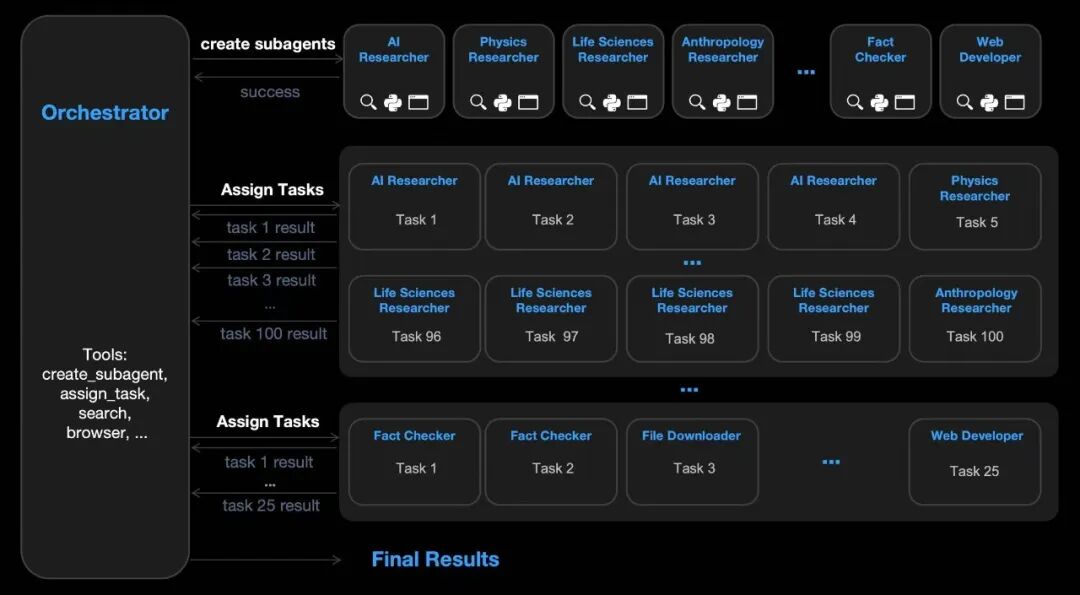 ▲Source: Moonshot AI
Market feedback exceeded expectations.
Less than a month after K2.5's release, its revenue in nearly 20 days surpassed all of 2025.
But Yang Zhilin didn't stop. He made a bolder move: redefining how large models work.
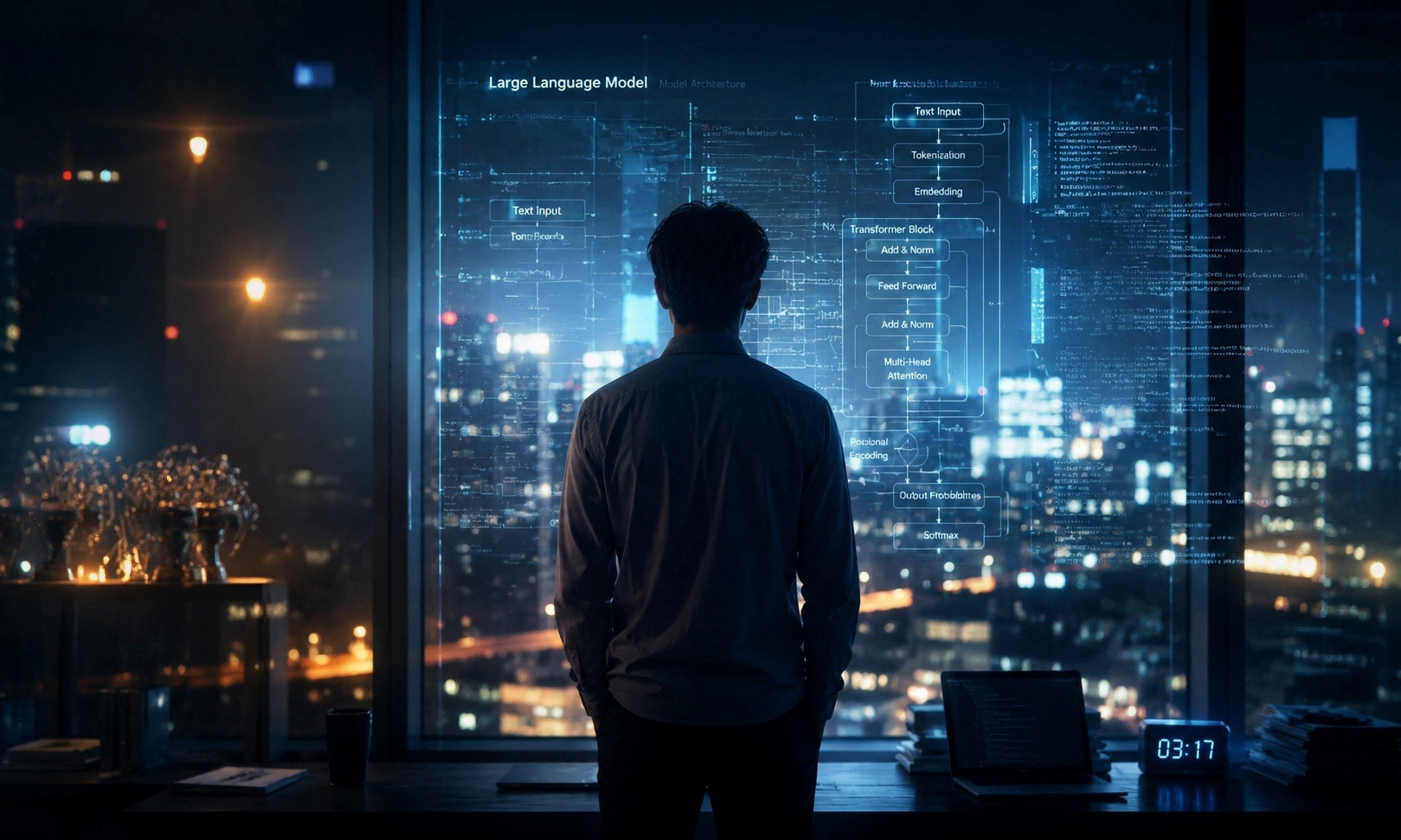
For a decade, mainstream large models relied on Transformer architectures.
Yang Zhilin's team didn't simply follow. They explored new paths to strengthen models via training methods, reasoning mechanisms, and efficiency.
While others built bigger engines, they redesigned combustion.
These three changes were packed into Kimi K3.
【03 Giving Weapons to the Enemy】
For centuries, the business world's instinct was to hide advantages—lock away technology, build moats, charge licensing fees. But Yang Zhilin did the opposite.
He spent over a year sharpening his blade, then handed it to everyone, including tomorrow's rivals.
On July 27, 2026, K3's weights went open-source. Developers worldwide could access them via a single link.
A startup voluntarily abandoning its moat seemed absurd.
The answer might lie in Yang Zhilin's anxiety.
He once thought user scale was his moat. But the tens of millions of users acquired by spending over 700 million yuan collapsed after DeepSeek's emergence.
It wasn't that Kimi's technology was inferior—AI competition was just that brutal.
Google, with top talent, massive data, and self-developed chips, was still overtaken by OpenAI. Before OpenAI could settle into its championship, Anthropic surpassed it.
Now, Anthropic faces pressure from open-source models.
This ruthless competition made Yang Zhilin realize AI moats' fragility. In this war where no one dared stop, the biggest risk was using yesterday's answers for tomorrow's problems.
Thus, during that silent half-year, he chose a new battlefield. While many fought for today, he bet on the next generation.
During 2025's low point, Yang Zhilin repeatedly read physicist David Deutsch's *The Beginning of Infinity*, trying to scale this endless mountain.
Behind it was his near-obsessive belief in technology's value and exploring the unknown.
This instinct to forge paths through uncertainty defined his life: While others sought certain answers, he ventured into the unknown.
In high school, he wrote *Just for fun* in his personal motto column at Shantou Jinshan High School.
Selected for the Informatics Olympiad training class with zero programming experience, he'd never written a line of code.
Studying thermal engineering at Tsinghua, he switched to computer science after reading a Haruki Murakami novel about programmers coding late at night.
At Tsinghua, he formed a rock band, Splay, reaching the finals of the campus singer-songwriter competition.
His favorite band was Pink Floyd. Later, he named his company “Moonshot AI” after their album *The Dark Side of the Moon*.
Yang Zhilin once explained publicly that the moon's far side, Always turn your back to Earth (always facing away from Earth), symbolized mystery and the spirit of exploring the unknown.
This aligned perfectly with the company's AGI pursuit.
After graduating from Tsinghua, Yang Zhilin pursued a Ph.D. at Carnegie Mellon University under Apple's AI head and Google AI's chief scientist.
During his Ph.D., he published two landmark papers, drawing attention from Silicon Valley giants like Apple.
Apple executives eagerly invited him to join, promising a secure future and even a Beijing-based role. But Yang Zhilin declined.
According to his advisor later, Yang Zhilin told him at graduation,
“If I don't try starting my own company, I'll definitely regret it later.”
This trait reflected in his management style.
He rarely attended non-technical public forums, refused polished PPTs, and demanded engineers run live demos.
His team management resembled reinforcement learning: Setting goals and reward mechanisms without dictating methods, letting teams find optimal solutions through trial and error.
The company had no hierarchical evaluations. Former employees described the culture as *harmonious volatility*—
Technical leaders communicated bluntly and intensely, criticizing colleagues face-to-face and rejecting suggestions ruthlessly, yet everything reset minutes later.
To outsiders, Moonshot AI sheltered a group of wandering geniuses who might not fit corporate molds but found their place there.
Born in 1992, Yang Zhilin is not yet 35—the youngest among China's top large model founders.
The industry calls him a staunch AGI believer. He'd long said:
“We should learn from OpenAI's technological idealism. If everyone thinks you're normal, if your ideals are what everyone expects, they add nothing to humanity's total ideals.”
Thus, open-sourcing was never just a business strategy for him—it was a personal choice.
【04 Epilogue】
Waking up daily feeling the company is on the brink seems like extreme anxiety, yet it's the norm in the AI era.
No one truly wins—only the next war hasn't begun. In this war, the greatest competitor isn't those with money and resources—it's the one who:
Dares to give weapons to rivals.
【References】
[1] *Why Can't the U.S. Retain Yang Zhilin?* National Business Daily.
[2] *Accumulating Over Time for Breakthroughs—Moonshot AI Focuses on General Artificial Intelligence* Xinhua Net
——END——
Welcome to follow 【Hua Shang Tao Lue】 to know influential figures and read legendary strategies.
All rights reserved. No unauthorized reproduction.
Some images sourced from the internet.
For infringement, please contact for removal.
-
![]()
Can a Small Car Priced at 63,900 Yuan Help Leapmotor Achieve Its Goal of 60% Overseas Sales?
-
![]()
Behind Two Renewed Agreements: Joint Venture Automakers Choose Long-Term Presence in China's New Energy Sector
-
![]()
Will Zunjie’s Launch of Two L3-Ready MPVs Spell the End of the ‘Price Markup Era’ for Alphard and Its Peers?
-
![]()
17 Strategies, 1.8 Billion Parcels, 12.5 Billion Yuan: Huizhou, Guangdong, Paves the Way for Autonomous Vehicle and Drone Delivery
-
![]()
Manus to Regain Independence, Former Shareholders Including Tencent to Repurchase Shares from Meta for $2 Billion
-
![]()
Starting at 99,900 yuan, the Updated Seal 06 Hits the Market. How Should Family Buyers Decide?
-
![]()
In-Depth Analysis of Volkswagen CARIZON’s Proprietary Intelligent Driving Technology
-
![]()
Can a car priced at 80,000 yuan really have LiDAR? Features once exclusive to 300,000-yuan models now available at rock-bottom prices