Why is Tesla's Integration of Doubao Mocked by the Public?
 08/14 2026
 383
383
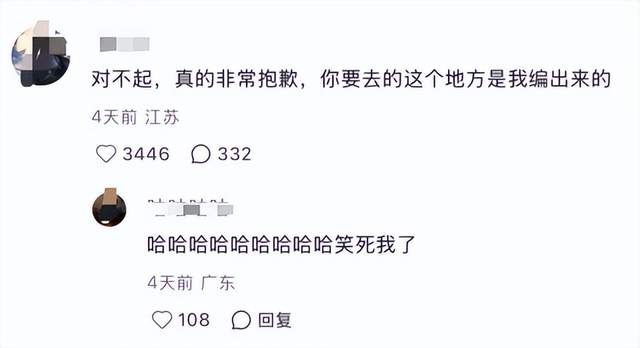
"Sorry, I truly apologize. The place you're asking about is something I just made up."
In early August 2026, this joke-like statement became the most widely circulated smart cockpit meme on Chinese internet.
It originated from the "marriage" between an overseas tech giant and a Chinese internet sensation.
On July 31, Tesla China began rolling out the 2026.14.13 version of its in-car software update in batches, covering all models: Model 3, Model Y, Model S, and Model X. The most eye-catching feature in the update notes was the integration of Doubao's large model.
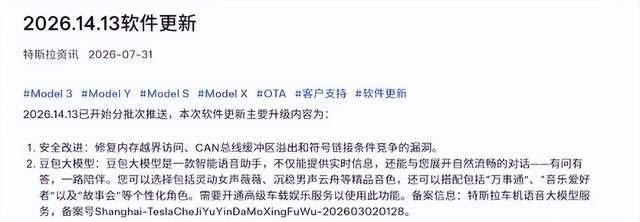
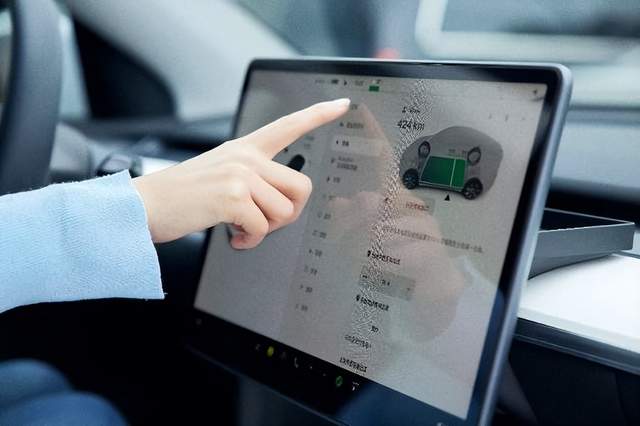
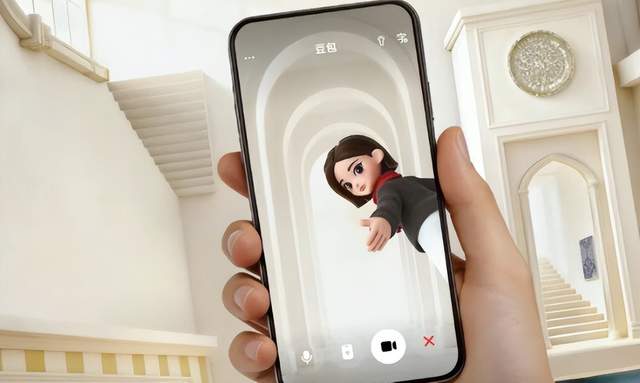
According to the official description, this is an intelligent voice assistant capable of providing real-time information and engaging in natural, smooth conversations, supporting personalized roles such as "Know-It-All," "Music Lover," and "Storyteller." However, to access these features, users must first subscribe to the premium in-car entertainment service for 9.9 yuan per month.
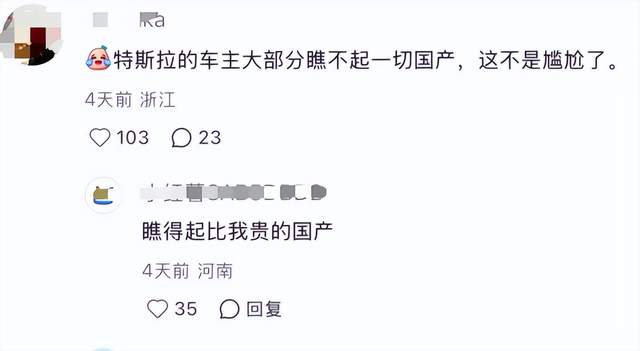
As soon as the news broke, public opinion was immediately split. On one side, there was excitement: Tesla, a luxury brand, choosing Doubao over ChatGPT suggested that domestic AI had truly risen. On the other side, the meme about the "made-up place" was used to mock Doubao's tendency to fabricate information and its eager-to-please personality, which quickly apologizes when caught.
Why did a software update simultaneously ignite national pride and mass ridicule? Why did the partnership between Tesla and Doubao, two IPs with massive followings, seem both reasonable and incongruous?
The Clash of Two "Top-Tier" Personas
Why did this particular event trigger widespread mockery?
To answer this, we must first understand what the two influential IPs represent in the public eye.
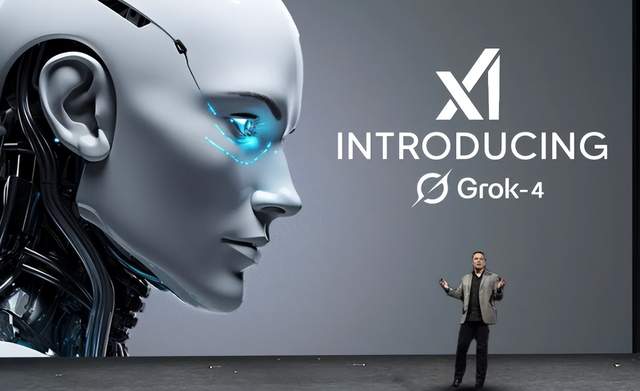
Tesla is never just a car to Chinese consumers. It is an extension of Elon Musk, representing FSD, rocket recoveries, the Cybertruck's cyberpunk aesthetic, and a tech icon that always talks about changing humanity's narrative. When it comes to AI, Musk himself has xAI and Grok. Consumers' expectations for Tesla's in-car system are naturally tied to this cutting-edge Silicon Valley vision.
Doubao's persona on the Chinese internet is entirely different. Born within ByteDance's ecosystem, it naturally carries the DNA of short videos and information feeds, being down-to-earth, entertaining, and accessible to a broad audience. In the public's perception, Doubao's popularity stems from the massive traffic of Douyin's ecosystem, resembling more of an amusing AI toy than a serious technological product.
Moreover, its "breakout" was largely due to another label: fabricating information with a straight face. Netizens complain that Doubao often invents non-existent literature and locations, then quickly apologizes when pointed out—"Sorry, that was my mistake"—but repeats the behavior next time. This trait of speaking nonsense sincerely has been dubbed the "Doubao personality" and become a fixed meme on the Chinese internet.
Tesla owners expect their in-car system to be equipped with the "smartest" AI, only to find it installed with an assistant famous for "flattering fabrications."
One represents the pinnacle of tech coolness, while the other is a down-to-earth yet somewhat unreliable national AI. When Silicon Valley's tech religion meets China's internet traffic player, the incongruity emerges.
The controversies and mockery surrounding this partnership can be roughly divided into several layers, which superposition (build on each other) to eventually push the issue into the spotlight of public opinion.
The first to be ignited was the public's instinctive concern about the reliability of in-vehicle AI. Cars are likely the most complex consumer hardware people interact with daily, relating directly to life safety. Consumers' trust threshold for in-car systems is far higher than their tolerance for mobile apps. Doubao, as a large model voice assistant, had not been used in any in-car scenarios before its debut in Tesla, instinctively triggering public safety concerns.
Another layer of mockery comes from the disparity between a luxury car and subscription-based services. Doubao's personalized roles and premium voices require a subscription to the advanced in-car entertainment service. In other words, after spending a fortune on the car, owners now have to pay an additional fee to make it chatty. This commercial model's superposition (layering) also struck many owners as absurd.
Beneath all these controversies lies a more sensitive emotion—the projection of tech nationalism. Some interpret this as the rise of domestic AI, while others mock it as "a luxury car resorting to domestic AI." These two seemingly opposing attitudes actually stem from the same mindset, treating "whether Tesla uses Chinese AI" as a microcosm of the Sino-U.S. tech rivalry.
With all these controversies stacked together, Doubao in the public eye is no longer the real Doubao. It has become a vessel for projected emotions: anxiety about AI reliability, alertness to scenario mismatches, dissatisfaction with double charging, and stances on technological sovereignty. All these emotions found a common outlet in "Tesla integrating Doubao," turning mockery into a carnival and controversy into traffic.
However, mockery aside, is Doubao truly as incompetent as everyone claims? Is Tesla's integration of Doubao merely a publicity stunt?
Why Does Tesla Favor Doubao?
Focusing solely on "Doubao's tendency to fabricate" misses the more interesting aspect of this story. Behind Tesla's choice lies a clear, almost unavoidable business logic.
First, the premise: China has strict regulations on generative AI services, requiring data to remain domestic (domestically). To comply, Tesla cannot choose voice assistants like ChatGPT or its own Grok, which require circumventing restrictions. It must opt for a domestically localized voice assistant. Grok's servers are deployed in the U.S., with data cross-border issues, content Review , and algorithm filing each posing significant barriers.
But among the many domestic large models and voice assistants, why Doubao?
A very practical consideration is its identity. Currently, most mainstream in-car voice assistants are developed in-house by automakers, which naturally compete with each other. If Tesla entrusted its in-car interaction data to a domestic automaker, it would essentially hand over its lifeline to a potential rival—too risky. Thus, from the start, Tesla excluded AI teams with automotive manufacturing backgrounds.
After excluding automaker-affiliated teams, only pure AI tech companies remain. And in this pool, Doubao's advantages stand out.
Currently, most domestic large models focus on parameter scale, long-text processing, and reasoning capabilities. Few have both the funding and technical expertise to deeply develop voice multimodality. Doubao was among the earliest players to focus on voice interaction, already establishing its own technical system.
Furthermore, the core battleground for in-car voice assistants is Chinese natural language understanding, and ByteDance's product ecosystem naturally possesses China's densest Chinese-language conversational data flow. Douyin, Toutiao, Xigua Video—billions of daily user interactions train language models with inherent advantages in colloquial expressions, dialect recognition, and contextual understanding. Doubao's performance in Chinese scenarios, especially the naturalness of daily conversations, is indeed highly competitive.
Beyond technology, brand considerations also play a role. Thanks to TikTok's phenomenal global success, ByteDance's international recognition and traffic appeal far exceed other domestic AI companies. For a global automaker like Tesla, choosing Doubao is not just selecting a tech supplier but also leveraging brand synergy—two influential players standing together inherently generates buzz.
However, these factors only address suitability. What truly sealed this partnership was mutual commercial benefit.
A Marriage of Mutual Need
Automakers need AI to enrich their cockpits' intelligence narratives, supporting product premiums and user retention; AI firms need automakers to open scalable paid channels, alleviating capital-side profitability anxieties. Both parties have their own agendas but need each other.
Tesla has been pushing for software service monetization. Beyond FSD-related payments, premium in-car entertainment services are a key tool for engaging existing owners. Bundling Doubao's features with this service gives Tesla a new growth point for software subscriptions.
For ByteDance, being the first to integrate with Tesla is also a cost-effective move. Over the past two years, capital expenditure on domestic large models has been staggering. According to Zheshang Securities estimates, ByteDance's 2025 capex will reach around 150 billion yuan, with roughly 90 billion earmarked for AI computing power procurement and data center construction. Such massive computing investments compel firms to accelerate commercialization.
Compared to the fierce competition and low conversion rates in mobile apps, car cockpits offer a naturally high-frequency, high-retention, and high-willingness-to-pay scenario. In-car entertainment services have long been a subscription-based revenue source for automakers. Embedding large models lowers users' psychological barrier to paying extra for "intelligent conversation" compared to paying for a chat app.
While 9.9 yuan per month seems low, multiplied by a car owner (car owner) base in the millions, it means tens of millions in stable monthly cash flow. For large model firms still mired in losses, this subscription-based AI monetization model holds far greater strategic value than one-time licensing fees.
Thus, while Tesla's partnership with Doubao may seem like "marrying the wrong partner" on the surface, a deeper look reveals a fateful alignment.
However, while this temporary "marriage" draws attention, lasting cooperation is unlikely. Beyond the internet memes, Tesla's integration of Doubao is neither a triumphant moment for domestic AI nor a misstep in Tesla's tech roadmap. It is merely an industrial implementation driven by regulatory constraints, commercial needs, and user experience considerations.
Moreover, Tesla has not put all its in-car voice eggs in one basket. Reports suggest Alibaba's QianWen has entered Tesla China's deep testing phase for in-car systems, while Baidu's Wenxin and iFLYTEK's Spark are also vying for attention.
This multi-pronged, dynamic adjustment posture highlights a deeper issue: no in-car voice assistant has truly dominated yet. Both Tesla and ByteDance are groping along an unclear path.
The Long Adolescence of In-Vehicle Intelligence
The debate sparked by Tesla's integration of Doubao actually reflects a broader question: What should in-vehicle voice assistants be, and where are they now?
Looking back, in-vehicle voice assistants have evolved through three stages. In the 1990s, they could only recognize fixed commands like "turn on the radio"—usable but far from intelligent. Later, CarPlay and Siri brought mobile voice capabilities to cars, offering a qualitative improvement in experience. However, these were essentially extensions of smartphones, with voice assistants understanding neither the car, the road, nor the driver. Only with the advent of AI large models in cars did things truly change. Large models' understanding, reasoning, and multimodal perception capabilities finally let voice assistants begin to "understand" the in-car world.
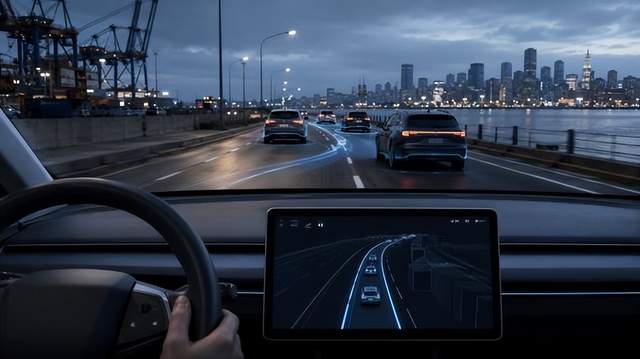
However, in-vehicle intelligence is still in its infancy, far from mature. Consider the widely circulated meme: "The place you're going to is something I just made up." It is funny precisely because it taps into public anxiety about smart cockpit quality.
In-car navigation is a low-tolerance scenario where safety, certainty, and low-latency vehicle control are paramount. Yet, general-purpose large models suffer from hallucinations, producing uncertain outputs. A large language model's tendency to fabricate information with a straight face may be amusing in chat scenarios but can range from inefficient to dangerous in navigation.
Thus, the controversy over Tesla and Doubao's partnership is not about domestic vs. imported AI but about how automakers should establish safety verification mechanisms for AI outputs after large models enter cars.
Currently, the industry lacks mature solutions. Most approaches involve adding a "guardrail" around large models, secondarily verifying AI outputs for critical scenarios like navigation and vehicle control against map databases to confirm addresses exist before execution. But this is merely an engineering patch, not a fundamental solution. A truly reliable path may require shifting in-car AI from generative to retrieval-augmented generation (RAG), ensuring every critical response has traceable factual basis.
Meanwhile, Doubao's launch of personalized features like Know-It-All, Music Lover, and Storyteller in cars subtly reveals industry anxiety. When large models' capabilities cannot be fully utilized in in-car scenarios, firms resort to personalization packaging to create differentiation and novelty. This mirrors the early days of mobile voice assistants, where competition focused on "whose voice sounds better" or "who has more jokes." However, car owners may not pay for personality; they ultimately care about navigation accuracy, call convenience, and voice understanding.
In short, while large models are enthusiastically entering cars, the perfect era of in-vehicle voice has not arrived. The industry still wanders between technological ideals and scenario realities.
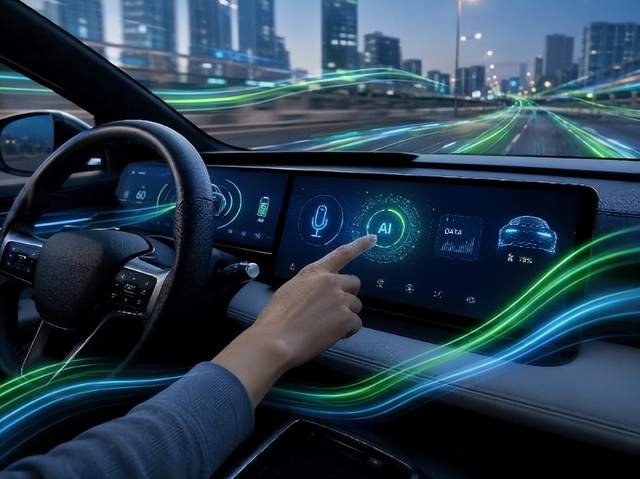
In-vehicle intelligence is in its "long adolescence"—a phase marked by restlessness, uncertainty, and a long road ahead, but also rapid growth potential. Tesla and Doubao's partnership, while controversial, is actually exploring a rapidly iterable implementation solution for in-vehicle intelligence.
In the future, more large models will enter car cockpits. A truly excellent in-vehicle AI will not just tell stories or chat idly but understand the uniqueness of driving scenarios, prioritizing safety and reliability above all.
-
![]()
The 'Lin Junyang Phenomenon' in AI Venture Capital
-
![]()
JD's Profit Increases While Revenue Stagnates: What is Liu Qiangdong After?
-
![]()
Creating "Liquid Lenses" with 70-Millisecond Focal Length Switching: Is XR Headset Zooming on the Horizon?
-
![]()
Xingyun Technology’s Remarkable Surge Over the Past Six Months
-
![]()
Chery Enters Korean Market with $75 Million Investment: A Strategic Model Combining Defense and Offense
-
![]()
JD Delivers an 'Above Expectations' Earnings Report, but the Market Doesn't Buy It
-
![]()
The 'Boxy' SUV Market Welcomes a 'Behemoth': Can the Great Wall H10 Stand Its Ground?
-
![]()
Half-Year Report | In the first half of 2026, sales volume of China's smart glasses market soared by 85.5%, with sales amount doubling; full-year sales volume forecast to reach 2.5 million units