Musk’s Ex-Chinese Executive Spends $500 Million on Silicon Valley Mansion: Is AI Fueling a New Era of Wealth Creation?
 08/18 2026
 373
373
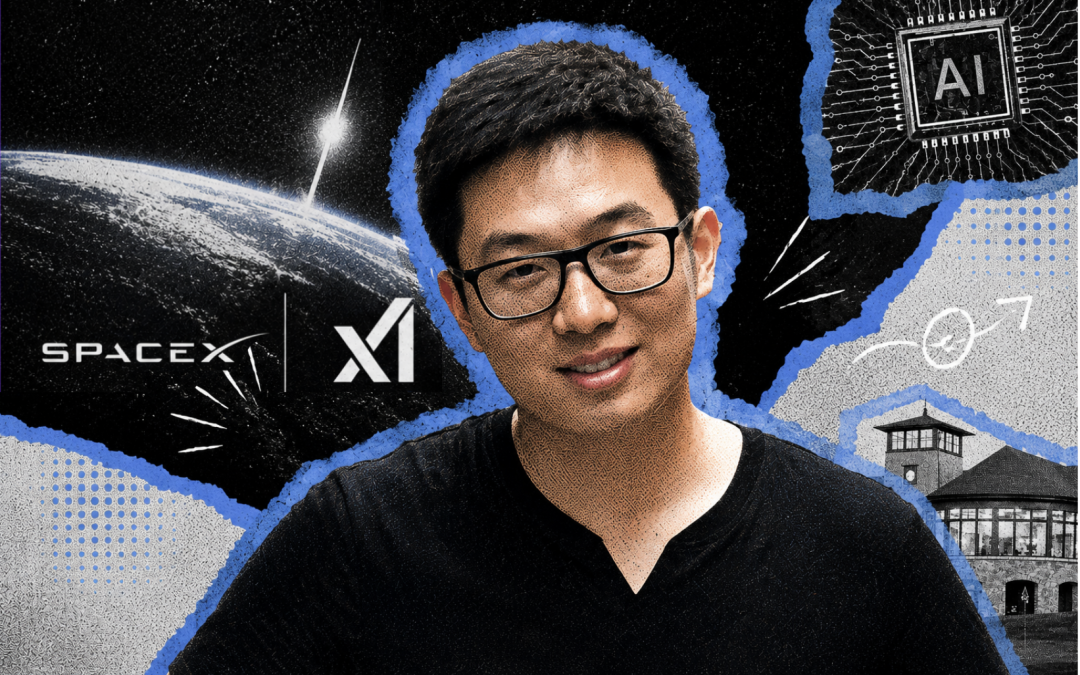
xAI Co-Founder Wu Yuhuai Acquires Silicon Valley Mansion

Hangzhou Native, Born After 1995, Buys Silicon Valley Mansion for $500 Million
Recently, the San Francisco Bay Area witnessed its most expensive luxury home sale of the year, with a 12-acre estate fetching $70 million (approximately RMB 500 million). The buyer? Wu Yuhuai, co-founder of xAI.
This young scientist from Hangzhou, born in 1995, had already made headlines last year by purchasing a Silicon Valley mansion for $12 million. Now, he has splurged another $70 million on a second property, sparking envy among his peers.
However, the transaction itself is less noteworthy than Wu’s identity. At last year’s Grok 3 launch event, Wu appeared alongside Elon Musk; yet by February this year, he had announced his departure from xAI.
Leaving Musk’s side and then spending $500 million on a Silicon Valley mansion—what is the story behind this 31-year-old AI scientist?

Wu Yuhuai’s $500 Million Mansion Purchase
Wu’s new mansion, located in Hillsborough, spans approximately 12 acres, featuring a 12,000-square-foot main residence and a 4,600-square-foot guesthouse.
The opulence resembles “bringing a resort home”: tennis courts, a nine-hole golf course, an 18-hole putting green, and a koi pond are just the basics. The estate also boasts a 150-seat outdoor amphitheater, a 2,100-gallon aquarium, and a set of outdoor fountains modeled after Las Vegas’ Bellagio.
Initially listed at $88 million, the property saw a $10 million price reduction before closing at $70 million on August 6, marking Northern California’s largest residential transaction this year.
While the luxury is evident, the buyer’s identity remained concealed until media traced property records to Wu Yuhuai, co-founder of xAI.
The question arises: How did Wu, still young, amass such wealth? The answer lies in xAI’s blockbuster merger earlier this year.
On February 2, 2026, SpaceX completed its acquisition of xAI via an all-stock transaction. At the time, SpaceX was valued at approximately $1 trillion, xAI at $250 billion, and the combined entity at $1.25 trillion.
SpaceX subsequently listed on NASDAQ on June 12, with an IPO price of $135 per share. Its closing price on the first day reached $160.95, peaking intra-day at $176.
For xAI’s early employees and founding team, this meant a revaluation of their equity holdings.
Public filings reveal that eligible xAI shareholders could convert their shares to SpaceX stock at a predetermined ratio.
According to the exchange ratio, each xAI share corresponded to 0.7165 SpaceX shares, valued at approximately $115.32 per share based on the first-day closing price—53% higher than the $75.46 cash alternative.
As SpaceX’s stock price surged post-listing, the equity value held by these early shareholders grew further. Public reports indicate that over 4,400 individuals now hold stakes worth at least $1 million, with roughly 400 holding over $100 million.
Wu, as one of xAI’s earliest core members, has not disclosed his exact shareholding. However, judging by his property purchases, the wealth effect from his equity is substantial.
Yet, reducing Wu’s story to “winning the SpaceX lottery” underestimates the young scientist. After all, Musk’s decision to bring Wu into xAI was itself a bet on top AI talent.

xAI’s “Dream Team”: All Co-Founders Have Exited
Wu Yuhuai is no ordinary figure. Born in 1995 in Jiande, Hangzhou, he pursued a Ph.D. in machine learning at the University of Toronto under Roger Grosse and Jimmy Ba. After graduating, he conducted postdoctoral research at Stanford University, focusing on “building machines capable of reasoning.”
Along this path, Wu contributed to projects like StarCraft AI AlphaStar, self-learning reasoner STaR, mathematical model Minerva, and geometric reasoning system AlphaGeometry. He also interned at OpenAI and Google.
In essence, Wu’s long-term research has centered on enabling machines to not only provide answers but also generate reasoning steps, verify their processes, and learn continuously from their results.
This aligns closely with the core competitive direction of today’s large language models.
In July 2023, Musk announced the founding of xAI on social platform X. The initial team of 12 included Wu and his mentor, Jimmy Ba, as early co-founders.
Though small, xAI’s team comprised top researchers from Google, DeepMind, OpenAI, and Microsoft Research. Wu served as a core member leading the reasoning direction.
By the time Grok 3 was released, Wu had become a key researcher on xAI’s reasoning team. Grok 3’s emphasis on “thinking before answering” and its ability to perform extended reasoning, backtracking, and verification in complex tasks closely mirrored Wu’s research focus.
Yet, a year later, Wu chose to leave.
On February 10, 2026, Wu announced his resignation on X, writing, “Time to begin my next chapter. Even a small AI-powered team can move mountains.” Less than a day later, his mentor, Jimmy Ba, also announced his departure.
Notably, this timing was critical, as SpaceX had completed its acquisition of xAI just days earlier, on February 2. In other words, Wu left as xAI stood at a major organizational crossroads.
Moreover, Wu was not the first to exit xAI.
Starting in 2024, xAI’s founding team began experiencing attrition. Infrastructure lead Kyle Kosic left first, followed by core team members Christian Szegedy and Igor Babuschkin.
In 2026, departures accelerated. After Yang Ge exited due to illness, Wu, Jimmy Ba, and Toby Pohlen resigned in February. Over the next month, Dai Zihang, Zhang Guodong, and Manuel Kroiss departed, while Ross Nordeen, responsible for xAI’s operations and computing infrastructure, announced his exit in late March.
Thus, the “dream team” of 11 co-founders had fully disbanded within three years, leaving Musk as the sole remaining founder.
At a February 12, 2026, all-hands meeting, Musk addressed xAI’s talent exodus, attributing the restructuring to “improving the company’s execution speed.”
Many departing members expressed gratitude to Musk and xAI in their farewell posts.
Reports suggest that this reflects both Musk’s management style and the broader context of surging entrepreneurial opportunities in the AI sector, where top researchers increasingly choose to start their own ventures. For them, leaving a major company no longer means starting from scratch; equity, reputation, and technical expertise can all serve as capital for their next endeavor.

The AI Industry Is Creating a New Wave of Wealth
Wu’s story is not unique. Over the past year, a new wave of “AI wealth creation” has emerged, spanning Silicon Valley to China’s tech sector.
In January, Zhipu debuted on the Hong Kong Stock Exchange as the “first global large language model stock,” with an initial market cap of approximately HK$52 billion, peaking at over HK$400 billion three months later. MiniMax, which went public around the same time, saw its market cap exceed HK$100 billion on its first trading day and reach HK$380 billion at its peak two months later.
The rapid appreciation of these companies’ valuations has turned early employees into participants in this wealth wave.
Using a simplified model, a core employee holding 0.5% of shares could see their paper wealth surge from HK$500 million to HK$1.5 billion; even those with just 0.001% could jump from the millions to the hundreds of millions.
A similar scenario unfolded at Anthropic across the Pacific. After a new funding round this year, the company’s valuation soared to approximately $965 billion, surpassing OpenAI’s $852 billion.
This means that even if Anthropic’s seven founders held an average of less than 1% each, their individual paper wealth would reach about $8 billion.
China’s hard tech sector is no exception.
Jiang Bo Long, a memory chip enterprise, saw founders Cai Huabo and his sister Cai Lijiang hold a combined 42% stake, with their paper wealth once nearing RMB 93 billion. Changxin Technology, which launched its IPO in July, now has a market cap exceeding RMB 4 trillion, catapulting founder Zhu Yiming’s wealth from RMB 12 billion to over RMB 100 billion.
A wave of entrepreneurs in chips, AI, and new energy is rapidly joining the high-net-worth ranks through funding, listings, and rising valuations.
However, the flip side of these “wealth creation” stories is worth noting. Much of this wealth remains on paper, built on technological breakthroughs, market expectations, and future commercialization potential—not yet realized cash.
In February, Zhipu faced backlash over subscription rule changes, causing its stock to plummet 22.76% in a single day, erasing over HK$70 billion in market value. Most employee shares are also subject to lock-up periods, leaving many to watch wild price swings without being able to cash out during peak hype.
Traditionally, top AI researchers joined major firms for stable salaries, computing power, and research resources.
Today, when an AI company’s equity value is high enough and entrepreneurial opportunities are abundant, leaving to start anew with accumulated technology and capital is becoming a viable alternative.
References:
“Hangzhou Post-95s Buys Silicon Valley Castle for $500 Million,” QbitAI;
“Musk Announces AI Company with Chinese as Founding Team Mainstay: Wu Yuhuai, Jimmy Ba, Yang Ge, Zhang Guodong, Dai Zihang Join,” Synced;
“xAI Founding Team 'Wiped Out': Last Co-Founder Exits,” Cailian Press;
“Only Musk Remains! All 11 xAI Co-Founders Have Left,” New Intelligence;
“Another xAI Chinese Co-Founder Exits! Sat Next to Musk at Grok 3 Launch,” Zhidx;
“Musk’s Inner Circle Is Emptying Out,” Zhidx;
“xAI Loses Two More Chinese Co-Founders! 9 of 11 Gone, Musk Admits Initial Mistake,” QbitAI;
“AI Company Employees Are Becoming Millionaires En Masse,” Nanfeng Window.
THE END
Copyright and Disclaimer
1. Content Copyright: Except for quoted public data, policies, and cases, this article is original. Professional data is sourced from authorized databases and government websites; cases are compiled from real events.
2. Image Licensing: Some images are proprietary or officially licensed, while others are AI-generated. For uncredited online images, copyright belongs to the original authors; unauthorized use will be removed.
3. Reprint Guidelines: Unauthorized reproduction is prohibited. Reprints must retain the full source and author.
4. Liability Disclaimer: This article is a business observation and industry commentary based on publicly available information. Content is for reference only and does not constitute professional advice. Risks arising from use are borne by the user. Xinzhidongneng reserves final interpretation rights.
-
![]()
New Energy Vehicle Penetration Soars to Record High in July, Triggering Accelerated Industry Transformation
-
![]()
Why Has the Pricing Strategy of Leading AI Models Shifted: GPT Goes Free While DeepSeek Raises Prices?
-
![]()
Luxury Fuel Vehicles Struggle to Compete: Audi A6L Prices Plummet Below 250,000 Yuan. Are BBA Trapped in a Downward Spiral?
-
![]()
Geely Automobile Bolsters 'One Geely' Initiative with Management Team Realignment, Including Shift in Li Shufu's Role
-
![]()
[In-depth Report] Building a Solid Foundation of Quality to Lead the New Development of the New Energy Vehicle Industry
-
![]()
VOYAH Pursuit S Seeks to Outshine YU7? VOYAH Aims for Top 3 in BEV Market with Spiral Growth Strategy | Mingjingpro
-
![]()
6 Years, 7 Models, 2 Generations, 3 Major Categories: VOYAH Is Not Missing Any Battle
-
![]()
Will Gasoline Vehicle Owners Opt for Electric Vehicles with a 1,000-Kilometer Range?