6 Years, 7 Models, 2 Generations, 3 Major Categories: VOYAH Is Not Missing Any Battle
 08/18 2026
 543
543
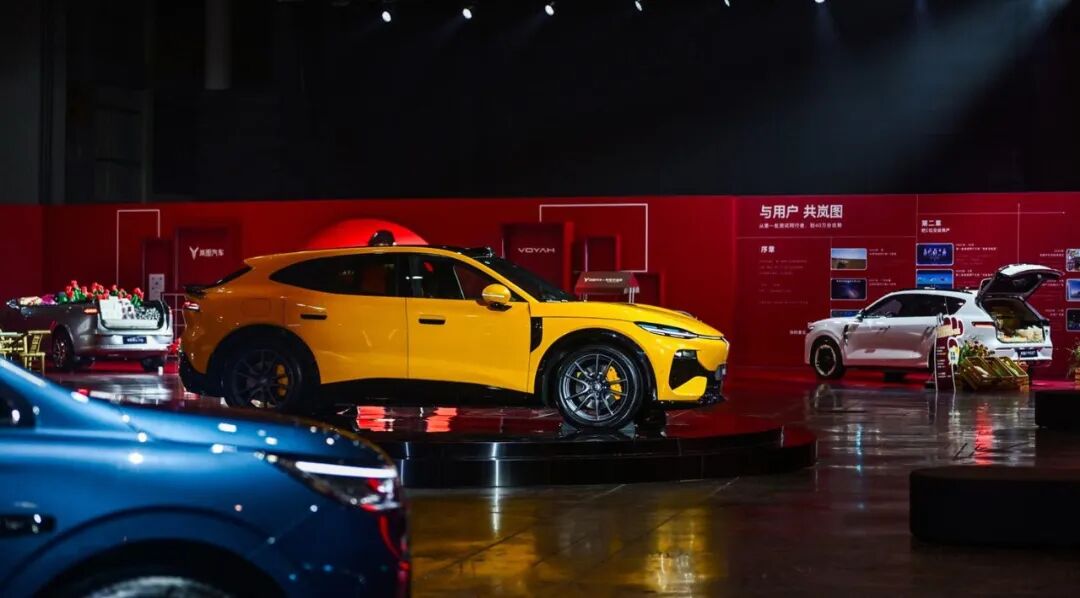
Lead
Introduction
The direction is clear.
On July 17, 2020, Dongfeng Motor launched its new high-end electric vehicle brand, VOYAH, in Wuhan. At that time, the penetration rate of new energy vehicles in China had just surpassed 5%. Broadly speaking, VOYAH was born into a less-than-friendly automotive market era.
Considering the official launch of its first model, the VOYAH FREE, in mid-2021, by the time VOYAH entered the market, Tesla had already localized production in China, NIO's William Li had shed the label of being the "most miserable person," and models like the Li ONE and XPENG P7 were gaining momentum.
During the same period, traditional automakers such as SAIC's IM, Changan's Avatr, and Geely's Zeekr were also intensively deploying their high-end new energy brands. Looking ahead, Huawei's "Five Brands, Two Realms" strategy continued to unfold, and Xiaomi Motors was quickly catching up.
It can be said that for VOYAH, the high-end new energy sector was already a fiercely competitive landscape, with formidable competitors ahead and behind.
However, seven years later, the Chinese auto market has seen players exit, fall behind, and make comebacks. VOYAH has survived, delivering 150,169 units in 2025, an 87% year-on-year increase, and 89,453 units from January to July 2026, a 31% year-on-year increase.
While these figures may not be as eye-catching as those of Xiaomi, AITO, NIO, or Li Auto, among state-owned high-end new energy brands like Avatr, IM, and Hyper, VOYAH is the undisputed sales leader.
In November last year, VOYAH rolled off its 300,000th vehicle, becoming the first central and state-owned enterprise high-end new energy brand to achieve this milestone. In March this year, VOYAH was listed on the Hong Kong Stock Exchange, becoming the first high-end new energy vehicle stock among central and state-owned enterprises.
In six years, going from 0 to 300,000 units. It is evident that VOYAH has accomplished the arduous task of establishing a traditional, especially state-owned, high-end new energy brand in a crowded track (Chinese term for 'sector' or 'market'). It has stayed and is gradually moving forward.
01 Steady Without Contention
Previously, VOYAH stated that it would introduce at least one new model per year. Indeed, it has delivered on this promise. From the VOYAH FREE in 2021 to the Dreamer in 2022, and then to the Z Glory in 2023, it completed the layout of three major categories—SUV, MPV, and sedan—within three years.
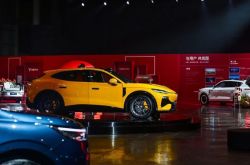
By 2025, VOYAH began to accelerate its renewal pace. The FREE+, all-new Zhiyin, 2026 Dreamer, flagship six-seater SUV Taishan, and Z Glory L were successively launched, all equipped with Huawei Intelligent Driving and HarmonyOS cockpit. In May this year, the five-seater SUV Taishan X8 was launched, followed by the Z Glory S, positioned as the "world's first tech FUV," on August 15.
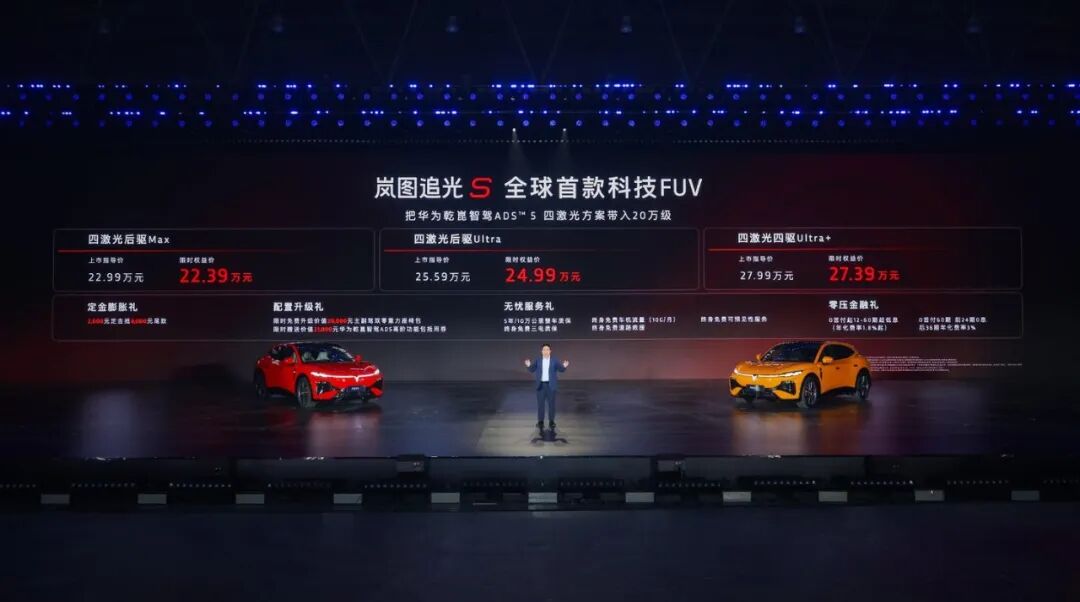
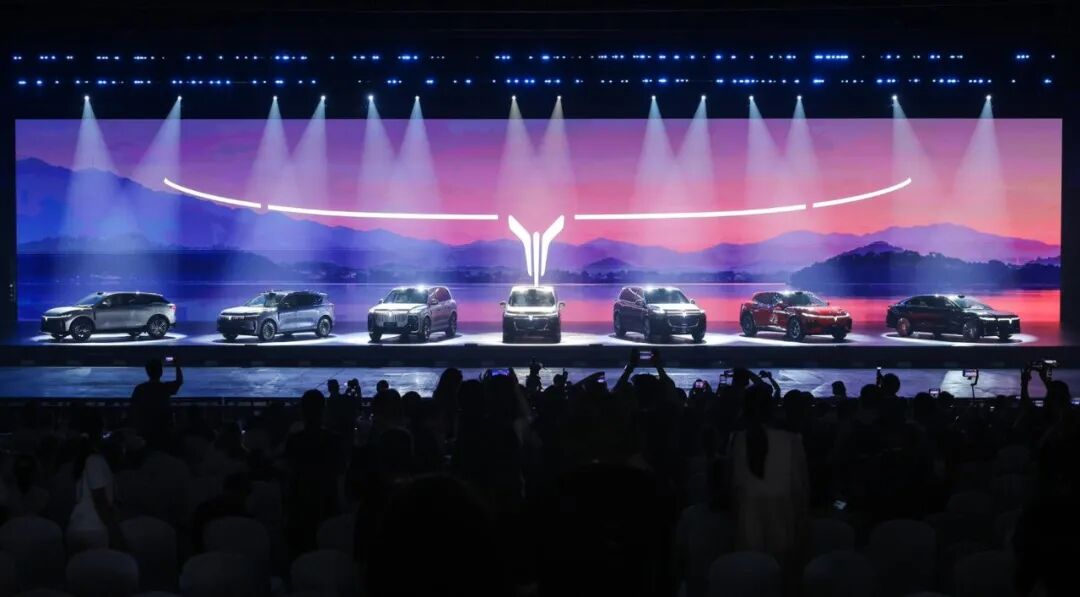
At this point, VOYAH's product matrix has become unprecedentedly vast, spanning price ranges from 200,000 to 700,000 yuan. Among domestic high-end new energy automakers, few have such a complete and systematically advancing product lineup. This also reveals VOYAH's ambition: not only to enter the high-end new energy market but also to quickly secure positions across all categories.
However, a complete product lineup does not equate to leading sales. From January to July 2026, Zeekr sold 214,200 units, Fangchengbao exceeded 200,000 units, and VOYAH sold nearly 90,000 units. Thus, many describe VOYAH as steady—not overly hot but never falling behind. Encouragingly, after the Dreamer became VOYAH's sales pillar, the Taishan X8 is emerging as the second-highest contributor.
Narrowing the perspective from the entire new force market to the segment of high-end new energy brands among central and state-owned enterprises, VOYAH's performance shifts from steady to outstanding. Especially in November last year, when VOYAH became the first central and state-owned enterprise high-end new energy brand to reach 300,000 units, the significance of this statement is profound.
Considering profitability and operational quality, VOYAH achieved a net profit of 1.017 billion yuan for the full year of 2025, with a gross margin exceeding 20.9%, making it one of the few domestic new energy automakers to achieve annual profitability. Even with government subsidies, this demonstrates that VOYAH has established a profitable model, transitioning from the investment phase to the return phase, as evidenced by this year's performance.
In fact, what is more worthy of discussion than sales and profit is the value that these six years, seven models, two generations, and three major categories have brought to VOYAH.
VOYAH's sales structure reveals a problem: it has not bet on a single blockbuster model but has, over six years, simultaneously invested in multiple segments, including MPVs, sedans, five-seater SUVs, six-seater SUVs, and crossover FUVs. From the Dreamer's strong position in the MPV market to the explosion of the five-seater Taishan X8, and the Z Glory S's exploration of the youth market, all have provided VOYAH with extensive market validation and decision-making basis.
A significant indicator is that while the early FREE and Dreamer adopted self-developed three-electric systems and chassis architectures, from 2025 onwards, VOYAH fully integrated Huawei's intelligent technologies, and in 2026, it released the fully self-developed Tiger Chassis. This dual-track system of collaboration and self-research has allowed VOYAH to find the optimal balance between supply chain synergy and product competitiveness.
Looking beyond product layout, VOYAH has accomplished more. From a blueprint at the brand's launch in 2020 to a fully-fledged automaker with complete capabilities in R&D, manufacturing, supply chain, sales and service, overseas expansion, and capital operation by 2026, VOYAH has built all the necessary infrastructure for a high-end new energy brand.
Therefore, when evaluating VOYAH, it is overly simplistic to summarize it by saying its sales are not as high as XX or its presence is not as strong as XX. On the challenging path of high-end new energy for central and state-owned enterprises and even traditional automakers, VOYAH has achieved profitability, completed its product categories, understood the market, and established a robust system. These accumulations are the crucial leverage supporting VOYAH's continued progress.
02 Walking Its Own Path, and Walking It Well
New questions arise following these accumulations: In the eyes of users, what kind of brand is VOYAH, and how do its products differ from others on the market?
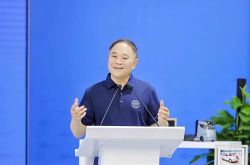
On August 15, the day the Z Glory S was launched, VOYAH's Chairman Lu Fang and General Manager of Sales Company Shao Mingfeng participated in a media group interview. The timing of this interview was ingenious (Chinese term for 'opportune' or 'well-timed'): first, discussions about automakers' reliance on Huawei have recently resurfaced as a hot topic; second, VOYAH suddenly released the Tiger Chassis; and third, VOYAH ventured into the FUV segment.
Therefore, VOYAH must provide a clear and unified brand essence at this juncture. Thus, the content of this interview can, to some extent, be seen as VOYAH's latest and most complete answer to the question of "Who am I?"
The most direct question was: When all models are equipped with Huawei ADS and HarmonyOS cockpit, what differentiates VOYAH from other brands also using Huawei's solutions?
Shao Mingfeng's response was straightforward: "Given China's current road environment, complex traffic conditions, and the present capabilities of intelligent driving assistance, I believe Huawei ADS remains leading. Therefore, if users now seek a superior intelligent driving assistance experience, I believe Huawei's solution is a must-have."
The term "must-have" implies that VOYAH does not intend to build brand differentiation through self-developed intelligent driving. On this front, VOYAH has chosen the most pragmatic path: using the industry's best solution.
However, Lu Fang quickly rounded out the response: "Where does VOYAH's differentiation truly lie? We may adopt many of the same solutions, but the inherent capabilities of the vehicle differ. It's like everyone studying advanced mathematics; the outcomes vary because each individual's inherent abilities differ."
"VOYAH's future differentiation will heavily rely on chassis capabilities and overall vehicle safety."
The core logic here is that while intelligent driving can be outsourced, the chassis cannot. The chassis represents an automaker's depth of understanding of a vehicle's physical attributes—it is the inherent capability of the car. Even if all models use Huawei's intelligent solutions, significant differences will still emerge in terms of handling precision, power response, chassis performance, and safety across different models.
Last month, VOYAH released the fully self-developed Tiger Chassis. Recently, the Z Glory S, equipped with the Tiger Chassis D, completed a 360° tunnel loop challenge. From start to finish, this challenge was thoroughly dissected by netizens. Ultimately, VOYAH proved the Z Glory S's capabilities through a series of videos.
Lu Fang stated that tuning for handling was traditionally the domain of German, American, and British automakers, but the VOYAH Z Glory S was entirely tuned in-house. Therefore, when discussing great cars in the future, Chinese people should have confidence—the best cars are in China. Shao Mingfeng was more blunt: "We want to tell the world: For intelligent driving, there's Huawei; for chassis, there's VOYAH."
These two statements together almost constitute VOYAH's brand declaration. Not overreaching in intelligence but using the best; not compromising on the chassis but developing it in-house. This is a highly pragmatic differentiation strategy: collaborating with top suppliers for intelligence but independently creating leading competitiveness in the chassis—a domain traditionally monopolized by German brands in the era of internal combustion engine vehicles.
Besides the chassis, VOYAH is also attempting to clarify its identity in another dimension: for whom it builds cars.
VOYAH has always targeted the backbone forces of the new era, but previously, the external perception of this group leaned toward elites aged 35-45. During the group interview, Lu Fang redefined this positioning: "The backbone forces of the new era also include many young people. Nowadays, many young people across various industries are creating value for society; they are equally the backbone forces of the new era."
The launch of the Z Glory S is a product of this updated cognition (Chinese term for 'cognition' or 'understanding'). It is revealed that among the Z Glory S's orderers, 70% are under 35, and 55% are under 30. Shao Mingfeng stated that VOYAH's core user group remains unchanged—still serving "reserved, pragmatic, wise, accomplished, and socially responsible users"—but the Z Glory S aims to attract younger users.
Lu Fang summarized: "What does VOYAH hope users will remember in the future, and what will it persist in? First, original design. Second, chassis capabilities. We want users to know that the most fundamental experience of a car is still driving control. If Chinese cars are to go global in the future, I believe two things are crucial: original design and a product experience that truly brings driving pleasure to users."
Evidently, VOYAH has provided a complete self-definition and clearly expressed its core brand values. However, as Shao Mingfeng said, VOYAH still has a long way to go in terms of sales. Therefore, from this perspective, clarifying its identity is not the endpoint but the starting point.
Editor-in-Chief: Cao Jiadong Editor: Wang Yue

THE END
-
![]()
New Energy Vehicle Penetration Soars to Record High in July, Triggering Accelerated Industry Transformation
-
![]()
Why Has the Pricing Strategy of Leading AI Models Shifted: GPT Goes Free While DeepSeek Raises Prices?
-
![]()
Luxury Fuel Vehicles Struggle to Compete: Audi A6L Prices Plummet Below 250,000 Yuan. Are BBA Trapped in a Downward Spiral?
-
![]()
Geely Automobile Bolsters 'One Geely' Initiative with Management Team Realignment, Including Shift in Li Shufu's Role
-
![]()
[In-depth Report] Building a Solid Foundation of Quality to Lead the New Development of the New Energy Vehicle Industry
-
![]()
VOYAH Pursuit S Seeks to Outshine YU7? VOYAH Aims for Top 3 in BEV Market with Spiral Growth Strategy | Mingjingpro
-
![]()
6 Years, 7 Models, 2 Generations, 3 Major Categories: VOYAH Is Not Missing Any Battle
-
![]()
Will Gasoline Vehicle Owners Opt for Electric Vehicles with a 1,000-Kilometer Range?