Why Has the Pricing Strategy of Leading AI Models Shifted: GPT Goes Free While DeepSeek Raises Prices?
 08/18 2026
 382
382
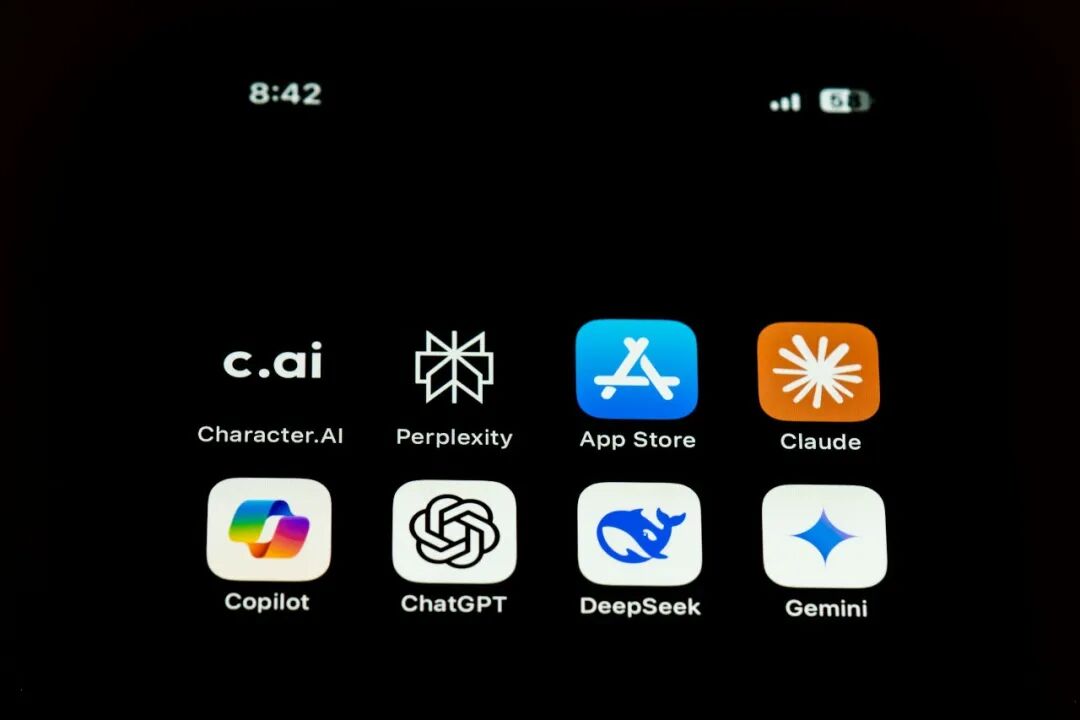
In recent years, the AI industry has witnessed rapid growth, attracting numerous large-scale model companies. In the United States, renowned models such as GPT and Claude have emerged, while China boasts its own array of models, including DeepSeek, Kimi, Qianwen, and Wenxin. Traditionally, the market narrative has positioned US models as technologically superior but costly, whereas Chinese models, though slightly behind in innovation, have been lauded for their cost-effectiveness. However, the landscape has recently shifted: GPT has embraced a free model, while DeepSeek has decided to increase its prices. What is the rationale behind this reversal?

I. GPT Adopts a Free Model, While DeepSeek Raises Prices
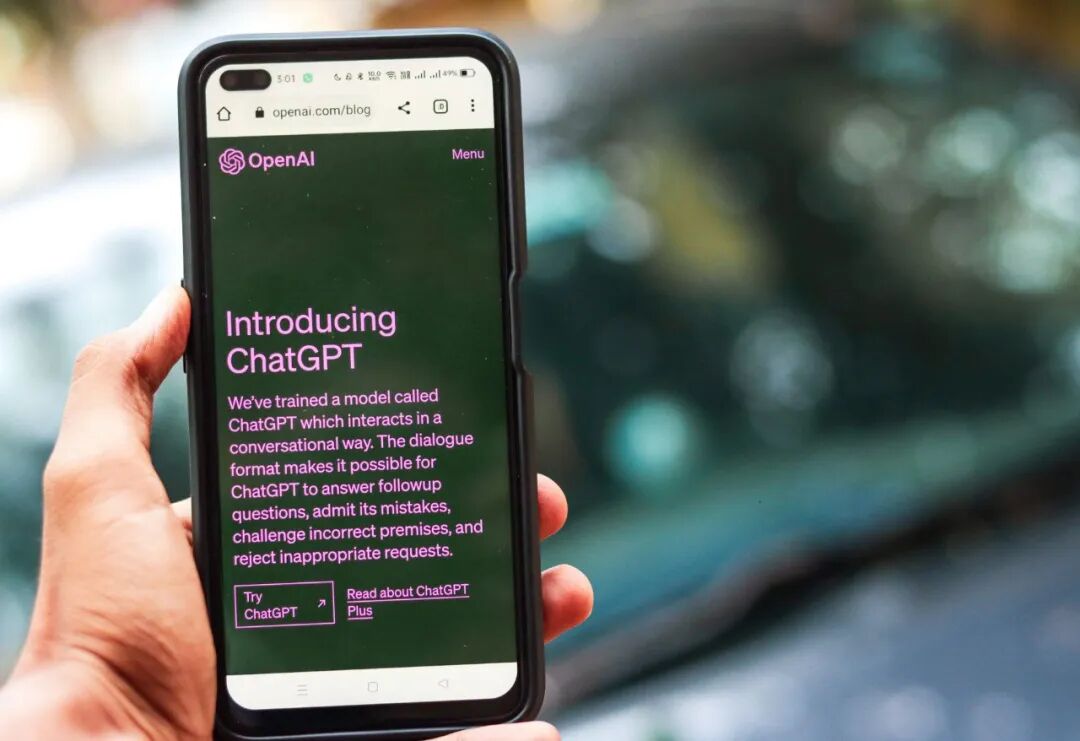
According to a report by Sina Finance, OpenAI recently announced that GPT-5.6 Luna would become the default model for Free and Go users starting immediately. From next week, users in both tiers will enjoy unlimited text-based chats. For complex queries, users can activate the "Think" feature, allowing the model more time to respond. However, file uploads, images, and other tools will still have usage limits, and anti-abuse measures will remain in place. OpenAI has also considered its paying customers. Plus and Pro users will gain access to the updated GPT-5.6 Sol, where quick answers and deep reasoning are handled by the same model, with adjustable thinking intensity via a slider.
Coinciding with OpenAI's move towards a free model, DeepSeek has taken a contrasting approach. On August 6, DeepSeek notified users via its backend that it planned to significantly increase the pricing of its DeepSeek API services in the near future.
On August 17, DeepSeek's new pricing was finally revealed. According to a report by China Economic Net, the latest adjusted pricing plan is as follows: During peak hours, V4 Pro will cost 9 yuan (a 200% increase) for every million tokens input (cache miss) and 27 yuan (a 350% increase) for output. For cache hits, the input cost is 0.3 yuan (a staggering 1100% increase). During off-peak hours, V4 Pro will cost 4.5 yuan for every million tokens input (cache miss) and 13.5 yuan for output, with cache hit inputs as low as 0.15 yuan. Thus, the highest increase for V4 Pro during peak hours reaches 1100%.
II. Why Has the Competitive Landscape of Large Models Suddenly Shifted?
Overseas, GPT has started offering pure text conversation capabilities for free, enabling ordinary users to access it without any barriers. In contrast, DeepSeek has announced a significant API price hike domestically. One model is reducing prices (or rather, offering free services), while the other is increasing them—these two diametrically opposite pricing strategies have left many in the market bewildered. What is the underlying reason?
Firstly, GPT's decision to go free is closely linked to the rise of domestic competitors like DeepSeek. The primary driver behind GPT's shift to a free model is the formidable ascent of domestic large models. This is an inevitable outcome of the combined effects of AI industry maturity and cost dynamics. The AI industry has evolved to a stage where model architecture iterations have far surpassed their initial, rudimentary phases. The continuous release of technological optimization benefits has driven down the operating costs of basic scenarios like pure text chats to negligible levels.
In the past, each interaction with a large model consumed substantial computational resources, making free offerings economically unfeasible. However, today, refined model structures have achieved a qualitative leap in computational efficiency, reducing the cost of pure text interactions to a minimal level. More critically, domestic models like DeepSeek have adhered to a long-term low-price competition strategy, continuously pushing down price baselines in the pure text domain and capturing market share through extreme cost-effectiveness.
This sustained low-price offensive has compelled GPT to reevaluate its pricing strategy. With controllable costs and intense competition, offering free services is no longer a profit-sacrificing gamble but an inevitable choice to defend market share and consolidate user bases. After all, in the pure text domain, acquiring users first grants the initiative for subsequent monetization.

Secondly, DeepSeek's price hike is justified by its own set of circumstances. The situation is entirely different for DeepSeek. This price increase is not about exploiting users but about addressing the inevitable cost pressures stemming from the evolution of model capabilities.
With the development of high-performance models like DeepSeek V4-Flash, a problem has emerged: AI is becoming "smarter," but this intelligence comes at a cost. The simple "you ask, I answer" model used to be inexpensive, but application scenarios have evolved. Programmers now use AI to write code, analysts to read financial reports, and enterprises for office automation. These scenarios demand exponential increases in the model's logical reasoning capabilities and context window requirements.
This leads to a phenomenon: Although the generation cost per token may remain unchanged or even decrease, the computational power and reasoning pathways required to complete a complex task multiply. The surge in daily token processing volume means computational consumption is like a faucet turned on full blast. Additionally, DeepSeek, within China's ecosystem, handles a large volume of API calls that might otherwise flow to overseas models. If it maintains its previous "lose money to gain market share" low-price strategy, its financial statements would become untenable. Any commercial entity must ultimately return to commercial fundamentals. Burning money to gain market share has its limits. When model capabilities reach a new level and service depth increases, price hikes become inevitable to support advanced reasoning capabilities.
Thirdly, domestic large models remain cost-effective even after price hikes. An interesting economic calculation reveals that US large model companies, while technologically advanced, generally incur higher computational, labor, and operational costs than their domestic counterparts. China boasts the world's most comprehensive supply chain for computational infrastructure and a large pool of highly efficient engineers who can maximize the utility of computational power.
When DeepSeek and others raise prices, they may only shift from "deep losses" to "slim profits" or "break-even." Meanwhile, GPT's pricing system still includes significant brand premiums. This gives domestic models substantial strategic leeway. In other words, even after raising prices, they remain cheaper than their US counterparts, and their Chinese language understanding and adaptability to local scenarios are stronger.
This cost advantage is the greatest source of confidence for domestic models. It allows them to adjust pricing strategies without fearing massive user loss. Because this is not just a price war—it's a value war. When users find that even with a slight price increase, the comprehensive cost of completing tasks is still lower than using GPT, the price hike is justified.

Fourthly, where is the competition among large models headed? The gap between domestic models and top US large models is continuously narrowing. In such a context, adopting different strategies has become a natural choice. Over the past few years, domestic models have been accustomed to playing the role of "chaser," using low prices and open-source strategies to secure survival space and ecological niches. But when the technological gap narrows to a certain point, and domestic products can provide experiences no worse than—or even superior to—competitors in certain vertical scenarios, continuing to play the "price cutter" is no longer optimal.
A new era of commercial competition is emerging, where the focus will shift from mere price and parameters to service stability, ecological completeness, deep integration in vertical scenarios, and the sustainability of business models. DeepSeek's price hike and OpenAI's free offering, while seemingly contradictory, are both preparations for this new era. They are trying to break free from single-dimensional competition and build a more multidimensional, healthier commercial ecosystem. This reflects the profound transformation of the global AI industry from "wild growth" to "intensive cultivation."
Finally, we must soberly recognize that the token business is far more challenging than imagined. Unlike oil or minerals, which face natural supply-side constraints, token supply is theoretically only limited by capital and electricity—both purchasable in the market. This means any short-term cost advantages established through technology or operations can be quickly erased by competitors using capital.
Therefore, neither GPT's free offering nor DeepSeek's price hike represents the final outcome but rather a new round in a longer, more complex game. The true winner won't be the player with the lowest price but the one who can develop the most sustainable and optimal business model.
END
Daily Quote: On life's journey, two things are invaluable: self-discipline and persistence. Self-discipline gives you strength, and persistence brings you rewards. Meeting the wrong person drains you, while meeting the right one heals you. The best self-discipline for adults is knowing when to cut losses. Everyone has obsessions, but they shouldn't lead to delusion. Letting go is the ultimate self-discipline for adults. Know when to stop, when to take profits, and when to withdraw—time waits for no one. A person's appearance reflects their value. It reveals your self-disciplined lifestyle and the life you're pursuing. — Bertrand Russell
Jiang Han's Perspective
Technology Knowledge, Han Hai Observations
-
![]()
New Energy Vehicle Penetration Soars to Record High in July, Triggering Accelerated Industry Transformation
-
![]()
Why Has the Pricing Strategy of Leading AI Models Shifted: GPT Goes Free While DeepSeek Raises Prices?
-
![]()
Luxury Fuel Vehicles Struggle to Compete: Audi A6L Prices Plummet Below 250,000 Yuan. Are BBA Trapped in a Downward Spiral?
-
![]()
Geely Automobile Bolsters 'One Geely' Initiative with Management Team Realignment, Including Shift in Li Shufu's Role
-
![]()
[In-depth Report] Building a Solid Foundation of Quality to Lead the New Development of the New Energy Vehicle Industry
-
![]()
VOYAH Pursuit S Seeks to Outshine YU7? VOYAH Aims for Top 3 in BEV Market with Spiral Growth Strategy | Mingjingpro
-
![]()
6 Years, 7 Models, 2 Generations, 3 Major Categories: VOYAH Is Not Missing Any Battle
-
![]()
Will Gasoline Vehicle Owners Opt for Electric Vehicles with a 1,000-Kilometer Range?