New Energy Vehicle Penetration Soars to Record High in July, Triggering Accelerated Industry Transformation
 08/18 2026
 364
364
Simultaneous Transformation in New Energy Brands, Products, and Profit Structures

China's automotive market in July 2026 presented a paradoxical scenario: new energy vehicle (NEV) penetration rates soared even as overall market volume contracted.
Data released by the China Passenger Car Association (CPCA) on August 11 revealed that NEV retail penetration reached 65.1% during the month, marking a new historical peak. This translates to two out of every three newly sold passenger vehicles being green-plated NEVs. However, total passenger vehicle retail sales declined 20.9% year-on-year to 1.461 million units, with NEV retail sales dropping 3.9% to 951,000 units.
The 65.1% penetration rate resulted not from NEVs "surging ahead" but from the "accelerated decline" of internal combustion engine (ICE) vehicles. July saw ICE vehicle retail sales plummet 41% year-on-year to just 510,000 units. This steeper decline in ICE vehicles compared to NEVs caused the penetration rate to rise passively amid market contraction.
The CPCA characterized July's automotive market as experiencing "persistent overall pressure, weakening month-on-month performance, and extreme structural differentiation." This contraction is driving intense transformation across three key dimensions simultaneously.
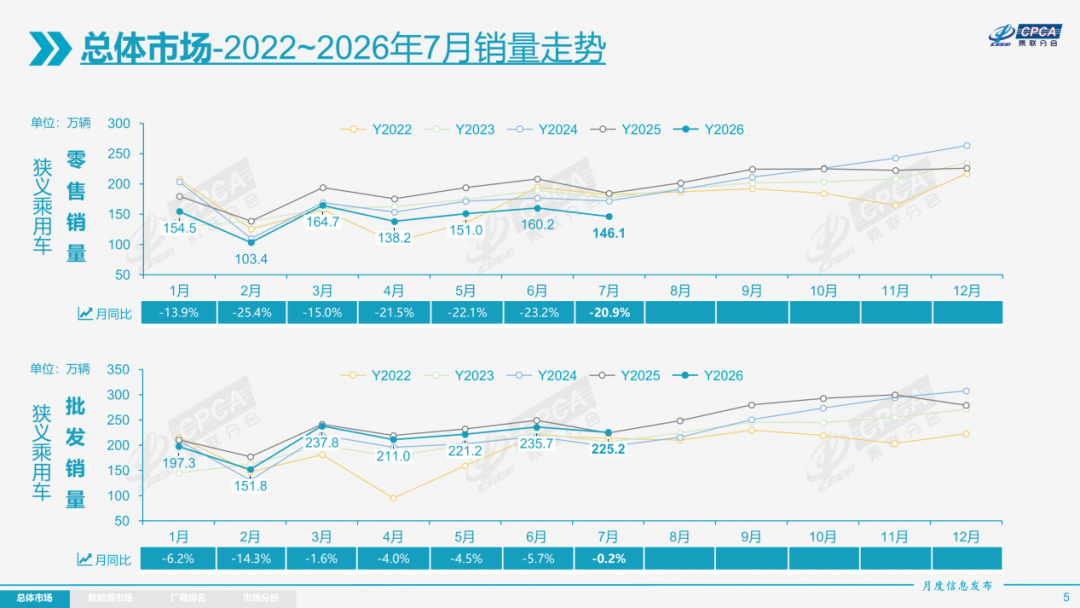
Image Source: China Passenger Car Association

Transformation Across Brands, Products, and Profits Amid Market Contraction
The competitive landscape for NEV brands has fundamentally shifted over the past five years.
In July 2026, domestic brands captured 71.0% of the retail market, up 5.4 percentage points year-on-year. Among joint venture brands, German, Japanese, and U.S. brands saw their shares decline to 12.4%, 10.9%, and 4.2% respectively. Just five years earlier, German brands held over 20% annual market share, Japanese brands approximately 23.2%, and U.S. brands 9%. In this short period, German brands nearly halved their market presence, while Japanese and U.S. brands lost more than half.
Beyond volume disparities, the divergence in NEV penetration rates was even more striking. Domestic brands achieved an 83.8% NEV penetration rate, while mainstream joint ventures lagged at just 13.7%. This means that for every 10 vehicles sold by domestic brands, over 8 were NEVs; for joint ventures, over 8 of every 10 vehicles sold remained ICE models.
The overall contraction of the ICE vehicle market directly impacts joint venture brands, whose core customer base remains concentrated in this segment. The gap between domestic and joint venture brands reflects fundamentally different strategic assessments of the industry's trajectory: one accelerating full-speed on the new energy track, while the other hesitantly adjusting on the traditional path.
The product dimension is also undergoing profound value restructuring. In early August, J.P. Morgan's analyst team conducted field visits to multiple brand stores in Shanghai, summarizing their observations with the phrase "bigger, better, and cheaper" in their research report.
Large SUVs measuring 5.3 meters in length with wheelbases exceeding 3 meters are now priced at just 200,000 to 250,000 yuan. Three to four years ago, vehicles of similar size typically commanded prices above 400,000 yuan.
This price restructuring exerts pressure on two categories of brands: those priced above 450,000 yuan, including NIO, Li Auto, and Huawei, can no longer rely solely on size advantages to justify premium pricing and must establish genuine differentiation through technology and user experience. Traditional luxury brands priced between 250,000 and 350,000 yuan but offering smaller vehicles, such as the BMW iX3 and Mercedes-Benz GLC, also face competition as younger consumers lack sufficient reasons to pay higher prices for smaller models.
J.P. Morgan predicts that only a few models will achieve stable sales in this fiercely competitive segment, including BYD's Tang, Haishi 08, Fangchengbao Titan 09, NIO ES9, Seres M8, and Leapmotor D19.
The profit structure is also undergoing dramatic changes. In the first half of 2026, the automotive industry generated 5,189.3 billion yuan in revenue, up 1.8% year-on-year, but profits fell 20% to 195.4 billion yuan. The industry's profit margin stood at just 3.8%, far below the 6.5% average for downstream industrial enterprises.
The intensity of price wars is evident from discount data. The industry's average discount rate narrowed from a February peak of 17.6% to 15.4% in July, but discounts for German luxury brands continued to widen: Mercedes-Benz around 25%, Audi at 30%, and BMW at 26%.
Zhang Xiang, a visiting professor at Huanghe Science and Technology College, told Securities Daily that the decline in demand for ICE vehicles is unlikely to reverse in the short term, with unprofitable models accelerating their exit from the market. Joint venture brands continue to contract and adjust, with some having officially withdrawn from the Chinese market.
Price cuts have failed to significantly boost sales, and the marginal effect of price wars is gradually diminishing.

J.P. Morgan Store Visits: Leading Brands Face Extended Wait Times, Struggling Brands Offer Deep Discounts
While macro data outlines the contours of industry transformation, J.P. Morgan's store visits reveal its "temperature." In early August, the analyst team visited multiple brand stores in Shanghai, including BYD, NIO, Li Auto, Xiaomi, and Tengshi, engaging with sales staff and some visiting consumers.
The disparity in foot traffic among different brand stores was striking. Some brands drew crowds, with display vehicles surrounded by people, while others saw more sales staff than customers.
On the busy side, BYD sold 419,000 NEVs in July, up 21.8% year-on-year. Models like the Tang faced wait times of about two months, with trade-in subsidies of 10,000 yuan for existing owners and 6,000 yuan for new owners. However, actual wait times extended to three to four months—not due to lack of demand, but inability to deliver. Leapmotor delivered 101,267 units in July, up 102% year-on-year, surpassing 100,000 units in a single month for the first time.
NIO delivered 35,934 units in July, up 71% year-on-year. The ES9's higher trim levels faced wait times of about four months, with orders skewing toward these trims. At Tengshi and NIO stores, buyers generally preferred higher-configuration versions. Models with strong product competitiveness maintained pricing power even amid price wars.
Citibank, in an expert conference call summary released on August 12, provided July order data for cross-verification. According to Citibank's experts, Leapmotor's monthly deliveries in the second half of the year could reach 120,000 to 130,000 units.
On the quiet side, Li Auto delivered 30,468 units in July, offering discounts of 10,000 yuan on the new L9 and 5,000 yuan on the i6. The recently updated i8 had no discounts during the visit. J.P. Morgan judges that Li Auto faces intensifying product overlap competition in the 5- to 6-seat large SUV segment.
Citibank experts believe Li Auto's product lineup is more complete (with the i9 launching soon and the i6 due for an update), and the company aims to push i6 sales to 20,000 units per month. Seres faces constraints from the M6 delivery bottleneck, the M9's sales ceiling, and consumer hesitation during the M8/M9 model transition.
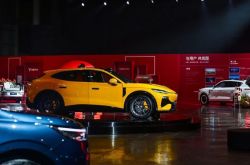
Xiaomi's Sky Nomad presents a wildcard. With pre-sale prices of 259,900 yuan and 299,900 yuan, store sales revealed that the official pricing in September might be about 10% lower than the pre-sale prices. Citibank experts predict cumulative refundable pre-orders could exceed 100,000 before launch. However, competitors' sales staff mentioned that Xiaomi's use of CALB battery cells, recently linked to quality issues in the news, might psychologically impact some buyers.
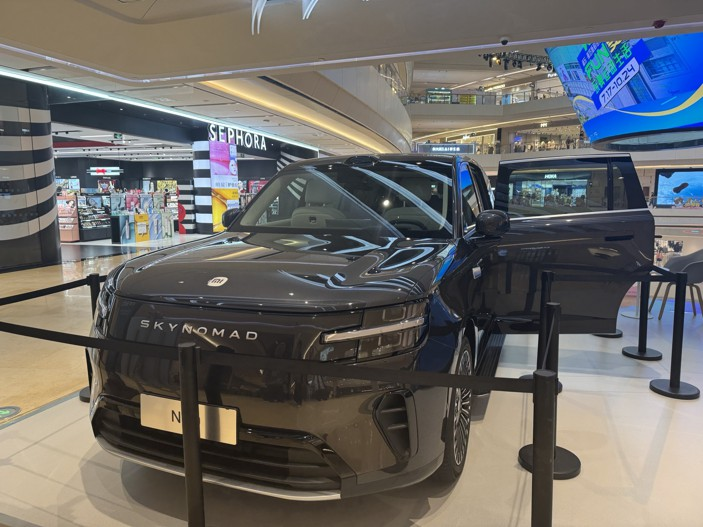
Figure: Xiaomi Sky Nomad exterior design
Source: Shanghai, August 7, 2023, J.P. Morgan
The temperature difference between busy and quiet stores reveals a single truth: demand is not evenly distributed but highly concentrated. The newest and most precisely positioned models can sustain months-long waiting lists and strong pricing power, while weaker models fall into a vicious cycle of deeper discounts and fewer buyers.

Exports: The Sole Pillar of Growth in a Challenging Domestic Market
Against the backdrop of sustained domestic demand pressure, exports have become the most critical supporting force.
In July, vehicle exports reached 1.043 million units, up 0.6% month-on-month and 81.3% year-on-year, surpassing 1 million units for the second consecutive month. NEV exports hit 553,000 units, up 5.7% month-on-month and 145.5% year-on-year, accounting for over 50% of exports for the second straight month.
For passenger vehicles, July exports totaled 918,000 units, up 87.8% year-on-year, representing 41% of passenger vehicle manufacturers' sales, compared to just 21% in the same period of 2025. NEV passenger vehicle exports reached 540,000 units, up 147.8% year-on-year, accounting for 58.8% of passenger vehicle exports.
Cui Dongshu stated that exports continue to play a stabilizing role, effectively supporting automakers' wholesale volumes and production capacity while alleviating domestic retail pressure.
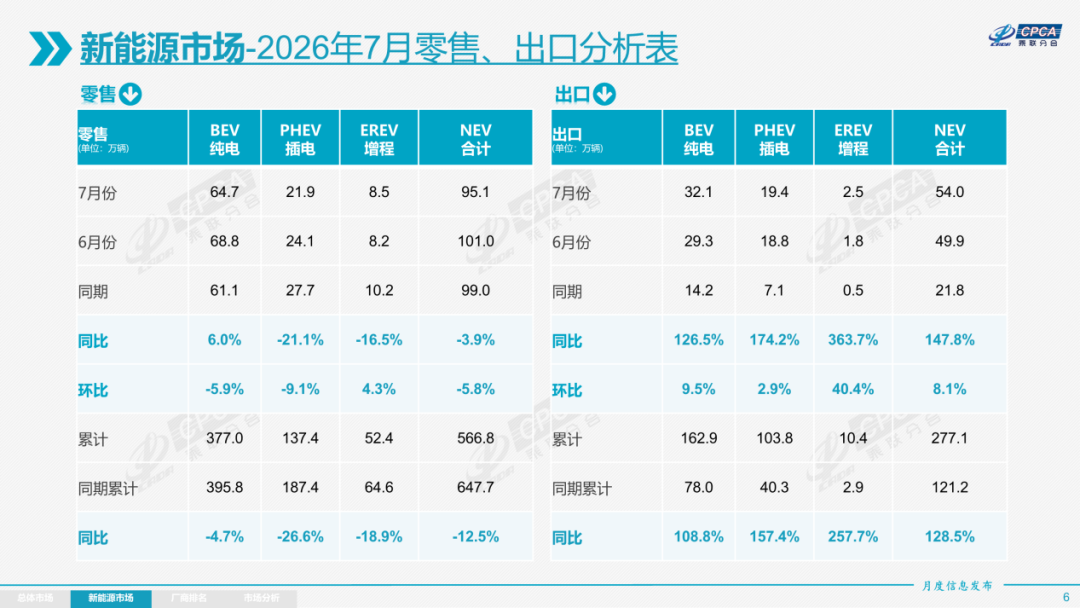
Image Source: China Passenger Car Association

65.1% Penetration: Not the Finish Line, But the Starting Line of a New Competition
China's automotive market is completing a fundamental shift from policy-driven to product-driven growth and from price competition to value competition.
In his interpretation of July data, Cui Dongshu noted that the continuous breakthrough in NEV penetration rates, coupled with the concentrated launch of new national standard-compliant products on the supply side, indicates a full-scale industry transition from price competition to value competition.
Looking ahead, Cui predicts that the auto market will bottom out and begin recovery in August. As consumer stimulus policies gradually take effect and year-on-year base effects improve, the decline in passenger vehicle sales will steadily narrow, setting the stage for the traditional "Golden September and Silver October" sales peak.
Citibank experts forecast that August sales could grow by 5% to 8% month-on-month. However, recovery does not equate to reversal. J.P. Morgan expects domestic retail declines to narrow to 15% in the third quarter and to single digits in the fourth quarter. The worst has passed, but the market has not fully emerged from difficulties.
The competition logic in the second half is clear: value competition is no longer just about stacking features or undercutting prices but a comprehensive contest of technology, branding, and ecosystems. Companies that only know how to build "cheap cars" are being eliminated, while brands with genuine technological strength and product competitiveness are just beginning to reap rewards.
For every three vehicles sold, two bear green license plates. But the value of those green plates is shifting from policy incentives to product strength.
As subsidies fade, price wars reach their limits, and consumers become more discerning, 65.1% is no longer the finish line but the starting line of a new competition.
One era is ending; another is just beginning.
Information Source Disclosure
Data and Announcement Sources: CPCA's July 2026 National Passenger Vehicle Market Data, China Association of Automobile Manufacturers' July 2026 Production and Sales Data
Research Report Sources:
J.P. Morgan, "China Auto Industry: Our Store Visits in Shanghai," August 12, 2026
Citibank, "China Auto Manufacturers Expert Call Takeaways with Mr. Liu," August 12, 2026
China Passenger Car Association, "July 2026 National Passenger Vehicle Market Analysis," August 11, 2026
Reporting Sources:
Securities Daily, "New Energy Vehicle Penetration Rate Continues to Rise in July," August 14, 2026
The Paper, "July Auto Market Experiences Phase-Specific Structural Fluctuations," August 14, 2026
Disclaimer: This article is for reference only and does not constitute investment advice.
Copyright and Disclaimer Statement
1. Content Copyright: Except for quoted public data, policies, and cases, all content is original. Professional data is sourced from authorized databases and government websites, with cases compiled from real events
-
![]()
New Energy Vehicle Penetration Soars to Record High in July, Triggering Accelerated Industry Transformation
-
![]()
Why Has the Pricing Strategy of Leading AI Models Shifted: GPT Goes Free While DeepSeek Raises Prices?
-
![]()
Luxury Fuel Vehicles Struggle to Compete: Audi A6L Prices Plummet Below 250,000 Yuan. Are BBA Trapped in a Downward Spiral?
-
![]()
Geely Automobile Bolsters 'One Geely' Initiative with Management Team Realignment, Including Shift in Li Shufu's Role
-
![]()
[In-depth Report] Building a Solid Foundation of Quality to Lead the New Development of the New Energy Vehicle Industry
-
![]()
VOYAH Pursuit S Seeks to Outshine YU7? VOYAH Aims for Top 3 in BEV Market with Spiral Growth Strategy | Mingjingpro
-
![]()
6 Years, 7 Models, 2 Generations, 3 Major Categories: VOYAH Is Not Missing Any Battle
-
![]()
Will Gasoline Vehicle Owners Opt for Electric Vehicles with a 1,000-Kilometer Range?