Will Gasoline Vehicle Owners Opt for Electric Vehicles with a 1,000-Kilometer Range?
 08/18 2026
 487
487

Lead
Introduction
These advancements reflect progress in battery technology and the commitment of automakers. However, they may not necessarily represent a rigid demand (essential need) for users.
It is an undeniable fact that the new energy vehicle (NEV) market has witnessed exponential growth. According to the China Passenger Car Association, the market penetration rate of NEV passenger vehicles in China surpassed 60% in 2026. NEV models are steadily replacing traditional fuel vehicles and emerging as a significant choice for families purchasing cars.
However, as the market expands, the trend of homogeneous competition within the industry has not subsided; instead, it has permeated various aspects of product development, pricing, and configuration, leading to increasingly fierce competition.
Reviewing the iterative paths of NEV models in recent years, it is evident that the competitive landscape for automakers has continuously broadened. From fundamental aspects such as body size, interior space, and materials to advanced features like intelligent cockpits, assisted driving, and overall vehicle energy consumption control, every parameter and configuration has become a focal point of competition among automakers.
Among all product selling points, driving range remains one of the core indicators that consumers perceive most intuitively and that significantly influences their decision-making.
A large number of potential users who remain hesitant about electric vehicles (EVs) cite insufficient range and inconvenient charging as their primary concerns. It can be said that the strength of a vehicle's range directly determines whether consumers are willing to abandon fuel vehicles and opt for NEV models; it is also crucial for automakers to drive market growth.
Today, significant progress has been made in battery energy density, safety, and cost control. In the early years, the CLTC range of mainstream pure electric models was limited to 400 to 500 kilometers, with a maximum of 650 kilometers. Now, a substantial number of mass-produced models have surpassed the 1,000-kilometer range barrier, effectively doubling the range parameters. Several mass-produced models have officially announced breakthroughs in achieving a range of over 1,000 kilometers, marking a significant increase in range capabilities.
This has sparked a discussion: Is the push by automakers to achieve ranges exceeding 1,000 kilometers a rigid demand (essential need) for consumers?
01 1,000 Kilometers Becomes the Norm, and Ultra-Long Ranges Become Widespread
In the early stages of NEV adoption, range anxiety was a core pain point that constrained industry development and hindered user purchases.
At that time, domestic power battery technology was not yet mature, with generally low battery energy density. Coupled with high vehicle manufacturing costs and imperfect overall vehicle energy consumption management systems, the CLTC range of mainstream mass-produced pure electric models was generally below 500 kilometers.
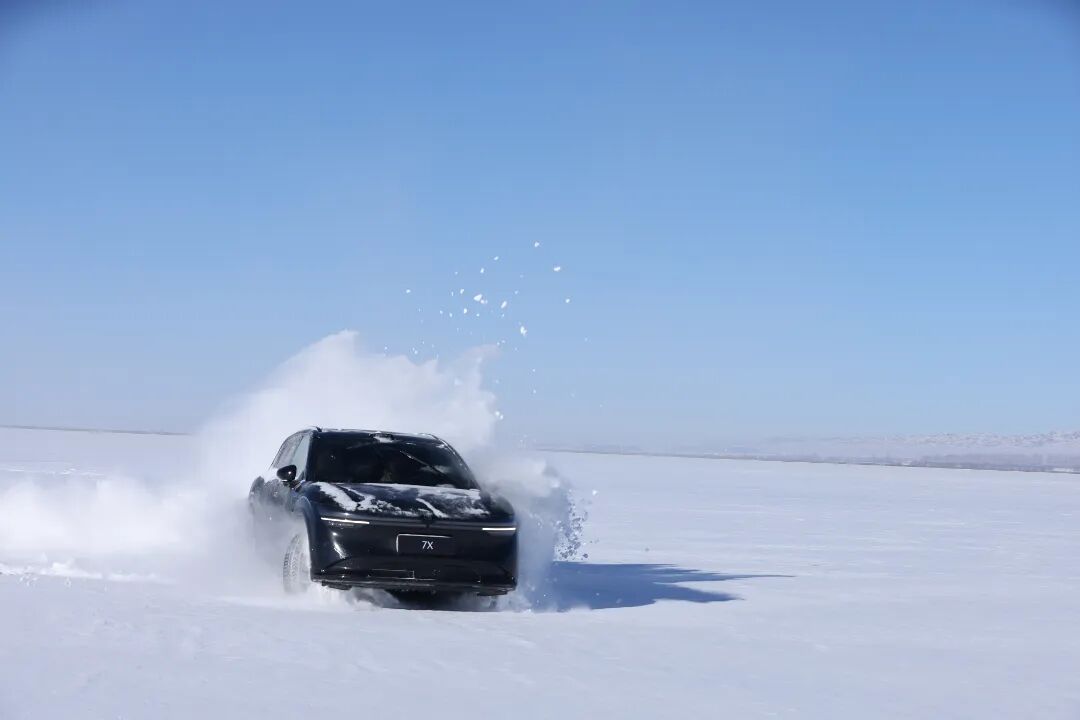
The limited driving range significantly restricted the usability radius of electric vehicles. Compared to fuel vehicles, which offered stable range and convenient refueling, the practicality gap was evident. While daily urban short commutes could be met, users became hesitant when it came to intercity travel or long-distance self-drive trips, as electric vehicles remained confined to the role of a "commuting tool."
Low-temperature environments were another major weakness of early electric vehicles.
Industry testing data showed that in northern winter low-temperature conditions, the activity of batteries in first-generation pure electric models significantly decreased, with actual range reductions generally reaching 40% to 60%. A stated range of four to five hundred kilometers would be effectively halved, leading users to avoid turning on the heater or traveling long distances in winter, constantly worried about the vehicle running out of power and stranding them.
Meanwhile, the construction of domestic charging infrastructure lagged, with scarce charging points in highway service areas, rural towns, and remote scenic spots. Issues such as difficulty in finding charging stations, slow charging speeds, and limited availability were widespread.
The combination of these multiple shortcomings not only led fuel vehicle users to continuously criticize the lack of practicality in electric vehicles but also caused many potential consumers to adopt a wait-and-see attitude, significantly limiting the expansion speed of the NEV market.
Today, with the continuous maturation of the domestic power battery industry chain, core technological bottlenecks have been gradually overcome.
Battery energy density has steadily increased, while the unit cost of battery installation has significantly decreased. Coupled with lightweight vehicle design and optimization of the overall thermal management system, automakers have completely broken free from the cost and hardware constraints of range upgrades, making the mass production of ultra-long-range models the norm.
For example, the Denza Z9S, which began pre-sales on August 3, 2026, relies on second-generation blade battery technology and extreme energy consumption optimization. The single-motor flagship version achieves a CLTC pure electric range of 1,100 kilometers, setting a new record for mass-produced pure electric sedans and marking a new height in civilian pure electric range technology.
More critically, a range of 1,000 kilometers is no longer exclusive to high-end flagship models but is rapidly becoming accessible to the mainstream market. Currently, Zeekr, NIO, and BYD's high-end series have all launched mass-produced models with a range of over 1,000 kilometers, with a range competition taking shape in the high-end market.
The pace of iteration in the mainstream family market has been even more rapid. In the past two months, BYD's Wangchao, Ocean, and Fangchengbao product lines have collectively launched new models and completed iterations, with the CLTC range of mainstream family pure electric models priced around 200,000 yuan generally exceeding 800 kilometers, significantly raising the range standards for family models.
Furthermore, SAIC MG's pure electric coupe, the MG07, launched at the end of July 2026, starts at a pre-sale price of just 125,900 yuan, with high-end versions achieving a CLTC range of 845 kilometers. In other words, vehicles priced just over 100,000 yuan now come equipped with ranges exceeding 800 kilometers, significantly lowering the entry barrier for ultra-long-range models.
But does the current product value system for family vehicles truly need to be reconstructed around a range of 1,000 kilometers?
02 Essential Need or Non-Essential Need
As the entire industry races to achieve ranges exceeding 1,000 kilometers, a critical industry question needs to be clarified: Is a range of 1,000 kilometers or more truly an essential need in ordinary family driving scenarios?
Based on domestic user driving data and daily travel scenarios, the vast majority of urban family users simply do not require a range of 1,000 kilometers; high-end, long-range configurations are already exhibiting significant performance excess.
Domestic urban commuting statistics show that users in first-tier cities like Beijing, Shanghai, Guangzhou, and Shenzhen drive an average of less than 50 kilometers per day, with even shorter commutes in second- and third-tier cities. Daily travel primarily consists of short commutes, with extremely low energy consumption needs.
Currently, mainstream pure electric models priced around 200,000 yuan offer a CLTC range of approximately 650 kilometers, which is sufficient to fully meet the travel needs of ordinary families. Even when factoring in weekend short trips or holiday outings to nearby areas, the overall energy consumption is limited, requiring charging only once a week, without affecting daily driving convenience.
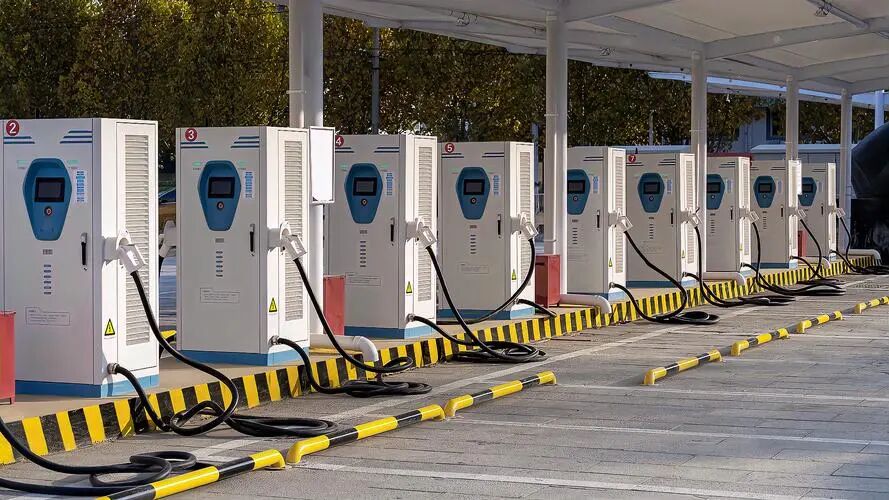
In contrast, the improved charging frequency brought by a 1,000-kilometer range, such as charging once every two weeks or once a month, offers minimal perceptible benefits to ordinary users and may not translate into substantial driving advantages. For users based in cities with fixed charging conditions, blindly pursuing a range of 1,000 kilometers is not a necessity.
Even for long-distance self-drive trips and intercity travel, a range of 1,000 kilometers remains non-essential.
From the perspective of human driving patterns, most drivers do not continuously drive for more than four hours at a time, as driving over 500 kilometers continuously can easily lead to fatigue, necessitating stops for rest and meals. Currently, the construction of new energy charging infrastructure in China has become increasingly mature, with charging stations now generally available in service areas along major national highways. Some service areas have implemented license plate-based entry and orderly charging models, completely resolving the old issues of competition for charging stations and difficulty in charging, significantly improving the convenience of long-distance charging.
At the same time, the widespread adoption of ultra-fast charging technology has further diminished the irreplaceability of ultra-long ranges.
Today, 800V high-voltage platforms and 5C ultra-fast charging technology have become mainstream configurations in mid- to high-end models, with charging efficiency comparable to refueling a fuel vehicle. Many models can achieve efficient charging within 15 minutes. Users can quickly replenish several hundred kilometers of range during rest stops on long-distance trips, fully supporting the subsequent journey without relying solely on extreme long-range capabilities.
Of course, this is contingent on automakers eliminating significant range overestimation issues and ensuring reasonable deviations between a model's actual range under real-world conditions and its stated range. A mainstream range of 600-800 kilometers is sufficient to cover the full range of travel needs for the vast majority of users.
From a long-term industry perspective, blindly increasing battery capacity and range is also a manifestation of an internal competition model. Ultra-large-capacity batteries increase the vehicle's curb weight, raise purchase and usage costs, significantly increase energy consumption in urban low-speed driving conditions, contradicting the core purpose of NEVs to promote energy conservation and low carbon emissions, and also resulting in waste of battery raw material resources.
While a range of 1,000 kilometers serves as a technical endorsement and marketing need for brands, and some users may genuinely require it, it is not currently a core essential need for users.
More important than a range of 1,000 kilometers is for automakers to match tiered and reasonable range configurations based on different user scenarios, such as commuting, short trips, long-distance travel, and commercial operations, achieving the optimal balance between range, energy consumption, and charging efficiency.
Editor-in-Chief: Cao Jiadong Editor: He Zengrong

THE END
-
![]()
New Energy Vehicle Penetration Soars to Record High in July, Triggering Accelerated Industry Transformation
-
![]()
Why Has the Pricing Strategy of Leading AI Models Shifted: GPT Goes Free While DeepSeek Raises Prices?
-
![]()
Luxury Fuel Vehicles Struggle to Compete: Audi A6L Prices Plummet Below 250,000 Yuan. Are BBA Trapped in a Downward Spiral?
-
![]()
Geely Automobile Bolsters 'One Geely' Initiative with Management Team Realignment, Including Shift in Li Shufu's Role
-
![]()
[In-depth Report] Building a Solid Foundation of Quality to Lead the New Development of the New Energy Vehicle Industry
-
![]()
VOYAH Pursuit S Seeks to Outshine YU7? VOYAH Aims for Top 3 in BEV Market with Spiral Growth Strategy | Mingjingpro
-
![]()
6 Years, 7 Models, 2 Generations, 3 Major Categories: VOYAH Is Not Missing Any Battle
-
![]()
Will Gasoline Vehicle Owners Opt for Electric Vehicles with a 1,000-Kilometer Range?