NetEase: Still Relying on Legacy Assets Without Burning Money, But With Strong Financial Foundations
 08/21 2026
 453
453
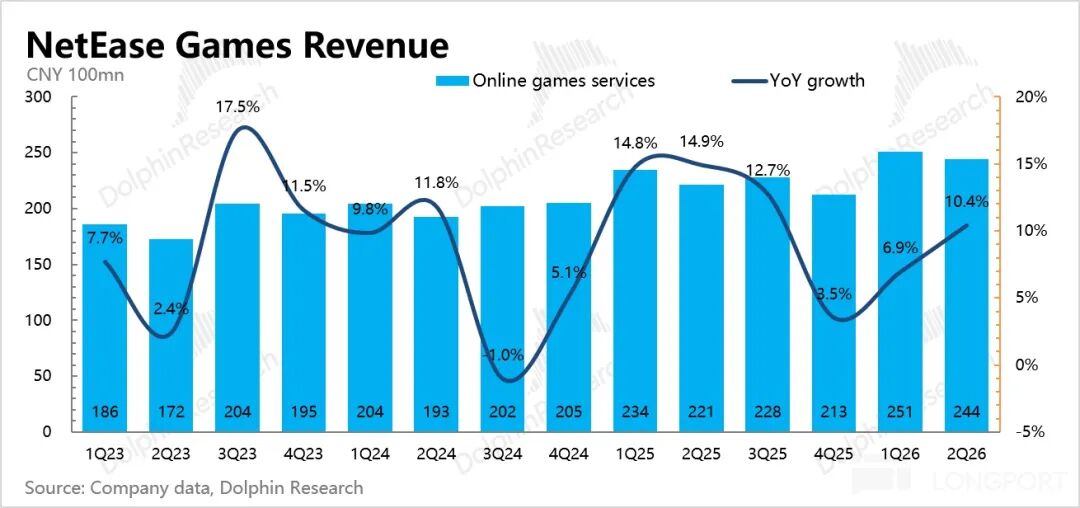
NetEase released its financial results for the second quarter of 2026 after the market closed on August 20 (Beijing Time). Q2 performance was decent, though profits appeared to miss expectations primarily due to investment losses. Core business profits continued to grow strongly, driven by an increased share of self-developed games and tight cost controls. The main drawback remained the revenue pressure caused by a gap in new game releases, which was already reflected in deferred revenue for Q2.
A detailed breakdown:
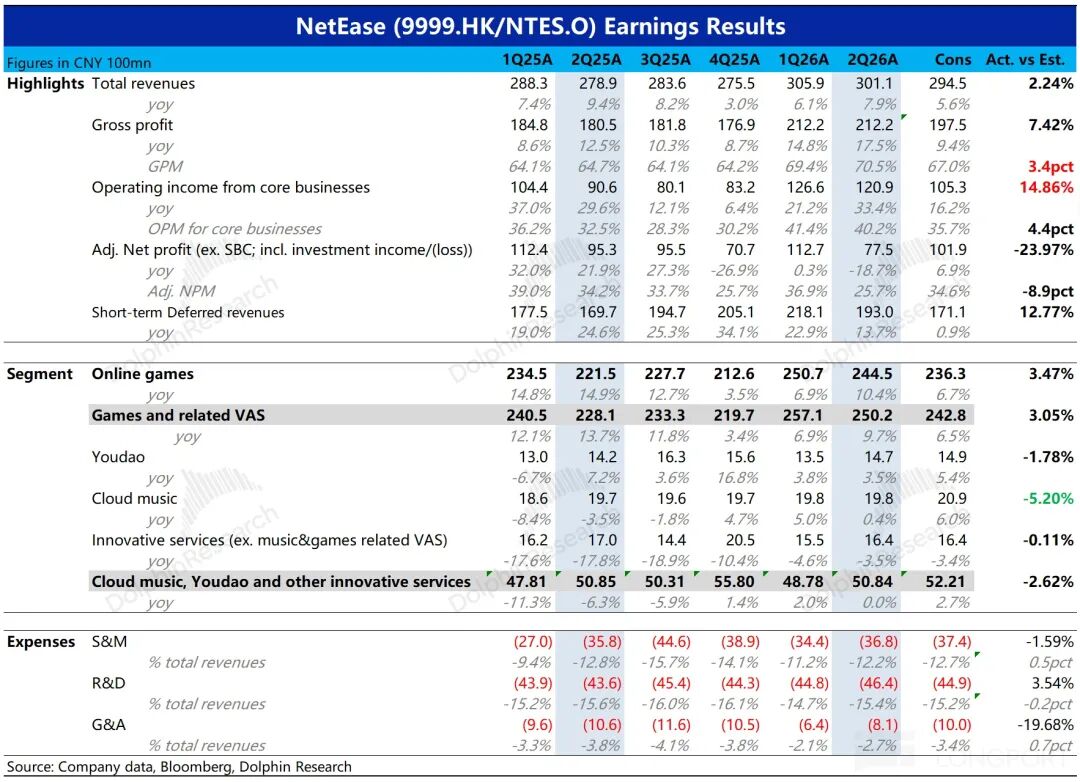
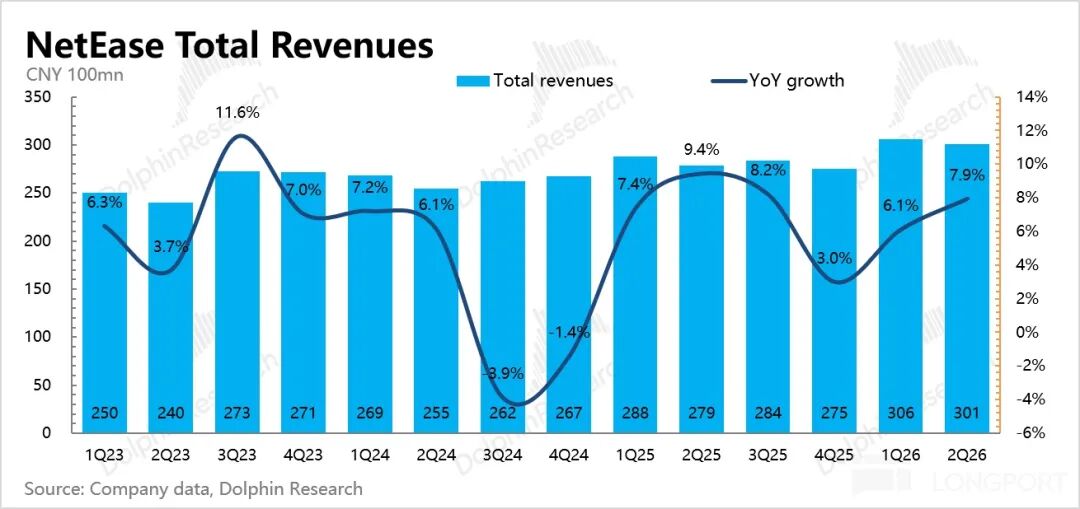
1. Overall slightly exceeding expectations: Total revenue reached RMB 30.1 billion, an 8% year-over-year increase, primarily driven by the core gaming business.
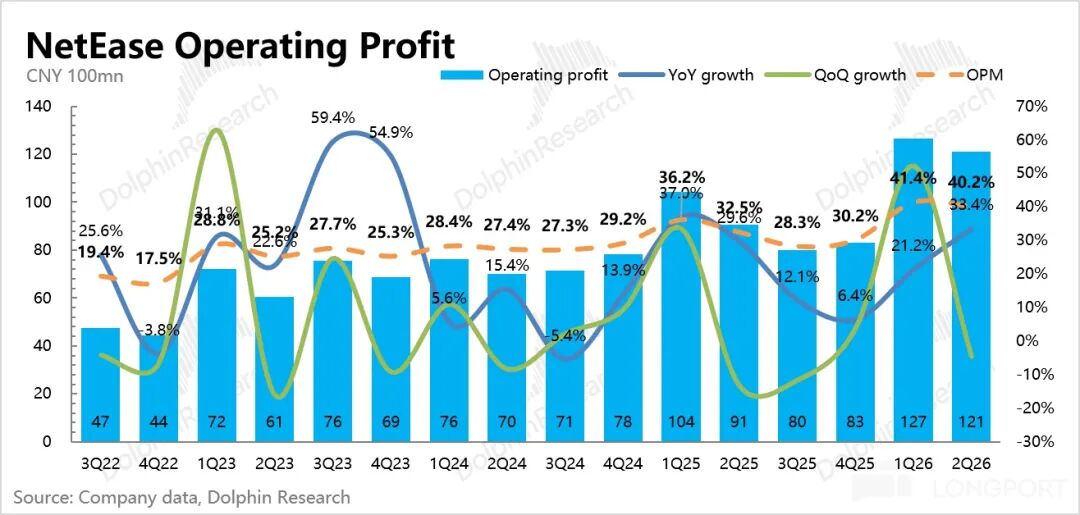
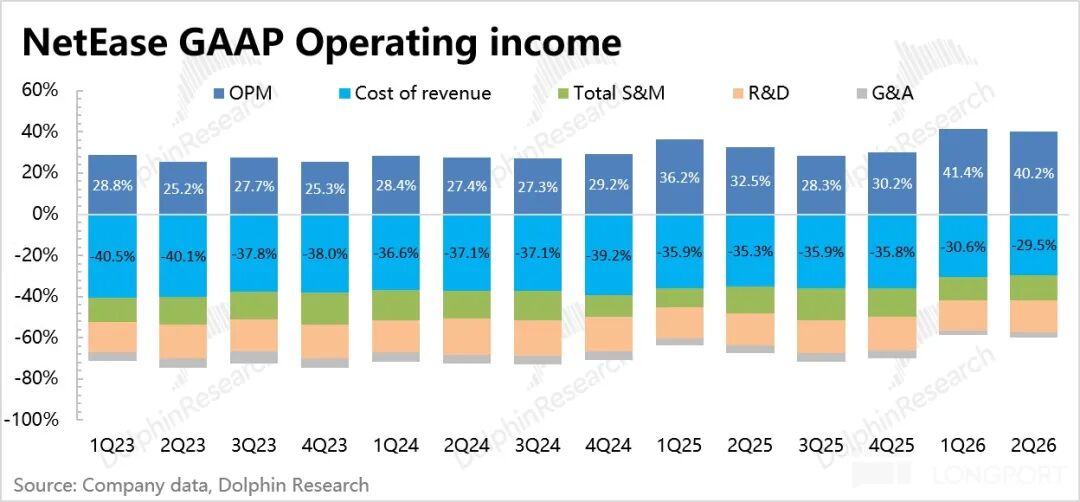
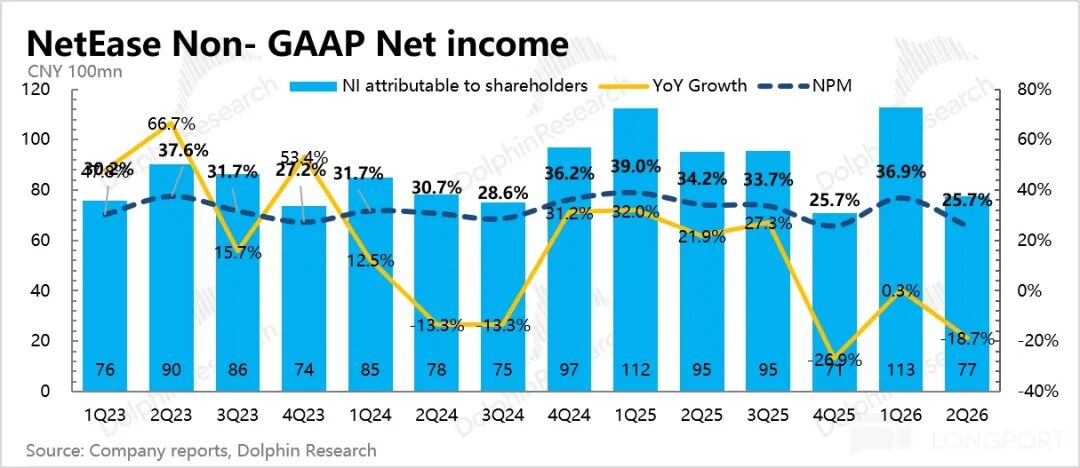
Core profits stood at RMB 12.1 billion, with a profit margin of 40%, up nearly 8 percentage points year-over-year. Adjusted profits (excluding only share-based compensation expenses but including investment gains/losses, interest income, and foreign exchange impacts) were RMB 7.8 billion, a 19% year-over-year decline. The drop was mainly due to investment losses, with a net loss of RMB 3 billion this quarter compared to a net gain of RMB 300 million last quarter, creating a RMB 3.3 billion gap.
2. Steady gaming growth, but reliance on evergreens continues in the second half: Revenue grew by 10% quarter-over-quarter, driven by new releases like Starry Skies and Sunny Days and evergreen titles such as Fantasy Westward Journey, Yan Yun's Sixteen Sounds, and Eggy Party.
As one of the few new releases this year, Forgotten Seas underperformed after its open beta in July. The main issue was an overload of gameplay mechanics, creating a steep learning curve that alienated casual gamers. Technical issues like device lag and overheating, though quickly addressed, had already tarnished the player's first impression.
Investment banks downgraded Forgotten Seas' first-year revenue projections from the RMB 3 billion range to RMB 1-2 billion. The second half of the year will see only one “semi-new” game—the mobile version of Fantasy Westward Journey: New Encounter, which differs from the original mobile game by sharing data with the PC version's “free-to-play” server. This is essentially an extension of the “Fantasy IP + free-to-play” trend and cannot be viewed as a standalone new game driving incremental growth.
The next product cycle is expected next year, at the earliest by late Q4. Fortunately, a lower base in the second half will ease some revenue growth pressure.
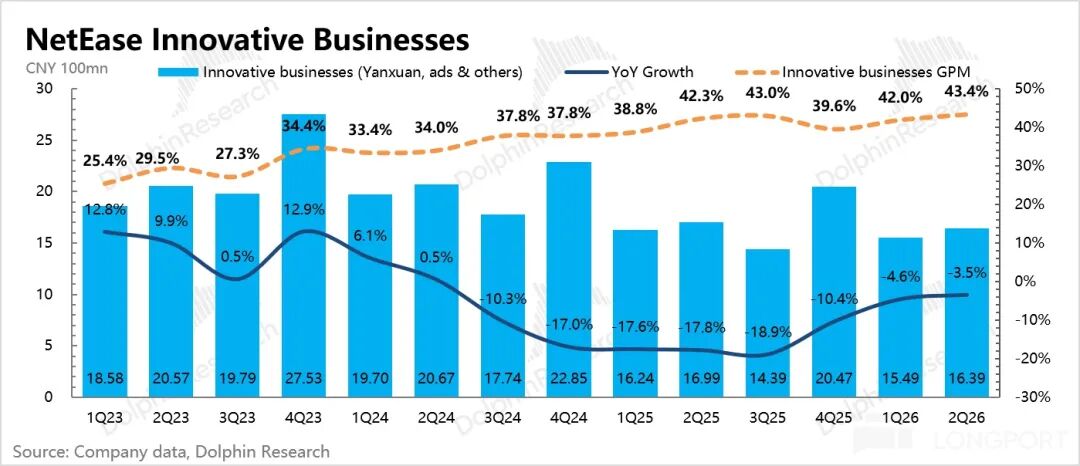
3. Other businesses remain lackluster but have minimal impact on the group due to their small share: Since non-gaming businesses provide little support for NetEase's performance and valuation and are underperforming individually, Dolphin Research generally does not discuss them in detail.
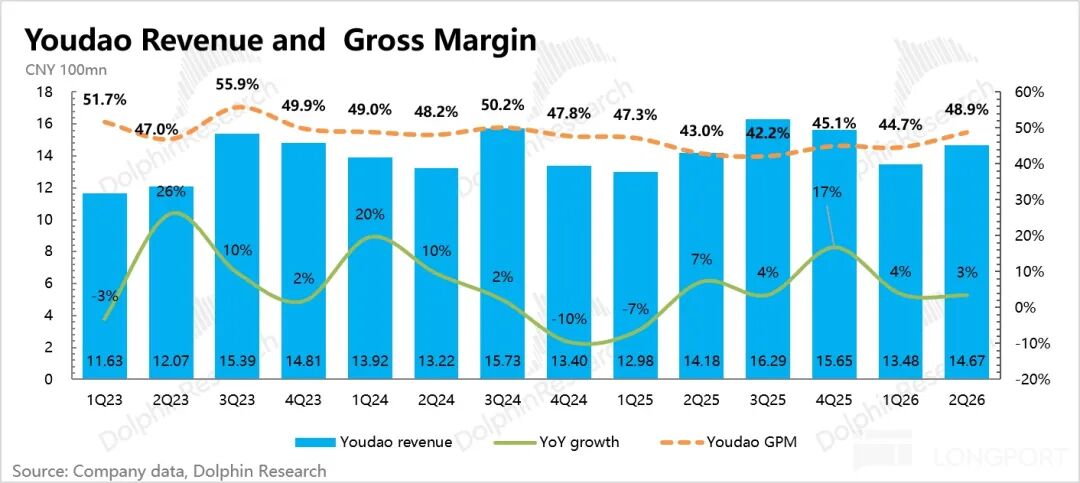
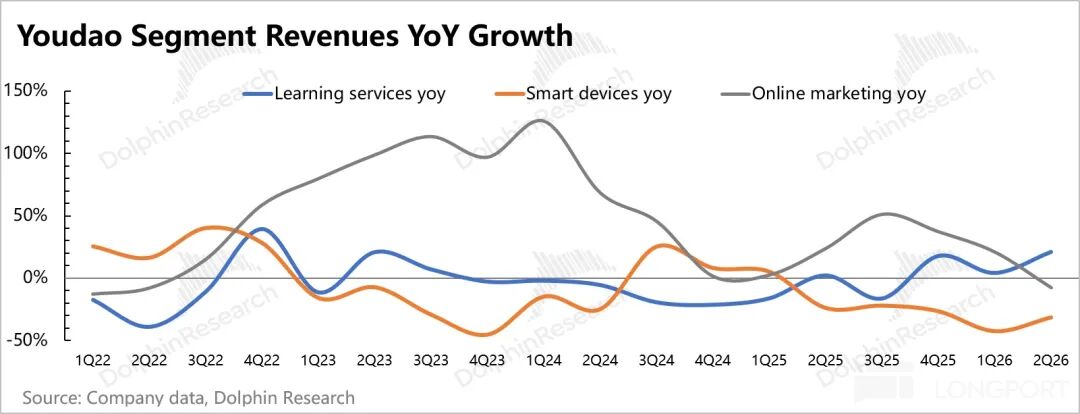
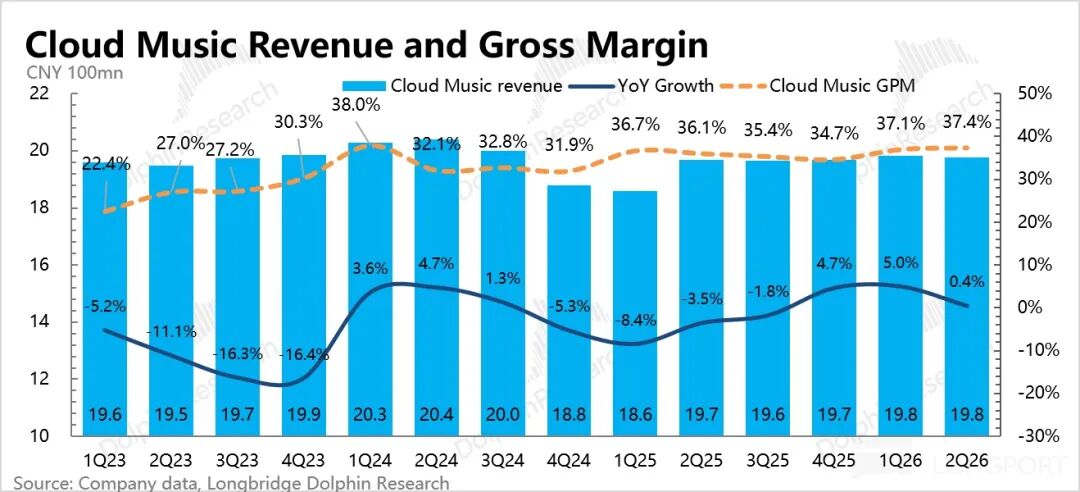
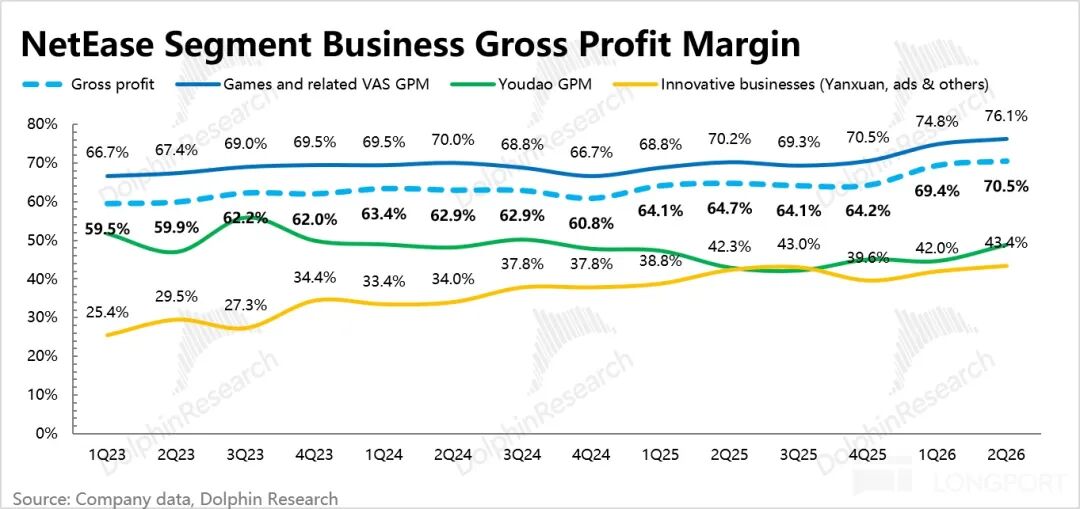
Youdao continued to see modest growth of 3.5%, dragged down by declining learning tablet sales (due to competition), which offset the sustained recovery of online courses. Cloud Music faced the same issues as Tencent Music, with competition from short video platforms and erosion of user engagement by short dramas, keeping revenue flat year-over-year.
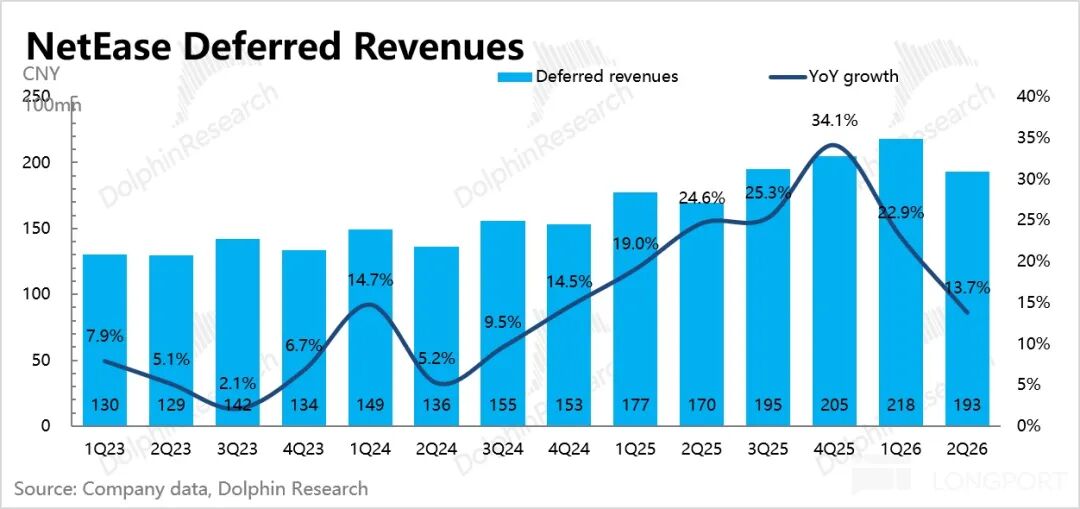
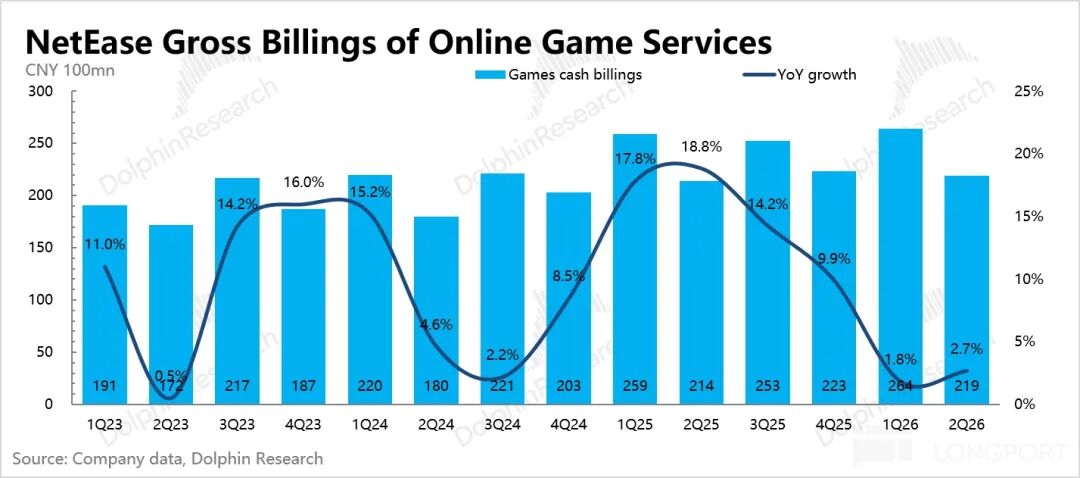
4. Deferred revenue confirms product gap issues: Q2 deferred revenue (to be recognized within one year) was RMB 19.3 billion, with growth slowing to 14% year-over-year and a net quarterly decline of 12%. This decline was sharper than typical seasonal fluctuations (which historically peaked at high single-digit percentages), reflecting relatively weak current revenue performance. Dolphin Research calculates revenue growth at less than 3%.
This indicates that despite the incremental boost from the new game Starry Skies and Sunny Days and the 11th-anniversary collaboration event between Fantasy Westward Journey Mobile and Chinese Paladin 3, which drove daily active users to a new post-2017 high, Q2—like Q1—lacked new game releases. Relying solely on operational activities from a few evergreen titles was insufficient to fully offset the natural decline of other games.
5. Core profit potential continues to unlock: Q2 profit performance remained impressive, with core profits up 33% year-over-year, far outpacing revenue growth.
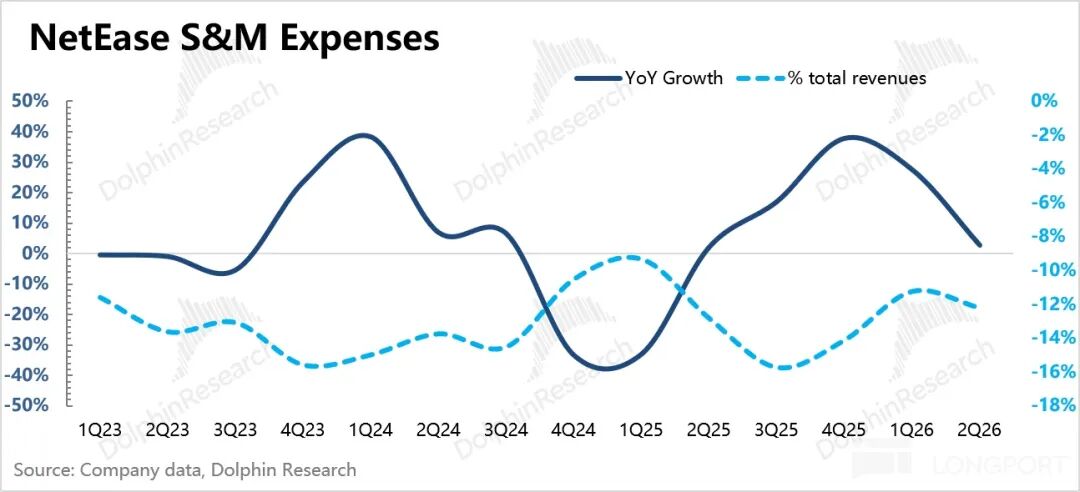
This was primarily driven by an increased share of high-margin self-developed games (both self-developed PC games like Yan Yun's Sixteen Sounds and evergreen titles with inherently high margins, where each operational activity delivers significant incremental profitability) and tighter control over selling, general, and administrative expenses (through reduced staff incentives and controlled external user acquisition spending).
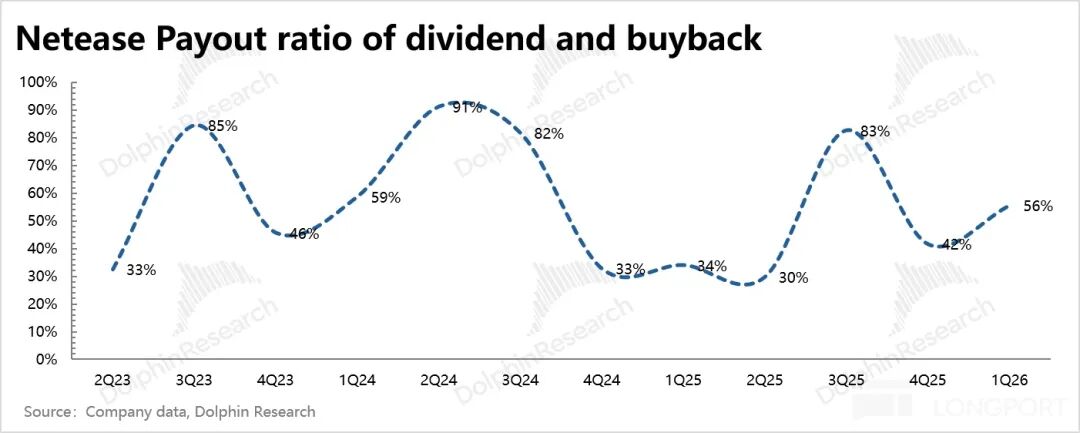
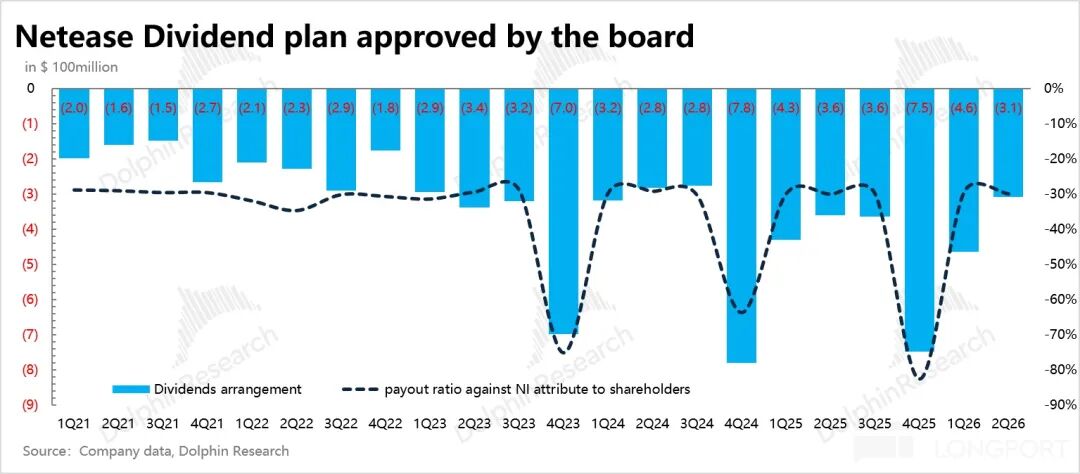
6. Stable shareholder returns, but still not high: The company plans to pay a dividend of USD 0.096 per share (USD 0.48 per ADS) this quarter, totaling USD 310 million, representing a 30% payout ratio. Excluding special year-end dividends, the payout ratio generally hovers around 30%.
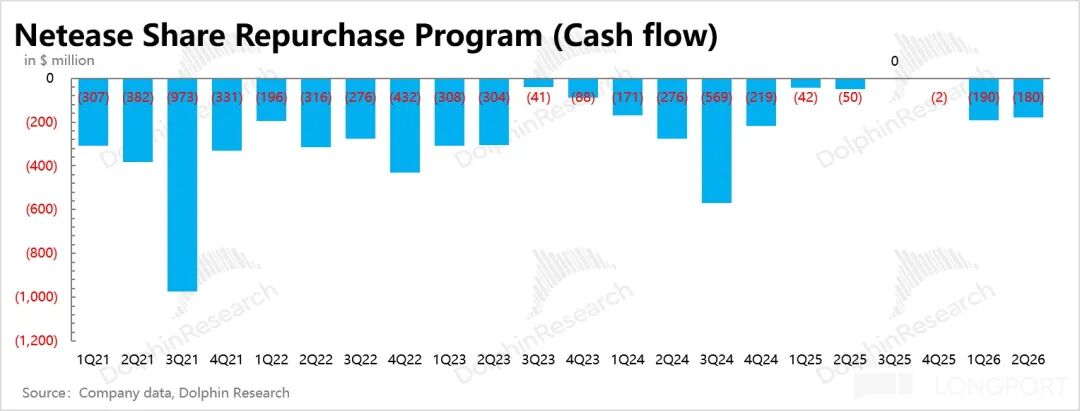
On share buybacks, USD 197 million was spent in Q2 (USD 180 million in cash flow terms), up nearly USD 70 million quarter-over-quarter. NetEase management typically adjusts the buyback pace with market cap fluctuations, with approximately USD 2.7 billion remaining in the current buyback authorization (valid for three years).
Assuming a simple annualization of H1 dividends and buybacks, plus the customary special dividends of the past three years, total shareholder returns for the year would be approximately USD 2.5 billion, or 3% of yesterday's closing market cap of USD 80.5 billion—not a particularly high return.
7. Key financial metrics at a glance
Dolphin Research's View
Q2 core performance continued the trend of recent quarters, including Q1—a product gap period where evergreen titles drove growth, coupled with group-wide cost controls and operational efficiency improvements to maintain high profitability despite revenue pressure.
NetEase's approach, which avoids sacrificing current profits and cash flow for AI transformation (unlike some Internet peers suffering from core business declines), appeals to value-oriented investors. In other words, NetEase—with its stable core business and limited AI investments—is seen more as a relatively high-quality defensive asset this year, positioned opposite AI-driven tech growth.
This explains why, during the global market correction in July, NetEase's market cap continued to rise against the trend after being added to the Stock Connect program. It also explains why, despite Forgotten Seas underperforming in its first week and a lackluster second-half pipeline, the stock's bottom has steadily risen amid volatility.
However, the impact of the product gap has already begun to show in Q2. After the release of Stock Connect tailwinds, the second half will likely lack catalysts. Of course, operational efforts around evergreen titles and a lower base should prevent revenue from declining sharply, providing a strong “floor.”
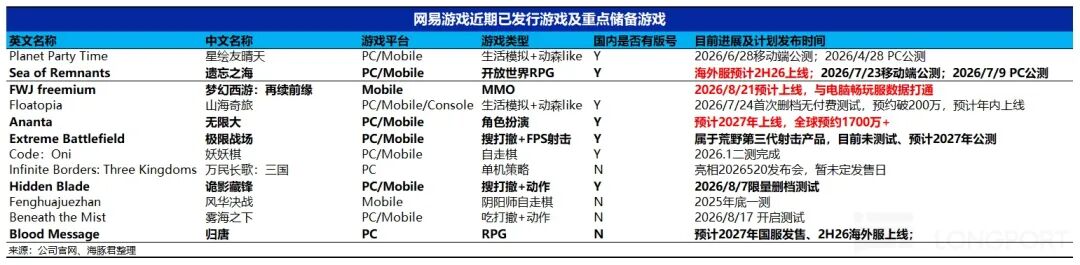
In the short term, for NetEase to break free from roller-coaster volatility and achieve steady upward momentum, it still relies on pipeline catalysts. For example, the announcement and first beta test of Beneath the Misty Seas earlier this month received positive user feedback, providing some upside.
Thus, before the product cycle arrives late this year or early next year, trading opportunities will mainly arise from range-bound fluctuations. For instance, one could boldly bottom-fish when AI skepticism resurfaces or when valuations adjust to create more upside potential, improving holding comfort.
Below are key charts:
End of content
- END -
// Reprint Authorization
This article is an original work by Dolphin Research. Reproduction requires authorization.
// Disclaimer and General Disclosure
This report is for general reference only, intended for users of Dolphin Research and its affiliates for general browsing and data reference. It does not consider the specific investment objectives, product preferences, risk tolerance, financial condition, or unique needs of any individual receiving this report. Investors must consult independent professional advisors before making investment decisions based on this report. Any person using or referring to the content or information in this report for investment decisions does so at their own risk. Dolphin Research shall not be liable for any direct or indirect losses or responsibilities arising from the use of data contained in this report. The information and data herein are based on publicly available sources and are for reference only. Dolphin Research strives to ensure but does not guarantee the reliability, accuracy, or completeness of such information and data.
The information and views expressed in this report may not be treated or construed as offers to sell or solicitations to buy securities in any jurisdiction, nor as recommendations, inquiries, or endorsements of securities or related financial instruments. The information, tools, and materials in this report are not intended for distribution to or use by individuals or entities in jurisdictions where such distribution, publication, provision, or use would violate applicable laws or regulations or subject Dolphin Research and/or its affiliates or subsidiaries to registration or licensing requirements in those jurisdictions.
This report reflects only the personal views, insights, and analytical methods of the relevant contributors and does not represent the stance of Dolphin Research and/or its affiliates.
This report is produced by Dolphin Research, with copyright reserved solely by Dolphin Research. No institution or individual may, without prior written consent from Dolphin Research, (i) reproduce, copy, duplicate, reprint, forward, or otherwise create copies or replicas in any form, or (ii) directly or indirectly redistribute or transfer them to unauthorized persons. Dolphin Research reserves all related rights.
-
![]()
NetEase: Still Relying on Legacy Assets Without Burning Money, But With Strong Financial Foundations
-
![]()
Zhuque-3 Successfully Recovered, But How Far Is It from True Reusability?
-
![]()
Xiaomi Surmounts the 'Storage Storm,' Approaching a Pivotal Moment
-
![]()
Blockbuster Move: Jensen Huang's Strategic Investment Tied to Elon Musk's Ventures
-
![]()
When Even Boxy SUVs Embrace Smart Driving, What Future Awaits Off-Road Vehicles?
-
![]()
Three Major Factions Lock Horns in Fierce Contest, Chengdu Auto Show Sizzles with Anticipation
-
![]()
Alibaba's AI Ledger, Calculated So Clearly for the First Time | Earnings Report Insight
-
![]()
HONOR Robot Phone: Telling the Lightest AI Story with the Heaviest Hardware