Xiaomi Surmounts the 'Storage Storm,' Approaching a Pivotal Moment
 08/21 2026
 388
388
Historically, the market has predominantly viewed Xiaomi through the prism of a hardware manufacturer. However, the Q2 financial results send a clear signal: Xiaomi's revenue composition, profit sources, and growth catalysts are undergoing profound transformations.
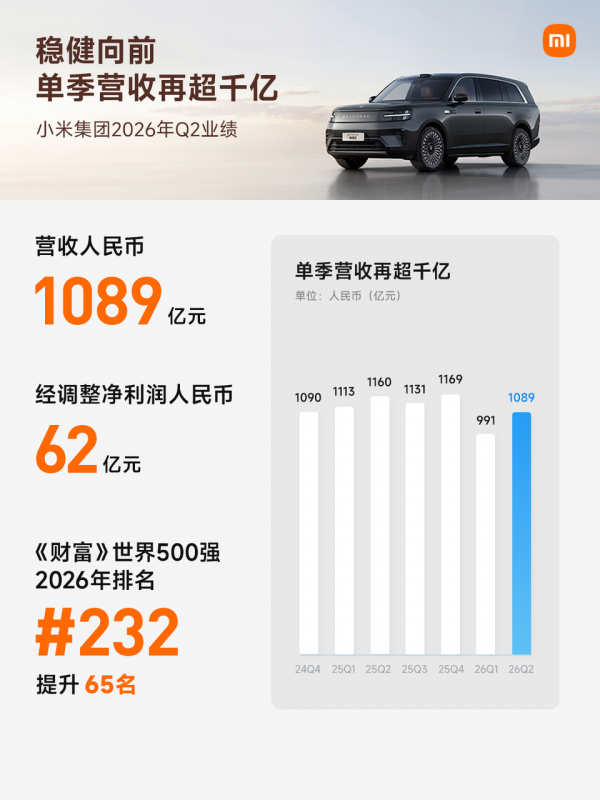
On the evening of August 18, Xiaomi unveiled its Q2 financial results. The quarterly revenue soared to RMB 108.9 billion, with adjusted net profit reaching RMB 6.2 billion, both surpassing market expectations. R&D investment also surged to RMB 9.2 billion, marking an 18.9% year-on-year increase.
At first glance, these figures suggest a "stabilized" performance. Yet, when contextualized within industry cycles, a more compelling narrative emerges from the data.
Over the past six months, global memory chip prices have witnessed an unprecedented surge, severely impacting the cost structure of the mobile phone industry and dragging nearly all manufacturers into a profitability slump. The true highlight of these financial results lies in the signals released amidst this industry upheaval:
Having weathered the storm of escalating storage costs, the market is reassessing Xiaomi's operational resilience and the realization potential of its new ventures, with a performance inflection point gradually emerging.
Over the past six months, global memory chip prices have undergone a rare "super cycle." Counterpoint's latest data reveals that mobile phone memory prices skyrocketed by over 80% quarter-on-quarter in Q2 2026, leading to a significant rise in BOM costs across all price segments. In fact, from the end of 2025 to mid-2026, average contract prices for smartphone memory chips more than doubled.
This price surge dealt a severe blow to the cost structures of the mobile phone industry. Recently, Apple CEO Tim Cook described the current memory cost pressures as a "flood of the century" during an earnings call and announced across-the-board product price hikes. Virtually all mobile phone manufacturers have been ensnared in a profitability slump.
Amidst this industry-wide pressure, Xiaomi has remained unscathed by cost shocks. Q2 revenue reached RMB 108.922 billion, surpassing the RMB 100 billion mark in a single quarter and exceeding market expectations of RMB 108.325 billion. Adjusted net profit hit RMB 6.219 billion, surpassing expectations of RMB 6.159 billion, thus stabilizing its core business.
Notably, revenue grew by 9.9% month-on-month compared to Q1, while adjusted net profit rose by 2.4% quarter-on-quarter. This indicates that while the impact of soaring storage prices is inevitable, the most challenging phase may be receding.
Delving into the specific business segments, it is evident that Xiaomi has chosen not to compromise profitability for scale. Instead, it has fortified its operational foundation by continuously optimizing its revenue structure.
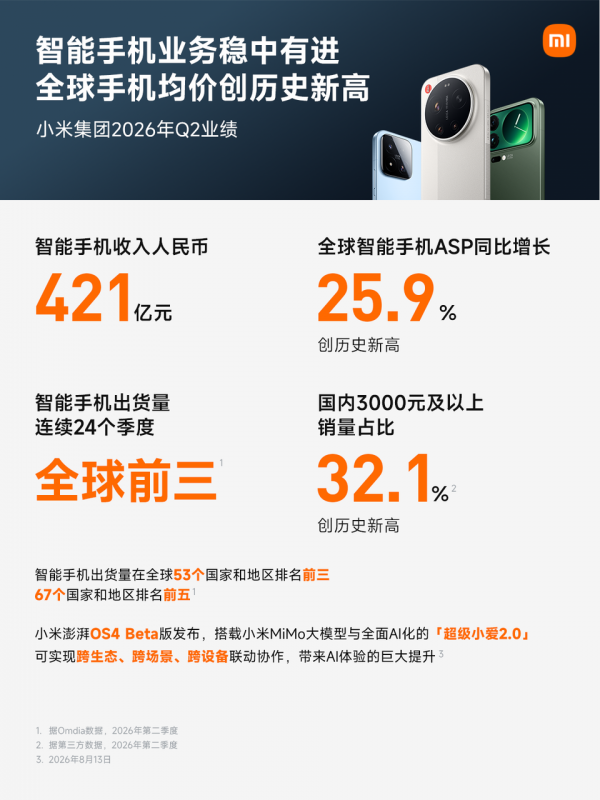
The "Smartphone × AIoT" segment generated RMB 84 billion in revenue. Within this, the smartphone business contributed RMB 42.1 billion, with global shipments reaching 31.2 million units. Notably, the "value per unit" of smartphones has significantly increased, with the average selling price (ASP) surging by 25.9% year-on-year to RMB 1,351. In the domestic market, sales of models priced above RMB 3,000 accounted for 32.1% of total shipments—both key metrics reached all-time highs.
The commercial implications of this data are clear: Xiaomi is deepening its focus on high-net-worth customers. Amidst soaring memory chip prices and rigid BOM cost increases, this strategy has safeguarded gross margins and avoided a scenario of "selling at a loss for every unit sold."
Revenue from IoT and lifestyle consumer products reached RMB 31.3 billion, up 26.7% quarter-on-quarter, while internet services revenue hit RMB 9 billion, with a gross margin of 76.8%. These two high-margin, strong-cash-flow businesses have served as an "operational safety net," effectively offsetting cost pressures from the hardware side.
More notably, Xiaomi's second growth curve has transcended the "storytelling" phase and officially entered the realization stage.
Revenue from innovative businesses, including smart electric vehicles and AI, reached RMB 24.9 billion, up 17.1% year-on-year and 25.3% quarter-on-quarter. Within this, smart electric vehicle revenue amounted to RMB 23.9 billion. In Q2 2026, Xiaomi delivered 104,199 new vehicles, up 28.2% year-on-year.
At a time when the mobile phone industry faces cost storms, the revenue contribution and profit potential of these new businesses are set to become pivotal variables in the capital market's re-evaluation of Xiaomi's value.
At the earnings briefing, Xiaomi President Lu Weibing stated that he expects the industry to enter a "slow growth" phase in the second half of the year, though overall prices will remain high. To adapt to rising storage costs, Xiaomi will continue adjusting its product mix in the second half. However, he also noted that the industry's most difficult moment has passed, with the storage sector now entering a relatively predictable and controllable stage.
In the fiercely competitive smartphone market and new energy vehicle sector, price hikes are rarely a sustainable competitive advantage; low-price competition is the norm. So, how has Xiaomi managed to withstand this round of the "storage storm"?
Reviewing Xiaomi's operational strategies in recent years, it becomes evident that the company's resilience stems from three structural factors: premiumization supporting unit prices, globalization dispersing market risks, and smart ecosystems enhancing user loyalty. These three paths have all made visible positive contributions in Q2.
First, premiumization is transforming Xiaomi's revenue structure.
Take smartphones as an example: the significant rise in ASP has effectively offset declining sales volumes. While Xiaomi phones were once synonymous with "cost-effectiveness," the current trend indicates a structural shift toward "value-for-money," with brand premiumization becoming increasingly apparent.
The effects of premiumization are also evident in the brand momentum of Xiaomi's automotive business. In the first half of 2026, the Xiaomi SU7 series ranked first in sales among pure electric sedans priced above RMB 200,000 in mainland China, with cumulative deliveries surpassing 500,000 units.
Second, Xiaomi's globalization is deepening and broadening. According to Omdia, Xiaomi has maintained its position among the top three global smartphone vendors for 24 consecutive quarters, ranking in the top three in 53 countries and regions and the top five in 67 markets worldwide. This global market presence effectively buffers risks from single-market fluctuations.
At the channel level, Xiaomi has over 640 overseas retail stores covering Southeast Asia, Europe, East Asia, Latin America, the Middle East, and Africa. Coupled with the year-on-year surge in Q2 revenue from IoT and lifestyle consumer products overseas, this indicates strengthening monetization capabilities in international markets and the gradual release of profit potential beyond hardware.
In September, Xiaomi's "Human-Vehicle-Home Ecosystem" will make its debut at the Internationale Funkausstellung Berlin (IFA), with the Mi Home brand officially launching. Numerous products, including Xiaomi's major home appliances, will enter European markets at scale. This marks a further upgrade in Xiaomi's globalization strategy: shifting from single-category exports to holistic outputs of branding, ecosystems, and full-category capabilities.
Third, user loyalty driven by the smart ecosystem continues to strengthen. As of June 30, 2026, Xiaomi's AIoT platform had connected 1.16 billion IoT devices, up 17.4% year-on-year; the number of users with five or more connected devices reached 24.6 million, up 20.2% year-on-year. User engagement within the ecosystem remains high, with Xiao Ai's monthly active users reaching 175 million, up 14.2% year-on-year, and the Mi Home app's MAUs hitting 124 million, up 9.7% year-on-year.
The value of the smart ecosystem lies not only in enhancing user loyalty and increasing switching costs but also in providing foundational support for Xiaomi's long-term narrative of a "Human-Vehicle-Home Ecosystem."
Whether these three paths—premiumization, globalization, and smart ecosystems—can continue delivering results in subsequent quarters remains to be seen. However, Q2 data at least demonstrates that Xiaomi's structural adjustments are clear, and its resilience against cyclical pressures is strengthening.
After withstanding cost pressures, Xiaomi's growth logic is evolving, and the market is beginning to re-price its operational resilience and the realization potential of its new businesses.
In Q2, Xiaomi's R&D expenditure reached RMB 9.2 billion, up 18.9% year-on-year, with cumulative H1 R&D investment hitting RMB 18.2 billion. Despite storage price hikes eroding industry profits, Xiaomi has maintained R&D intensity instead of cutting back, sacrificing short-term profits for long-term technological barriers.
A positive sign is that Xiaomi's core technologies, including AI, OS, and robotics, are transitioning from sustained investment to intensive realization phases.
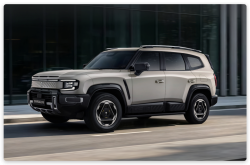
On July 30, Xiaomi Automobile officially launched its new product series, the "Xiaomi Pengcheng (SkyNomad)," debuting two extended-range SUV models—the Pengcheng N70 Max and Pengcheng N90 Max—priced at RMB 259,900 and RMB 299,900, respectively.
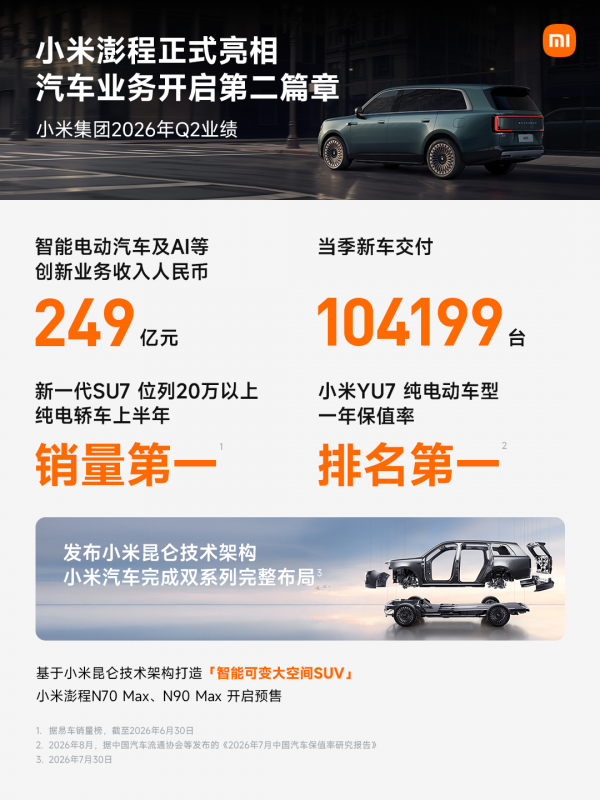
Previously, the SU7 validated Xiaomi's automotive capabilities and brand appeal in the RMB 200,000+ pure electric sedan market. However, this segment has limited capacity. Extended-range SUVs target the larger family user market, which is also the main battleground for brands like Li Auto and AITO.
While pure electric sedans represent a relatively niche market, extended-range SUVs cater to a broader family user base—precisely the core market for Li Auto and AITO. The launch of the Xiaomi Pengcheng series signifies Xiaomi Automobile's expansion from a single model to a multi-category matrix.
During the earnings briefing, Lu Weibing revealed that small-deposit orders for the Xiaomi Pengcheng series exceeded expectations, with sufficient production capacity to ensure immediate delivery upon launch. From pure electric to extended-range, from sedans to SUVs, Xiaomi Automobile's second growth curve is unfolding.
In AI, Xiaomi explicitly disclosed for the first time in its financial results the revenue contribution from innovative businesses like AI. Q2 revenue from "other related businesses" reached RMB 1 billion, up 56.5% year-on-year, including AI business revenue generated by the Xiaomi MiMo large model series.
In terms of model performance, Xiaomi's MiMo series has achieved industry-recognized results in inference speed and usage volume: the Xiaomi MiMo-V2.5-Pro-UltraSpeed mode, launched in June, is the world's first trillion-parameter model to achieve inference speeds exceeding 1,000 tokens/s on general-purpose GPUs, setting a new global record for flagship model inference speed. In July, MiMo-V2.5 topped both the weekly and monthly global large model usage rankings on OpenRouter.
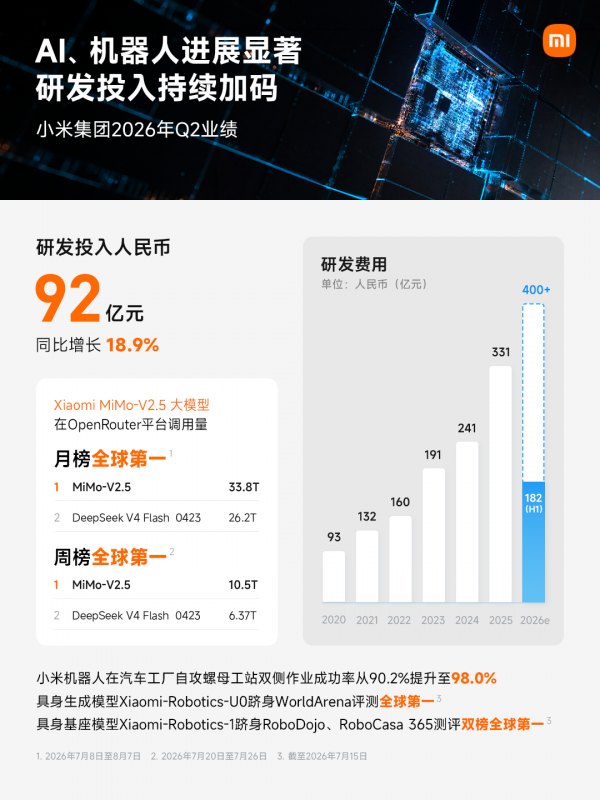
Lin Shiwei, Xiaomi's Vice President and CFO, stated that as usage of the MiMo large model continues to grow, API calls and Token Plans have begun contributing revenue at a rapid pace, indicating that the path for AI business to transition from technological investment to commercial realization is opening up.
In chip development, Lu Weibing revealed that the Xuanjie O1 chip, launched last year, has surpassed 1 million cumulative shipments across three terminal devices, achieving large-scale validation for flagship chips. A new generation of Xiaomi Xuanjie chips is also set to be released. The integration of self-developed chips with HyperOS and AI large models will deepen software-hardware synergy across smartphones, automobiles, and IoT.
At the operating system level, HyperOS 4 Beta has been released, featuring the MiMo large model and AI-transformed "Super Xiao Ai 2.0," further enhancing cross-device interoperability.
Additionally, Xiaomi's robotics business has achieved phased progress. The latest humanoid robot achieved a 98% success rate in multiple workstations at Xiaomi Automobile's factory, while its self-developed embodied model ranked highly in various evaluations.
In response, Goldman Sachs analyzed in a research report that Xiaomi has completed the initial integration of its robotics framework across hardware, data, and models, potentially forming a self-reinforcing closed loop and advancing toward general-purpose industrial and home automation.
Historically, the market has predominantly viewed Xiaomi through the prism of a hardware manufacturer. However, the Q2 financial results send a clear signal: Xiaomi's revenue composition, profit sources, and growth catalysts are undergoing profound transformations.
Smartphone premiumization is expanding profit margins, globalization is dispersing geographical risks, and smart ecosystems are enhancing user loyalty. Meanwhile, new businesses like AI, OS, and robotics are transitioning from investment to realization phases. These changes did not happen overnight, but the direction is now clear.
According to public reports, 12 investment banks have given Xiaomi a "buy" rating in the past 90 days, with a target average price of HKD 42.01. Guotai Junan Securities believes the second half of the year could see a "fundamental inflection point," while Huatai Securities expects the automotive business to become the "primary growth engine." Summarizing institutional views, a consensus is emerging: the most difficult moment is passing, and the window for future strategic positioning has opened.
Today, Xiaomi stands at a performance inflection point, but whether it can unlock new growth spaces beyond this turning point remains to be seen in subsequent financial results.
-
![]()
NetEase: Still Relying on Legacy Assets Without Burning Money, But With Strong Financial Foundations
-
![]()
Zhuque-3 Successfully Recovered, But How Far Is It from True Reusability?
-
![]()
Xiaomi Surmounts the 'Storage Storm,' Approaching a Pivotal Moment
-
![]()
Blockbuster Move: Jensen Huang's Strategic Investment Tied to Elon Musk's Ventures
-
![]()
When Even Boxy SUVs Embrace Smart Driving, What Future Awaits Off-Road Vehicles?
-
![]()
Three Major Factions Lock Horns in Fierce Contest, Chengdu Auto Show Sizzles with Anticipation
-
![]()
Alibaba's AI Ledger, Calculated So Clearly for the First Time | Earnings Report Insight
-
![]()
HONOR Robot Phone: Telling the Lightest AI Story with the Heaviest Hardware