Zhuque-3 Successfully Recovered, But How Far Is It from True Reusability?
 08/21 2026
 483
483
The Zhuque-3 Y2 successfully reached orbit, after which its first stage returned to the recovery zone and completed a soft landing using engine retro-thrust and landing legs.
This mission accomplished both orbital insertion and recovery. LandSpace has thus become the first private rocket company in China to complete an orbital launch and successfully recover the first stage, while Zhuque-3 has achieved the first recovery of an orbital-class rocket first stage using landing legs in China.
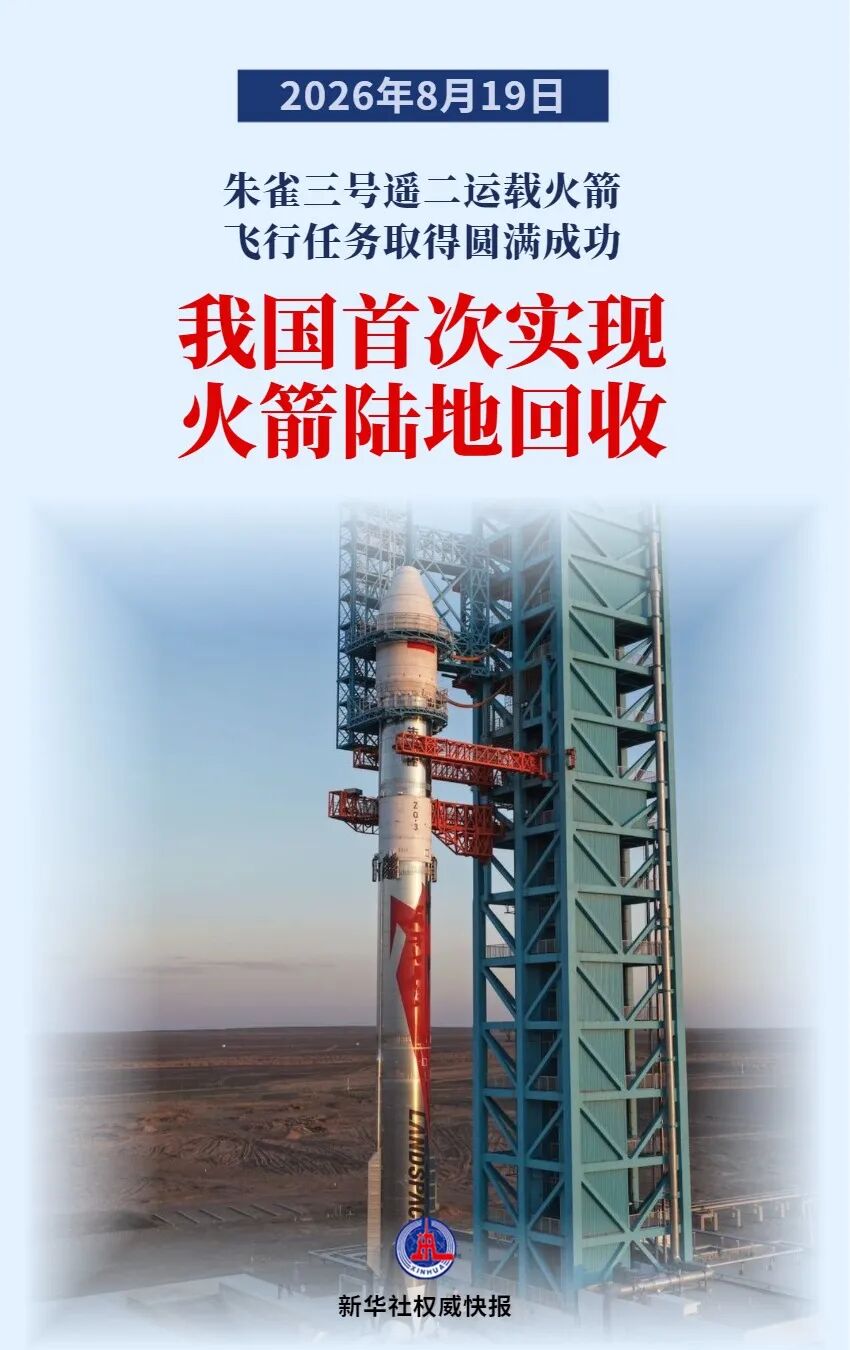
The first flag for controlled recovery of an orbital-class first stage in China was claimed by the Long March 10B on July 10. The Long March 10B employed a sea-based net capture method, while Zhuque-3 relied on engine retro-thrust and landing legs for landing. Each approach represents distinct technical trade-offs, and a single success is insufficient to determine superiority. Zhuque-3 Y2 did not rewrite "China's first"—it advanced the engineering progress of both private commercial space and the landing leg approach.
These significances are clear and do not require further exaggeration.
Beyond records, the dual success genuinely transforms how LandSpace is evaluated.
In previous years, evaluating Zhuque-3 was relatively straightforward. Clear outcomes for orbital insertion, return, and landing allowed external judgments to be made shortly after a single mission.
After the first stage lands, many evaluations can no longer be completed within a single flight. Recovery proves it can return, but reusability value awaits disassembly inspections and reflights.
Until now, time belonged to R&D. From this day forward, time begins to count as a cost.
01
First, it is essential to clarify which version of Zhuque-3 succeeded today. As of press time, LandSpace has not fully disclosed the specific configuration changes of Y2 compared to Y1, so the upgrade states covered by this success remain subject to LandSpace's subsequent technical disclosures.
The Zhuque-3 design configuration released by LandSpace in 2023 measures 76.6 meters in length, with its first stage powered by nine Tianque-12B engines and its second stage by a Tianque-15B. According to publicly disclosed specifications, this configuration offers a disposable low-Earth orbit (LEO) payload capacity of 21.3 tons, with a recovery payload capacity of 18.3 tons in the launch area. The first stage is designed for no fewer than 20 reuses.
The Y1 flight in December of the previous year represented a different configuration. It measured 66.1 meters in length, with its first stage powered by a Tianque-12A and its second stage by a Tianque-15A. The prospectus disclosed an actual payload capacity of approximately 14.2 tons for a 200-kilometer orbit. This 14.2-ton figure refers to payload capacity and does not mean Y1 actually carried a 14.2-ton payload. The orbital altitude, engine state, and rocket configuration corresponding to 14.2 tons also differed from those of the 21.3-ton configuration.
Therefore, the technical significance of Y2's success must correspond to the actual configuration flown this time.
Aerospace products are highly sensitive to technical states. Engine model changes, rocket lengthening, and second-stage propulsion modifications all introduce new flight environments and control characteristics.
Aerospace products only recognize flown configurations.
The history and performance data belong to the configuration flown. Engines not integrated into the rocket will not automatically gain flight history due to Y2's success, nor will unflown payload capacities be realized with the first stage's landing.
This is also a common source of misrepresentation in publicity. The success of a single test flight can easily be conflated with the full capabilities outlined in product planning, ultimately creating the impression that all design specifications have been achieved.
Planning can extend far into the future, but reliability can only be accumulated flight by flight.
02
Second, successful recovery does not equate to successful reusability. One of the costliest misunderstandings in commercial space is equating "recoverable" with "low-cost."
What LandSpace now possesses is a complete first stage that has experienced ascent, separation, high-speed re-entry, engine restart, and landing impact.
Whether it can fly again depends first on post-recovery inspection results. The condition of the rocket body, tanks, and critical welded structures, as well as the remaining engine lifespan, will all affect subsequent reflights.
These efforts ultimately translate into time and cost.
A one-week inspection versus a three-month inspection carries entirely different implications for high-frequency launches. Limited part replacements versus extensive disassembly and refurbishment also correspond to different reusability values.
In 1936, American aeronautical engineer T.P. Wright observed while studying aircraft manufacturing that unit labor input declines as cumulative production increases—a concept later generalized as the learning curve. While rocket refurbishment differs from aircraft manufacturing, experience similarly enhances maintenance efficiency. The inspection scope, lifespan boundaries, and release criteria for recovered orbital-class first stages must also be refined through subsequent product iterations.
Recovery leaves behind a first stage with reflight potential but also increases return and post-processing costs. To enable return, the rocket must sacrifice some payload capacity, while recovery, transportation, inspection, and maintenance all add costs.
Only when this first stage relauches does its one-time manufacturing cost get amortized across multiple missions for the first time. As reflight counts increase, inspection processes stabilize, and turnaround times shorten, the cost advantages of reusability gradually emerge.
Designing for 20 reuses is a product specification. After Y2, what LandSpace truly possesses is a single recovery record. This distinction is no semantic game.
Twenty reuses mean a single first stage can theoretically serve more missions. A single recovery only proves it has returned safely.
03
The capital markets' most common mistake is treating necessary conditions as sufficient ones. For Zhuque-3's established reusability roadmap, successful recovery is a necessary condition for cost reduction but cannot alone guarantee the eventual realization of low costs and high-frequency launches.
In 2025, LandSpace reported revenue of RMB 52.0963 million, a net loss attributable to the parent company of RMB 1.711 billion, a net cash outflow from operating activities of RMB 1.221 billion, and R&D expenses of RMB 922 million. As of the end of 2025, the company's consolidated unappropriated profit stood at negative RMB 5.955 billion.
For a company still in the phase of continuous R&D and commercialization ramp-up for large liquid rockets, these figures are unsurprising. However, as model maturity improves, capital market focus will shift.
According to the prospectus, which references existing orders, the current estimated revenue per Zhuque-3 launch is approximately RMB 150 million.
This figure is easily misconstrued as "Zhuque-3 sells for RMB 150 million per launch," leading to further profit calculations. In reality, it represents the company's estimated revenue per launch based on existing orders and should not be viewed as a standard quote applicable to all missions, much less directly converted into profit.
LandSpace expects to achieve consolidated profitability as early as 2029. Conditions supporting this judgment include Zhuque-3 becoming the primary launch service product, with significantly increased launch frequency and payload capacity, sustained reliability improvements, and gradual normalization of first-stage reuse.
After Y2's success, technical uncertainties surrounding the recovery roadmap have indeed decreased significantly.
However, the moment the first stage touches down, revenue, cash flow, and gross margins remain unchanged.
Only when data emerges on how long this first stage takes to restore, how many components need replacement, and how many consecutive missions it can achieve will Zhuque-3's future cost curve gradually take shape.
While the recovery roadmap has transitioned from technical concept to flight reality, Zhuque-3's cost curve remains far from clear. Twenty reuses is merely a design specification. Until actual reflight counts emerge, costs cannot be amortized in advance, nor can profits be realized prematurely.
04
In February, LandSpace stated it would attempt the first recovered reflight in the fourth quarter of 2026, based on Y2's recovery test results.
Now that the first stage has returned, this timeline carries new weight.
SpaceX also traversed this phase.
In April 2016, a Falcon 9 first stage from the CRS-8 mission completed a sea-based recovery. In March 2017, this same first stage flew the SES-10 mission, becoming SpaceX's first Falcon 9 first stage to be reflown in orbit. Only after accumulating numerous flights did Falcon 9's reusability transition from a rare event in select missions to a routine operational aspect. Zhuque-3 has now just reached the starting point for reflight verification. If Y2's recovered first stage relauches in the fourth quarter, market attention will focus not merely on "successful reflight" but also on inspection duration, part replacement volume, and the nature of the reflight mission—all of which will influence judgments about Zhuque-3's reusability. If reflight is delayed, reusability failure should not be immediately concluded. The first recovered orbital-class first stage must also help LandSpace refine inspection standards and lifespan models for orbital-class products. Exercising caution holds more value than rushing to meet a timeline.
However, LandSpace's burden of proof has shifted. Before recovery success, the outside world could wait for it to resolve "whether it can return." After recovery success, continued investment must increasingly align with reflights, deliveries, launch frequency, and cost improvements. "Technical breakthroughs" remain valid, but after recovery success, the market will more directly question what these investments ultimately deliver.
From today onward, Zhuque-3's commercial value will be determined by the numbers least suited for headlines: inspection hours, part replacement ratios, turnaround days, reflight counts, and cost per launch.
Before the rocket proves its staying power, LandSpace must demonstrate it can bring it back.
After the rocket proves its staying power, LandSpace must prove bringing it back is worthwhile.
Sources Cited in This Article:
1. LandSpace: Zhuque-3 design configuration, 10-kilometer-class VTVL test, Y1 mission-related materials, 2023–2025.
2. LandSpace: Prospectus for Initial Public Offering and Listing on the STAR Market (Draft), June 29, 2026.
3. LandSpace: Related materials from the 63rd session of the United Nations Committee on the Peaceful Uses of Outer Space Scientific and Technical Subcommittee, February 25, 2026.
4. China National Space Administration: "China Successfully Implements First Reusable Launch Vehicle Recovery Mission," July 10, 2026.
5. SpaceX: CRS-8, SES-10 mission materials; T. P. Wright, “Factors Affecting the Cost of Airplanes,” 1936.
-
![]()
NetEase: Still Relying on Legacy Assets Without Burning Money, But With Strong Financial Foundations
-
![]()
Zhuque-3 Successfully Recovered, But How Far Is It from True Reusability?
-
![]()
Xiaomi Surmounts the 'Storage Storm,' Approaching a Pivotal Moment
-
![]()
Blockbuster Move: Jensen Huang's Strategic Investment Tied to Elon Musk's Ventures
-
![]()
When Even Boxy SUVs Embrace Smart Driving, What Future Awaits Off-Road Vehicles?
-
![]()
Three Major Factions Lock Horns in Fierce Contest, Chengdu Auto Show Sizzles with Anticipation
-
![]()
Alibaba's AI Ledger, Calculated So Clearly for the First Time | Earnings Report Insight
-
![]()
HONOR Robot Phone: Telling the Lightest AI Story with the Heaviest Hardware