The Battle Among Big Firms for AI Talent: People Are More Expensive Than Computing Power
 08/21 2026
 449
449
Layout | Xiaoxi
The rapid expansion of the AI industry has first and foremost washed away the salary systems for top talent at major companies.
In July 2024, Zhou Chang left Alibaba, citing “entrepreneurship” as the reason. Shortly after, he appeared at ByteDance’s Seed workstation. ByteDance assigned him a level of 4-2, equivalent to Alibaba’s P11, with an eight-figure total compensation package. When Zhou left, he took more than ten core members from Alibaba with him.
Alibaba later initiated a non-compete arbitration. This was one of the earliest non-compete disputes in the AI talent war to attract public attention. The core details of the final ruling and compensation decision in this labor arbitration were never publicly disclosed by either party. However, Alibaba's arbitration couldn't stem the talent drain.
Over three years, the same scenario has repeatedly played out in China’s AI industry: an individual job-hopping, with their price jumping from the millions to the tens of millions, and then into the “hundred-million club.”
On one side is ByteDance, which invests hundreds of billions of yuan annually in AI infrastructure, becoming one of the few companies supporting AI experiments with capital expenditures in the hundreds of billions. On the other side is DeepSeek, which once had fewer than 140 employees (about 200 names, including external collaborators, were listed on the R1 paper). According to its technical report, the V3 training cost was approximately $5.57 million, yet it produced the globally impactful R1.
These two extreme cases point to the same issue: AI competition is not just about who can afford more GPUs, but who can better convert computing power into model capability. Among these factors, the talent issue is a strategic one, even determining the industry landscape.
| The Collapse of the Internet Talent Salary System |
In 2023, the annual salary for top AI researchers was still in the millions. At that time, the recruitment logic of major Chinese companies was no different from hiring programmers a decade ago, with salaries set by job level.
In 2024, Zhou Chang rewrote this rule. A technical leader, not a CEO or co-founder, was worth eight figures.
In December 2025, Yao Shunyu left OpenAI to join Tencent as Chief AI Scientist, reporting directly to President Martin Lau. Market rumors suggested an annual salary exceeding 100 million yuan, though Tencent refuted this, stating “some information is inaccurate.”
The following year, in April 2026, ByteDance poached Guo Daya from DeepSeek, with rumors of a “nearly 100-million-yuan annual salary.” Li Liang, Vice President of Douyin Group, refuted the specific figure but added, “If the business performs well, it’s not impossible for some Seed technicians to earn hundreds of millions in four years.” This refutation only further convinced the market that the scale of high-salary poaching had been reassessed.
The “transfer fees” for these top AI talents are approaching the quotation (quotes) of NBA superstars, and are even more exaggerated abroad.
In June 2025, Meta established a super-intelligence lab, with Mark Zuckerberg personally leading it. Within a month, they poached several Chinese researchers from OpenAI and Apple. Among them, Pang Ruoming’s compensation package was rumored to exceed $200 million, and Yu Jiahui’s exceeded $100 million.
The job-hopping price for one individual could buy a small- to medium-sized listed company. The market has accepted the fact that the quotation (quotes) for top AI talents have been re-anchored.
This year, talent programs like ByteDance’s TopSeed have offered annual packages to fresh PhD graduates that jump year by year, with top positions reaching the millions. Algorithm PhD interns at leading companies earn around 2,000 yuan per day, with some ungraduated interns earning more per month than most white-collar workers.
Job levels, non-compete agreements, and industry norms—all three pricing anchors have broken down. Leading AI companies are no longer the price setters.
But what are these astronomical salaries built on?
In 2025, ByteDance went all-in on the AI track, combining sky-high poaching with sky-high GPU purchases. In 2026, AI investment expenditures were raised to 160 billion yuan, yet the AI business itself has not yet reached profitability.
In other words, every hundred million spent on talent is not drawn from realized profits but is pre-spent from an unrealized AI future.
Ba Ran, Vice President of Liepin, made it clear: “The million-yuan salaries the public sees are just a few at the top of the pyramid.” What is truly being fought over is the group that determines the upper limits of models. For the majority of AI practitioners, salaries have not followed suit.
Supply and demand data also confirms this divide. According to Liepin’s Big Data Research Institute’s 2026 AI Talent Recruitment White Paper and Maimai’s spring recruitment report, the overall supply-demand ratio for AI positions is 0.97, appearing balanced. However, when broken down into high-performance computing, the ratio drops to a dire 0.15, with seven positions competing for one person. The highest-paid AI scientists/leaders average 137,153 yuan per month, while edge positions in the industry earn only a fraction of that. The gap between core and edge roles in the same field is vast.
The AI talent market is not an ordinary supply-demand market. The output of a core researcher is non-linear; they can determine whether a model succeeds, something a hundred edge engineers cannot replace. For this reason, companies are willing to pay top talent far beyond their “current contributions.” This is a deeper pricing logic beyond supply and demand.
Most people supplying the industry have not shared in this feast. Money is concentrated on the few who determine model upper limits, not the entire AI industry.
| The Power to Choose a Company |
Zhou Chang spent seven years at Alibaba, under the alias Zhonghuang, keeping a low profile. His name was unknown to the outside world until his departure.
Large model research and development involves a core researcher leading a few key partners in repeated trial-and-error on computing clusters. The dozen people Zhou led at Tongyi had worked with him since M6, collaborating not through weekly reports but through long-term tacit understanding (tacit understanding). Team collaboration density was extremely high, and team run in (integration) costs were enormous. Replacing one person meant overhauling the entire tacit understanding.
Why did Alibaba lose him? According to Caixin, Zhou Chang stated that the then-responsible leader, Zhou Jingren, “could not coordinate sufficient computing power for large models,” so he chose ByteDance, which had more abundant computing resources. In 2024, money was no longer the primary variable affecting talent choices; computing power and decision-making authority were.
After Zhou joined, he led Seed’s “multimodal interaction and world model” direction, significantly raising ByteDance’s profile in multimodal AI. In the second half of 2025, ByteDance’s visual generation business leaders took leaves or resigned, and the text-to-video model Seedance was placed under Zhou’s oversight. In February 2026, Seedance 2.0 was launched, with Feng Ji, producer of Black Myth: Wukong, calling it “the strongest on Earth.” This was not solely Zhou’s doing, but his arrival altered the team’s organizational approach and external expectations. Alibaba’s cost was that Qianwen’s multimodal direction suffered.
When Zhou left, he took with him a “micro-production unit” that had already been validated and operated efficiently. From him onward, “poaching one person” and “poaching a team” became one and the same. His departure seized the “team” pricing power.
Another talent who chose ByteDance, Guo Daya, went alone.
Guo’s reason for leaving DeepSeek was subtle: he wanted to work on Agents, but DeepSeek’s core focus was on model foundations, with Agents not a priority.
Guo was the first author of the DeepSeek-Coder series and the core proposer of the GRPO reinforcement learning algorithm. GRPO is a reinforcement learning training algorithm that enables models to “grow” reasoning capabilities at extremely low computing costs. His GRPO algorithm directly enabled R1’s reasoning capabilities, one of the hottest AI products globally, with his being a key contribution to its most critical reinforcement learning module.
According to LatePost, he considered leaving as early as October 2025 but delayed until March of the following year. However loyal one might be, it cannot surpass loyalty to one’s technical ambitions.
Alibaba, Tencent, and ByteDance all vied for him, but he chose ByteDance. The money offered by all three was in the same ballpark; the difference was ByteDance explicitly gave him decision-making power over Agent development.
Guo seized the “direction”; he sought not money but the authority to decide “what to do.”
After Guo left, DeepSeek’s V4 was repeatedly delayed. This was not solely due to Guo, but his reinforcement learning direction was a key part of V4’s reasoning capabilities.
Luo Fuli is another top talent who left DeepSeek. She did not choose Tencent or ByteDance but Xiaomi, a “hardware company” with little presence in large models.
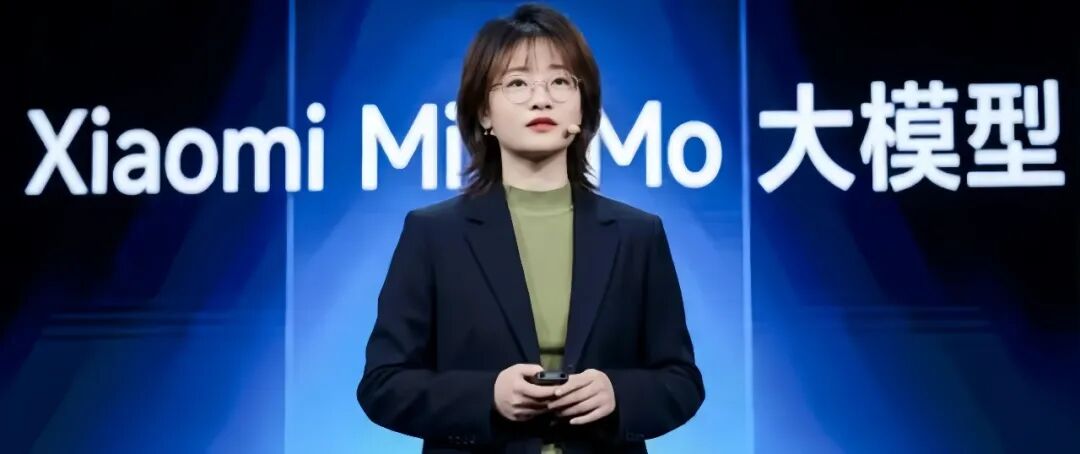
At DeepSeek, she worked on the MoE/MLA architecture, a computing-efficient design that allows models to “activate only a small portion of parameters each time,” with fewer parameters, higher efficiency, and lower reasoning costs, making it ideal for edge deployment. Xiaomi ships 165 million smartphones annually, with its AIoT platform connecting over 1 billion devices.
In November 2025, she announced on WeChat: “Intelligence will move from language to the physical world. I’m at Xiaomi MiMo.” A month later, MiMo-V2-Flash was released: with 309 billion total parameters and 15 billion activated, it ranked among the top two global open-source models in coding capabilities, with reasoning costs just 2.5% of Claude Sonnet 4.5’s.
Xiaomi invested over 30 billion yuan in R&D in 2025, with about 7.5 billion allocated to AI, building its own AI Infra platform and stockpiling 6,500 GPUs. Luo was the key catalyst. She activated Xiaomi’s AI narrative and opened a new path—not competing on trillion-parameter foundations but making models extremely small, fast, and efficient, running on every device.
Luo seized the “scenario”; she chose where technology could land.
Perhaps Guo and Luo’s departures reminded Liang Wenfeng. In April 2026, he finally initiated the first external funding round, totaling over 50 billion yuan, with the core purpose explicitly stated as “pricing and cashing out employee options to retain researchers.”
Retaining talent with money may not work, but poaching with positions certainly does, as others have proven.
On December 17, 2025, Tencent issued an internal announcement: former OpenAI researcher Yao Shunyu was appointed Chief AI Scientist in the “CEO/President’s Office,” reporting directly to President Martin Lau and serving as head of the AI Infra and Large Language Model departments.
Born in 1998, Yao Shunyu became one of the youngest AI leaders in China’s internet giants.
He earned his undergraduate degree from Tsinghua Yaoban and his PhD from Princeton. At OpenAI, he proposed the ReAct framework and Tree of Thought (ToT). ReAct enabled models to “think and act simultaneously,” while ToT allowed multi-step reasoning. These became the technical foundations for all Agent products today, with OpenAI’s Operator and Deep Research built on his routes.
After Yao joined, in March 2026, Tencent dissolved its AI Lab, with some personnel merged into the Hunyuan team under him. In July, Hunyuan’s multimodal and large language model departments merged to form the Foundational Models Department, all under his management. Meanwhile, ByteDance’s Seed lost 70 people, with nearly 30 joining Tencent to lead AI Infra and data infrastructure.
Silicon Valley could not offer Yao what Tencent could, including leadership over the AI business of a trillion-dollar company.
Yao seized the “route”; a trillion-dollar company entrusted him with its AI direction.
Another “captain” from abroad is Wu Yonghui.
Wu worked at Google for 17 years, rising to Google Fellow (L10, a level believed to have only a few dozen globally). His GNMT translation system was his breakthrough work, with Gemini being his magnum opus. With over 50,000 Google Scholar citations and an h-index around 72, he achieved ultimate recognition in the world’s top AI lab, needing no further proof of himself.
In February 2025, Wu joined ByteDance’s Seed as Head of Foundational Research. Wu, deeply patriotic, said that in middle age, he wanted to leave something for his homeland. Having climbed Silicon Valley’s mountains, he now wanted to climb his own country’s.
At ByteDance, Wu leads an independent research team with direct access to top leadership and the chance to leave his mark on his country’s industrial frontier.
When Wu chose to “climb his own country’s mountains,” “talent setting their own prices” ceased to be a slogan and began determining how top companies participate in China’s AI industrial narrative.
Wu seized the “territory”; he is moving not just a company but a nation’s talent landscape.
According to the Paulson Institute’s MacroPolo think tank’s Global AI Talent Tracker, which followed 4,622 top AI researchers, Chinese universities produce 47% of the world’s top AI researchers.
Wu, a rare Google Fellow (L10) at Google, returned to lead an independent research team at ByteDance with direct access to top leadership. Yao, merely a researcher at OpenAI, returned to become Tencent AI’s top figure, reporting to the president. These individuals did not return from Silicon Valley to “work”; they came to claim decision-making power over technical routes.
From taking teams to deciding directions, picking scenarios, grasping routes, and finally rewriting the landscape, the high-salary flow of AI talent has altered major companies’ salary systems and prompted them to decentralize power to individuals. This may be the prologue to organizational change in the AI era.
| Conclusion |
While top talent can move entire industries, a lively undercurrent also thrives.
According to Jiemian News, ByteDance’s Seed team has lost nearly 70 people in the past year, poaching from DeepSeek and Alibaba while losing core members to others.
Such talent flow occurs across multiple AI companies. Tencent poached Wang Bingxuan and Sun Qingfeng from DeepSeek and Microsoft; ByteDance took Feng Guanyu and Deng Shihong from Zhipu and Jieyue Xingchen; Alibaba poached Ge Hao and others from ByteDance’s Seed. This is an arms race without winners, where only a few hold the scepter before the industry’s competitive landscape clarifies.

But as the model's capabilities continue to expand and the cost of computing power continues to decline, those who can turn the model into products, revenue, and infrastructure will be rewarded, while others may face revaluation.
Three years later, when the first batch of fresh Ph.D. graduates who were signed at exorbitant prices complete their studies, when the cost of computing power continues to decrease, and when the model's capabilities reach a plateau, where will the pricing power for talent flow?
The picture is from the internet. Delete if it's a violation.
-
![]()
Aunt Wu Advises Everyone Not to Be Afraid
-
![]()
Chengdu Auto Show: BMW and SAIC Volkswagen Adopt Direct Strategies
-
![]()
The Battle Among Big Firms for AI Talent: People Are More Expensive Than Computing Power
-
![]()
NetEase: Still Relying on Legacy Assets Without Burning Money, But With Strong Financial Foundations
-
![]()
Zhuque-3 Successfully Recovered, But How Far Is It from True Reusability?
-
![]()
Xiaomi Surmounts the 'Storage Storm,' Approaching a Pivotal Moment
-
![]()
Blockbuster Move: Jensen Huang's Strategic Investment Tied to Elon Musk's Ventures
-
![]()
When Even Boxy SUVs Embrace Smart Driving, What Future Awaits Off-Road Vehicles?