Doubao's 'AI Smartphone': Myth or Just a Bit of Fun?
 12/11 2025
 585
585
Is Doubao's take on the 'AI Smartphone' a fantasy or simply a laughing matter?
Some time ago, Doubao's newly unveiled mobile assistant made a splash in the market, much like DeepSeek did earlier in the year. Some believe it revolutionizes operation by sidestepping traditional apps, posing a threat to the ecosystems of major internet players. Observers also highlight that this product significantly transforms the hardware and software landscape of conventional smartphones.
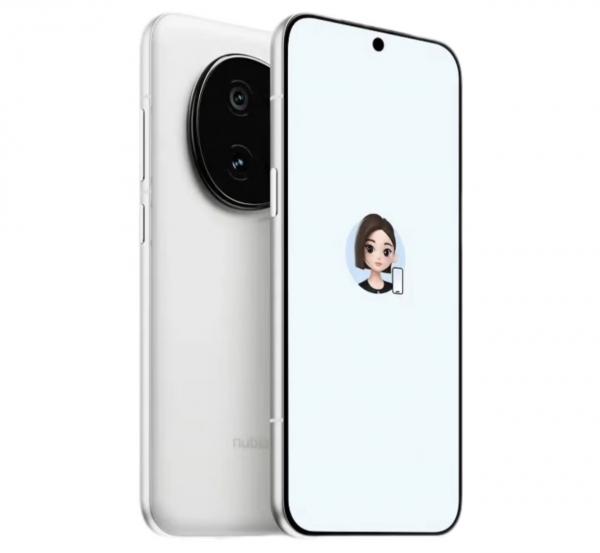
Initially, the phone resulting from the collaboration between ByteDance and ZTE was expected to swiftly gain industry-wide acclaim. However, this initial surge of success was short-lived, as Doubao soon found itself under siege.
On December 2nd, Doubao Mobile Assistant announced the suspension of its function to operate WeChat through the assistant. By December 5th, it further revealed restrictions on AI-driven phone functionalities in incentive, financial, and gaming contexts.
On December 9th, Ni Fei, President of Nubia, took to Weibo to acknowledge the feedback received on previous issues and assured that the team was actively working with partners to address them. Subsequently, Li Liang, Vice President of Douyin Group, reposted Ni Fei's message and emphasized the reality of AI-driven transformation and user demands, stressing that 'regardless of the outcome of this attempt, AI is undeniably the future.'
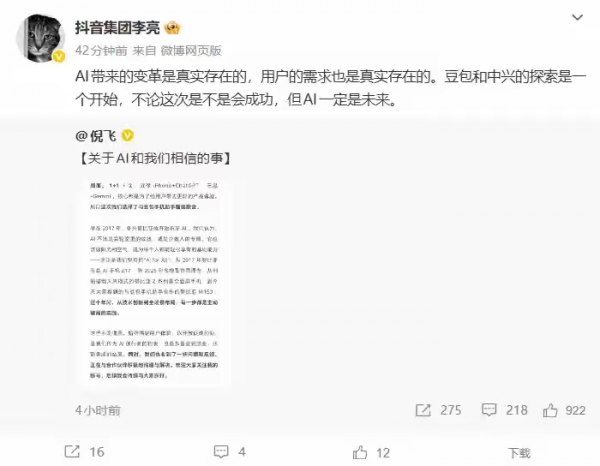
The back-and-forth between these two entities is quite captivating. Ultimately, Doubao Mobile Assistant began to 'step back gradually' within a short span, amidst skepticism, debate, and restrictions from various quarters. Yidu Pro believes that the true significance of this application lies in its potential impact on the smartphone market landscape and the defensive strategies of other tech giants.
| A New Breed: The Second Path for AI Smartphones |
The partnership between Doubao and ZTE, to a significant extent, offers a second avenue for phones to truly embrace the artificial intelligence era.
The integration of AI and smartphones is not a new concept. However, the industry's previous definitions have largely remained at the stage of 'voice assistants (e.g., Apple's introduction of Siri in 2011) + algorithmic optimization,' representing the initial, shallow layer of technology.
A seasoned industry veteran shared with Yidu Pro that the industry has recently entered what is termed the AI smartphone development phase. However, the mode of operation has not been fully clarified. The initial commercialization route has largely been confined to embedding large models. Now, merely scheduling intelligent agents to play an instructional role in smartphone imaging and information processing cannot be considered true AI smartphones.
He further pointed out that the concept of AI smartphones remains undefined. Although Huawei, Honor, Apple, and others are exploring based on their early technological accumulations or system and ecological advantages, Honor has even hinted at launching a RobotPhone next year, integrating AI smartphones, embodied intelligence, and high-definition imaging.
Coincidentally, Doubao's AI smartphone's seamless intelligent interaction experience seems to break through the functional boundaries of traditional AI smartphones, opening up new avenues for the industry's definition of AI smartphones. It can be seen as a beneficial exploration of AI smartphones attempting to progress from the 1.0 stage to the 2.0 stage.
In the eyes of observers, the difference between the two is not merely a technological upgrade but more akin to a transition from tool assistance to 'proactive service.' At least, the engineering evaluations available online have already demonstrated this point.
This phenomenon bears some resemblance to the early-year frenzy surrounding Manus. At that time, Manus amazed the world with its selling point of 'full-process execution.' Its mediator-free decision-making and execution model of 'input demands → output results' was even rumored to be capable of directly replacing humans in stock trading.
Similarly, the core pain point of traditional AI smartphones lies in their passive responsiveness. Users need to trigger functions through specific hands-on operational instructions, and the recognition accuracy is greatly affected by the environment, tone, and the technical programs provided by each app developer. Yidu Pro found that, apart from announcing some AI functions and parameters of the phones at product launches, manufacturers have not actually promoted AI smartphones as a separate main marketing item in the terminal retail market. Even many stores lack a clear understanding of what AI smartphones are.
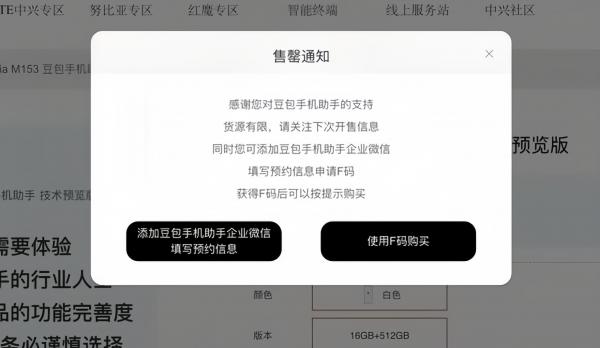
Although Doubao Mobile Assistant is itself an app, it has generated significant market heat, to the extent that the ZTE model has sold out. That being said, the integration of AI mobile assistants or AI agents on smartphones has the technology in place, but true realization still requires overcoming numerous hurdles such as privacy, security, and business models.
| Will Smartphone Manufacturers Compromise Their Core Identity? |
In fact, most smartphone manufacturers have long been exploring AI assistants but have not launched products similar to Doubao's. So, the new question arises: will smartphone manufacturers choose to compromise their core identity to win the competition?
Judging by the laws of industry development, this possibility seems low.
A professional well-versed in the mobile phone business advised Yidu Pro to refer to Huawei's identity, role, and positioning in the intelligent automobile industry. Although some automakers proposed the 'soul theory' earlier on, subsequent practice showed that Huawei and automakers have a mutually beneficial relationship. Even if one party may have a relatively stronger voice, the product leadership and definition it brings are quite impressive.
There is also another layer of reason related to the current competitive landscape of smartphone manufacturers. Most major mobile phone manufacturers that have been striving and intensely competing in the industry for years possess the ability to refine their products in terms of AI, whether it be imaging or systems, which is clearly superior to that of traditional automakers. Some manufacturers only lack large model capabilities, leading some to rely on open-source solutions. However, some manufacturers possess an independent capability system, such as Apple's strengthening of the autonomous synergy between AI and its ecosystem. In this way, there is a possibility of cooperation at their respective levels. However, due to the competition over 'who holds the dominant power over users' smartphones,' it is unlikely that model providers and mainstream smartphone manufacturers will reach a point of complete integration.
Smaller manufacturers, on the other hand, have more potential for scalability.
Doubao's choice of ZTE, a manufacturer with a relatively low market share, is similar to Huawei's smart selection vehicle mode choosing an automaker that was not very well-known at the time. Initially, the goal was to create a market sensation and validate the feasibility of commercial opportunities.
However, from another perspective, Doubao's rise also provides the industry with new development ideas. Honor has shifted from hardware competition to ecological construction through its 'Alpha Strategy.' Doubao's practice proves that in a market with intensifying homogeneous competition, technological route differentiation may be the key to breaking the deadlock.
Whether the Doubao model can become mainstream in the market remains to be seen. On the one hand, major smartphone manufacturers like Apple and Huawei will have their own considerations when cooperating with large model manufacturers. Moreover, under the product architecture of their proprietary operating systems, they are unlikely to grant core permissions to third-party large models. This further confirms that the 'soul theory' in the mobile phone industry seems untenable.
The development history of the mobile phone industry has repeatedly proven that brands capable of leading technological changes are often not giants clinging to traditional advantages but innovators daring to break free from path dependencies.
Doubao is positioned to empower various industries. Whether it can become the Huawei of the automotive industry in terms of AI smartphones requires time to verify and also depends on the development trend of the AI smartphone industry.
| Beyond Souls, Gateways Have Become a New Source of Concern |
Some influential figures regard the emergence of Doubao Mobile Assistant as a continuation of the 'gateway competition.' Zhou Hongyi directly stated that Doubao Mobile Assistant would directly crash through the defensive barriers of major internet companies, prompting executives from Meituan and Taobao to hold emergency meetings and leading to the possibility of major companies launching joint defense agreements.
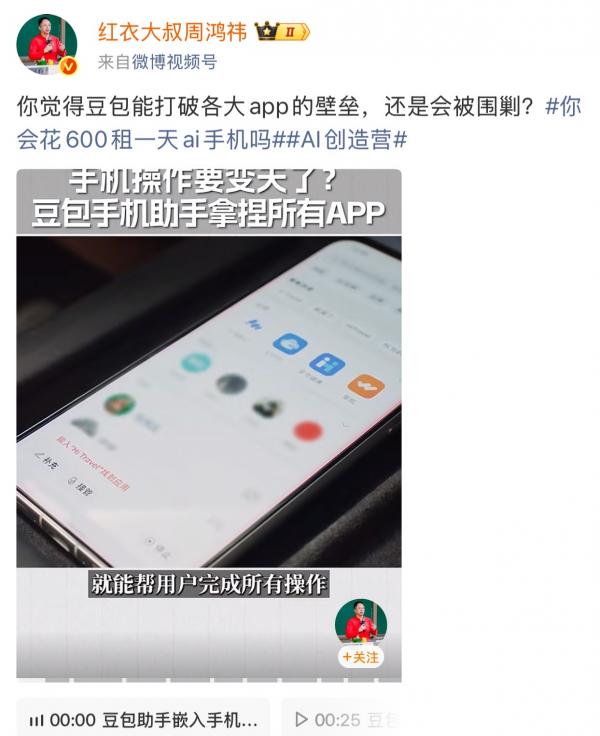
From another perspective, its impact extends beyond smartphone manufacturers to more tech giants, as they are all built upon the app morphology of the mobile internet era.
From the operating system competition in the PC era to the app ecosystem battles in the mobile internet era, and now to the AI terminal competition, the essence has always been a struggle for user attention and usage scenarios. In this war without smoke, various terminals such as AI smartphones, AI glasses, and smart cars are all vying to become the core gateway of the next era.
Reviewing the development history of the tech industry, gateway iterations often signify a restructuring of the industry landscape. In the 1990s, the PC served as the core gateway, giving rise to Microsoft and Intel's 'Wintel Alliance.'
After 2010, smartphones became the primary gateway, spawning industry giants like Apple and Huawei. According to Gartner's 2025 Global Smart Terminal Report, the market size of AI terminals is projected to exceed $1.2 trillion in the next five years, with AI smartphones accounting for 45%, becoming the largest submarket. This implies that whoever can dominate the development direction of AI smartphones may hold the discourse power of the next generation of intelligent terminals.
Of course, various terminal manufacturers are stepping up their layout of AI gateways.
For instance, Xiaomi is constructing a 'human-vehicle-home full ecosystem' through the ecological synergy of smart cars, smartphones, and home appliances. Other giants are expanding AI application scenarios through new categories such as smart glasses and robots.
However, the core of the gateway competition lies in the ecological system behind the terminals. The reason Apple was able to dominate the market with the iPhone back then was not solely due to the superiority of its phone hardware but rather the construction of a closed-loop ecosystem of 'hardware + system + apps.'
Nowadays, the biggest challenge facing Doubao Mobile Assistant is how to quickly establish a comprehensive AI ecosystem. At the hardware level, ByteDance itself is not a smartphone manufacturer, and its cooperation with major smartphone manufacturers remains to be seen. The shipment volumes of smaller smartphone manufacturers also cannot form scale in a short period. Given this situation, hardware tech companies still have ample time to respond.
Non-hardware internet companies, on the other hand, have constructed sufficiently strong commercial gateway barriers in areas such as social networking, gaming, shopping, food delivery, and short videos. Today, they need to consider how to consolidate their moats in the traditional app era.
No one can currently answer how apps and large models will coexist in the future. Wu Yongming, the CEO of Alibaba, boldly predicted in a speech that large models will be the next-generation operating systems, and AI Cloud will be the next-generation computer.
This also explains why major internet companies are flocking into AI hardware markets such as XR glasses and robots, whether through self-research or cooperation.
Behind all these lies the fundamental anxiety over gateways. Whether it is traditional mobile phone product manufacturers or internet company giants, each has a different positioning of their commercial gateways. Doubao Mobile Assistant has merely made everyone feel more 'crisis-ridden.'
Returning to the initial question, is Doubao's take on the 'AI Smartphone' a myth or just a bit of fun? The answer may not lie in the current public opinion but rather in future market practices. Regardless of the outcome, its emergence provides the industry with an important revelation: in today's era of accelerated technological iteration, daring to break through and innovate can almost subvert an entire industry and recreate a new one.
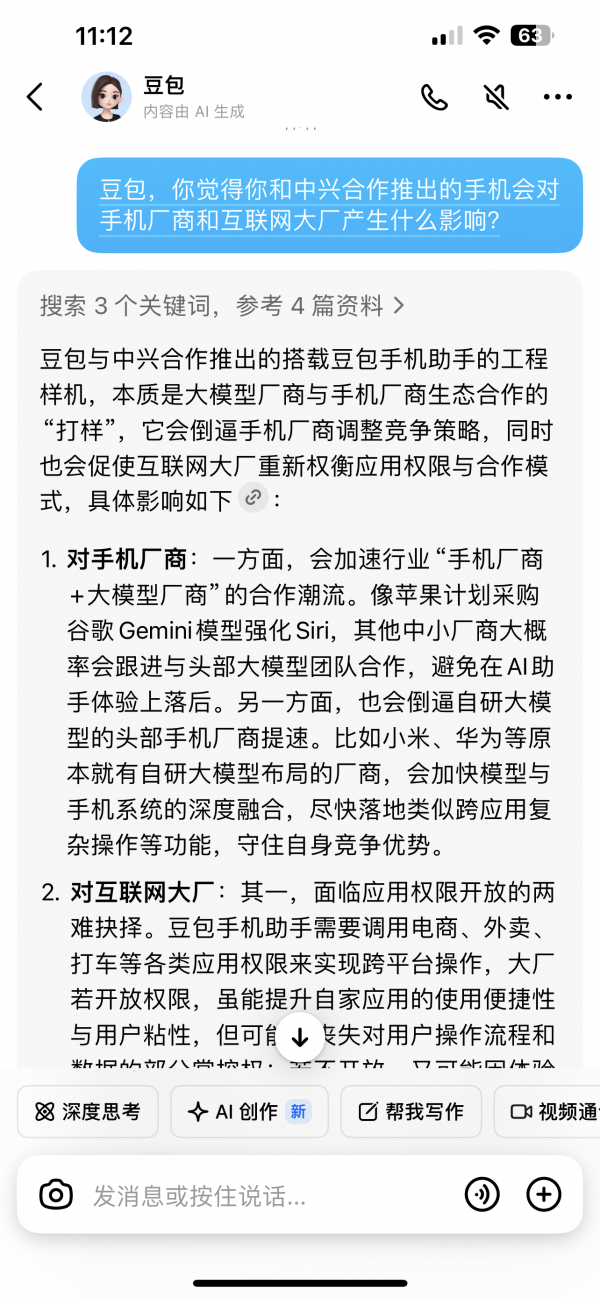
Image sourced from the internet. Rights reserved by the original author.
-
![]()
Hardware is the skeleton, AI is the soul, and data integrates the two
-
![]()
China’s AI Industry: A Unified Pivot Towards Monetization?
-
![]()
New Progress! Infineon Completes Acquisition of ams OSRAM's Non-Optical Sensor Business
-
![]()
35 Million Bet on an Optical Future! Tengjing Technology Makes a Move in AR
-
![]()
Why World Models Get Stuck on Construction Roads in Autonomous Driving Applications
-
Alibaba Initiates Cultural Transformation: Is Jack Ma Making a Strategic Comeback?
-
Tianfeng Heads to Hong Kong for IPO with RMB 3.8 Billion in Funds: Xingyu's Cross-Border Foray into Embodied AI Faces Uncertain Future
-
![]()
Mengshi Auto’s High-End Aspirations Dashed: Huawei Partnership Fails to Revive Sales, New Model’s Entry Price Dips Below 300,000 Yuan