Doubao Phone Goes Viral, Offering Reassurance to Mobile Phone Manufacturers?
 12/16 2025
 618
618
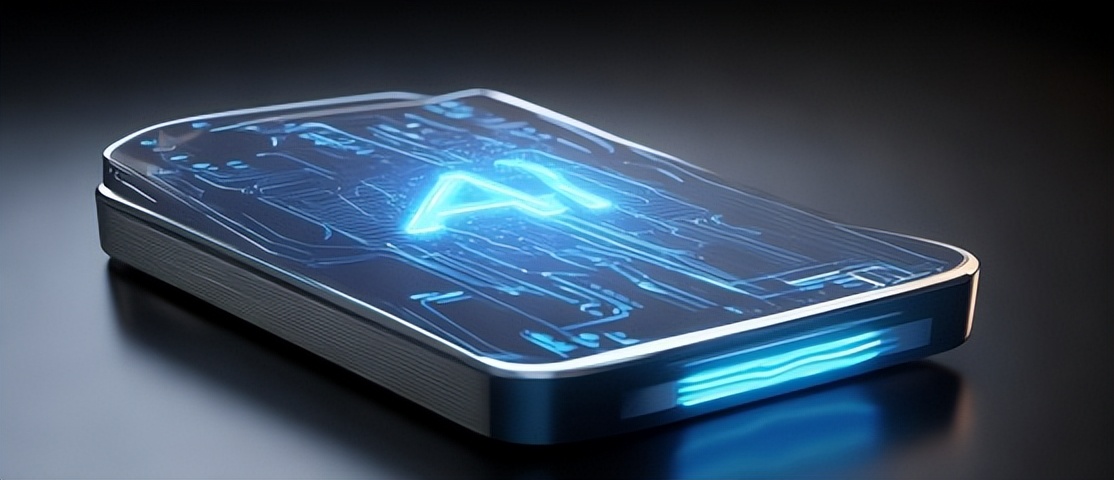
Introduction: Before embracing the 'iPhone Moment,' AI phones should first prepare for the next 5G era.
During its viral phase, the Doubao phone has experienced a rollercoaster of treatment.
On one hand, sales figures don't lie.
The initial batch of 30,000 units sold out in just one day, and on Xianyu (a second-hand trading platform), the phone's resale price was 700 to 1500 yuan higher than the official retail price.
On the other hand, within two weeks of its launch, the Doubao phone faced controversies over privacy, security, and WeChat account bans.
According to The Paper, the Doubao phone is currently restricted when logging into apps like WeChat, Alipay, and Taobao.
Public opinion is sharply divided.
Some are impressed by its ability to order takeout, book flights, and compare prices while shopping, believing the 'iPhone Moment' for AI phones is imminent.
Others dismiss it as mere hype.
It's hard to say who is right.
But one thing is certain: AI phones will remain a hot topic for a long time to come.
I. Big Players Flock In: The Value of AI Phones Extends Beyond AI
From a practical standpoint, AI phones may still be far from their 'iPhone Moment.' However, market performance indicates growing consumer acceptance.
An IDC report forecasts that in 2025, China's new-generation AI phone shipments will reach 118 million units, up 59.8% year-on-year, accounting for 40.7% of the overall market. This growth rate far exceeds that of the broader smartphone market.
Phone manufacturers have also rolled out self-developed AI agents.
Over the past year or so, Honor's YOYO, Huawei's Xiaoyi, Xiaomi's Super Xiaoai, Vivo's Blue Heart Xiaov, and OPPO's Xiaobu have made their debuts.
The smartphone market is a typical example of a mature industry. The seemingly stable landscape, where five major players dominate, is actually fragile, with none daring to rest on its laurels.
To stay in the game, the basic requirement is to 'have what others have.' Hence, technologies like fast charging and 5G quickly became standard features across all brands shortly after their introduction.
AI is likely to follow a similar path, eventually becoming a standard feature in smartphones – 'I may not use it, but you can't do without it.'
Moreover, AI is currently one of the hottest sectors in the capital market, implying cheaper traffic, lower financing costs, and access to more talent.
According to Jiemian News, AI industry financing in the first half of 2025 alone has surpassed the total for the entire year of 2024.
Lei Jun once expressed strong resistance to making cars, believing that focus was key to success.
However, after conducting research in early 2021, he realized that Xiaomi's foray into car manufacturing was urgent. He discovered that smart electric vehicles had replaced smartphones as the epitome of cutting-edge technology.
If Xiaomi didn't make cars, it risked falling behind in frontier technologies.
Thus, when giants flock to a hot sector, they compete not just for market share but also for talent and capital.
If you don't follow the trend, you risk having your talent siphoned off, eventually leading to decline.
The current hype around Robotaxi and embodied AI is similar. Short-term profitability may be elusive, but no major player dares to remain indifferent.
Of course, there are differences in capabilities and strategies among giants, leading to varying levels of commitment to emerging trends.
For instance, while Huawei, Xiaomi, OPPO, and Vivo may develop AI phones simply to 'keep up with the Joneses,' Honor treats it as a core strategic initiative.
In the first half of this year, Honor announced it would invest over $10 billion over the next five years to build an AI ecosystem terminal. It has also established multiple AI industry departments, employing over 2,600 people in related fields.
This move likely stems from Honor's desire not just to 'get on the AI train' but to 'board it first,' capturing consumer mindshare ahead of competitors.
According to the Tianyancha app, Honor's full name has been changed from 'Honor Terminal Co., Ltd.' to 'Honor Terminal Co., Ltd. (Joint-Stock).'
From a results perspective, Honor's investment has begun to pay off.
In October this year, Honor unveiled its latest MagicOS 10, described as a self-evolving AI agent operating system.
The new AI agent, YOYO, continuously evolves through daily interactions with users.
According to Global Times, the scenarios supported by Honor YOYO have surged from over 200 to over 3,000 in just three months, covering high-frequency life needs such as shopping comparison, travel planning, and health management.
AI functionality has gradually become a standout feature of Honor's products. Previous highlights like 'ordering 2,000 cups of coffee with one sentence' and 'learning a completely new board game in a dozen minutes' at this year's launch event have also resonated with users.
In contrast, while the AI agents of Huawei, Xiaomi, OPPO, and Vivo each have their unique features, none have gained as much traction as Honor's.
When people think of Xiaomi, the human-car-home ecosystem comes to mind.
For Huawei, the kylin (Kirin) chip + HarmonyOS system is likely the first thing that users think of.
OPPO and VIVO are still primarily associated with design and imaging.
This differentiation forms the basis of competition. AI may become Honor's unique competitive edge, allowing it to maintain a first-mover advantage even if AI phones become commonplace.
Firstly, from a functional perspective, AI agents improve with use. The more users, the faster the iteration, leading to a greater competitive advantage.
Secondly, consumer mindshare will form a strong moat.
For instance, although 5G has become standard, when asked 'Which company excels in 5G technology?' most people still think of Huawei first.
This is the power of branding.
Huawei phones command a premium not just because of the Kirin chip and HarmonyOS but also due to the emotional value associated with Huawei's technological prowess.
Xiaomi's cars stand out in the crowded new energy vehicle market because of their unique positioning as sports sedans and sports SUVs in the 200,000-300,000 yuan price range.
Brands that find growth in mature markets almost always possess a distinct 'personality.' After all, in an era of scarce attention, being ordinary means being overlooked.
During China's subsidy period, Pinduoduo chose to subsidize products at its own expense, incurring 'significantly higher costs than peers,' to maintain its low-price image.
JD.com's 'Chunxiao Plan' to promote its third-party (3P) business has been running for several years, yet its self-operated business remains the cornerstone. This is because only through self-operation can JD.com solidify its 'quality' branding.
While the value of branding is hard to quantify, it is crucial in competition.
When Honor announced its $10 billion investment in building an AI ecosystem terminal over the next five years, many critics deemed it too risky. However, if it helps Honor stand out more prominently, the investment will likely prove worthwhile.
Smartphone Price Hikes: Where Is the Added Value?
In the second half of this year, smartphones have experienced a wave of price increases.
According to China Newsweek, since October, new models released by domestic manufacturers have seen price hikes ranging from 100 to 600 yuan across different configurations compared to their predecessors.
On the evening of October 23, the Redmi K90 series was launched, and its pricing immediately drew criticism.
The reason was that Redmi had widened the price gap between memory configurations. The difference between the 12GB+512GB and 12GB+256GB versions expanded from the usual 400 yuan to 600 yuan.
Xiaomi President Lu Weibing responded on Weibo the next day, attributing the memory price hike to upstream cost pressures. He lamented, 'We cannot change the global supply chain trends. Storage cost increases have far exceeded expectations and will continue to intensify.'
This highlights the limitations of low-price competition: the duration of price wars is dictated by the supply chain.
Consumer dissatisfaction is understandable: where is the corresponding value increase for the price hike?
In contrast to the Redmi K90, the iPhone 17 series offers a different scenario. The price difference between the 256GB and 512GB versions of the standard iPhone 17 is 1,200 yuan, while the difference for the iPhone 17 Pro Max is as high as 2,000 yuan.
Yet, consumers continue to place orders. Within two months of its domestic launch, the iPhone 17 series has activated over 10 million units.
The key difference lies in the fact that Apple's high added value stems from its proprietary chips and operating system, whereas Redmi's value is concentrated in the manufacturing link (production process).
A general rule is that if a product's value is concentrated in the manufacturing link , prices will continue to decline.
A decade ago, a 55-inch TV could sell for 5,000 yuan; now, it costs just 1,500 yuan. According to Zhiyan Consulting, from 2016 to 2023, the average price of air purifiers dropped by 34%.
The reason is that the manufacturing link is replaceable. If you charge too much, low-cost alternatives will quickly emerge.
In contrast, truly irreplaceable link often have deep moats, making it hard for latecomers to catch up.
Take self-developed chips, for example. The astronomical costs are just the beginning. Even if a manufacturer designs a chip more advanced than Apple's A-series, it's useless if TSMC cannot manufacture it.
And even if TSMC can manufacture it, convincing consumers to buy is another challenge. Xiaomi's Xuanjie O1 boasts parameters comparable to Apple's A18 Pro, yet its flagship phones still use Qualcomm's Snapdragon 8 Supreme Edition chip.
The situation is similar for self-developed operating systems. While some manufacturers may create systems better than iOS and Android, convincing users to switch is an uphill battle.
An operating system can only attract users if it has a rich software ecosystem, which in turn requires a large user base.
Thus, while HarmonyOS's user base is growing rapidly, it may still be a long way from Yu Chengdong's vision of 'one-third of the global market.'
Therefore, to overtake Apple, domestic manufacturers must break free from the framework defined by Apple and forge their own path.
AI may present this opportunity.
According to China Business Journal, Apple Intelligence, which Apple has high hopes for, has repeatedly delayed multiple features due to failing to meet the company's testing standards, described by internal employees as a 'ship in a storm.'
Apple's AI struggles contrast sharply with the Doubao phone's viral success and Honor AI's emergence.
If domestic manufacturers can maintain their lead and become the defenders of future AI phones, surpassing Apple may no longer be a distant dream.
After all, if a phone can truly solve everything with one sentence, few would prefer to click and swipe manually.
Of course, this on the premise of (prerequisite) is that AI phones can deliver truly disruptive experience upgrades. After all, the original iPhone didn't lead an industry revolution by constantly promoting itself as a smartphone; it did so by being genuinely useful.
The Doubao phone's viral success indicates that consumers are willing to pay for AI functionality.
This should reassure manufacturers betting on AI phones: if the 'iPhone Moment' for AI phones arrives, there will be a market for it.
As for whether the 'iPhone Moment' for AI phones will ever come, we'll have to wait and see.
-
![]()
Hardware is the skeleton, AI is the soul, and data integrates the two
-
![]()
China’s AI Industry: A Unified Pivot Towards Monetization?
-
![]()
New Progress! Infineon Completes Acquisition of ams OSRAM's Non-Optical Sensor Business
-
![]()
35 Million Bet on an Optical Future! Tengjing Technology Makes a Move in AR
-
![]()
Why World Models Get Stuck on Construction Roads in Autonomous Driving Applications
-
Alibaba Initiates Cultural Transformation: Is Jack Ma Making a Strategic Comeback?
-
Tianfeng Heads to Hong Kong for IPO with RMB 3.8 Billion in Funds: Xingyu's Cross-Border Foray into Embodied AI Faces Uncertain Future
-
![]()
Mengshi Auto’s High-End Aspirations Dashed: Huawei Partnership Fails to Revive Sales, New Model’s Entry Price Dips Below 300,000 Yuan