AI Toy Extravaganza: The 'Explosive' Story of Big Tech Ecosystems
 01/27 2026
 536
536
Author: Lin Feixue
Editor: Hu Zhanjia
Operations: Chen Jiahui
Produced by: LingTai LT (ID: LingTai_LT)
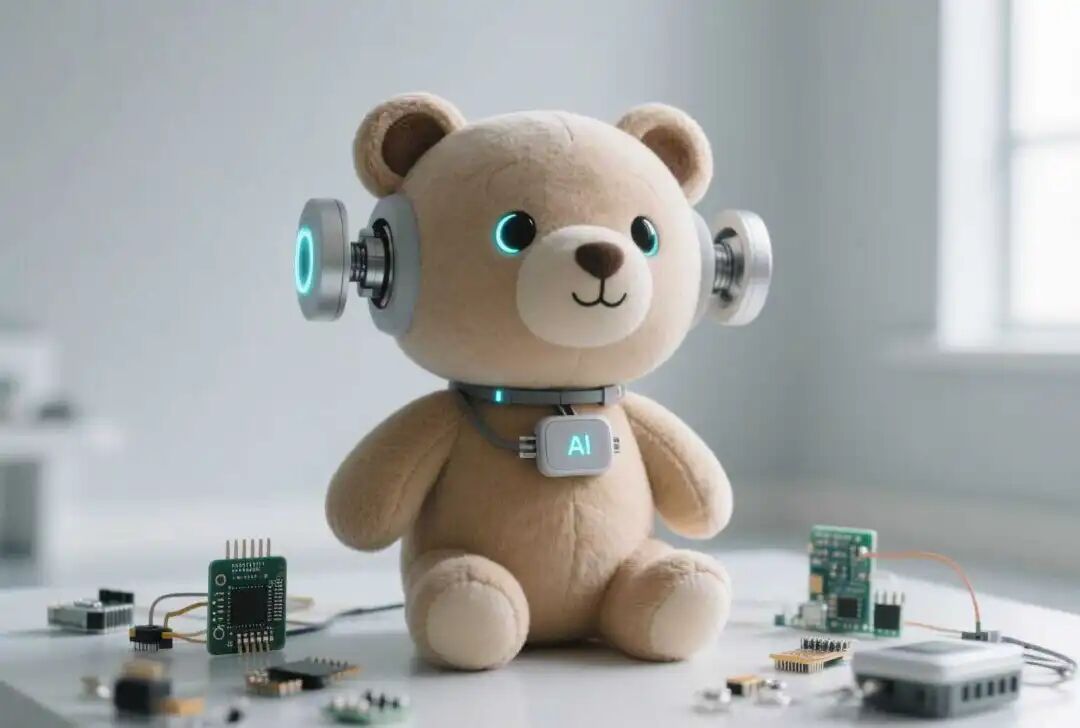
Header Image: Sourced from the public domain online
In the toy factories of Rongcheng County, Hebei, the busiest employees are no longer seamstresses but technicians fine-tuning intelligent modules. According to a CCTV report in December 2025, over a dozen local enterprises have transitioned to developing AI toys.
At CES 2026 in Las Vegas, the AI virtual pet Sweekar, reminiscent of the classic 'Tamagotchi,' drew massive crowds.
It reacts with facial expressions to every spoken sentence.
A more vivid scenario was depicted in a Beijing Daily report the same month: a 6-year-old child cheered excitedly while embracing an 'AI Ultraman,' while Huawei's co-branded 'Smart Silly' toy sold out within just 10 seconds of its release. The market's enthusiasm is undeniable, but a stark contrast emerges: why are more big tech companies not participating in this nationwide AI toy craze and tech narrative?

AI Toys: More Than Just Playthings
Traditionally, toys were purchased primarily for entertainment, with aesthetics and tactile appeal driving consumer choices. Now, AI toys are sought after for their functionality—users expect them to engage in conversation, provide companionship, educate children, or even serve as emotional outlets. While both are labeled 'toys,' consumer motivations have shifted significantly. The aforementioned CCTV report described AI toys as products capable of conversation, learning, and memory retention, suitable for both early childhood education and a variety of other scenarios.
This functionality is not achieved by merely embedding technology into a doll's body but by making toys the gateway for AI into households. Consumers are not purchasing a plush exterior but an intelligent interactive tool capable of conversation and play. According to reports from Tianyancha media and Xinhua Net's May 2025 financial focus article, AI toys are viewed as a crucial scenario for deploying large language models.
Viewing AI toys as merely 'smarter toys' underestimates their transformative impact on the industry. Previously, toy factories competed on three fronts: manufacturing and delivery capabilities, channel and shelf presence, and IP/content supply. With the advent of AI, a new challenge arises: ensuring sustained engagement without causing boredom.

▲Figure: AI Virtual Pet Sweekar
Disposable dolls may invite fickleness, but interactive tools that converse and understand foster dependency. This 'need to chat occasionally' makes AI toys feel like long-term companions rather than mere shelf commodities.
Changes on the demand side are equally significant. Toys now serve family relationships beyond just children. Parents purchase AI toys to ensure their children are heard, guided, and accompanied, while young adults may buy AI plush toys not out of nostalgia but for a nonjudgmental listener amid stress.
According to data from Tianyancha and MIIT, China's AI toy market reached 24.6 billion yuan in 2024 and is projected to hit 29 billion yuan in 2025. This rapid growth stems from shifting consumer priorities—from momentary play to long-term companionship.
AI toys leverage toys' approachable forms and household settings to deliver AI's conversational abilities, content supply, voice, and character design, all packaged into purchasable items. The toy is merely a vessel; what's consumed is the interactive experience and responsive companionship.

Toys First, Big Tech Second: A Strategic Division
For most consumers, big tech companies seem secondary or even hidden in the realm of AI toys. This reflects their backend role in the industry—a strategic division of labor for sustainable development.
Toy manufacturing involves supply chain management, materials, craftsmanship, quality control, offline channels, IP licensing, and co-branding—all areas requiring long-term refinement. Big tech excels in large model capabilities, voice recognition, content supply, computing power, and platform tools. By empowering toy factories with core technologies, big tech helps create AI toys that sell well and keep users engaged.
According to data from Tianyancha and Statista, the global AI toy market is expected to grow at a 14%–16% CAGR over the next decade, potentially exceeding $60 billion by 2034.
The initial buzz around AI toys may stem from novelty items like countertop pets, but sustained use relies on a collaborative network between big tech and toy factories. Manufacturing handles touch and delivery, technology supplies models and computing power, content updates characters and dialogue, channels ensure reach and operations, and after-sales resolves issues.
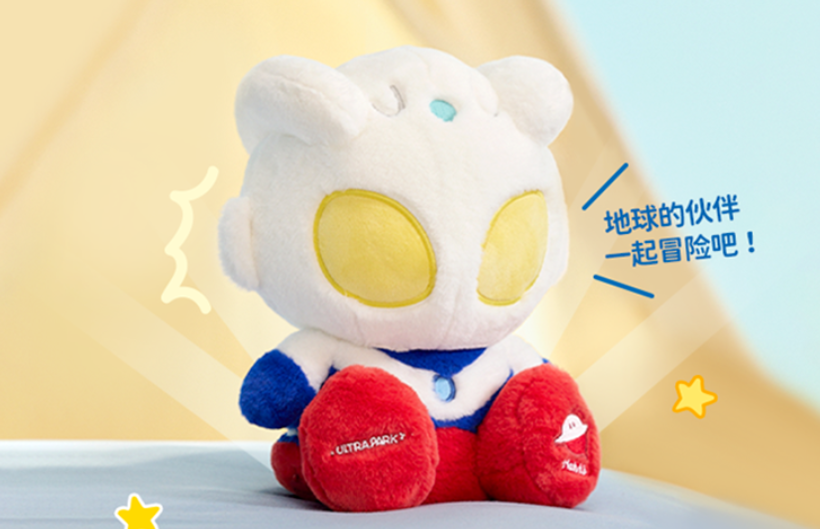 ▲Figure: Ultraman AI Interactive Toy
Any weak link in this chain could reduce AI toys to primitive playthings, jeopardizing repurchases and reputation.
The 'toys first' approach stems from a deep industry understanding of companion needs. Toy factories know that children crave stories, adults seek comfort, and elders need reminders. Cuteness is not childishness but a design language that lowers defenses. AI toys resembling cold electronics struggle to enter daily life.
Toy factories excel in this area far more than most tech teams.
The 'big tech second' approach leverages technical empowerment and scalability. Big tech need not craft every doll; it provides replicable capabilities like voice recognition, dialogue generation, content modules, computing support, and toolkits. Without big tech, sustainable AI toys might not exist.
This explains why big tech prefers the backend role. Hardware involves inventory, delivery, and after-sales, with lower profit margins than platform services. By positioning themselves as capability suppliers, big tech expands coverage across brands and categories while focusing iterations on technology, software, and content for faster market response.
Previously, success in the toy industry hinged on channel presence and style. Now, it's about delivering stable companionship. Toy factories no longer compete solely on design; big tech no longer on model parameters. Both now vie to 'understand' users in household scenarios, with ecosystem rules determining the outcome.

Ecosystem Dynamics: Rules Shape Success
As markets scale, covering the entire chain from hardware to cloud, content, and operations becomes costly and risky. Division of labor aligns with business logic. Collaborations between big tech and industrial belts form ecosystem anchors.
On June 12, 2025, the 2025 AI Toy Industry Innovation and Development Conference, hosted by Baidu Intelligent Cloud and the Chenghai District Government with support from the Chenghai Toy Association and Shifeng Culture, brought together global AI tech firms, renowned IP holders, and industrial chain partners. Themed 'Cluster Synergy · AI Breakthrough,' it explored ecosystem building and innovation paths, accelerating traditional toy manufacturing's upgrade to high-end intelligent production. Similarly, on January 20, 2026, JD launched the JoyInside initiative to advance industrial belt development, lowering access barriers through capability supply.
Big tech now focuses on the long-term supply of full-stack AI toy technologies and collaboration efficiency, using top-tier models and edge intelligence to ensure stable, sustainable experiences. With sustained technical supply, toy factories see faster sales growth, channel stability, and an ecosystem where big tech provides universal foundations while brands differentiate on aesthetics and content.
Ecosystem expansion relies on rules—akin to a chassis. Stability here enables everything else. First, rules define access conditions. Backend big tech can set AI toy technical standards, such as computing quotas, model stability, data retention boundaries, and account permissions. Toy factories adopting a big tech's ecosystem gain a strategic edge.
Over time, as most AI toys operate under standardized rules, channels prefer integrating such capabilities. Whoever controls access standards shapes industry norms.

▲Source: Shantou Federation of Industry and Commerce
Second, rules govern interaction boundaries. AI toys' value lies in interaction, but missteps—especially in households—can alienate users. A single inappropriate response may prompt parents to power off the device. Big tech can design age-specific dialogue strategies, topic whitelists/blacklists, and conversation mechanisms, then license these to toy factories to prevent mishaps.
For toy factories, such rules are safety nets, not embellishments. Finer rules clarify boundaries, stabilize experiences, and build parental trust for long-term use.
Third, rules address long-term responsibility. AI toys aren't one-time purchases but services requiring sustained support. Minor issues—disconnections, delays, false activations, or inaccurate content—can erode trust over frequent use. Big tech can establish responsibility mechanisms based on technical capabilities, ensuring partners adhere to unified standards.
As the market scales, channels and consumers favor AI toys with clear responsibility chains. Big tech whose rules become trust thresholds can deter competitors from replicating their ecosystems.
Beyond rules, competition shifts to trust and controllability. For example, in households, children face stricter usage boundaries, and parents prioritize privacy and content safety. At the 2025 National Cybersecurity Awareness Week's Personal Information Protection Forum on September 16, 2025, initiatives like the 'Smart Toy Personal Information Protection Pledge' were unveiled.
When AI toys offer persistent dialogue and content generation, rules become their core competitive edge. Big tech's ability to set and promote rules will determine access to broader scenarios and channels. Mature safety governance, stable privacy strategies, and sustainable monitoring and updates are critical for securing AI toys' future.

Epilogue
In the opening scene of the Beijing Daily report, a 6-year-old's exclamation—'It really talks!'—while hugging an 'AI Ultraman' instantly transported many adults back to their childhood. Toys are no longer inert objects but responsive companions. They don't attract users with grand visions but with simplicity: the ability to converse, chat, and keep company.
As this scenario enters more households, big tech's backend role becomes less mysterious. The AI toy craze won't sustain on novelty alone but on a long-term race where stable companionship, smarter 'brains,' and clearer rules determine who remains on users' desks and bedsides.
End
-
![]()
Hardware is the skeleton, AI is the soul, and data integrates the two
-
![]()
China’s AI Industry: A Unified Pivot Towards Monetization?
-
![]()
New Progress! Infineon Completes Acquisition of ams OSRAM's Non-Optical Sensor Business
-
![]()
35 Million Bet on an Optical Future! Tengjing Technology Makes a Move in AR
-
![]()
Why World Models Get Stuck on Construction Roads in Autonomous Driving Applications
-
Alibaba Initiates Cultural Transformation: Is Jack Ma Making a Strategic Comeback?
-
Tianfeng Heads to Hong Kong for IPO with RMB 3.8 Billion in Funds: Xingyu's Cross-Border Foray into Embodied AI Faces Uncertain Future
-
![]()
Mengshi Auto’s High-End Aspirations Dashed: Huawei Partnership Fails to Revive Sales, New Model’s Entry Price Dips Below 300,000 Yuan