Is Samsung's 'Home Base' at Risk? Google's AR Glasses Venture Might Be Steered by Chinese Manufacturers
 02/02 2026
 534
534
The landscape of the smart glasses market in 2026 has undergone a dramatic transformation.
While the entire industry is eagerly anticipating the next move from the 'Android XR Alliance' (comprising Google, Samsung, and Qualcomm), whispers from the XR Research Institute suggest that this seemingly unbreakable alliance is showing signs of strain. 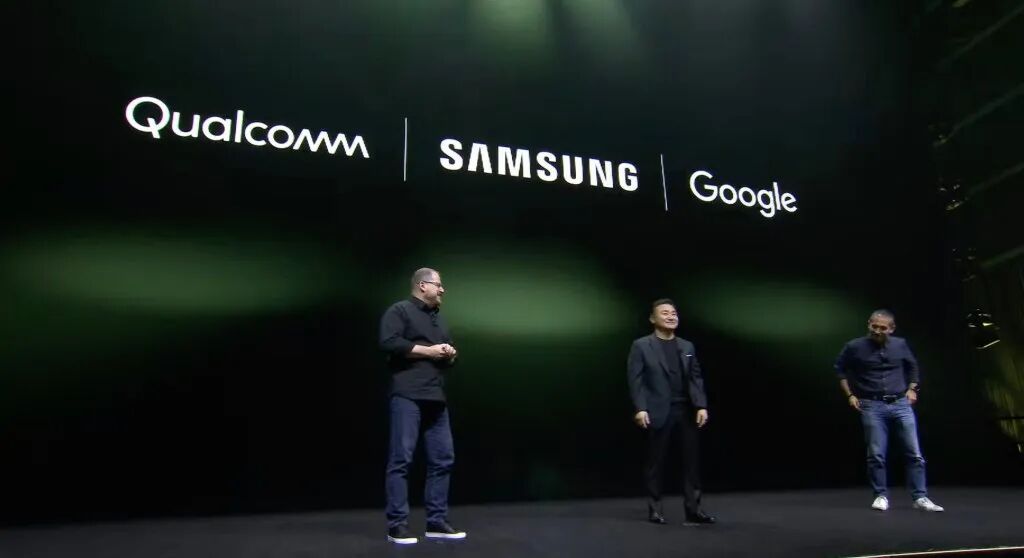
Image Source: mixed-news
Faced with Samsung's cautious approach to hardware specifications, Google, eager to deploy its Gemini AI, is now casting its eyes towards Hangzhou, China.
According to insiders at the XR Research Institute, Rokid is on the verge of clinching a deal with Google, potentially becoming the first brand globally to mass-produce waveguide AR glasses with native Gemini capabilities. Meanwhile, Samsung's similar offering, traditionally a 'core ally' in Google's ecosystem, may see its launch delayed behind Rokid's due to adjustments in its R&D cycle.
This isn't just a race for commercial partnerships; it could also signal a triumph for the 'Chinese industrial chain' over the 'Korean industrial chain.' 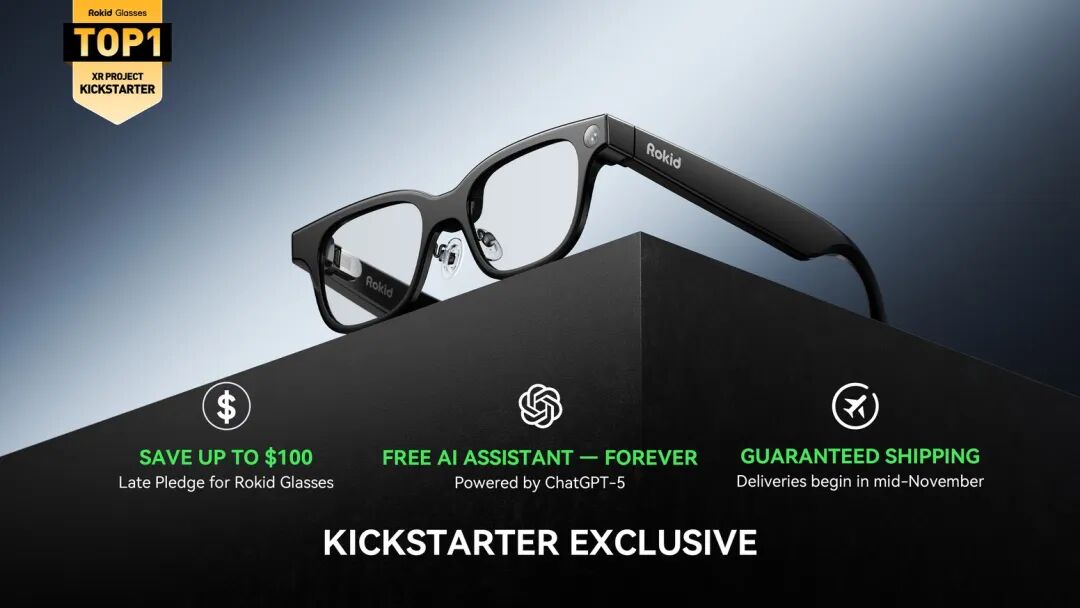
Rokid Glasses set a new record in overseas crowdfunding. Image Source: kickstarter
01
Google's 'Urgency' and Samsung's 'Big Brand Burden'
Why did Google have a change of heart? The answer is straightforward: time is of the essence. 
In the AI hardware race, Meta's Ray-Ban glasses have already proven the market, and OpenAI is quietly building momentum. Google, with one of the world's most powerful multimodal models, finds itself in an awkward position—Gemini has the brains but lacks the 'eyes' that can be worn on users' faces all day.
Google initially placed its hopes on Samsung. However, according to the XR Research Institute, Samsung exhibits classic 'big brand perfectionism.' Especially after a series of strategic adjustments and restarts in its MR headset project targeting Vision Pro, Samsung's definition of AR glasses has become more conservative and stringent. This 'domino effect' from the MR project delay has forced the AR glasses mass production schedule to slow down.
Google can afford to wait, but Gemini cannot.
In this state of urgency, Google desperately needs a 'Ready to Ship' hardware platform. Chinese manufacturers, with their lightning-fast decision-making and mature supply chains, seem to be Google's only viable option.
02
Google's Dual Strategy: XREAL on One Side, Rokid on the Other
According to insiders at the XR Research Institute, Google has actually charted two distinct paths for integrating Gemini into AR glasses:
Path A: Waveguide Glasses. These are characterized by their extreme thinness and lightness (<50g), with an appearance akin to regular glasses, making them suitable for all-day wear.
Path B: MWG Technology Glasses. These offer a wider field of view and more immersive visual effects, with spatial computing capabilities, but may weigh up to 100g without the computing unit. These products can be seen as 'lightweight VR' or 'large field-of-view AR.' 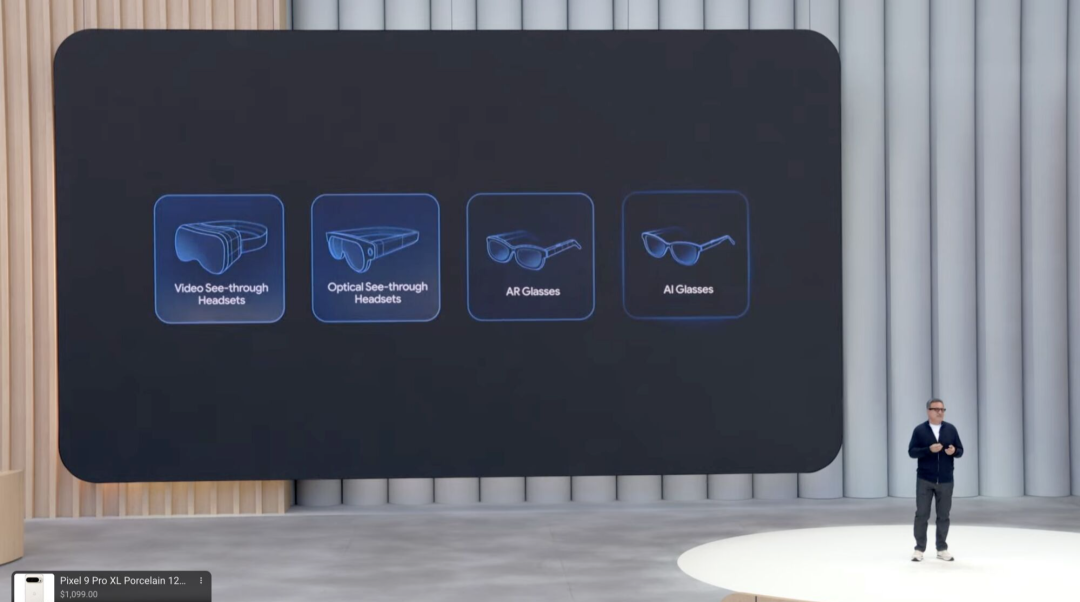
Google's four XR product categories announced at its launch, from left to right, are VR headsets, optical see-through headsets (i.e., 'MWG glasses' in this context), AR glasses (i.e., waveguide glasses here), and AI glasses (display-less glasses). Image Source: Google Launch Event
On the MWG immersive path, Google chose to partner with Chinese manufacturer XREAL early on and aimed to build its Android XR ecosystem on this foundation:
Technical Origins: In late 2023, Google acquired core MWG (Mixed Waveguide) technology patents through its purchase of the Chinese company 'Antvision.' This technology achieves an ultra-wide field of view (up to 120°) through 'polarization folding,' which is Google's key to creating 'immersive AR.'
Public Debut: On May 21, 2025, Google officially unveiled the Project Aura at its I/O Developer Conference, marking its first appearance as the inaugural AR hardware carrier of the Android XR ecosystem.
Scheduled Launch: On December 9, 2025, at The Android Show event, Google further disclosed product details of Project Aura and anticipated its official launch in 2026.
 Project Aura prototype. Image Source: extremetech
On the waveguide glasses path, which is more geared towards everyday wear for the general public, Google's initial choice was Samsung, but recently, it has shifted its focus to Rokid.
The key reason for Rokid's success in 'securing its spot' at this juncture lies in its intense investment and scalable mass production capabilities in waveguide solutions.
The numbers speak for themselves. According to XR Research Institute data, Rokid is currently the brand with the highest shipment volume of global waveguide glasses.
2024: The brand with the highest shipment volume of global waveguide AR glasses was Microsoft (HoloLens 2), with annual shipments of approximately 50,000 units.
2025 Boom: Rokid's monthly shipments have surged to as many as 30,000 units, nearly achieving what the past giant accomplished in six months in a single month.
2026 Goal: Rokid has revealed through multiple channels that it aims to lead the waveguide field in 2026, with a target shipment volume exceeding 1 million units.
This 'million-plus' delivery confidence is precisely what Google, eager to popularize Gemini, values most.
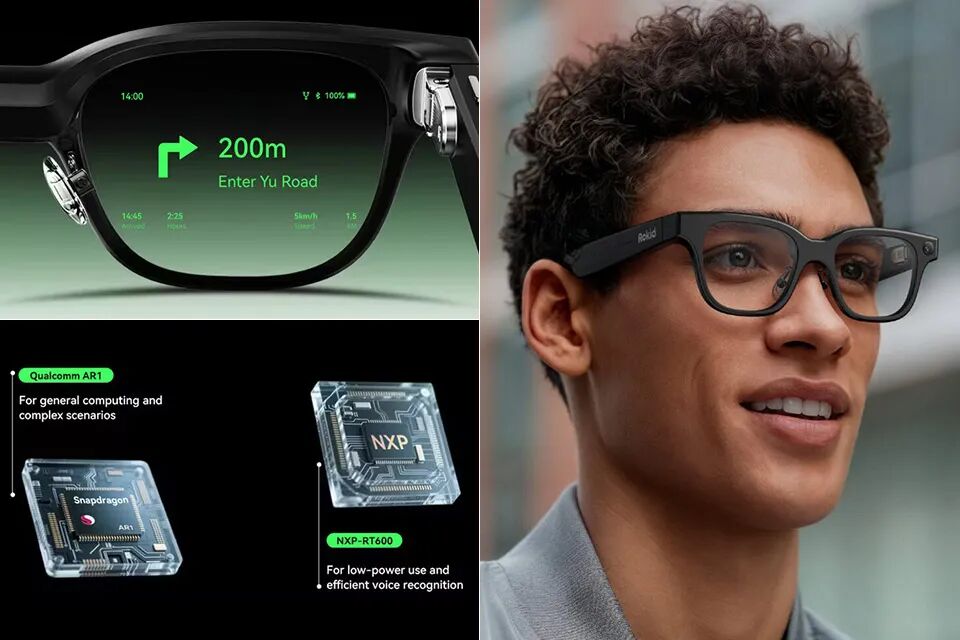 Rokid Glasses equipped with Qualcomm AR1 chip and NXP MCU, resembling regular glasses. Image Source: techeblog
03
Samsung's Predicament: Early Bird, Late Arrival
If the rumors hold true, Samsung finds itself in the most precarious position.
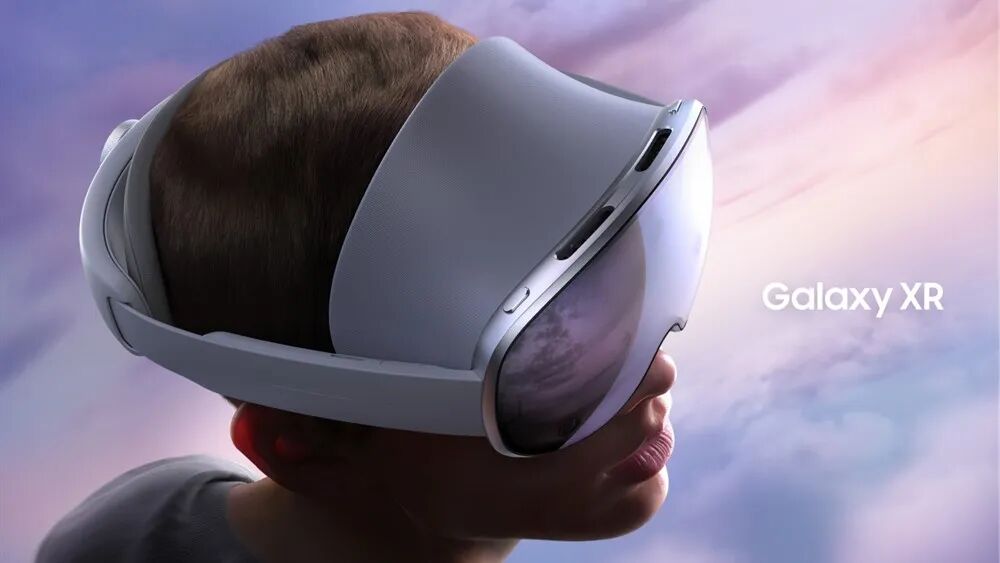 Samsung VR headset. Image Source: Samsung
As the 'leader' of the Android camp (outside of China), Samsung boasts the strongest brand and the widest overseas channels but lacks 'agility' in the AI era.
In the AR glasses category, which demands 'simplification,' Samsung often carries too much baggage—wanting both Ultimate Picture Quality and Long-lasting Battery Life and Extreme Thinness and Lightness. This 'have it all' product philosophy has resulted in its products being unable to leave the lab.
Chinese manufacturers, on the other hand, adopt a 'scenario-driven' approach—since it's glasses, they focus on delivering the ultimate glasses experience, making compromises elsewhere.
Experts from the XR Research Institute believe that if Rokid can release its product first, it will be a landmark event. It signifies that in the era of AI-defined hardware, agile development and precise definition may be more crucial than mere brand prestige.
04
Script Flip: Who is the Real 'Backup Plan'?
The underlying logic behind this revelation is actually an 'unexpected yet plausible' 'role reversal.'
Looking back at Google's initial intentions in laying out XR, the original script may have been written for Samsung: having Samsung, the overseas Android leader, lead the 'charge' and directly compete against Apple and Meta; while Chinese manufacturers may have initially been seen merely as supply chain supplements or even just backup plans.
But circumstances often dictate outcomes.
Faced with Meta Ray-Ban's relentless advance and the fleeting window of opportunity in AI hardware, Samsung's sluggishness has left Google with no choice but to look elsewhere.
When Rokid and XREAL forge ahead with mature mass production solutions, the Chinese contingent, once seen as 'backup plans,' has actually taken up the main banner of 'countering Meta.' Meanwhile, Samsung, the originally highly anticipated 'main force,' if it continues to miss opportunities amidst hesitation, may well end up becoming the biggest 'backup plan' in this AI war.
History repeats itself: wasn't half of the Android smartphone market conquered step by step by Chinese manufacturers in this manner? Do you think Chinese brands can outshine the 'Koreans'? Share your thoughts in the comments section.
END
-
![]()
Hardware is the skeleton, AI is the soul, and data integrates the two
-
![]()
China’s AI Industry: A Unified Pivot Towards Monetization?
-
![]()
New Progress! Infineon Completes Acquisition of ams OSRAM's Non-Optical Sensor Business
-
![]()
35 Million Bet on an Optical Future! Tengjing Technology Makes a Move in AR
-
![]()
Why World Models Get Stuck on Construction Roads in Autonomous Driving Applications
-
Alibaba Initiates Cultural Transformation: Is Jack Ma Making a Strategic Comeback?
-
Tianfeng Heads to Hong Kong for IPO with RMB 3.8 Billion in Funds: Xingyu's Cross-Border Foray into Embodied AI Faces Uncertain Future
-
![]()
Mengshi Auto’s High-End Aspirations Dashed: Huawei Partnership Fails to Revive Sales, New Model’s Entry Price Dips Below 300,000 Yuan