From 'Single Product Dominance' to 'Ecosystem Victory': Paradigm Shift in the Handheld Imaging Market
 03/13 2026
 666
666
The AWE Conference is currently in full swing, with this year's theme being 'AI Technology, Enabling a Smarter Future'.
After walking around, while the new products were indeed eye-catching, what touched me more was a deeper observation: nearly all brands are undergoing a fundamental shift in their product logic.
In the AI era, the single-product mindset is fading, and cross-device intelligent connectivity and ecosystem interconnection have become the true main themes.
Traditional home appliance giants like Haier and Fangtai are transforming into ecosystem brands.
This seems to be a new rule of the AI era and the source of the growing value of ecosystem brands.

Coincidentally, I have recently been researching content in the video field and specially (deliberately) visited the handheld imaging booths.
When I compared the ecosystem trend I saw at AWE with the current state of this niche market, I noticed a similar trend and it sparked some thoughts on the future direction of the handheld imaging industry.
Dramatic Changes in the Handheld Imaging Market Landscape
Is the Ecosystem Moat the 'Game-Changer'?
The handheld smart imaging device market has long been a typical 'hardware parameter competition' arena.
Technical specifications such as stabilization level, resolution, and waterproof depth form the main focus of product iteration and shape consumers' choice logic.
However, this competitive paradigm is now being shaken.
The dramatic shift in the action camera market may be the most convincing illustration.
According to Jiuqian Zhongtai data, this track (sector), which was defined and dominated by the American brand GoPro for nearly a decade, underwent a significant power shift last year:
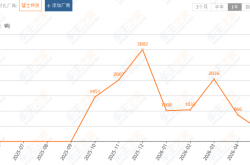
In 2022, GoPro's HERO series still held an absolute 73% global market share; however, by the first three quarters of 2025, DJI had surpassed it with a 56% market share, while GoPro fell to 18%.
More notably, DJI launched another offensive in the second half of 2025, crossover (cross-border) entering the 360-degree camera market and achieving remarkable results.
Jiuqian Zhongtai data shows that at the beginning of the year, Insta360 still held a near-monopoly with 91% of the market; however, after the launch of Osmo 360 in late July, DJI captured 43% of the market share in just one quarter with lower pricing and a stronger ecosystem, while Insta360's share dropped to 49%, breaking the long-term monopoly.
Years of dominance, short-term displacement. How did DJI achieve such rapid multi-field reversals? If it were just about parameters, it might not have been possible. The answer may lie in the word 'ecosystem'.
The report points out that future industry competition will focus more on scenario adaptation and intelligent experiences, with ecosystem connectivity becoming a key variable for improving user retention.
This reveals a harsh reality: the era of relying solely on hardware specifications is coming to an end. User loyalty no longer comes from a single impressive parameter but from whether the device can continuously create, seamlessly share, and integrate into broader creative workflows.
In this dimension, the market landscape shows clear stratification.
DJI's rapid rise can largely be attributed to its inherent ecosystem advantages and closed-loop experience. From drones to handheld gimbals, to phone stabilizers and accompanying apps, DJI has built a three-dimensional ecosystem matrix covering 'sky-ground-mobile terminals'.
For users, this ecosystem closed loop means seamless integration of the creative process: aerial perspectives from drone footage, portable on-the-go shooting with handheld devices, and quick editing and one-click sharing on mobile can all be completed within the same account system and community platform.
More importantly, DJI's ecosystem possesses strong 'scenario penetration'. Whether for professional film production, self-media content creation, or ordinary users' travel recordings, different levels of needs can find corresponding products and services within the ecosystem.
This layered coverage capability makes DJI's user switching costs significantly higher than those of single-device brands.
When users accumulate flight data and community relationships within the drone ecosystem, their motivation to switch to other brands decreases significantly.
Compared to DJI, Insta360's growth path represents another competitive strategy. By deep cultivation (deeply cultivating) the 360-degree camera field, Insta360 has successfully carved out a differentiated niche in 'creative shooting'.
Its products' ease of use and innovations in the accompanying app's AI editing, auto-tracking, and other functions have indeed formed a unique user experience barrier.
However, Insta360's challenge lies in the 'single-point' nature of its ecosystem.
While it has established advantages in the vertical field of 360-degree shooting, its coverage breadth across devices and full scenarios is relatively limited.
Although Insta360 has ventured into the drone field, it is difficult to replicate DJI's aggressive offensive in cross-border expansion.
Technically speaking, companies that have made drones can certainly achieve the technical level for gimbal cameras, but companies focused on cameras face a huge technological leap when trying to make drones, as demonstrated by Xiaomi-invested Fimi previously.
This reminds me of the competition between Huawei and automotive companies. Huawei can use its intelligent driving technology to outmaneuver automotive manufacturers, but car companies cannot research 5G/6G to enter Huawei's communication stronghold.
The competition between DJI and Insta360 is similar to the relationship between Huawei and automotive companies.
Technological asymmetry enables the attacker to penetrate one-way (unidirectionally), while the defender finds it difficult to counterattack.
At the same time, Insta360's drones have failed to form effective ecological synergy and linkage with its 360-degree and action cameras.
This means Insta360's user loyalty is built more on 'functional uniqueness' rather than 'ecosystem dependency'. Once other brands achieve breakthroughs in 360-degree technology or user demand shifts toward more comprehensive creative scenarios, Insta360's moat may become shallower.
As the pioneer of the action camera category, GoPro's competitive logic is more traditional. It has long relied on strong brand recognition and cultural identity within the extreme sports community.
Product iterations of the Hero series have always revolved around the core selling points of 'ruggedness and simplicity', with a user base highly concentrated among outdoor sports enthusiasts.
Moreover, its ecosystem construction has not kept pace with hardware innovation.
While the GoPro Quik app provides basic editing and sharing functions, it lacks sufficient linkage with a broader device ecosystem, social platforms, and creative tools.
In the AI era, when users expect full-link intelligence from 'shooting-editing-publishing-interaction', GoPro remains stuck in the 'shooting tool' positioning. This path dependency has caused it to gradually lose momentum in the ecosystem competition.
Of course, GoPro is not sitting idle, but it has repeatedly lost its way in transformation.
The company once ventured into the drone field, launching its first product, Karma, attempting to replicate DJI's success path. However, it suffered from poor battery life and stability issues, leading to a collapsed reputation and eventual recall and discontinuation. This cross-border gamble wasted significant resources.
In addition, GoPro attempted to build a complete ecosystem of 'shooting-editing-sharing' by acquiring video editing companies and setting up content platforms like GoPro Channel, but it similarly failed to effectively attract and retain users.
Evidently, building an ecosystem moat is not something that can be accomplished overnight.
Comparing the strategic differences among the three leading players, the essence of ecosystem competition becomes clear: it is not just about product line expansion but about occupying users' 'time' and 'scenarios'.
DJI occupies users' complete creative time from planning to final product through multi-device collaboration; Insta360 occupies specific scenarios where users seek novel experiences through creative functions; while GoPro clings to the vertical scenario of outdoor sports but struggles to extend to broader lifestyle scenarios.
The future game-changer lies in who can transform 'advantages in specific scenarios' into 'ecosystems for all scenarios'.
For Insta360 and GoPro, this means they must break free from the limitations of single-device categories and consider how to integrate 360-degree technology with other creative tools, social platforms, and devices to build a more scalable experience moat.
Ecosystem Reigns Supreme: The Final Chapter of Electronics Competition
Understanding the necessity of ecosystem competition requires returning to changes in market fundamentals.
The current handheld smart imaging market is undergoing dual transformations: explosive growth on the demand side and reshaping of the supply-side landscape.
One change on the demand side is the continuous expansion of the user base.
The sustained popularity of short-video platforms has transformed 'Vlog recording' from a niche hobby into a mainstream lifestyle, and handheld imaging devices have shifted from professional tools to everyday consumer products.
According to the Jiuqian Zhongtai report, the revenue growth rate of the handheld smart imaging market (including action cameras, 360-degree cameras, and small wearable devices) reached a staggering 96% year-on-year in 2025.
Behind this astonishing growth is a comprehensive broadening of the user base.
Expanding from professional creators and extreme sports enthusiasts to ordinary travelers and families with children.
At the same time, the nationwide trend of sports like skiing, cycling, and surfing has created sustained scenario demand for action cameras.
As the market shifts from vertical to mass, the logic of single-function electronic consumer products can no longer support sustained growth.
First, user experience demands have become more diverse and extensive, making it difficult for a single product to meet all needs.
Second, as the market cake continues to grow, it inevitably attracts cross-border players from giants.
This brings us to the changes on the supply side—diversification of competitors.
On one hand, smartphone manufacturers like vivo and OPPO have announced their entry into the handheld imaging field, bringing with them a massive user base, mature imaging algorithms, and channel advantages; on the other hand, cross-border giants like DJI are continuously expanding their product boundaries, extending from drones to ground shooting and from professional-grade to consumer-grade, forming comprehensive market coverage.
With a continuously expanding user base and giant players entering the fray, industry incumbents must deepen their moats to defend their positions, and ecosystem construction is becoming the fundamental cornerstone of future competition.
Examining cross-border players like vivo, OPPO, and DJI, they all possess solid hardware ecosystem foundations, posing a dimensionality-reducing strike against brands that have not yet established ecological barriers.
Why has Apple long stood at the pinnacle of the smartphone market?
Because Apple's moat has never been the hardware parameters of a single iPhone but a complete hardware matrix spanning iPhone, iPad, Mac, Apple Watch, and AirPods, along with an ecosystem of services like iCloud, App Store, and Apple Music.
Users are not purchasing a single device but a seamless digital lifestyle.
The same applies to Xiaomi, which has expanded from smartphones to air conditioners, creating a complete Xiaomi Ecosystem.
It is clear that the ultimate form of competition in electronics is ecosystem-based.
This ecological stickiness makes user switching costs extremely high.
Moreover, according to financial reports, Apple's services business gross profit margin (gross profit margin) reached around 75% in FY2025, far exceeding hardware products, confirming the efficiency advantage of ecosystem monetization.
Returning to the handheld smart imaging field, the core logic of ecosystem competition is equally clear. As the user base expands to the mass level, demand shifts from 'professional shooting' to 'convenient creation and sharing'.
This means product value lies not just in the shooting moment but in the entire workflow experience before, during, and after shooting.
Rapid device connectivity, automatic material (content) synchronization, one-click intelligent editing, and direct publishing to social platforms.
Isolated products cannot meet these coherence (cohesive) demands; only ecosystems can provide end-to-end solutions.
Especially with the advent of the AI era, competition in ecosystem interaction and connectivity capabilities is intensifying further.
Last year, DeepSeek ignited the market with generative AI, and this year, Xiaolongxia (a playful term likely referring to some AI trend) is stir up (setting off) another wave. Following this logic, will AI drive explosive growth in smart hardware products next year?
This trend was already evident at this year's AWE Conference, where not discussing AI almost made one feel out of place.
Under this new logic, companies gain continuous interaction with users, deeply understanding their comprehensive needs across products, services, and channels, and satisfying them with one-stop solutions.
The future core is no longer a single product but scenarios built around user experience—where different products collaborate and contribute their strengths.
In other words, future competition in electronic consumer products will escalate into ecosystem competition driven by AI as the core force.
Therefore, companies that have not yet completed their ecosystem layouts must accelerate their pursuit before it's too late.
-
![]()
Hardware is the skeleton, AI is the soul, and data integrates the two
-
![]()
China’s AI Industry: A Unified Pivot Towards Monetization?
-
![]()
New Progress! Infineon Completes Acquisition of ams OSRAM's Non-Optical Sensor Business
-
![]()
35 Million Bet on an Optical Future! Tengjing Technology Makes a Move in AR
-
![]()
Why World Models Get Stuck on Construction Roads in Autonomous Driving Applications
-
Alibaba Initiates Cultural Transformation: Is Jack Ma Making a Strategic Comeback?
-
Tianfeng Heads to Hong Kong for IPO with RMB 3.8 Billion in Funds: Xingyu's Cross-Border Foray into Embodied AI Faces Uncertain Future
-
![]()
Mengshi Auto’s High-End Aspirations Dashed: Huawei Partnership Fails to Revive Sales, New Model’s Entry Price Dips Below 300,000 Yuan