Apple Accelerates AI Pin Launch to Compete in AI Market, Yet Model Limitations Remain a Critical Flaw
 03/27 2026
 439
439
Apple, Hindered by Model Limitations, Struggles to Create Genuine AI Hardware
In a bid to enable Siri to 'perceive the world,' Apple plans to equip it with 'a pair of eyes.'
On March 26, 2026, MacRumors reported on the latest developments of the 'Apple Pin': This wearable smart device, comparable in size to an AirTag, is set to debut as an 'iPhone accessory.' It will provide Siri with visual and auditory perception capabilities beyond the iPhone (the new Siri will be deeply integrated with Apple Intelligence).
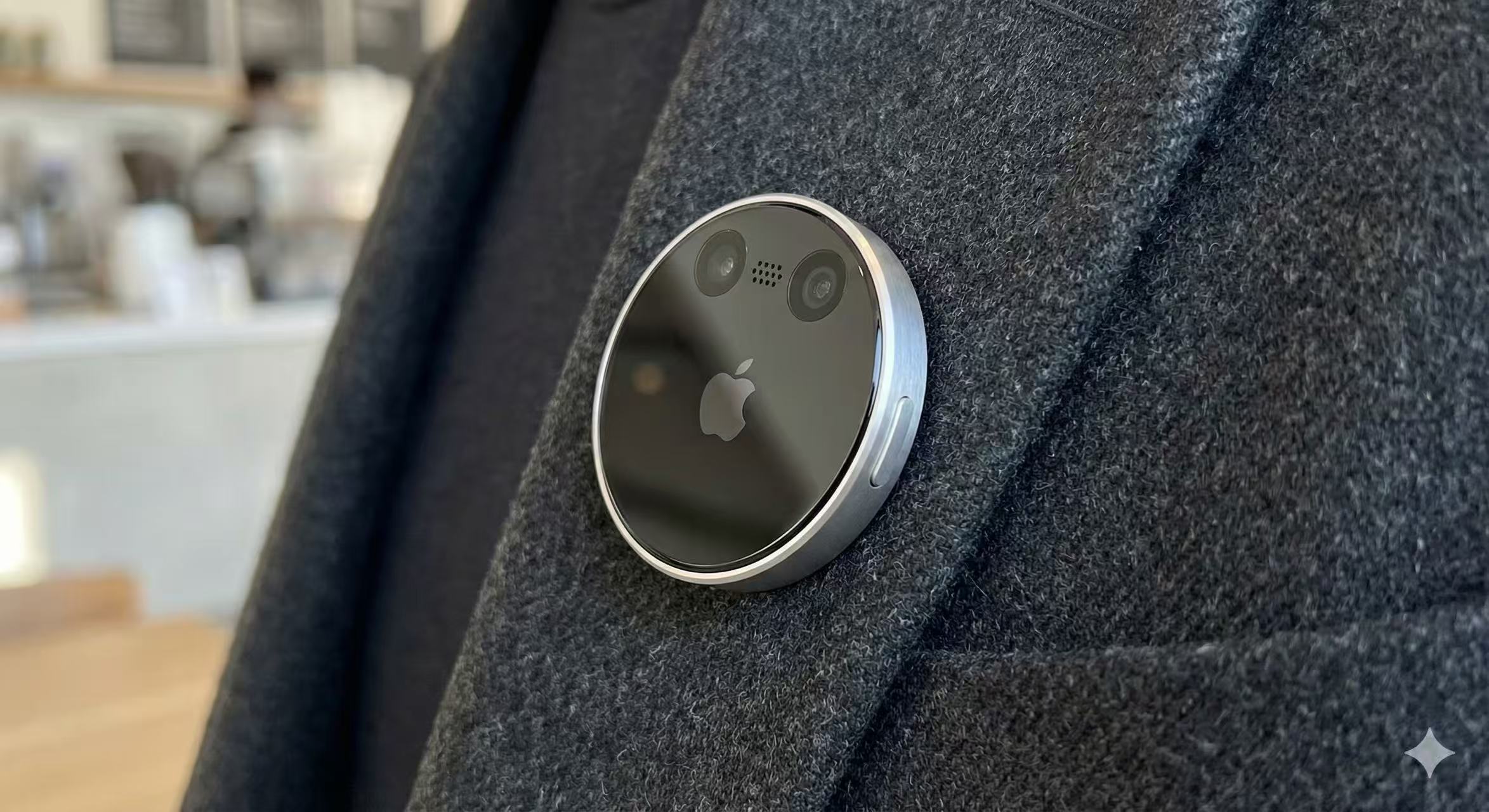
Image Source: Gemini
However, when it comes to the visual solution for this 'Apple Pin,' two media outlets have put forth differing speculations: Bloomberg suggests that the 'Apple Pin' will be equipped with a low-resolution, always-on sensing camera. The Information, on the other hand, proposes that the 'Apple Pin' will feature a 'wide-angle + ultra-wide-angle' dual-camera setup, akin to the digital series iPhones.
From Leikeji's standpoint, the debate over 'single versus dual cameras' is not even the primary point of contention for the 'Apple Pin.' The crux of the issue lies in Apple's product positioning for this device.
MacRumors noted that the 'Apple Pin' is not a standalone smart device capable of independent operation. It houses a low-power chip with extremely limited performance, similar to the AirPods H2. All actual AI inference computations are handled by the iPhone.
Indeed, in a certain sense, the so-called 'Apple Pin' is essentially just an external camera. But the question arises: Does such an external smartphone camera warrant being labeled as an 'AI smart device'?
The ability to operate independently from a smartphone is a hallmark of superior AI hardware.
To understand why the 'Apple Pin' has become an iPhone accessory, we must first clarify the two technological approaches prevalent in the current AI hardware industry. Leikeji believes that, based on the 'independence' of devices (whether their primary functions can operate independently of the parent device after initialization), AI products in the industry can be categorized into two main types: 'non-standalone devices' and 'standalone devices.'
Non-standalone devices are relatively straightforward. The vast majority of smart bracelets, non-eSIM smartwatches, as well as common AI glasses, AI earphones, and AI recording cards, fall into the category of non-standalone smart hardware. Although these products possess complete interaction, computation, and storage structures in terms of hardware, they must connect to a smartphone to fully leverage their AI capabilities due to limitations in chip performance, Wi-Fi performance, and battery life.
The 'Apple Pin,' the focus of our discussion today, falls into this category. To ensure a comfortable wearing experience, the 'Apple Pin' cannot accommodate an excessively large battery. The battery capacity, in turn, limits the chip performance of the 'Apple Pin,' compelling it to delegate actual computations to the smartphone.
In contrast, standalone devices typically come equipped with eSIM and can directly access cloud computing power via mobile networks (without the need to go through a smartphone). The Lightwear AI full-sensory wearable device that Leikeji experienced late last year, as well as the AI Pin that garnered attention at MWC a few years ago, are prime examples of standalone AI devices.
It's Not That They Don't Want Independence—Technology Just Isn't There Yet
If independent operation is the 'ultimate dream' of AI hardware, why are 'accessories' like the 'Apple Pin,' which still require connection to an iPhone, the mainstream in the 2026 market?
From Leikeji's perspective, the reasons can be distilled into three key points: power consumption, battery life, and cost.
Let's begin with the most direct issue: power consumption. Anyone who has attempted to run on-device large models (SLMs) on their computer is aware that on-device large model inference places immense demands on device performance and power consumption. The recent OpenClaw craze, which drove the M4 Mac mini to sell out, was precisely because the M4 Mac mini represents a balance between performance and power consumption among consumer AI terminals.
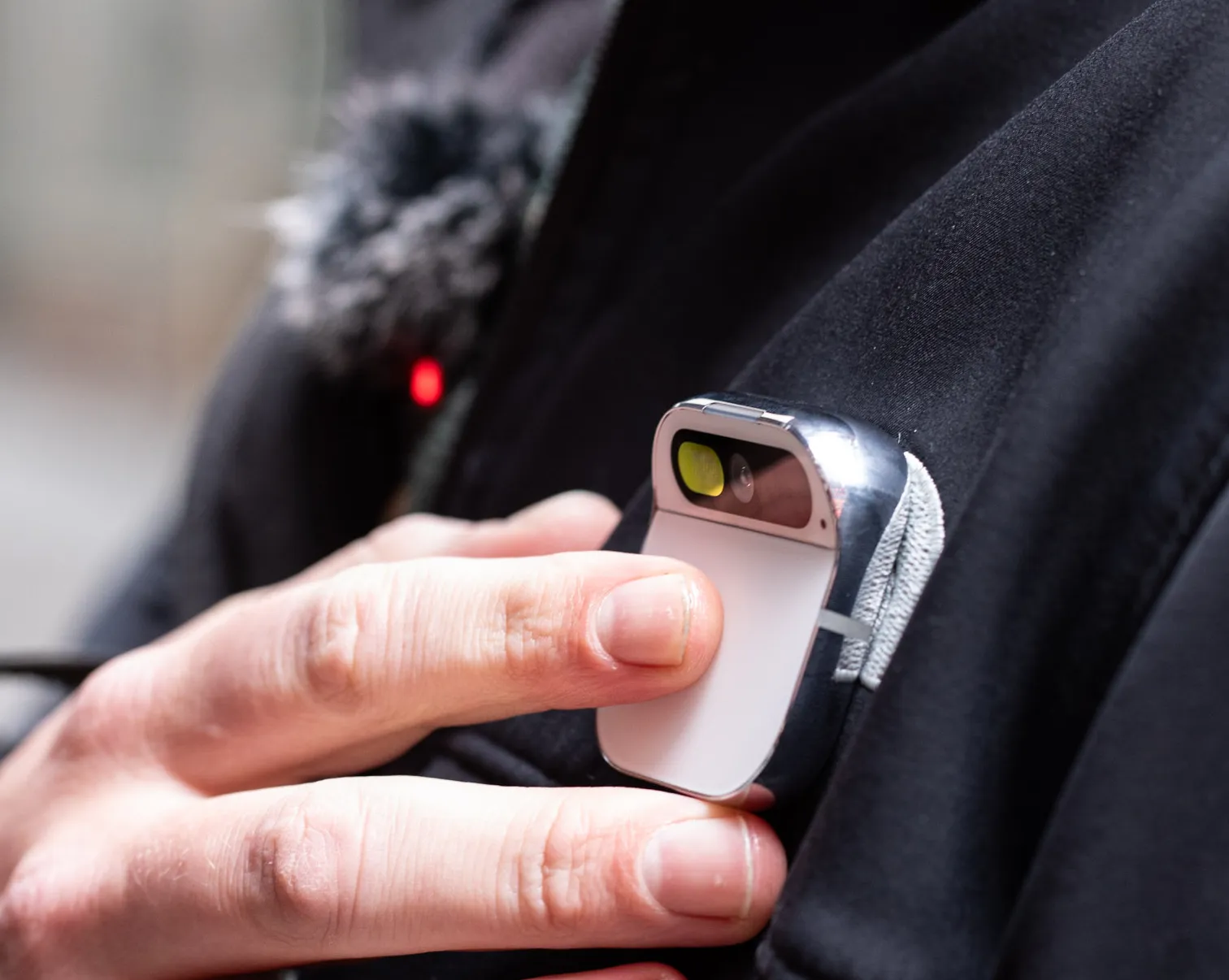
Image Source: AI PIN/Humane
However, if Apple were to cram a chip like the A19, capable of running multimodal interactions, into a device the size of an AirTag—even if only for local data preprocessing and desensitization—its instantaneous power consumption would soar. Clearly, to ensure a positive user experience, Apple cannot incorporate an active fan into the 'Apple Pin.'
According to the theory of 'thermal volume' changes in electronic products, the smaller the product's motherboard, the smaller its 'thermal volume,' leading to heat accumulation in a shorter time. The shell (outer casing) could approach the critical point of scalding (45°C) within minutes. Compared to allowing the 'Apple Pin' to continuously generate heat on the user's chest (prolonged contact with a 44°C object can also cause low-temperature burns), having the iPhone heat up slowly in the pocket while keeping the 'Apple Pin' 'cool' is clearly the most feasible product strategy.
Secondly, independent operation means that the 'Apple Pin' would need to simultaneously power a 5G baseband, camera, and processor. Under such high-load conditions, whether the 'Apple Pin's battery could last even 4 hours is questionable, and it would most likely become the next Apple Vision Pro—more decorative than practical.
However, if the 'Apple Pin' is designed as an accessory and operates in tandem with a smartphone, it only needs to handle low-power data transmission, potentially achieving battery life comparable to that of the Apple Watch.
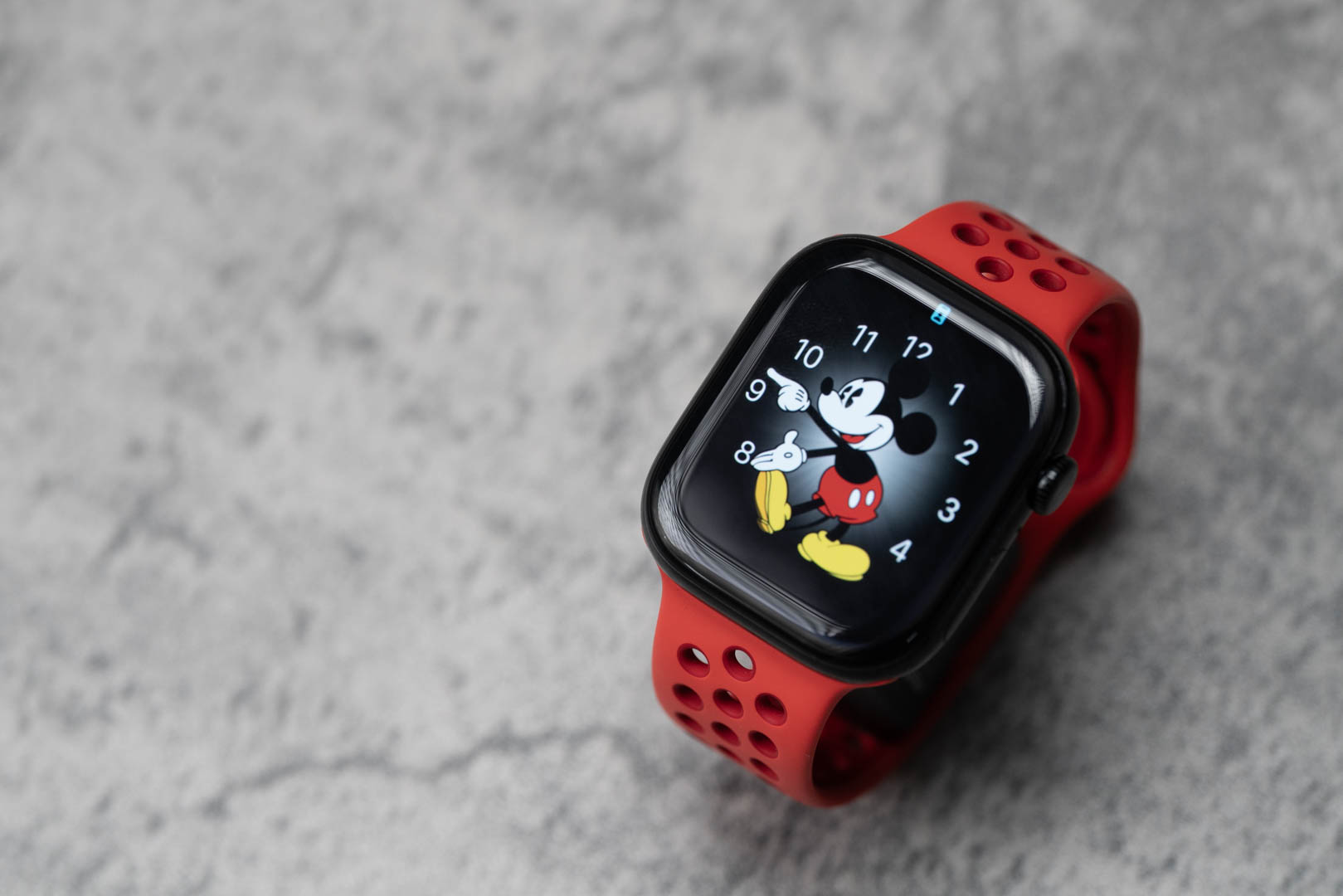
Image Source: Leikeji
Of course, cost control, acting as the 'goalkeeper' in product design, is also, in Leikeji's view, the fundamental reason why the 'Apple Pin' can only function as an accessory. Standalone hardware must incorporate eSIM, baseband chips, and supporting antenna arrays, essentially making it a more powerful Apple Watch.
Since every potential Apple Pin user already carries a high-performance, always-online, and computationally redundant iPhone in their pocket, what incentive does Apple have to create a higher-performance, more expensive 'pocket watch version of the Apple Watch' in an AirTag-sized form factor?
AI Computing Power and Hardware Interaction Will Inevitably Be 'Decoupled' in the Future
Although non-standalone hardware appears to be the most 'reasonable' hardware strategy from a technical standpoint, Leikeji still firmly believes that standalone devices represent the ideal hardware form in the AI era. The reason is straightforward—in the AI era, smart hardware should not merely be an extension of smartphone functions but rather a 'new window' for users to interact with cloud-based AI.
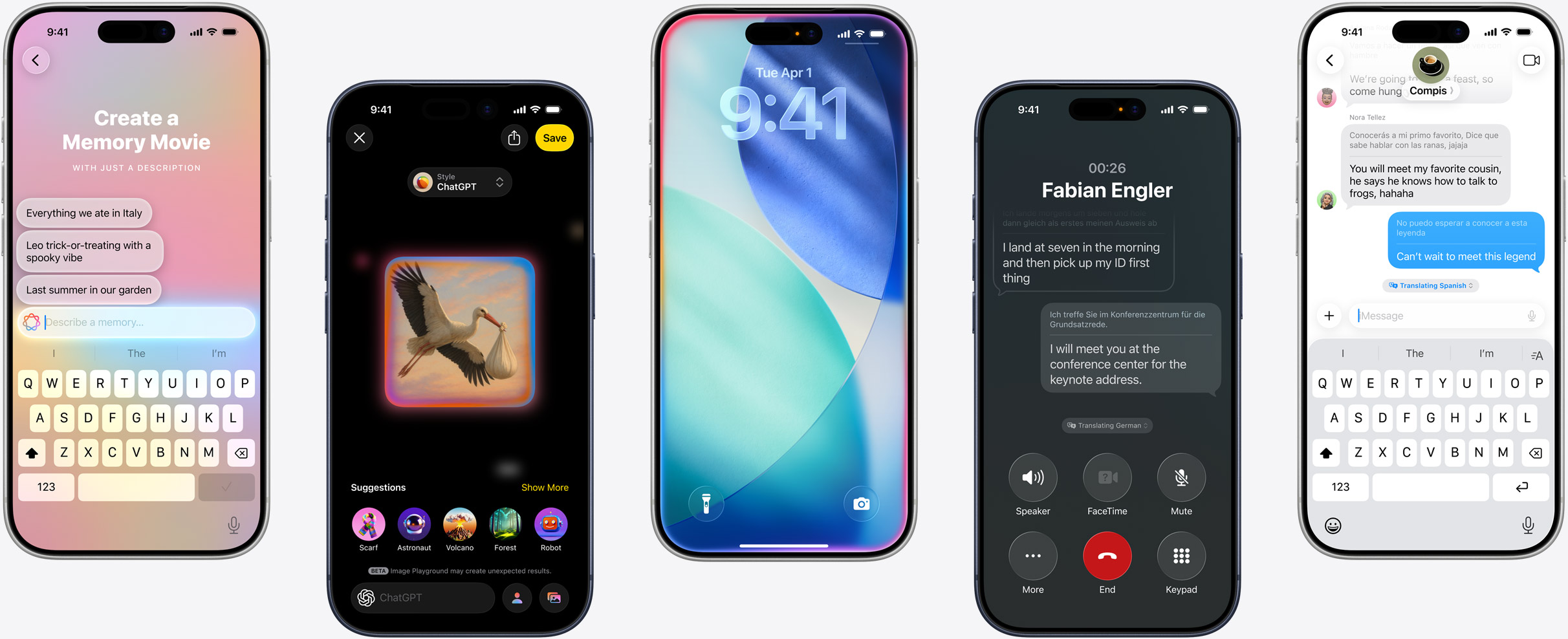
Image Source: Apple
Over the past decade, under the logic of mobile internet, the smartphone has been the absolute 'computing center' and 'interaction hub.' However, in 2026, as AI Agents take over digital life, this smartphone-centric computing model has begun to shift toward cloud-based computing power. In this model, where on-device processing handles only rapid requests and data desensitization while delegating all other computations to the cloud, AI hardware's computing power and interaction will undergo 'decoupling.'
After computing power and interaction are 'decoupled,' different AI devices will compete based on interaction, inevitably enhancing the user experience of AI hardware. After all, the more natural the interaction, the more user-friendly the device, the more seamless the service, the higher the usage frequency, and consequently, the higher the sales.
Even OpenAI CEO Altman has stated that OpenAI will not launch a single device in the future but rather 'a series of small devices,' none of which will rely on smartphones. Therefore, Leikeji boldly predicts that with the development of upstream chip manufacturers, the new AI hardware model of 'standalone hardware + cellular networks + cloud computing power' will inevitably become the mainstream in the future.
The Present of Smart Bracelets is the Future of 'Non-Standalone Devices'
But then again, if standalone hardware will become the future mainstream, what will happen to the current popular 'non-standalone hardware' and 'smartphone accessory' models? Leikeji believes that non-standalone devices will not disappear but will inevitably become 'lower-tier alternatives' to high-end standalone hardware, much like today's smart bracelets.
In terms of price, after eliminating expensive 5G/6G baseband modules and complex cooling structures, non-standalone devices can reduce BOM costs to a fraction of those of standalone devices. Aesthetically, non-standalone devices can also be made thinner and lighter. For users who do not pursue ultimate experiences and only want to 'dip their toes into AI,' such 'smartphone accessories' remain the lowest-cost entry point into the AI era.
Of course, whether standalone or non-standalone hardware, these are not the most pressing issues for Apple on its AI device journey. As the saying goes, 'You can't make bricks without straw'—Apple's shortcomings in key AI models are the biggest obstacle limiting the development of its AI hardware.
The original Apple Intelligence model, once highly anticipated but overpromised for years, has effectively been abandoned, while the 'Apple version of Gemini,' developed in collaboration with Google, still requires time for optimization. At this juncture of transition, even if Apple were to unveil a truly revolutionary AI hardware design, who besides tech bloggers would buy it? In Leikeji's view, Apple's current AI hardware resembles the lyrics of Eason Chan's 'Tourbillon': 'If the soul is sold, even winding won't make it tick.'
Apple AI Hardware
Source: Leikeji
Images in this article come from: 123RF Royalty-Free Image Library
-
![]()
Smartphone Prices Surge Amid Manufacturer Anxiety
-
![]()
Orbbec Soars to Record Heights, Eyes Further Capital Influx of 980 Million!
-
![]()
Tongding Interconnect Sets Up Shop in Shaoguan with 800 Million Yuan in Registered Capital
-
![]()
Before Kimi’s A-Share Debut, Zhipu Aims to Secure More 'Strategic Funding'
-
![]()
Innovative Leap | Fiber-Pluggable 1470nm Laser Source: Revolutionizing Precision Laser Weeding
-
![]()
73-Day Rapid Listing: Where Does Unitree's Wang Xingxing's 'Sense of Urgency' Come From?
-
![]()
AI Project Mindverse, Backed by Meituan, Faces Data Inflation Allegations Over Its Macaron Product
-
![]()
3000-word In-Depth Analysis | What Makes Physical AI So Magnetic? It Has Captivated Masayoshi Son, Jensen Huang, and Justin Sun All at Once