Domestic Mobile Phone Price Hikes: A Growing Divide
 03/30 2026
 602
602
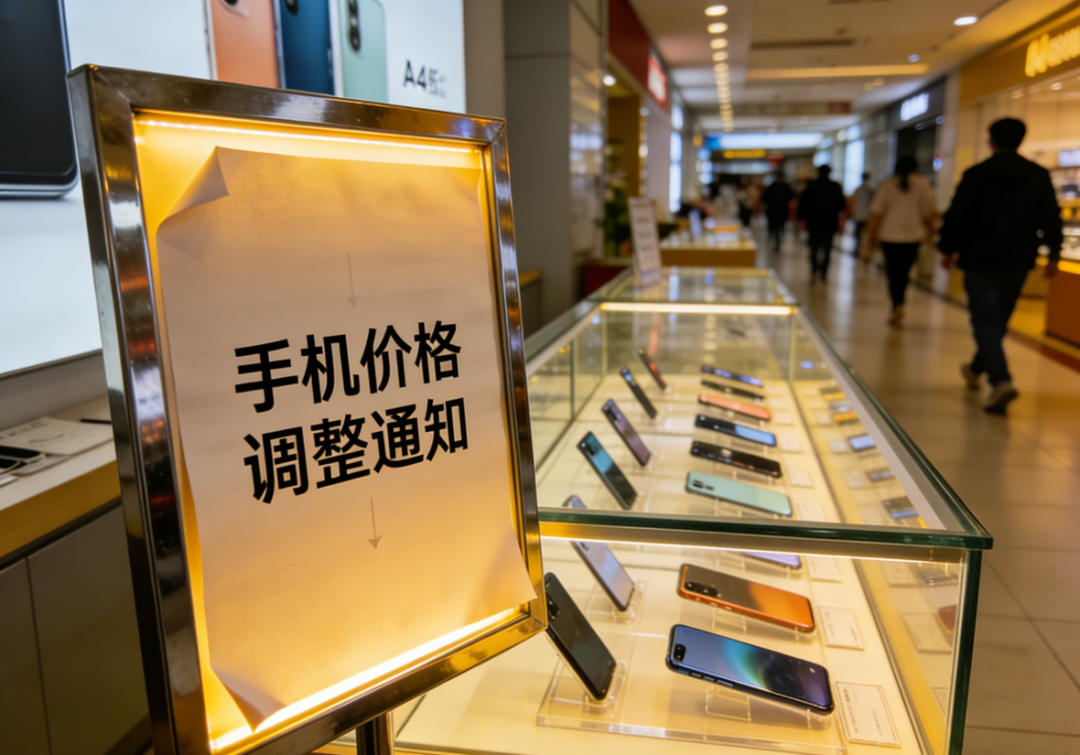
Consumers Bear the Brunt of AI-Driven Price Wars
Author/ Li Jinlin
Editor/ Li Ji
Layout/ Annalee
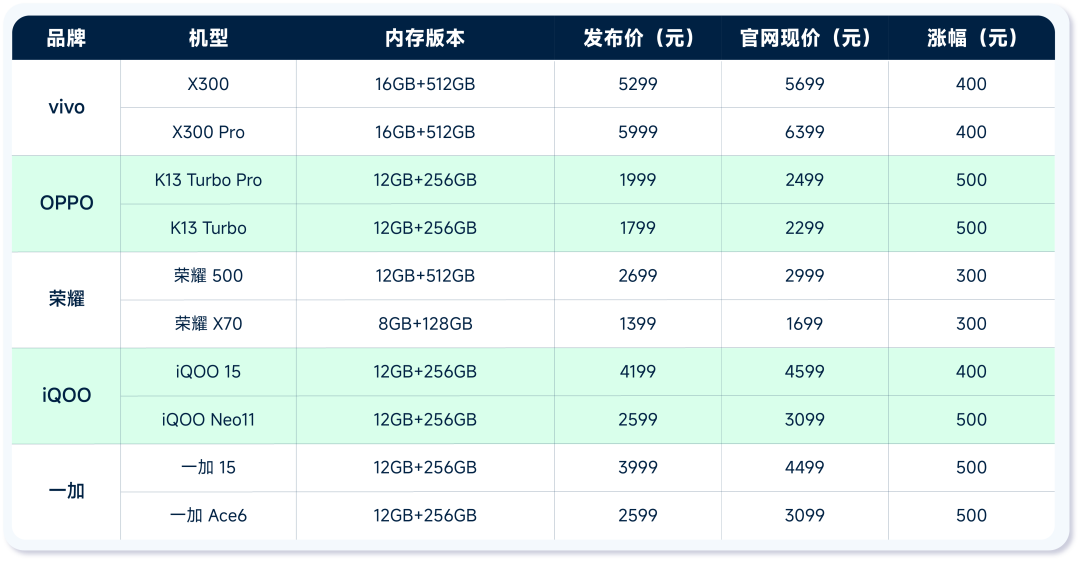
In March, China's smartphone industry saw a wave of price increases across the board. Leading domestic brands like OPPO, Xiaomi, vivo, and Honor have raised prices on select models, with mid-range devices seeing hikes of RMB 300-800. Affordable "sub-RMB 1,000" phones are nearly extinct.
This industry-wide price adjustment, dubbed the "largest and most significant in five years," has left many consumers postponing phone upgrades.
On the surface, the immediate cause is the skyrocketing cost of upstream chips. DRAM contract prices have surged by 80%-95%, NAND flash memory by 33%-60%, and HBM (High Bandwidth Memory) prices have soared past 170%. Memory chips now account for over 20% of a smartphone's BOM (Bill of Materials) cost, up from 10%-15%. Some mid-to-low-end models are even slipping into "negative gross margin" territory.
However, beneath these chip price hikes lies a deeper issue: the intense AI competition among domestic smartphone makers. The hefty R&D and chip procurement costs incurred in the race to lead in AI are ultimately passed on to consumers through higher prices.
Who Will Champion Users Uninterested in AI Phones?
On his commute home, Wu Fei puts on his headphones, opens his phone, and plays a round of "Golden Spade." As the bus sways, two games suffice to reach his stop.
But about a month ago, entertainment turned to anxiety. After his phone's battery health dropped below 75%, performance began to suffer. One day, as Wu Fei opened "Golden Spade," a work WeChat notification popped up. Switching to WeChat, his phone froze completely, leaving him staring at a black screen for over ten minutes.
"The phone heats up as soon as I start a game, and the battery drains rapidly. Sometimes I worry it won't last until I get home," Wu Fei said, frustrated. To avoid such尴尬 (awkward) situations, he felt compelled to consider a new phone.
However, after browsing popular models, Wu Fei was unimpressed: the features were too flashy and mostly useless to him. "I rarely take photos. AI image removal or photo editing? None of it matters to me. I don't need an AI assistant either. Manufacturers really don't need to pile on so many features."
Yang Nan, who runs a digital products business in Chengdu, echoes this sentiment from another angle. He recently encountered several fresh graduates planning to buy mid-range phones (RMB 3,000-4,000) for daily commuting, socializing, and simple office tasks. But after browsing, they found that models in this price range had seen significant price hikes and were packed with unnecessary AI features.
Yang said most of these consumers are now considering delaying their purchase, either waiting for prices to drop or opting for a secondhand device instead.
Such scenarios reflect the plight of many users with basic needs. They derive no value from AI overcompetition yet are forced to bear the extra costs. The root cause lies in the AI race among domestic smartphone makers, which has triggered a surge in chip demand and price hikes.
Against a backdrop of stagnating smartphone market growth and fierce homogeneous competition, AI has become a "lifeline" for domestic manufacturers seeking to break through growth bottlenecks.
Looking back at the competitive history of domestic smartphones, from initial price wars to later imaging battles and fast-charging comparisons, each shift in focus was an attempt to escape homogenization and capture market share. However, these competitive dimensions had relatively low technical barriers and were easily imitated by peers, trapping competition in a repetitive cycle.
The emergence of AI technology provided a new competitive dimension—one involving not only hardware-level chip upgrades but also software-level model development and algorithm optimization, creating higher technical barriers and greater room for differentiation. It became a key leverage point for domestic manufacturers to achieve a "shortcut to success."
As a result, major manufacturers ramped up their AI investments, creating a cutthroat atmosphere of overcompetition.
Huawei introduced its "One-Click Video" feature, allowing users to automatically generate short videos with a cinematic feel from randomly shot footage; Xiaomi launched "Lobster AI," a system-level intelligent agent that automates complex cross-app tasks; Honor debuted the "Lobster Universe" intelligent agent platform, capable of reshaping mobile interaction paradigms; OPPO and vivo, meanwhile, focused on office efficiency and multi-scenario adaptation, respectively, introducing features like AI Flash Notes and offline dialogue.
This high-intensity AI overcompetition directly drove explosive growth in upstream chip demand. Unlike traditional smartphone chips, the smooth operation of AI features requires dedicated NPU (Neural Processing Unit) chips, which are more difficult to develop and manufacture and demand stricter computing power.
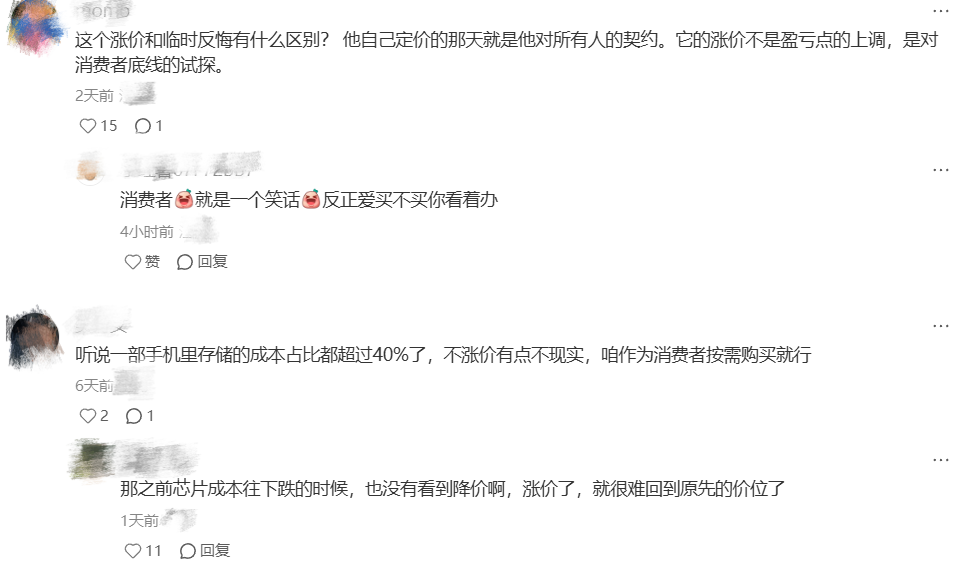
Many consumers have postponed phone upgrades due to price hikes
According to IDC data, 2026 will mark the "first year of AI smartphone popularization," with AI phone shipments in China reaching 147 million units, accounting for more than half (53%) of the market for the first time. In other words, for every two new phones sold this year, one will be an AI phone. This large-scale adoption of AI phones will directly drive soaring demand for smartphone chips, especially NPUs and memory chips.
For domestic smartphone manufacturers, this AI overcompetition-induced chip dependency is, in fact, a passive binding. On one hand, to gain an edge in the AI race, manufacturers must procure higher-spec NPUs and larger-capacity memory chips, the pricing of which is entirely controlled by upstream players like Qualcomm, MediaTek, and Samsung, leaving domestic manufacturers with little bargaining power.
On the other hand, due to shortcomings in the domestic chip industry, the core chips of domestic smartphones rely almost entirely on imports, with no viable domestic alternatives. This means any fluctuation in upstream chip prices directly impacts terminal products, becoming an inevitable justification for manufacturers to raise prices.
Stop the Overcompetition: No More AI for AI’s Sake
With the rise of AI phones, clear demand segmentation has emerged among consumers. Some users have strong demand for AI features and are willing to pay a premium for the AI experience, while others—such as elderly users, students, and those seeking a secondary device—only need basic functions like calling, texting, WeChat, and photography, with no interest in AI features and, in some cases, no idea how to use them.
However, the reality is that regardless of whether consumers need AI features, they must pay for manufacturers’ AI overcompetition. This is because the current pricing logic of domestic smartphones has already factored AI R&D and chip procurement costs into every product.
A joint survey by JD Consumption and Industry Development Research Institute and Jing Insight previously found that 95.3% of users have used smartphone-based generative AI tools, but 57.3% only used AI for daily life assistance, 54.2% for work efficiency, and a significant portion said they "only occasionally use AI features" or "don't know how to use them."
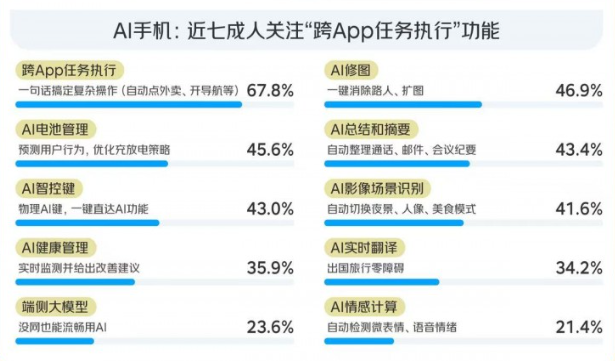
Source: JD Consumption and Industry Development Research Institute
The survey also revealed that 45.8% of users believe AI phones are "promising for the future," 39.9% think they are "worth waiting to see," and 10.5% feel they are "more concept than substance." This suggests that over half of users lack a clear understanding of the value of AI features, even viewing them as flashy but impractical.
Nevertheless, when purchasing a phone, these users still have to pay a premium for manufacturers’ AI investments. Currently, almost no new phones on the market come without AI features; even entry-level models are forced to include basic AI capabilities, with the corresponding costs naturally passed on to the selling price.
More notably, the choice space for users with basic needs is being further compressed.
During this price hike, mid-to-low-end models have seen the most significant increases, with devices once priced at RMB 1,999 now rising to RMB 2,499, effectively exiting the sub-RMB 1,000 market. IDC data shows that in 2026, flagship phone prices in China will surge by over 30%, with similarly configured models costing RMB 300-1,000 more than in 2025, and large-storage versions even RMB 2,000 more. Meanwhile, the market share of low-end phones in China will drop from 44% in 2024 to 40%, and the sub-RMB 1,000 market may disappear entirely.
For users with basic needs and limited budgets, they are either forced to pay higher prices for AI-equipped models or settle for secondhand or outdated devices, significantly raising their upgrade costs.
The frenzy of AI overcompetition not only fails to achieve a "shortcut to success" but also exacerbates cost pressures and harms consumer interests, ultimately trapping the industry in a vicious cycle. To break free from the current predicament, domestic smartphone manufacturers need to step out of the specs race and refocus on the core of user needs.
For example, high-end flagship models can feature advanced AI capabilities to meet the needs of business professionals and young users; mid-to-low-end models can streamline AI features, retaining only basic and practical AI assistance to reduce chip and R&D costs, avoiding "AI for AI’s sake."
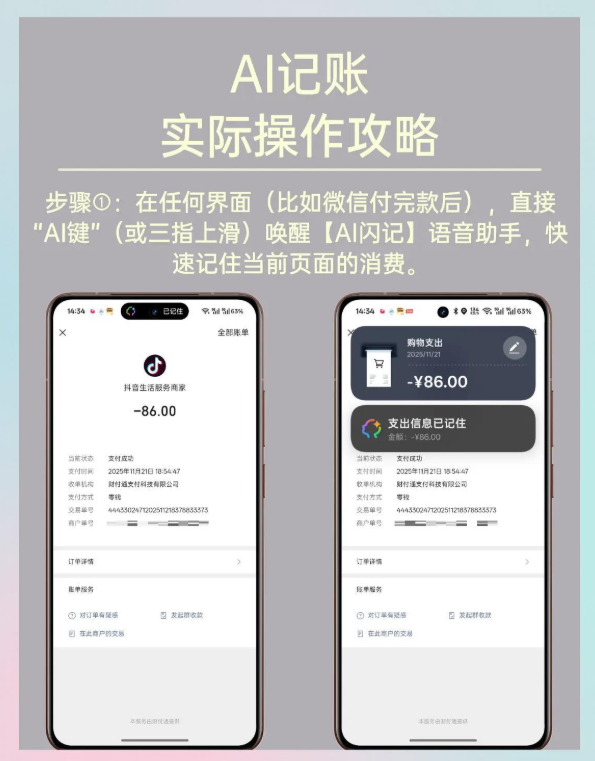
OPPO's AI expense-tracking feature
In fact, signals of a rational shift are already emerging in the industry.
Recently released domestic flagship models have begun shifting from specs stacking to scenario-based optimization. At a product launch, Honor CEO Li Jian demonstrated the shopping scenario optimization capabilities of the AI agent YOYO, which can automatically capture hidden coupons to reduce user spending;
vivo showcased its 128K long-context processing model, focused on boosting office efficiency with a word output speed of 200 tokens per second, approaching cloud-level performance; OPPO developed a voice assistant that can automatically recognize bills and complete expense tracking, addressing user pain points of information overload...
Such scenario-based AI optimizations not only enhance user experience but also reduce unnecessary R&D investments, achieving a balance between cost and experience.
The 2026 price hikes for domestic smartphones mark a crossroads for the industry. While they have exposed deep-seated contradictions caused by AI overcompetition, chip dependency, and demand segmentation, they also provide an opportunity for rational industry development.
For consumers, what they need is not flashy AI features but cost-effective products that meet their needs. Only when manufacturers stop blindly overcompeting, stop forcibly passing on costs, and respect the needs of every user, can the domestic smartphone industry gain the initiative in the global consumer electronics market.
-
![]()
Smartphone Prices Surge Amid Manufacturer Anxiety
-
![]()
Orbbec Soars to Record Heights, Eyes Further Capital Influx of 980 Million!
-
![]()
Tongding Interconnect Sets Up Shop in Shaoguan with 800 Million Yuan in Registered Capital
-
![]()
Before Kimi’s A-Share Debut, Zhipu Aims to Secure More 'Strategic Funding'
-
![]()
Innovative Leap | Fiber-Pluggable 1470nm Laser Source: Revolutionizing Precision Laser Weeding
-
![]()
73-Day Rapid Listing: Where Does Unitree's Wang Xingxing's 'Sense of Urgency' Come From?
-
![]()
AI Project Mindverse, Backed by Meituan, Faces Data Inflation Allegations Over Its Macaron Product
-
![]()
3000-word In-Depth Analysis | What Makes Physical AI So Magnetic? It Has Captivated Masayoshi Son, Jensen Huang, and Justin Sun All at Once