Domestic Smartphone Price Hikes: Are the Less Affluent Being Left Behind?
 03/29 2026
 570
570
Forced to Shoulder the Burden of AI Competition
Written by: Li Jinlin
Edited by: Li Ji
Layout by: Annalee
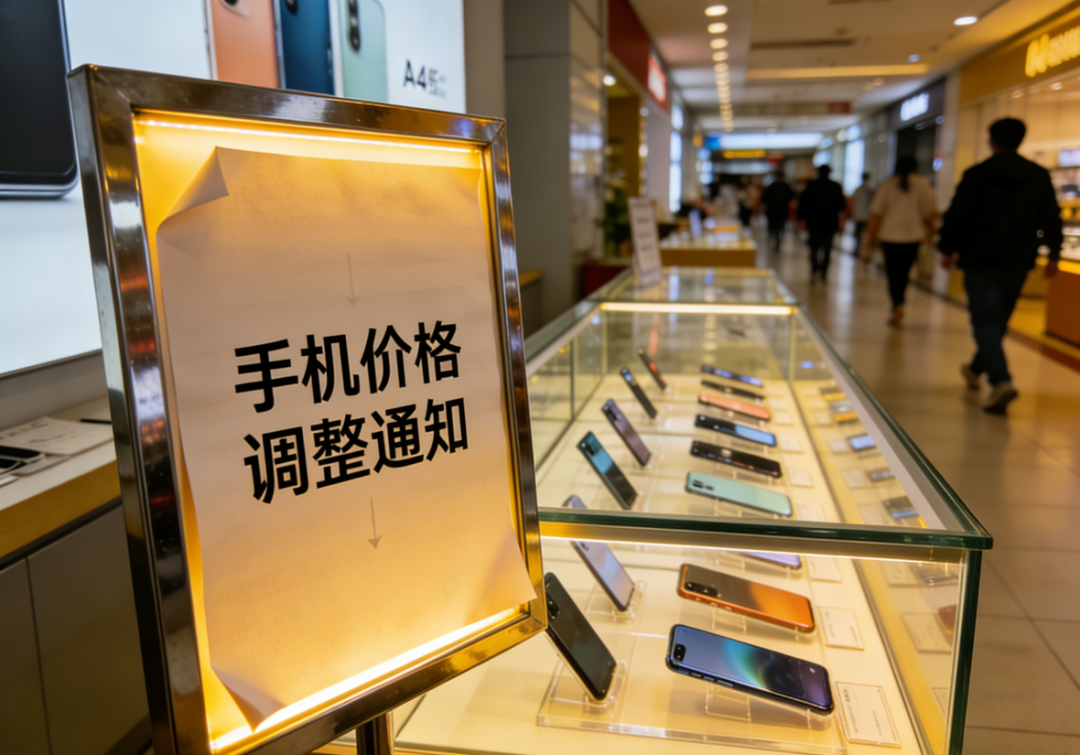
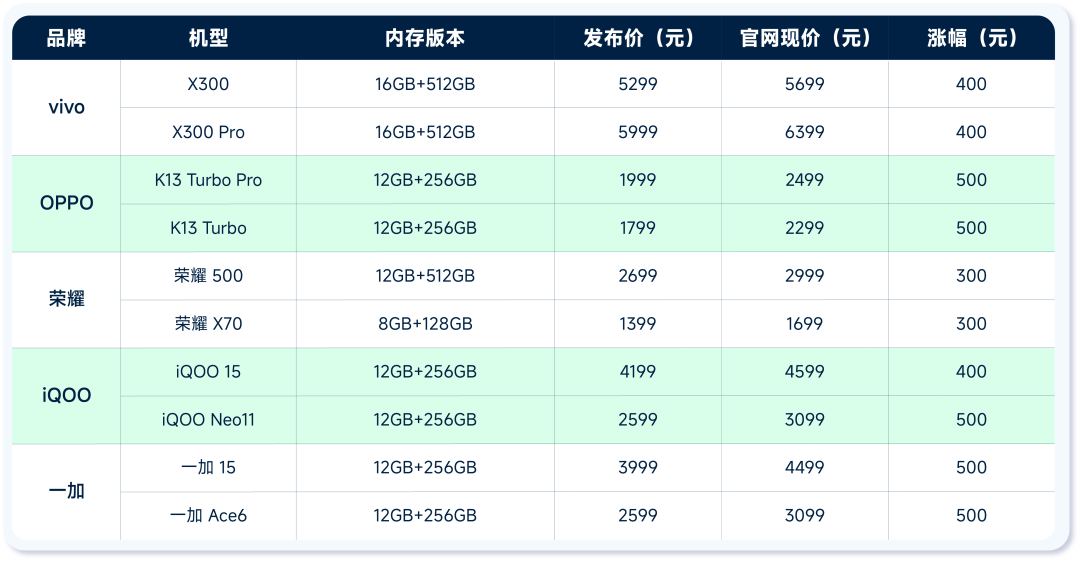
In March, China's smartphone market experienced a sweeping wave of price increases. Leading domestic brands such as OPPO, Xiaomi, Vivo, and Honor raised prices on select models, with mid-range devices typically seeing hikes of RMB 300-800. Budget-friendly phones priced under RMB 1,000 have all but disappeared.
Industry insiders have dubbed this collective price adjustment as the "most significant and largest-scale price hike in the past five years," compelling many consumers to delay their phone upgrade plans.
On the surface, the immediate catalyst for this price surge is the sharp rise in upstream chip prices. DRAM contract prices soared by 80%-95%, NAND flash memory by 33%-60%, and HBM high-bandwidth memory by over 170%. The share of memory chips in a phone's bill of materials (BOM) cost jumped from 10%-15% to over 20%, pushing some mid-to-low-end models into "negative gross margin" territory.
However, beneath the chip price hikes lies the fierce AI competition that domestic smartphone manufacturers have been embroiled in over recent years. The substantial R&D and chip procurement costs incurred by manufacturers to stay competitive in the AI arena are ultimately passed on to consumers through higher terminal prices.
Who Will Champion the Cause of Users Uninterested in AI Phones?
On his commute home from work, Wu Fei dons his headphones and opens his phone to indulge in a round of "Gold Shovel Warrior"—his preferred form of relaxation. As the bus sways gently, he finishes two games before reaching his stop.
His leisurely pastime turned into a source of anxiety about a month ago when his phone's battery health plummeted below 75%, and performance began to degrade. Once, Wu Fei had just launched "Gold Shovel Warrior" when a work-related WeChat notification popped up. Upon switching to WeChat, his phone froze completely, remaining unresponsive for over ten minutes.
"The phone heats up as soon as I start a game, and the battery drains rapidly. Sometimes I worry it won't last until I get home," Wu Fei lamented with frustration. Nevertheless, to avoid such embarrassing situations, he felt compelled to consider upgrading his phone.
However, after perusing popular models from various manufacturers, Wu Fei was left with a singular impression: the features were overly flashy and largely unnecessary for him. "I rarely take photos throughout the year, so AI photo editing or retouching features are useless to me. I also don't need an AI assistant. Manufacturers really don't need to overload their phones with so many features," he remarked.
Yang Nan, who has been running a digital products business in Chengdu for years, echoed this sentiment from another perspective, noting that the redundancy of AI features is actually a burden for users. Yang Nan recently encountered several fresh graduates who planned to purchase mid-range phones priced between RMB 3,000-4,000 for daily commuting, socializing, and simple office work. However, after browsing, they discovered that models in this price range had seen significant price increases and were laden with unnecessary AI features.
Yang Nan observed that most of these consumers would likely postpone their purchase, either waiting for prices to drop or opting for a second-hand device instead.
These scenarios are a microcosm of the challenges faced by many basic-demand users at this stage. They derive no value from the AI competition but are forced to bear the additional costs brought about by manufacturers' rivalry. The root cause of this predicament lies in the AI race among domestic smartphone manufacturers, which has triggered a surge in chip demand and subsequent price hikes.
Against the backdrop of a saturated smartphone market and increasingly fierce homogeneous competition, AI has emerged as a "lifeline" for domestic manufacturers seeking to break through growth bottlenecks.
Reflecting on the competitive history of domestic smartphones, from initial price wars to later imaging battles and fast-charging competitions, each shift in focus was essentially an attempt to escape homogenization and capture market share. However, these competitive dimensions had relatively low technical barriers and were easily imitated by peers, leading to a repetitive cycle of competition.
The advent of AI technology introduced a brand-new competitive dimension—it not only involves hardware-level chip upgrades but also encompasses software-level model development and algorithm optimization, with higher technical barriers and greater room for differentiation, becoming a crucial lever for domestic manufacturers to achieve a "strategic overtake."
Consequently, major manufacturers have significantly ramped up their investments in AI, fostering a cutthroat competitive environment.
Huawei offers a "One-Click Filmmaking" feature that automatically generates short videos with a cinematic feel from randomly shot footage; Xiaomi introduced the "Lobster AI" system-level intelligent agent, enabling cross-application automation of complex tasks; Honor has the "Lobster Universe" intelligent agent platform, which can redefine mobile interaction forms; OPPO and Vivo focus on office efficiency and multi-scenario adaptation, respectively, offering features like AI flash notes and offline dialogue.
This high-intensity AI competition has directly driven explosive growth in upstream chip demand. Unlike traditional smartphone chips, the smooth operation of AI functions requires dedicated NPU chips, which are more challenging to develop and produce and have stricter requirements for computing power.
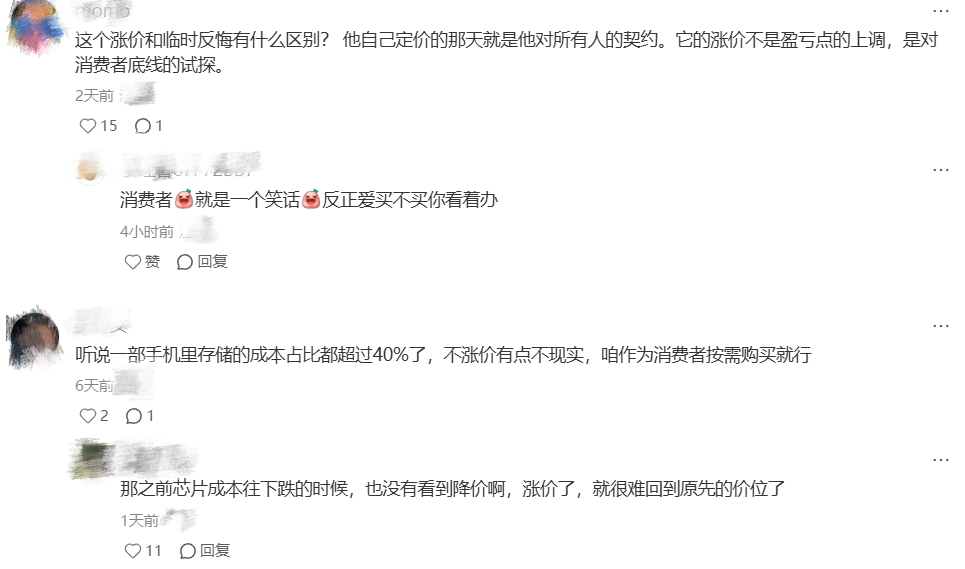
Many consumers have postponed their plans to upgrade their phones due to the price hikes.
IDC data indicates that 2026 will mark the "first year of AI phone popularization," with China's AI phone shipments reaching 147 million units, accounting for more than half (53%) for the first time. In other words, one out of every two new phones sold this year will be an AI phone. This large-scale adoption of AI phones will directly lead to a surge in demand for smartphone chips, especially NPU and memory chips.
For domestic smartphone manufacturers, this AI competition-induced chip dependency is actually a passive binding. On the one hand, to gain an edge in the AI race, manufacturers must procure higher-spec NPU chips and larger-capacity memory chips, the pricing of which is entirely controlled by upstream companies like Qualcomm, MediaTek, and Samsung, leaving domestic manufacturers with little bargaining power.
On the other hand, due to shortcomings in the domestic chip industry, the core chips of domestic smartphones are almost entirely reliant on imports, with no viable domestic alternatives. This means that any fluctuations in upstream chip prices are directly passed on to end products, becoming an inevitable reason for manufacturers to raise prices.
Curbing Internal Competition: No More AI for the Sake of AI
With the popularization of AI phones, clear demand differentiation has emerged among consumer groups. Some users have a strong demand for AI features and are willing to pay a premium for the AI experience, while others, such as elderly users, students, and those seeking a secondary phone, only need basic functions like calling, texting, WeChat, and photography, with no interest in AI features—some may not even know how to use them.
However, the reality is that regardless of whether consumers need AI features, they must pay for manufacturers' AI competition. This is because the current pricing logic of domestic smartphones has already factored in AI R&D and chip procurement costs into every product.
A survey jointly conducted by the JD Consumption and Industry Development Research Institute and Jing Insight previously found that 95.3% of users have used generative AI tools on their phones, but 57.3% only used AI for assistance with daily tasks, and 54.2% used it to improve work efficiency. A considerable number of users also said they "only occasionally use AI features" or "don't know how to use them."
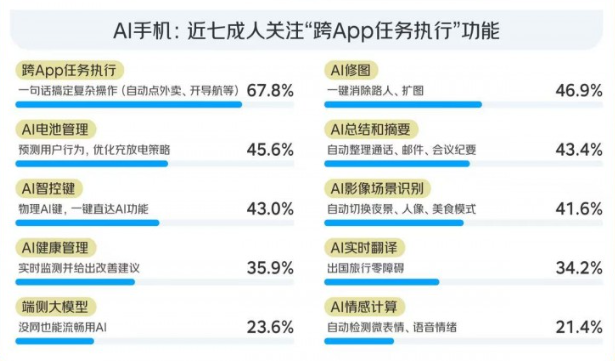
Source: JD Consumption and Industry Development Research Institute
The survey data also revealed that 45.8% of users believe AI phones have "great potential," 39.9% think they are "worth waiting to see," and 10.5% feel they are "more concept than substance." This means that over half of the users have a vague perception of the value of AI features, even considering them flashy but impractical.
Nevertheless, when purchasing a phone, these users still need to pay a premium for manufacturers' AI investments. This is because, in the current market, almost no new phones come without AI features. Even entry-level models are forced to include basic AI functions, with the corresponding costs naturally passed on to the selling price.
More notably, the options for basic-demand users are being further squeezed.
In this wave of price hikes, mid-to-low-end models have seen the most significant increases, with models previously priced at RMB 1,999 now rising to RMB 2,499, completely exiting the sub-RMB 1,000 category. IDC data shows that in 2026, the price of flagship phones in the Chinese market will increase by more than 30%, with similarly configured models costing RMB 300-1,000 more than in 2025, and large-storage versions even RMB 2,000 more. Meanwhile, the market share of low-end phones in China will decline from 44% in 2024 to 40% in 2026, and the sub-RMB 1,000 market may disappear entirely.
For basic-demand users with limited budgets, they are either forced to pay higher prices for AI-equipped models or settle for second-hand or outdated devices, significantly increasing their upgrade costs.
The frenzied AI competition will not only fail to achieve a "strategic overtake" but will also exacerbate cost pressures and harm consumer interests, ultimately leading the industry into a vicious cycle. To break out of the current dilemma, domestic smartphone manufacturers need to step out of the misconception of parameter competition and return to the core of user needs.
For example, high-end flagship models can be equipped with advanced AI features to meet the needs of business professionals and young people; mid-to-low-end models can streamline AI features, retaining only basic and practical AI assistance functions to reduce chip and R&D costs, avoiding "AI for the sake of AI."
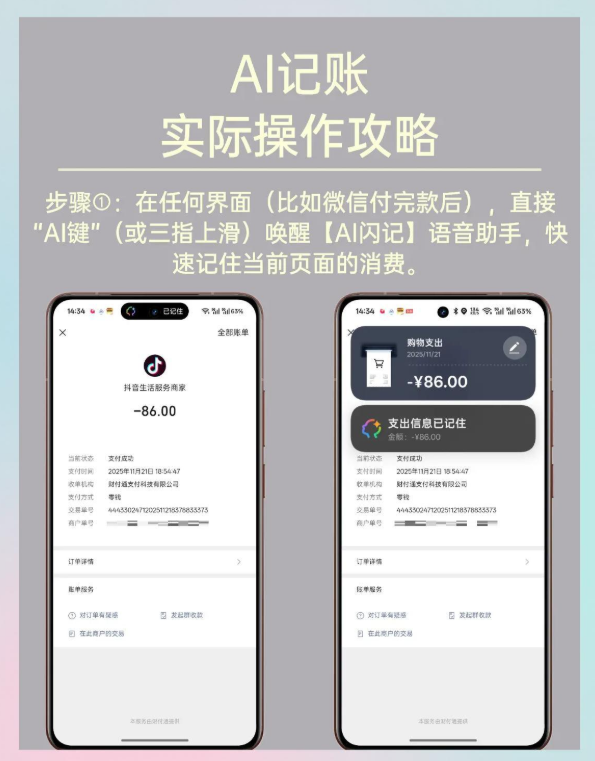
OPPO's AI expense tracking feature
In fact, there are already signs of a rational shift in the industry.
Recently released domestic flagship models have begun to shift from parameter stacking to scenario-based optimization. Honor CEO Li Jian demonstrated the AI agent YOYO's shopping scenario optimization capability at a launch event, which can automatically capture hidden coupons to reduce user spending;
Vivo showcased its 128K long-context processing model, focusing on improving office efficiency with a word output speed of 200 tokens per second, approaching cloud-level performance; OPPO developed a voice assistant that can automatically recognize bills and complete expense tracking, addressing user information overload pain points...
This type of scenario-based AI optimization not only enhances the user experience but also reduces unnecessary R&D investments, achieving a balance between cost and experience.
The 2026 price hikes for domestic smartphones represent a crossroads for industry development. While they have exposed, to a certain extent, the deep-seated contradictions brought about by AI competition, chip dependency, and demand differentiation, they also provide an opportunity for rational industry development.
For consumers, what they need is not flashy AI features but cost-effective products that meet their needs. Only when manufacturers stop blindly competing internally, stop forcibly passing on costs, and respect the needs of every user, can the domestic smartphone industry take the initiative in the global consumer electronics market competition.
-
![]()
Proposed to Raise 955 Million Yuan through Private Placement! Huicheng Vacuum Boosts Localization of Ultra-Precision Optical Coating Equipment
-
![]()
Cash Flow Soars 13-Fold! What Major Strategic Move is Wuhan Five Square Optoelectronics Planning?
-
![]()
Leaked Design of vivo X500: Reverts to Circular Camera Module in Top-Left Corner, Pays Homage to Classic X90 Aesthetic
-
![]()
DeepSeek Shows Signs of Foraying into Code Agents, Launches WeChat Official Account Focused on Harness
-
![]()
Auto Companies Deny Claims That ‘Cooperation with Huawei Is Non-Essential’, as Huawei Transforms into a ‘Public Platform’
-
![]()
Starship to Independently 'Return to the Launch Tower': SpaceX's Ambitions Extend Beyond Rocket Building to Dominating Space Transportation
-
![]()
Starship Set to Independently 'Return to the Launch Tower': SpaceX is Revolutionizing Space Transportation, Not Just Building Rockets
-
![]()
Anthropic and OpenAI Face Off Against Deepseek