Meta's 'AI Glasses' Target Over 2.6 Billion Users, Expanding Global Reach
 04/02 2026
 412
412
Prescription-First AI Glasses
By VR Gyroscope, Ran Qixing
Meta is redefining the core premise of its products: these are the essential myopia glasses you can't do without daily.
On March 31 (local time), Meta officially unveiled two models of 'prescription-first' AI glasses: the RayBan Meta Blayzer Optics (Gen 2) and the RayBan Meta Scriber Optics (Gen 2). These models boast support for 'nearly all prescriptions,' with prices starting at $499. They will be available through offline eyewear retailers in the United States and select international markets starting April 14.
Unlike previous iterations that leaned heavily on 'fashion collaborations' and 'trendy positioning,' Meta is using these new offerings to further broaden its user base for AI glasses. According to the World Health Organization (WHO), approximately 2.6 billion people worldwide were nearsighted in 2020, with projections indicating that this number could rise to around 3.4 billion by 2030. By 2050, the global count of nearsighted individuals may approach 5 billion, representing nearly half of the world's population.
Tapping into the vast global market of nearsighted individuals and unlocking high-frequency daily use scenarios is a growth strategy recognized by many domestic companies developing AI glasses. However, what sets Meta's 'prescription-first' approach apart this time?

01
What's New in the New Generation of RayBan Meta with 'Prescription Priority'?
Meta has shifted its focus from merely 'adding prescription lenses' to prioritizing 'prescription compatibility' in its product design. The official description now reads 'prescription-optimized AI glasses,' emphasizing support for 'nearly all prescriptions.'
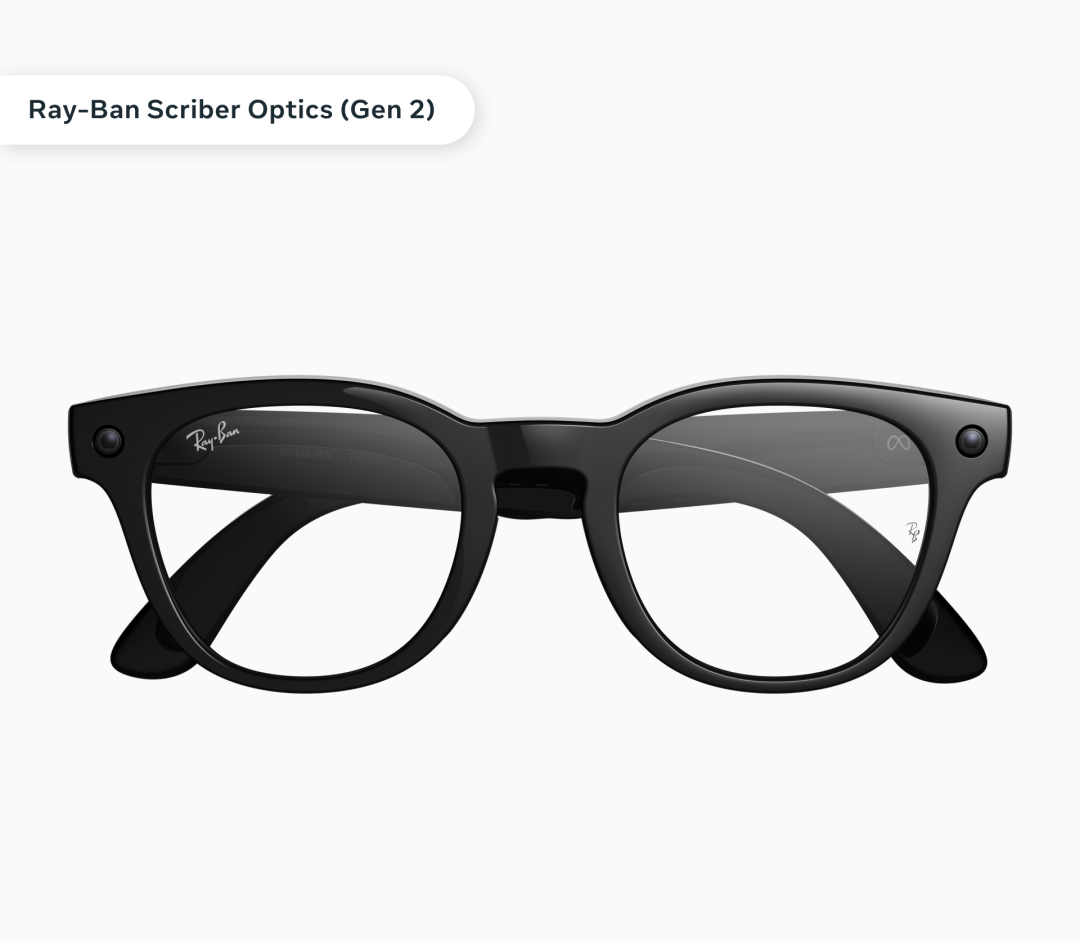
From a hardware standpoint, the newly launched RayBan Meta Blayzer Optics (Gen 2) and RayBan Meta Scriber Optics (Gen 2) are essentially two frame styles redesigned for nearsightedness and all-day wear. The Blayzer features a rectangular design available in Standard and Large sizes, while the Scriber offers a rounder frame.
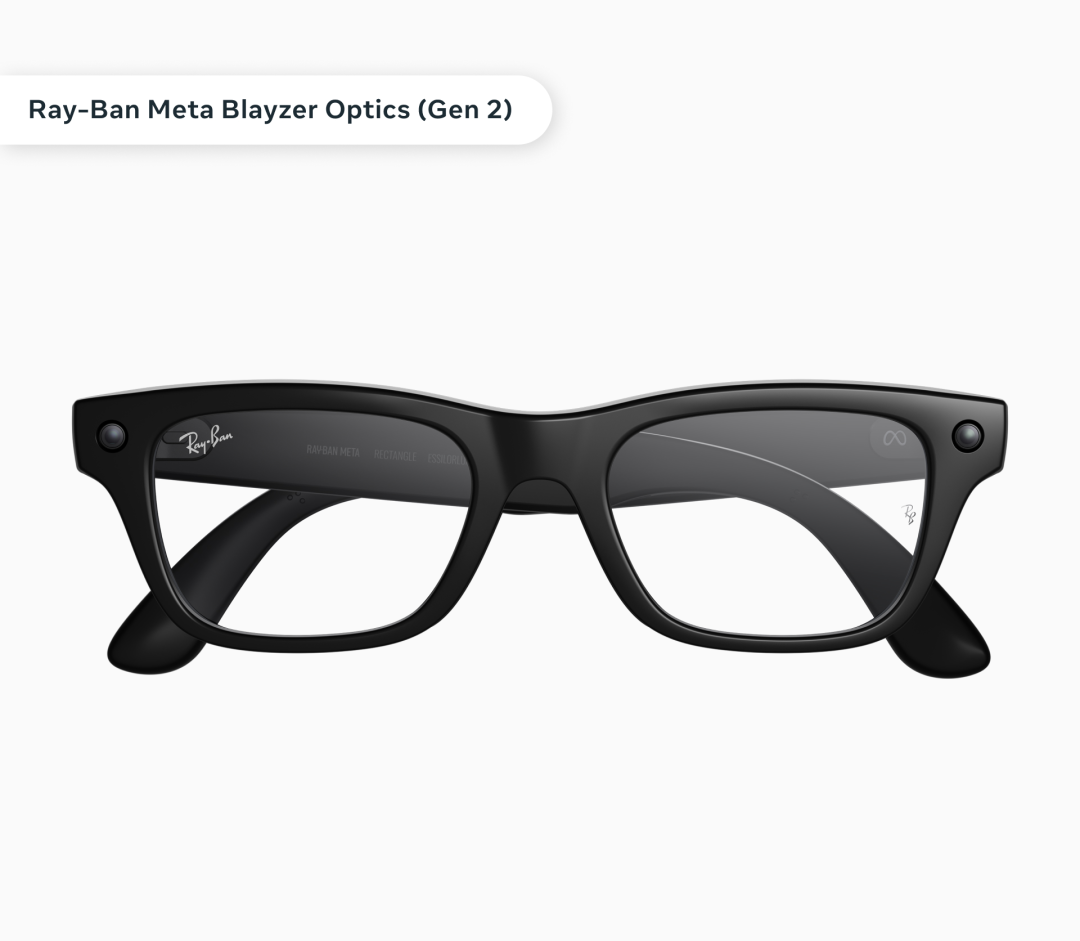
Both models boast redesigned temple hinges, nose pads, and temple ends. They incorporate expandable hinges, replaceable nose pads, and adjustable temples to better accommodate thicker prescription lenses while fitting different face shapes and enhancing comfort. Expandable hinges were previously exclusive to the Meta Ray-Ban Display model, not available on the standard Ray-Ban Meta smart glasses.
While previous RayBan smart glasses supported adding prescription lenses within a certain range, The Verge, citing a Meta spokesperson, reported that the prescription range for older models was roughly around ±6 diopters, with an even narrower range (±4) for display models. The new Optics series, however, is described as having 'virtually no limits' in prescription range, approaching the capabilities of standard optical frames.
While this may seem like a technical detail, it fundamentally determines whether the glasses can cater to severely nearsighted individuals, truly serving as a comprehensive upgrade to regular myopia glasses. In Meta's view, even the relatively small proportion of people with high myopia should not be overlooked; instead, specific products should cater to their needs, demonstrating Meta's commitment to the AI glasses category rather than merely 'accommodating' nearsighted users.
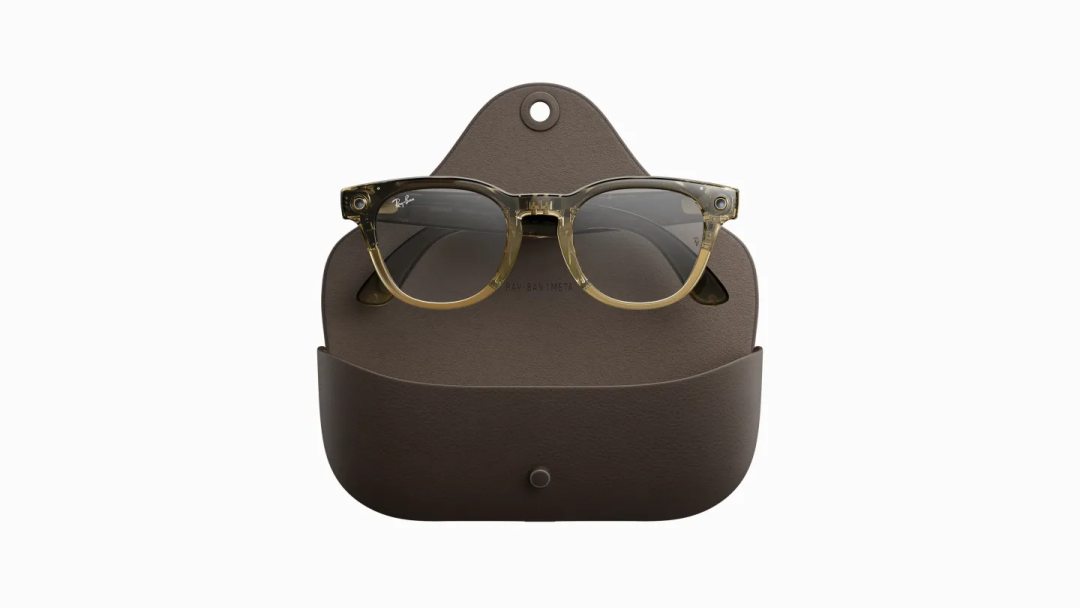
In terms of pricing and distribution strategy, the new models start at $499 and will be available through offline optical retail channels in the United States and select international markets starting April 14. Starting with the Ray-Ban Meta, Meta has been aggressively expanding its offline experience stores and retail outlets. For users requiring prescription lenses, offline optometry, fitting, and try-on are essential processes, and Meta has clearly established a basic sales closed loop.
For many, AI glasses cannot merely be electronic devices; they must also function as 'medical devices' for vision correction. Until now, AI glasses manufacturers have struggled to accommodate all vision conditions and face shapes, but Meta has evidently made significant strides in addressing this gap.
02
From AI Long-Term Memory to Social Ecosystem Integration, Meta AI Glasses Continue to Evolve
In addition to the new optical myopia glasses, Meta also announced a series of feature updates.
At the software level, Meta introduced hands-free nutrition tracking capabilities for the RayBan Meta and Oakley Meta series. Users can record their meals into the Meta AI app via a voice command or by taking a photo of the food with their glasses. AI automatically identifies key nutritional information and logs it into a personal 'food diary.'
Over time, this data will be used to generate more targeted health recommendations. For example, when feeling fatigued, asking, 'What should I eat to boost my energy?' will yield an AI response tailored to your historical dietary records and health goals. This feature will initially be available to users aged 18 and above in the United States, supporting RayBan Meta and Oakley Meta, with Meta RayBan Display users receiving the update in summer.

This feature represents an early iteration of Meta's 'AI long-term memory' capability. The underlying technical logic likely involves RAG (Retrieval-Augmented Generation), primarily relying on AI large models for retrieval-enhanced generation. This approach accurately retrieves specified knowledge bases (theoretically stored on private endpoints) to address hallucination issues in large models and better realize AI personalization.
The second focus is on information processing, integrating with Meta's social ecosystem. Meta has brought WhatsApp message summarization and 'Memories' features to the AI glasses' Early Access Program. Users can use wake-up phrases like 'Hey Meta, catch me up on my messages' to have the glasses summarize group chats or directly ask, 'What did Jamie suggest for dinner?' to retrieve specific information. Officials emphasize that such interactions are processed locally on the device and remain end-to-end encrypted to alleviate privacy concerns about 'having cameras and microphones on your face.'
For the Meta RayBan Display equipped with displays and neural wristbands, neural-sensing handwriting will be fully rolled out and extended to more system-level applications like iMessage. Users can 'write in the air' with their fingers on any surface, with the system recognizing the text for replies on Instagram, WhatsApp, Messenger, and native Android and iOS messaging apps.
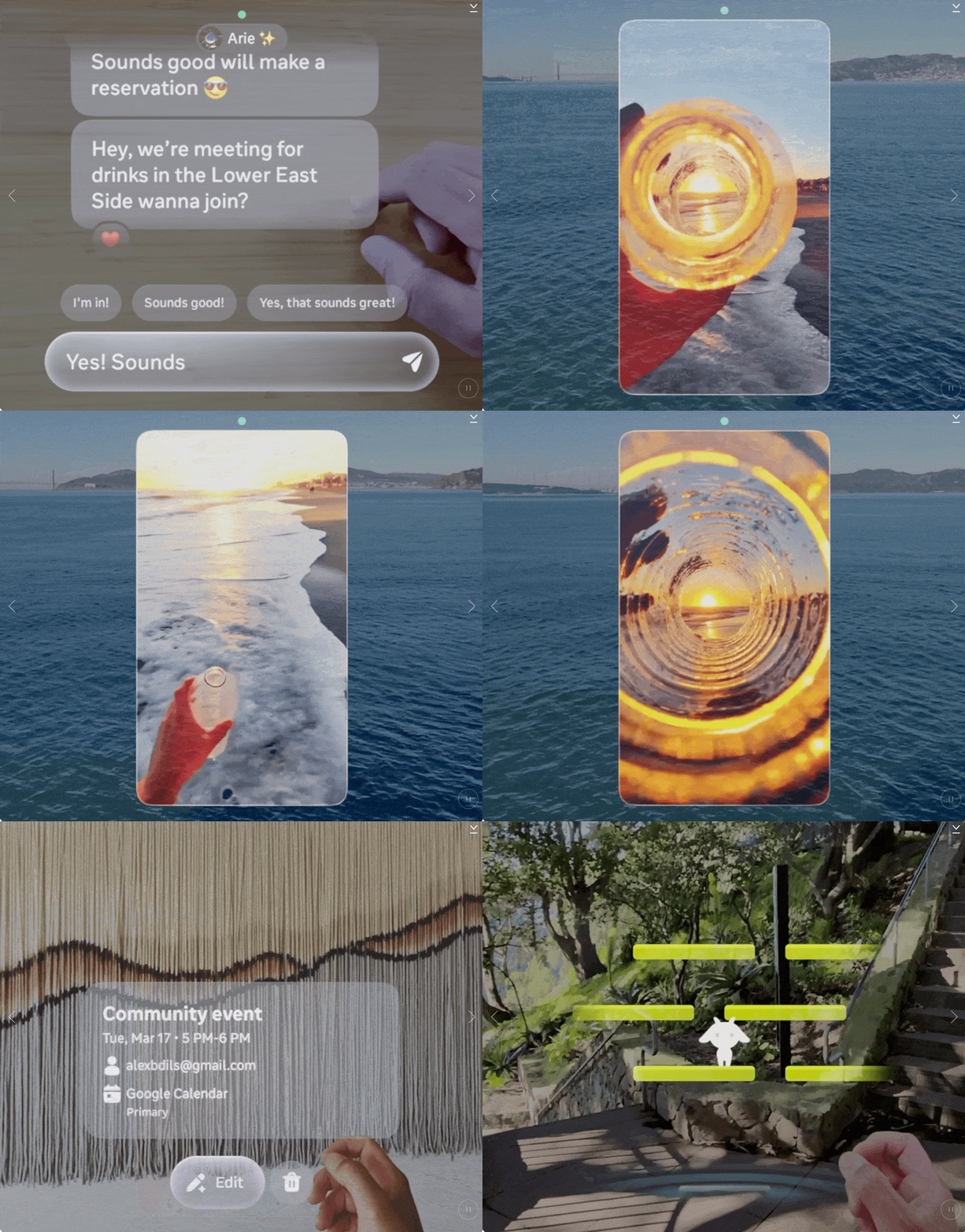
Officials revealed that future updates will include 'MR display recording,' packaging waveguide display content, the wearer's real-world view, and audio into shareable video clips. Additionally, the walking navigation feature will expand to all U.S. cities in May, providing turn-by-turn prompts directly in the lenses to reduce phone checking.
03
Final Thoughts
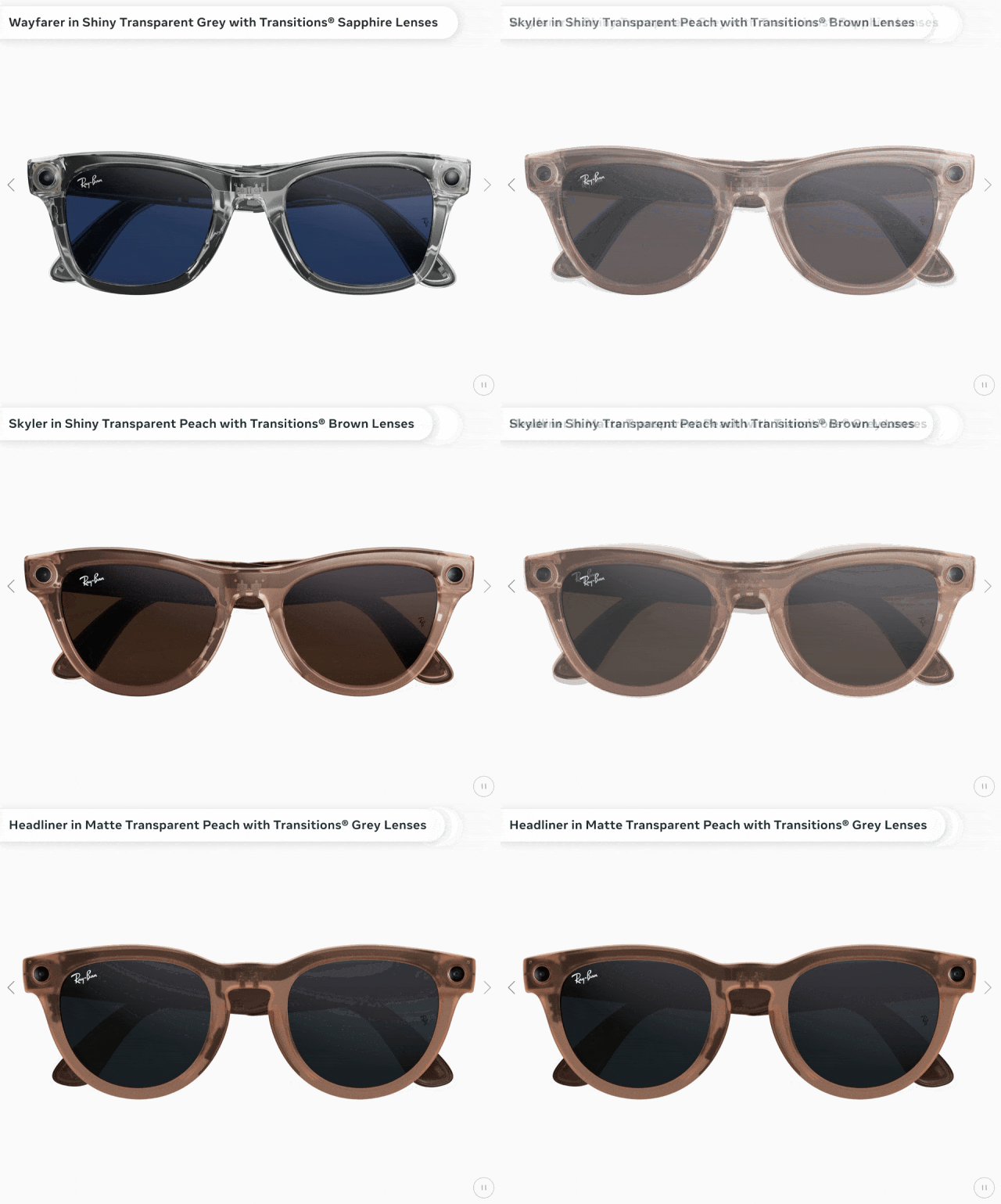
Beyond their medical utility, glasses also serve as fashion accessories. Meta has also updated the 'appearance options' across its entire eyewear product line. The RayBan Meta (Gen 2) introduces new color options for frame styles like Skyler, Headliner, and Wayfarer for spring and summer, paired with Transitions photochromic lenses and various coating colors to meet users' styling needs as their 'daily primary glasses.'
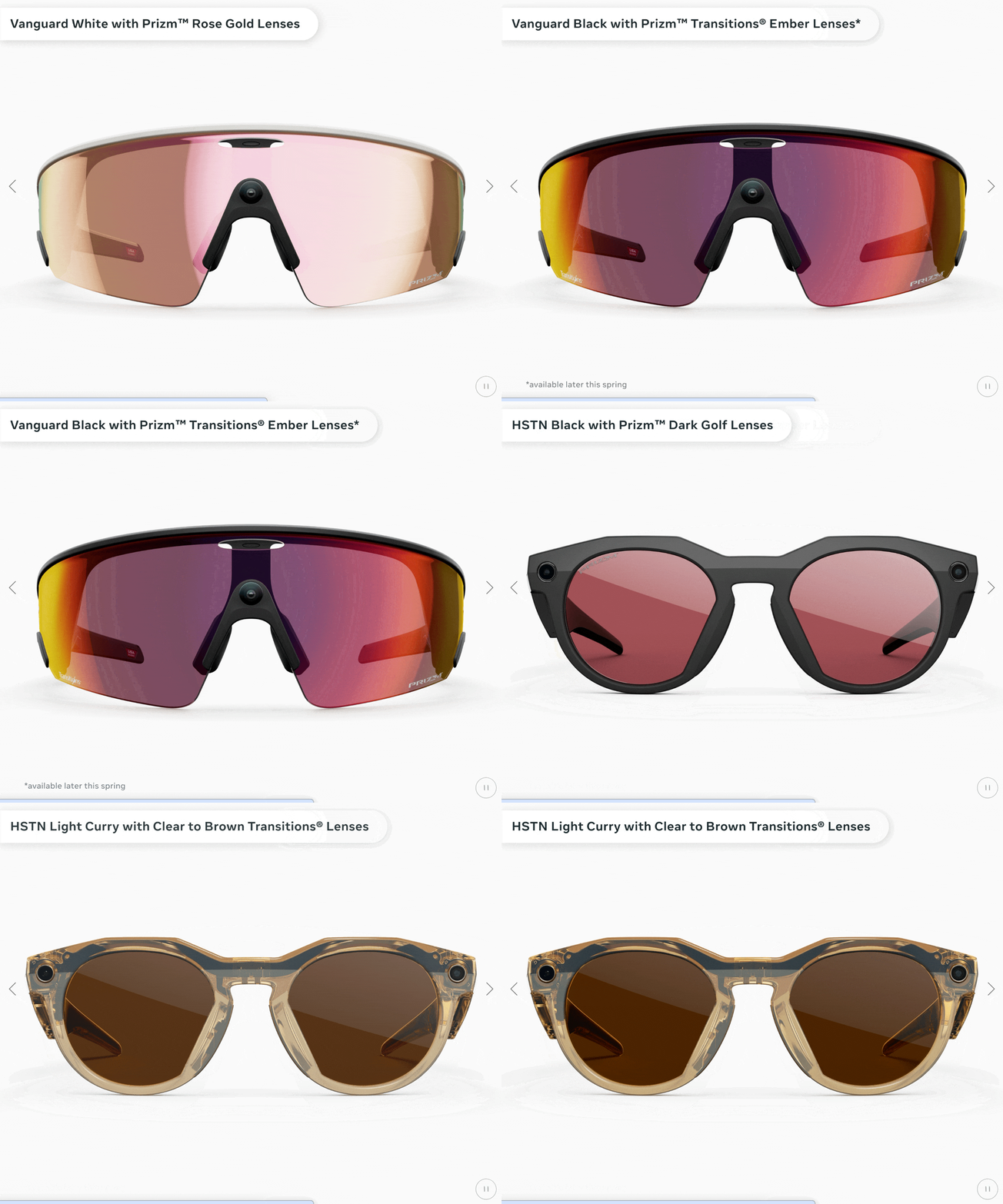
The Oakley Meta Vanguard and HSTN also offer new frame and lens combinations, including Prizm Dark Golf and, for the first time on the Vanguard, Prizm Transitions lenses, optimizing visual performance for outdoor sports and high-contrast scenarios.
From a functional perspective, Meta is attempting to weave together three main threads: first, transforming AI glasses into true 'daily optical devices' by focusing on essentials like prescriptions, frames, and lenses; second, integrating content consumption through quick access to Instagram, WhatsApp, and various widgets within the field of view; third, filling users' fragmented time throughout the day with features like nutrition tracking, schedule reminders, instant message summarization, and walking navigation.
This reflects Meta's clear business logic. Smartphone daily usage time has already reached its peak, while vision correction devices naturally have longer active durations—many severely nearsighted individuals wear glasses for over 12 hours a day. By stably and unobtrusively integrating AI capabilities into these glasses, Meta aims to make them the next 'operating system-level gateway' rather than a toy worn only occasionally.
The core essence of internet commerce is time competition (attention economy). In the mobile internet era of information overload and scarce time, those who can more efficiently retain users, piece together fragmented time, and convert it into high-stickiness interactions will gain a competitive edge.
From mobile social networking to the AI glasses ecosystem, Meta is laying the groundwork for the next decade.
-
![]()
Smartphone Prices Surge Amid Manufacturer Anxiety
-
![]()
Orbbec Soars to Record Heights, Eyes Further Capital Influx of 980 Million!
-
![]()
Tongding Interconnect Sets Up Shop in Shaoguan with 800 Million Yuan in Registered Capital
-
![]()
Before Kimi’s A-Share Debut, Zhipu Aims to Secure More 'Strategic Funding'
-
![]()
Innovative Leap | Fiber-Pluggable 1470nm Laser Source: Revolutionizing Precision Laser Weeding
-
![]()
73-Day Rapid Listing: Where Does Unitree's Wang Xingxing's 'Sense of Urgency' Come From?
-
![]()
AI Project Mindverse, Backed by Meituan, Faces Data Inflation Allegations Over Its Macaron Product
-
![]()
3000-word In-Depth Analysis | What Makes Physical AI So Magnetic? It Has Captivated Masayoshi Son, Jensen Huang, and Justin Sun All at Once