When Honor Is Also Considering 'Teaming Up' with Doubao
 04/15 2026
 467
467
Is the Doubao AI Phone Set to 'Broaden Its Horizons'?
On April 13th, news surfaced that Honor is in talks with ByteDance about collaborating on the 'Doubao AI Phone.' A so-called insider also disclosed that the two parties have yet to finalize the specifics of their brand partnership.
An intriguing detail is that before ByteDance teamed up with ZTE to launch the first-generation Doubao phone, Honor was actually the first phone manufacturer it approached.
However, Honor exercised caution at the time, fearing that such a profound system-level collaboration might introduce risks related to stability, compatibility, or security due to the bold technological approach of the Doubao AI Phone. This could potentially lead to widespread functional issues and user dissatisfaction.
Later that day, another well-known tech blogger revealed that, in addition to Honor, other top-tier phone manufacturers, including vivo, are actively engaging with Doubao, hinting at 'an impending wave of Doubao AI phones.' Previously, after the release of the first-generation Doubao phone, there were reports that ByteDance was also seeking collaborations with manufacturers like vivo, Lenovo, and Transsion.
This pattern of 'insider leaks, media follow-up, and tech bloggers shaping the narrative' is all too common, with a well-established communication chain in place.
Before either side confirms anything, a reasonable assumption is that one party, either Honor or ByteDance (more likely Doubao AI), intentionally leaked the information to gauge the reaction of potential partners and the market.
That evening, Honor responded, partially confirming my speculation. Honor stated that after internal verification, the rumors were unfounded. 'Honor is dedicated to providing consumers with high-quality products through technological innovation. If there are any strategic cooperation developments, we will promptly share them with everyone through official channels.'
Honor's denial of the 'related rumors' was prudent. The company has already amassed considerable expertise in the AI field, such as its Magic Large Model Matrix, which underpins the 'capabilities' of the YOYO intelligent agent. Its most notable moment was when former Honor CEO Zhao Ming demonstrated 'ordering coffee with a single sentence,' claiming to herald the 'era of autonomous smartphone operation.'
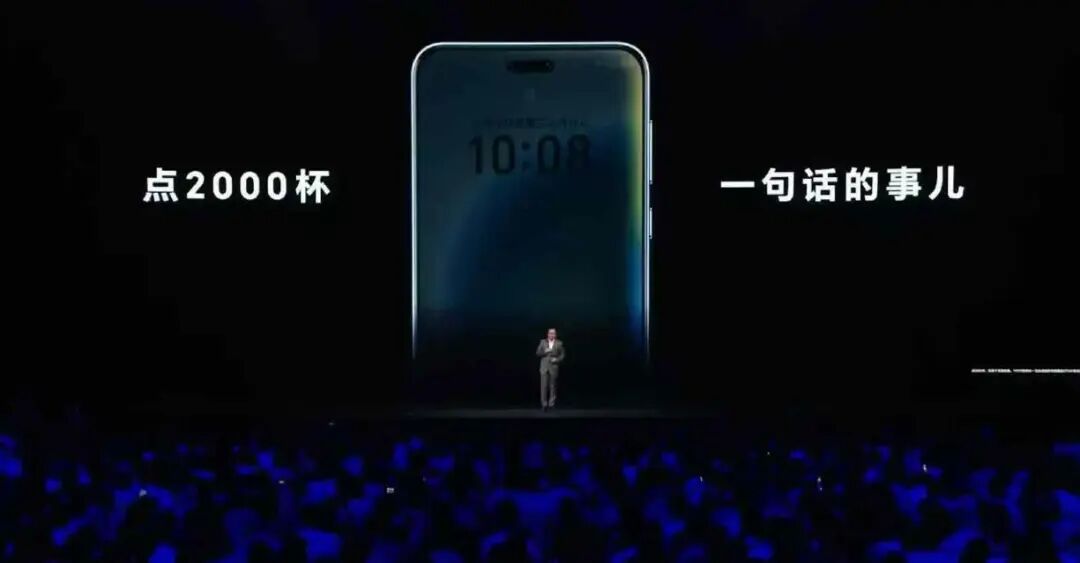 Figure | Honor showcasing 'ordering coffee with a single sentence'
Meanwhile, Honor is vigorously promoting a mysterious project codenamed 'Calw Lobster,' seen as a pivotal battle in its AI phone ambitions.
However, Honor did not entirely dismiss the possibility of collaboration with ByteDance, leaving room for 'any strategic cooperation' speculation.
This stance is quite thought-provoking and reflects a 'cautious yet open' attitude from phone manufacturers toward Doubao AI.
This underscores the 'AI anxiety' prevalent among phone brands. For them, the existing competition in the smartphone market makes it challenging to achieve significant growth by merely focusing on hardware specifications, imaging technology, or marketing tactics.
AI has thus emerged as the key differentiator and selling point to drive user device upgrades, with AI agents becoming a must-have for leading phone manufacturers at the software level.
IDC predicts that by 2026, China's new-generation AI phone shipments will reach 147 million units, accounting for 53% of total smartphone shipments, surpassing the halfway mark for the first time. This signifies that AI phones are transitioning from a technological concept to a mass consumer market, transforming human-machine interaction from 'people operating phones' to 'phones serving people.'
To capture this market, leading phone manufacturers and AI giants are strategically ramping up their investment in developing native system-level AI applications. However, in terms of actual implementation, most manufacturers' AI functions remain superficial, such as meeting transcription and photo retouching, lacking deep integration with the phone's operating system.
Essentially, they rely on preset rules to execute commands rather than truly understanding user intent. In other words, AI phones can only 'assist users in performing tasks' and have not yet acquired the ability to truly solve problems for users.
Most phone brands find themselves at a crossroads regarding AI implementation. From a technical standpoint, large model development demands not only substantial financial investment but also significant time for refinement, while facing three core barriers: resources, algorithms, and data. Most manufacturers cannot overcome these barriers alone, making self-development largely impractical.
While giants like Huawei and Xiaomi can persist with their investments, and Honor is transforming into an AI-focused company on a massive scale, many smaller manufacturers cannot keep pace, as exemplified by Meizu's halted phone business.
From an implementation perspective, even if some manufacturers invest heavily in AI technology research, they struggle to achieve deep integration of AI with their phone systems, failing to deliver complex cross-application operations with core competitiveness. Consequently, AI functions become mere 'novelties' that fail to meet actual user needs.
ZTE's version of the 'Doubao AI Phone' has demonstrated to the industry and users that Doubao AI can transform phones from 'pseudo-intelligent' to 'truly intelligent.' It enables lightweight deployment on the phone's edge, allowing for cross-application scheduling, complex scenario analysis, intelligent decision-making, and automated execution.
This precisely addresses several core pain points for phone manufacturers: breaking through technological bottlenecks, enabling manufacturers to acquire mature AI capabilities without self-development, and achieving deep system binding and hardware adaptation; transforming AI from a 'concept' to 'practicality,' delivering core functionalities, creating differentiated selling points, and reducing market risks; optimizing operational efficiency, enabling manufacturers to focus on hardware innovation and user services, achieving a win-win situation.
For phone manufacturers, this is a shortcut that not only saves significant R&D expenses but also eliminates the need to develop large models from scratch. 'Modifying' Doubao can swiftly enhance product competitiveness.
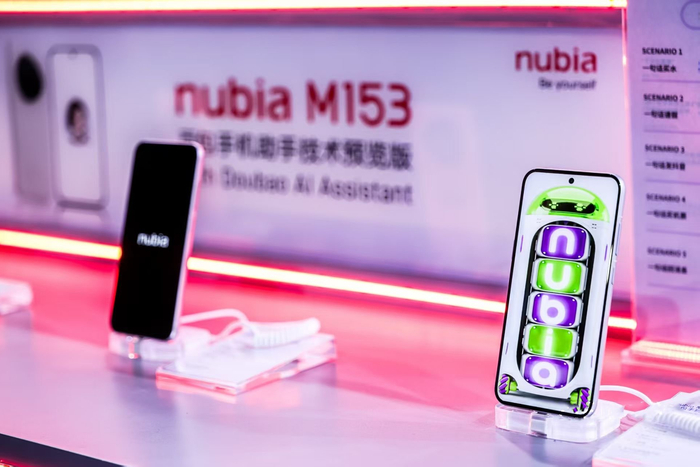
In my previous analysis of the Nubia version of the Doubao AI Phone, I pointed out that the biggest benefit of ZTE's cooperation with ByteDance was enhancing its 'AI visibility,' bringing its AI layout and strategic transformation of recent years into the public and investors' view in such a straightforward manner for the first time.
Honor and other phone manufacturers actively engaging with Doubao may also have this consideration, leveraging ByteDance Doubao's influence to showcase their AI capabilities to more users.
Naturally, ByteDance will not be at a disadvantage. In my view, if Doubao AI successfully 'broadens its horizons,' it has the opportunity to become the 'Hongmeng Intelligent Connectivity' of the AI phone realm.
The two models are similar: both are 'platform-based' collaborations. Hongmeng Intelligent Connectivity does not build cars, and Doubao does not manufacture phones. Both focus on providing core technologies and ecological support to terminal manufacturers; both rapidly expand their ecological reach through deep cooperation with terminal manufacturers, helping them overcome industry development challenges.
During this critical period when AI giants are vying for the super entrance of agents, if Doubao AI can successfully orchestrate this, it will undoubtedly be a significant boon for ByteDance's AI endeavors. After all, smartphones remain the most ideal carrier for AI agents.
It is crucial to note that both phone manufacturers and Doubao will face significant challenges. Fundamentally, Doubao AI is merely an important external force for phone brands in their AI layout. It can temporarily resolve technical, implementation, and cost issues in the short term, helping phone manufacturers quickly enter the deep waters of AI phones and alleviate their current AI anxiety. However, Doubao AI cannot replace the R&D and innovation efforts of phone manufacturers themselves. Only by 'forging their own iron' can they avoid 'making wedding dresses for others.'
After the 'lobster craze,' phone manufacturers are also accelerating their adaptations. For example, Xiaomi's Miclaw has initiated a small-scale closed beta test; Huawei's Xiaoyi Claw, based on the HarmonyOS system, has also released a beta version.
As leading phone manufacturers like Honor begin to consider 'teaming up' with Doubao, the AI phone market will move toward a coexistence of 'self-developed' and 'collaborative' approaches. Doubao AI will also be tested in this process to see if it can become the 'Hongmeng Intelligent Connectivity of AI phones.'
At least for now, this AI phone battle has become even more captivating.
References:
LanJing News, 'Honor in Talks with ByteDance for 'Doubao Phone' Cooperation'
Tang Chen's Classmate, 'ZTE's 'AI Visibility' is Being Elevated by the Doubao AI Phone'
-
![]()
Proceed with Caution Before Entering the Indian Auto Market: Even Musk Faced Challenges, What Makes Chery Think It Can Succeed?
-
![]()
EU Intends to Engage in Trade War with China Amid Chinese Cars Nearing 10% of Monthly Sales in Europe
-
![]()
Shenzhen Rolls Out 'Ten Measures' for New Energy Vehicle Insurance: Integrates Innovative Risk Factors and Adopts Battery-Body Separation Model
-
![]()
If You Can’t Drive a Ferrari Yourself, What’s the Point of Owning One?
-
![]()
ByteDance Clarifies: 'No Car Production, No Investment in Saido!' Seres' Stock Price Plummets to New Lows!
-
![]()
New Energy Vehicles Boast Over 60% Penetration Rate: Joint Venture Automakers Must Accelerate Their Efforts
-
![]()
Why Are New Energy Vehicles Becoming Increasingly 'Bulky'?
-
![]()
Over 12 Years, the Average Passenger Vehicle Has Gained Nearly 400 kg, Sparking Netizens' Queries: When Will New Energy Vehicles Revert to Their 'Standard Size'?